Last updated: 2026-08-01 by Ted Sellers, Owner
A hidden roof leak in walls usually shows up as subtle changes before you ever see water damage. Watch for water stains near the ceiling line, bubbling or peeling paint, soft drywall, a musty smell, or damp insulation behind the wall. In commercial buildings, leaks often travel far from the roof entry point, so the wall symptom rarely sits under the actual hole.
When This Applies
The buildings where wall leaks happen most
This applies to most commercial properties, especially those with low-slope systems where water can move sideways before it drops. Offices, retail spaces, warehouses, and multi-tenant buildings are common, because they have long roof runs, lots of penetrations, and big HVAC curbs.
Flat and low-slope roofs also hide moisture in insulation. By the time a wall changes color, wet insulation may already be spreading. If you manage multiple locations, it’s smart to treat one “small” wall stain as a building-wide risk and prioritize roof maintenance.
For a broader look at service options that tie into leak prevention and repairs, see Saint Paul commercial roofing services.
When it’s probably not a roof leak
Wall moisture can come from other sources, such as clogged gutters, so don’t assume. Some look-alikes are faster and cheaper to fix than roofing issues.
Plumbing and mechanical leaks that mimic roof problems
A leaking supply line, condensate drain, or rooftop unit drain can soak a wall and create the same stains. If the wall sits near restrooms, a break room, or an HVAC chase, confirm those first.
Condensation in exterior walls
Cold-weather condensation can wet walls without a roof opening. If the issue shows up during temperature swings, check humidity control, ventilation issues, roof vents, and insulation gaps.
First Signs You’ll Notice Inside The Building
Visual changes that show up high on the wall
A hidden roof leak often announces itself like a slow bruise from moisture intrusion. The wall may look “off” near the ceiling grid or along an exterior corner, with discolored ceilings that signal trouble. Water stains can start as a faint yellow ring, then deepen to brown. You might also see paint that looks puckered, swollen, or slightly glossy because moisture is trapped underneath.
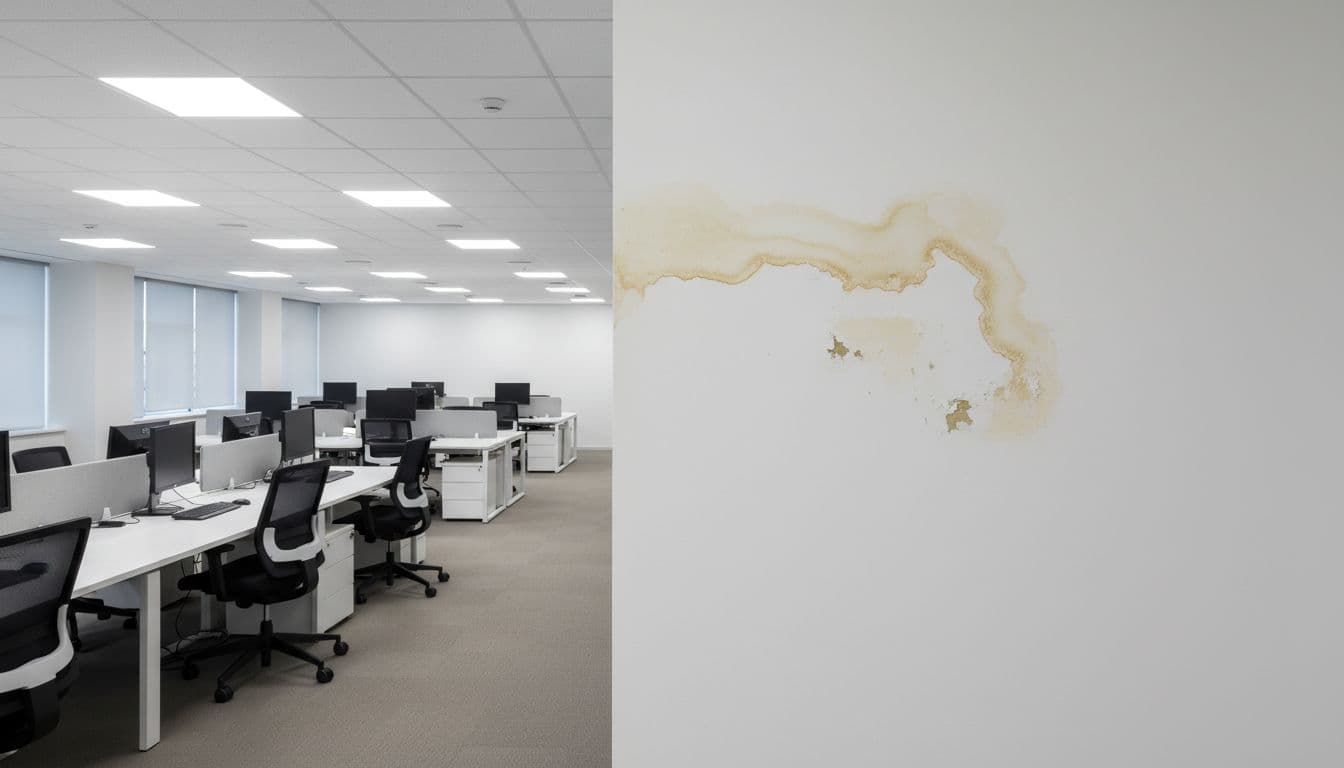
Besides water stains, pay attention to texture. Drywall tape can lift at seams. Corner bead can rust and “ghost” through paint. On masonry or block walls, white, chalky deposits (efflorescence) may appear as water moves salts to the surface. Ceiling tiles might show early sagging ceiling signs along the edges.
A common gotcha: on flat roofs, water can enter far from where it shows up. The stain is the symptom, not the map.
If you want a second checklist of early warning clues, this overview of subtle signs of a hidden roof leak pairs well with what facility teams see day to day.
Smell, comfort, and “building behavior” clues
Some leaks never stain at first. Instead, the space starts to feel wrong. Persistent musty odors after rain is a big flag. So is a room that suddenly feels humid, even when the HVAC schedule hasn’t changed. Wet insulation can also reduce R-value, which makes perimeter offices harder to heat in winter and harder to cool in summer, often leading to rising utility bills.
Listen for small operational hints too. Tenants may report a “damp” smell in a hallway. Cardboard packaging may feel soft. Ceiling tiles near the wall might sag, even if the wall looks fine. Those complaints often show up before someone sees a drip. Investigating these signs might require attic access to check attic insulation for moisture.
Step-by-Step
1) Confirm the wall moisture is real (and active)
- Photograph the area in good light, then date-stamp the report for your records.
- Touch the surface lightly; soft, spongy drywall suggests ongoing moisture and risk of structural damage.
- Press a dry paper towel to the wall for 10 seconds, then check for transfer.
- Note recent weather, wind direction, and where snow drifts or melt lines sit.
- Check the same wall section 24 hours later; spreading edges mean it’s active.
2) Narrow the source before you pay for the wrong fix
- Rule out plumbing by checking nearby restrooms, break rooms, and utility chases.
- Look above the wall line (ceiling plenum, soffit, or parapet return) for wet framing.
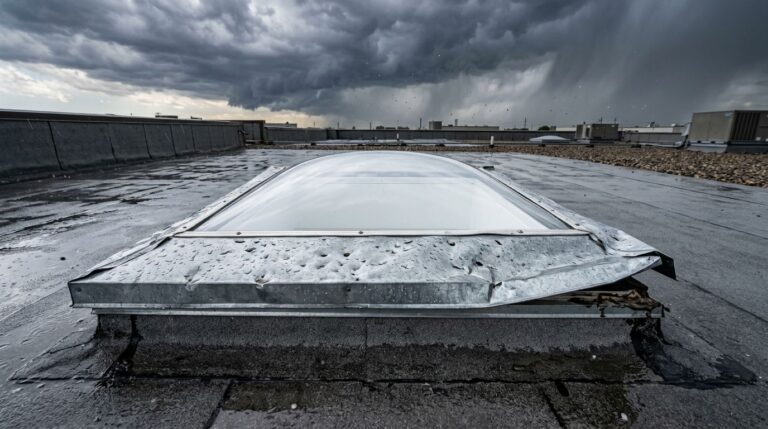
- Inspect roof-adjacent suspects: drains, scuppers, flashing damage, coping caps, and HVAC curbs.
- Treat roof penetrations as prime suspects, because small seal failures can feed big wall stains.
- If you manage a low-slope system, assume water traveled and plan a targeted investigation.
3) Decide the right next action for the roofing system
- If the roof membrane or seams are compromised, schedule commercial flat roof repair fast.
- If leaks repeat in the same zone, ask for diagnostic testing, not another patch.
- If insulation is saturated across wide areas, start budgeting for commercial roof replacement.
- If interior damage is growing, act as if your commercial roof needs repair today, not next quarter.
- Hire a professional roofer for a full roof inspection using commercial roof leak detection Saint Paul to pinpoint entry points before repairs.

FAQ
Will a roof leak in a wall dry out on its own?
It might look better for a week, then return with the next rain or thaw. Even when the surface dries, insulation and framing can stay wet longer. This trapped moisture leads to mold growth and wood rot in wall cavities, which keeps damage moving.
What if the stain only appears after snow, not rain?
That often points to meltwater and freeze-thaw pathways near parapets, edges, or drains. Roof drainage and ice-related backups can push water into details that seem fine in summer.
Does that mean the membrane failed?
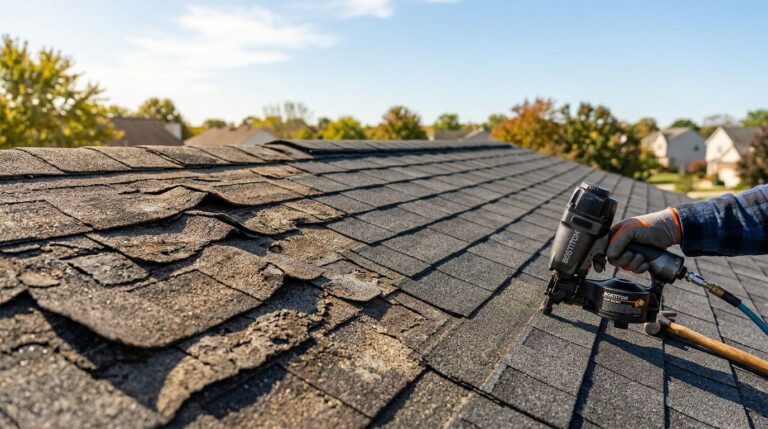
Not always. Many winter leaks come from flashing, coping joints, or clogged drainage, not a field tear. While low-slope roofs are the focus here, facilities with pitched sections should check for missing shingles, warped shingles, or granule loss as entry points.
How fast can a hidden roof leak damage a commercial wall?
Drywall can soften within days of repeated wetting. Mold risk increases when materials stay damp, and that can happen quickly in closed wall cavities with poor airflow.
Should we keep operating while we investigate?
Usually yes, but isolate the risk. Move inventory away from the wall, protect equipment, and consider dehumidification. If you see electrical hazards from wet outlets or ceiling sections sagging, restrict the area and escalate the call.
What documentation should we collect for insurance or tenants?
Keep dated photos, weather notes, and a simple log of when stains grew or odors appeared. Save repair invoices and inspection reports too, because a clear timeline helps support claims and reduces disputes.
Conclusion
A wall stain is rarely “just cosmetic” when it traces back to a hidden roof leak. Catching early signs like bubbling paint, soft drywall, and musty odors can prevent water damage such as saturated attic insulation and bigger disruptions. When the clues show up, confirm moisture, rule out plumbing, then locate the roof entry point before authorizing repairs. The fastest win is simple: act early, while the fix is still small.
Need a roof inspection in Saint Paul or the Twin Cities? Call Sellers Roofing Company at +1-651-703-2336 or schedule a free estimate. We are a black-owned, NMSDC-certified MBE roofing contractor with 9+ years experience.