Last updated: 2026-08-01 by Ted Sellers, Owner
Yes. Hail can dent, loosen, or split skylight flashing while the glass stays intact. On a commercial roof, that matters because flashing is often the first place water gets in. A skylight can look fine from the ground and still leak, stain insulation, and signal that a commercial roof needs repair.
When This Applies
Signs the hail-damaged skylight flashing took the hit
Hail often hurts the metal before it breaks the glass. You may see dents, lifted edges, cracked sealant, or a shifted curb cap around the skylight. Those changes can open a path for water even when the pane still looks clear.
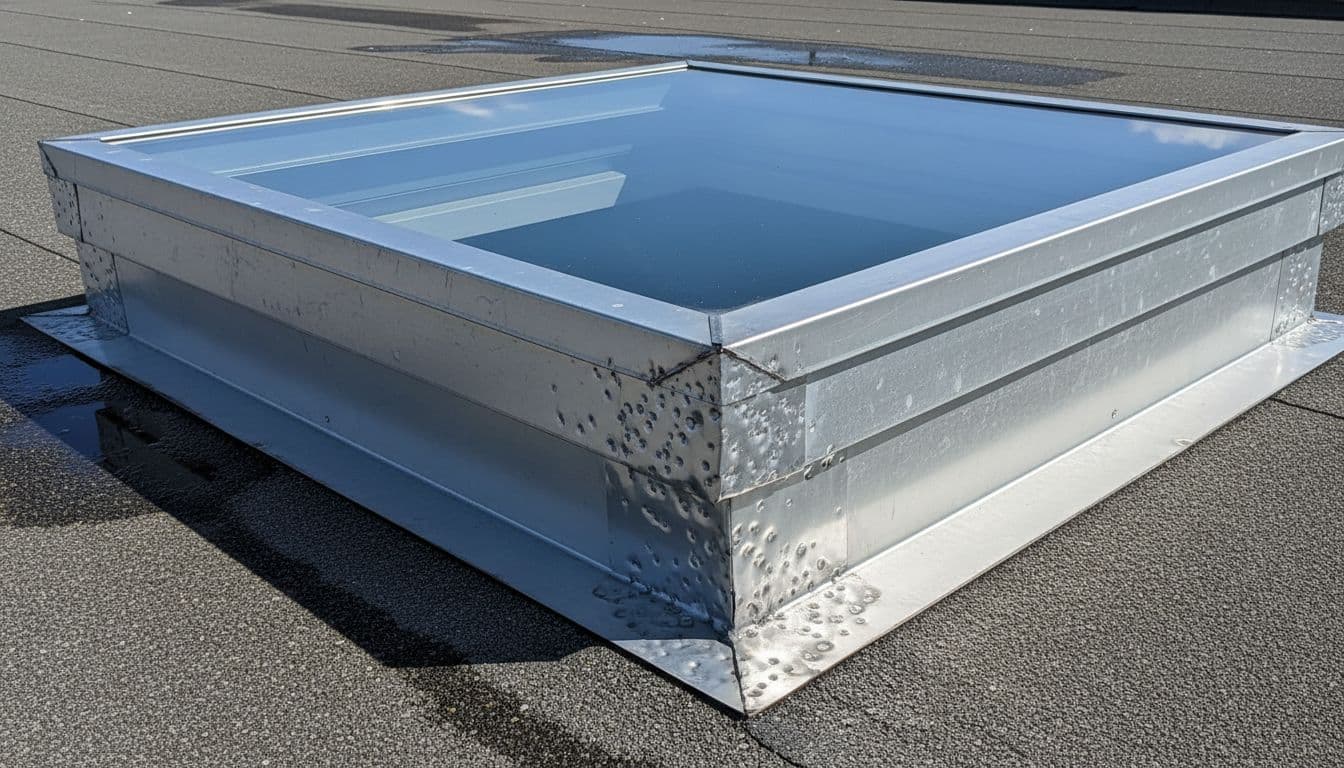
That kind of damage is easy to miss from the parking lot. It usually shows up when someone gets on the roof and checks the metal edges, fasteners, and seal points.
If the glass is fine but the flashing moved, treat it like a roof leak until proven otherwise.
When the glass stays intact but water still gets in
A skylight does not have to crack for the roof to fail. Water can enter through a bent flashing corner, then travel under the membrane or around the curb before it shows inside. On TPO, EPDM, and metal roofs, that path can be longer than people expect.
That is why a ceiling stain near a skylight is not the whole story. The leak may start at the flashing, then move across insulation or decking before it shows up inside the building.
When hail is not the real cause
Not every skylight leak comes from storm damage. Old sealant, poor installation, thermal movement, or rusted metal can do the same thing. If the roof already had brittle caulk or loose counterflashing, hail may only expose a problem that was there already.
When the wet spot is far from the skylight, commercial roof leak detection services can help trace the real entry point before a patch hides the evidence.
Step-by-Step
1. Check the skylight from the roof and inside
Start with a full look at the skylight curb, flashing, and nearby membrane. Then move inside and check the ceiling, wall line, and insulation if they’re visible.
Inside clues that matter
Look for fresh staining, bubbling paint, damp insulation, and drips near the curb. If the building has a drop ceiling, lift a tile and inspect above it.
Roof-edge clues that matter
Look for dented metal, split sealant, lifted corners, displaced fasteners, and punctures around the skylight base. A small bend in the wrong spot can open a leak path.
2. Document the damage before any patch goes on
Take clear photos before anyone covers the flashing or cleans the area. That includes wide shots, close-ups, and pictures that show where the skylight sits on the roof.
Save moisture readings, field notes, and the date of the hail event if you know it. These details help if the building owner, insurer, or roofer needs to compare the first condition with the repair scope later.
What to save
Keep proposals, receipts, and any temporary repair records. If a tarp or short-term seal is needed, document that too. Temporary protection is fine. Permanent work before inspection can blur the evidence.
3. Match the fix to the scope
If the flashing is dented but the curb and insulation are dry, a targeted commercial flat roof repair may be enough. That could mean replacing the flashing, resetting the seal, and checking the nearby membrane for hidden issues.
When a spot repair is enough
A local repair works when the damage is small, the deck stays dry, and the skylight frame is still sound. The goal is to stop water without opening more of the roof than needed.
If the damage spreads past the flashing, the scope changes fast. Wet insulation, damaged curb wood, or a torn membrane around the skylight can turn a simple repair into a much larger project.
4. Bring in a roofer who handles commercial work
A commercial roofer should inspect the skylight, the surrounding roof field, and the drainage path as one system. That matters because the flashing may be only one part of the leak story.
A commercial roofing team in Saint Paul can also help sort out temporary protection, permanent repairs, and claim support if insurance is involved. When the roof is unsafe to walk, emergency dry-in should start first, then the final scope can wait for review.
What Hail Does to Skylight Flashing
Why metal flashing fails before glass
Glass is often stronger than people think, especially when hail hits at an angle. Flashing, on the other hand, is thin metal with seams, bends, and seal points. Those weak spots take the удар first.
The corners around a skylight curb are especially vulnerable. Hail can flatten the metal, loosen edge sealant, or shift a cap just enough to break the weather seal. The glass may stay untouched while the roof’s water barrier fails.
How a small bend turns into a leak
A dent in the flashing can change how water runs off the curb. Instead of shedding cleanly, water can pool, back up, or slip under a lifted edge. Freeze and thaw cycles make that worse.
Once water gets under the metal, it does not always show right away. It can sit in insulation, move along the deck, or show up as a stain far from the skylight. That delay is why hail-damaged flashing can be missed during a quick visual check.
When the Repair Plan Changes
Repair, supplement, or replacement
The right fix depends on what the inspection finds. If the damage is local, the skylight may need only a focused repair. If the roof field around it is wet, warped, or torn, the job may grow into a larger commercial roof replacement.
That shift matters for commercial owners. The first estimate may miss line items such as hidden wet insulation, code-required details, or extra flashing work. If that happens, a supplement can correct the scope after better photos, measurements, or a reinspection.
When the insurer misses part of the damage
Ask for the reason in writing if part of the loss gets denied. Then answer it with better proof, not guesswork. Clear photos, moisture data, and a clean scope can move a claim forward faster than a long argument.
If the building has active leaks, keep using temporary protection while the claim is reviewed. That protects the interior and keeps the project moving while the final repair plan is sorted out.
Conclusion
Hail can damage skylight flashing without breaking the glass, and that is a real roof problem. The flashing is often the first part to fail, and once it opens up, water can travel far before anyone sees a stain.
For commercial owners, the safest move is simple. Check the curb and flashing, document what you find, and match the repair to the actual damage. A clear scope now is better than a bigger surprise later.
FAQ
Can hail damage skylight flashing if the glass is not broken?
Yes. The flashing can dent, lift, or split while the glass stays intact. That still creates a leak path, especially on low-slope commercial roofs.
How can I tell if the flashing is damaged from the ground?
You usually can’t tell with confidence from the ground alone. Dents, lifted edges, and seal failures are easier to see up close, so a roof inspection matters.
Is a skylight leak always caused by hail?
No. Old sealant, poor installation, rust, and movement in the roof system can all cause leaks. Hail may expose those weak spots, but it may not be the original cause.
Can the flashing be repaired without replacing the skylight?
Often, yes. If the glass and curb are sound, a roofer may replace the flashing or reseal the area. The full skylight does not always need to come out.
When does the damage point to a bigger roof problem?
If you find wet insulation, torn membrane, damaged curb framing, or repeated leaks, the repair scope is bigger. In those cases, the roof may need more than a spot fix.
Need a roof inspection in Saint Paul or the Twin Cities? Call Sellers Roofing Company at +1-651-703-2336 or schedule a free estimate. We are a black-owned, NMSDC-certified MBE roofing contractor with 9+ years experience.