Last updated: 2026-08-01 by Ted Sellers, Owner
Yes, if the leak is isolated and the membrane around it is still sound. TPO roof patching can work more than once when each repair bonds to clean, dry material and the rest of the field still holds. Once the same area keeps leaking, seams fail across the roof, or insulation gets wet, a larger commercial flat roof repair or commercial roof replacement usually makes more sense.
When This Applies
When another patch makes sense
This applies when the roof has one or two clear damage points, like a puncture, a small seam split, or a failed detail at a curb or pipe boot. It also fits roofs that still shed water well everywhere else.
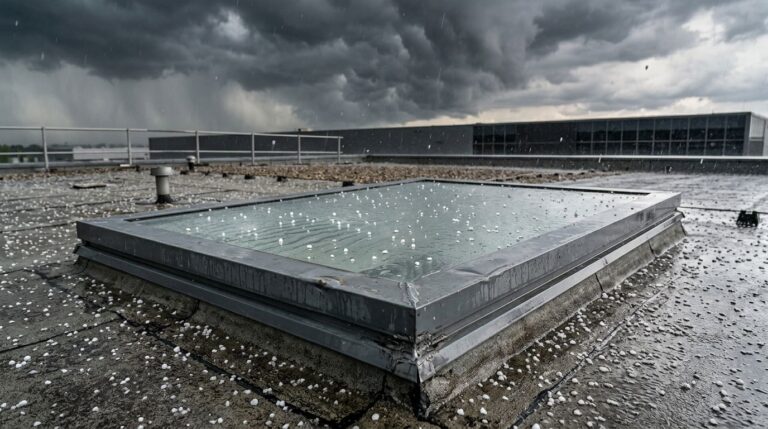
A second patch can make sense after a storm, a dropped tool, or an isolated service mistake. If the rest of the membrane is clean, dry, and well-adhered, the roof may still be in repair range. If you want a local opinion before you commit, commercial roofing services in Saint Paul can help confirm whether the damage stays small enough for patch work.
When patching stops making sense
Patching stops making sense when the same roof area keeps leaking, especially after the membrane has already been cleaned and welded once before. It also loses value when you see shrinkage, wide seam lift, or soft spots that point to trapped moisture.
When the same seam keeps failing
One repeat leak can still be a patch job. Two or three leaks in the same lane often mean the sheet itself is failing, not just the spot you can see. At that point, another patch may buy time, but it does not solve the cause.
If water keeps showing up in a new place, professional commercial roof leak detection can trace the path before you cover the evidence again. That matters because TPO leaks often travel under the membrane before they show inside.
Step-by-Step
1. Inspect the old repair first
Before you touch the roof again, look at the old patch, the seam edges, and the surrounding sheet. Fresh damage has a clean story. Old wear usually shows chalking, dirt, shrinkage, or lifted edges.
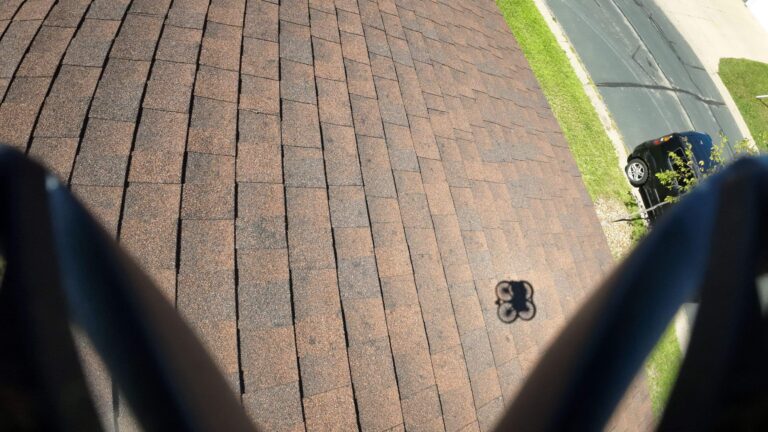
Separate those two before you decide what belongs in the new repair. If the roof has hail hits, foot traffic marks, or a puncture near equipment, take photos from more than one angle. That gives you a clean record and helps you avoid fixing the wrong spot.
2. Trace the leak to the source
Water often moves away from the entry point, especially on low-slope roofs. A ceiling stain does not prove the membrane failed above that spot. Moisture readings, interior notes, and close-up roof photos help connect the leak path to the actual defect.
If the path is not clear, pause the repair and trace it first. A new patch over a guessed location can waste money and hide the real opening. On larger buildings, the source may sit several feet away from the stain.
3. Prep the membrane as if the patch will stay
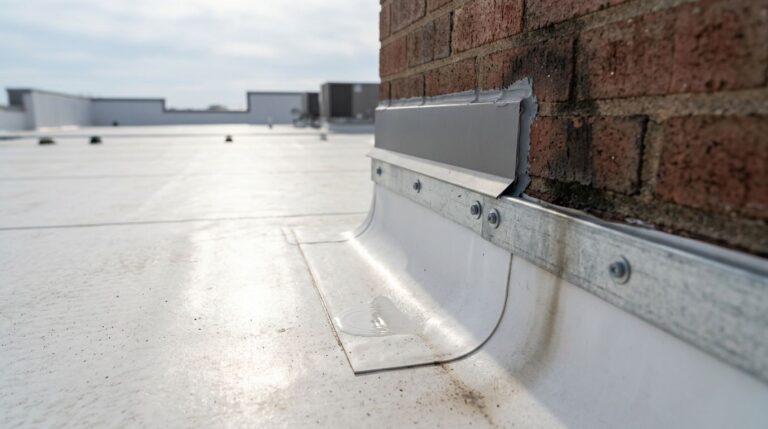
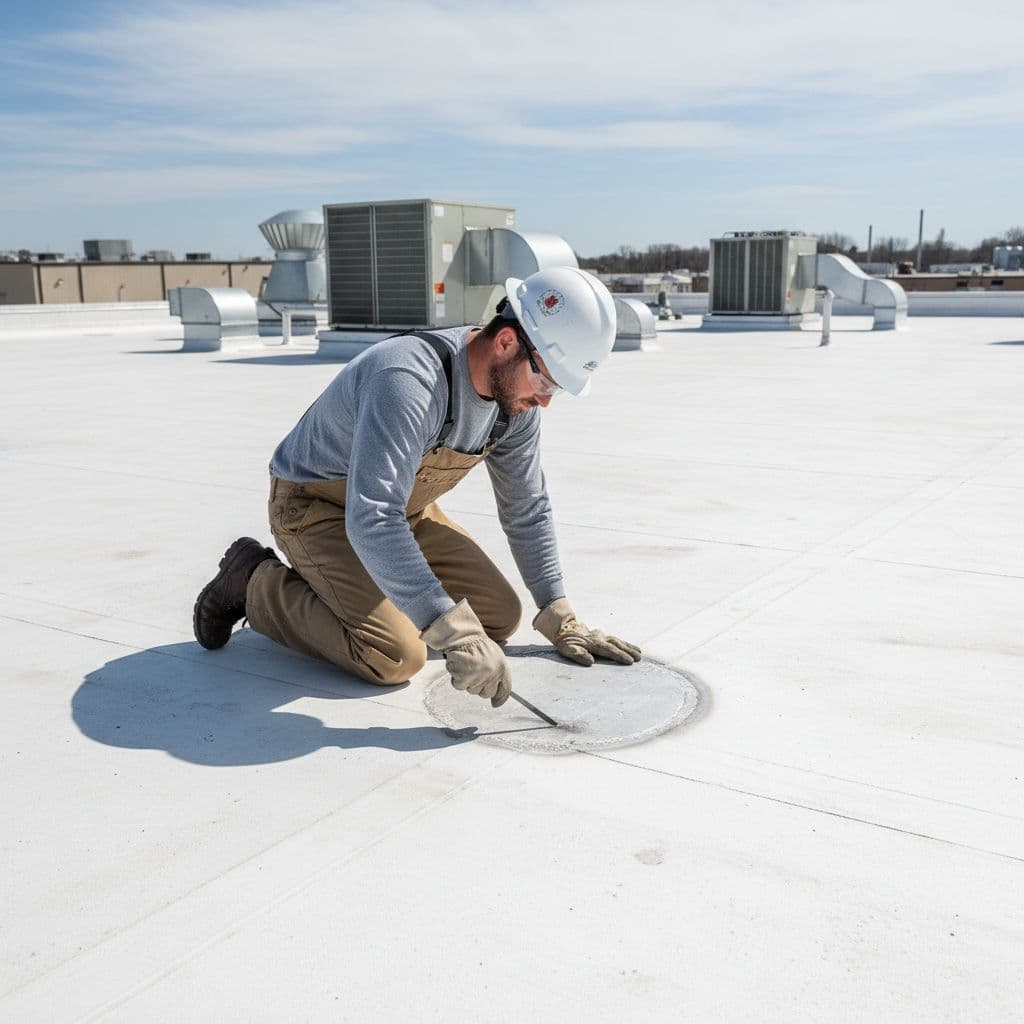
TPO roof patching only works when the surface is clean and dry. Dirt, ponding residue, and trapped moisture weaken the weld. The patch material should match the existing membrane, and the corners should be smooth so they do not peel early.
A useful primer on emergency TPO patch work makes the same point, clean prep beats fast work every time. If the repair is supposed to last, give it the same care you would give a brand-new seam.
4. Patch again only if the surrounding field is sound
A second patch over a different defect is fine when the roof field still holds up. It is a bad idea when the area around the repair is brittle, contaminated, or already overloaded with previous fixes.
One roof can have several repairs and still be serviceable. The question is whether each repair sits in healthy material. Rounded corners, full weld contact, and a tight probe check matter more than the number of patches on the roof. For more on seam discipline and edge work, a TPO welding guide explains why repair quality depends on prep, pressure, and cooling time.
When to stop patching the same area
If the same section has been patched twice and still leaks, stop and reassess the whole assembly. That is a sign the membrane, seam, or substrate is no longer a patchable problem.
5. Compare the patch cost with a bigger fix
When you keep paying for visits, the cheapest repair can become the most expensive one. If wet insulation, membrane shrinkage, or failed seams stretch across the field, the better answer may be commercial roof replacement. If the issue stays small, a commercial flat roof repair still makes sense.
The right line is not “how many patches”. It is “how much roof is still sound”. If your commercial roof needs repair, ask for a written scope that shows why the chosen fix is enough. If the answer keeps changing after each rain, the roof is giving you a clear signal.
What repeated patches mean for insurance and budgets
Document before permanent work starts
If the repair ties into a claim, photos matter more than opinions. Save dated pictures, moisture readings, invoices, and notes on interior damage. Temporary dry-in work, interior protection, and leak tracing do not weaken the claim. They show you acted fast and kept the loss from growing.
Do not throw away wet material before it has been documented if you can avoid it. If the same roof has older repairs, separate those from the new damage in your records. That helps an inspector sort out old wear, old patches, and fresh loss.
Ask for the decision that fits the damage
If only part of the roof failure relates to old work, ask for partial approval instead of accepting a full denial. Push the carrier to separate previous wear from fresh damage, and ask the inspector to define the proper scope in writing.
If the dollars are high, request a reinspection, then consider appraisal or coverage counsel. A concise rebuttal with photos, dates, and policy language usually works better than a long argument. The goal is simple, match the payment to the actual damage.
Conclusion
You can patch a TPO roof more than once, but the roof has to keep telling the same story, isolated damage, sound surrounding membrane, and no sign of broad failure. Once the same spot keeps leaking or the field starts to fail, another patch is only a delay.
The safest answer comes from condition, not habit. A good repair protects the building, but it also admits when the job has outgrown TPO roof patching and moved into a larger commercial flat roof repair or a full commercial roof replacement.
FAQ
How many times can a TPO roof be patched?
There is no fixed limit. A roof can take several isolated patches if the membrane is still stable. The better question is whether each repair lands in sound material. Once patches cluster in the same area, the roof is telling you the problem is bigger than a spot leak.
Can you patch over an old TPO patch?
Sometimes, but only if the old repair is intact and the surrounding membrane is clean, dry, and weldable. If the old patch is peeling, dirty, or hiding moisture, patching over it usually fails early. That is often a sign the section needs a larger repair instead.
What if the same leak comes back after rain?
Treat that as a leak trace problem first. Water can travel under TPO and show up far from the entry point. If the same leak returns, the opening may be nearby, or the first patch may have missed the actual source. Do not keep guessing at the same spot.
Is repeated patching cheaper than replacement?
Short term, yes. Long term, not always. If repairs keep finding new weak spots, the labor, disruption, and repeat visits can cost more than a planned commercial roof replacement. Compare the next patch bill with the roof’s remaining life, not just with the last invoice.
Will repeated patches hurt a roof claim?
Not by themselves. What matters is documentation and cause. If you photograph the damage, keep receipts, and separate old wear from fresh damage, repeated TPO roof patching does not erase coverage. Problems start when permanent work happens before the evidence is recorded.
Need a roof inspection in Saint Paul or the Twin Cities? Call Sellers Roofing Company at +1-651-703-2336 or schedule a free estimate. We are a black-owned, NMSDC-certified MBE roofing contractor with 9+ years experience.