Last updated: 2026-08-01 by Ted Sellers, Owner
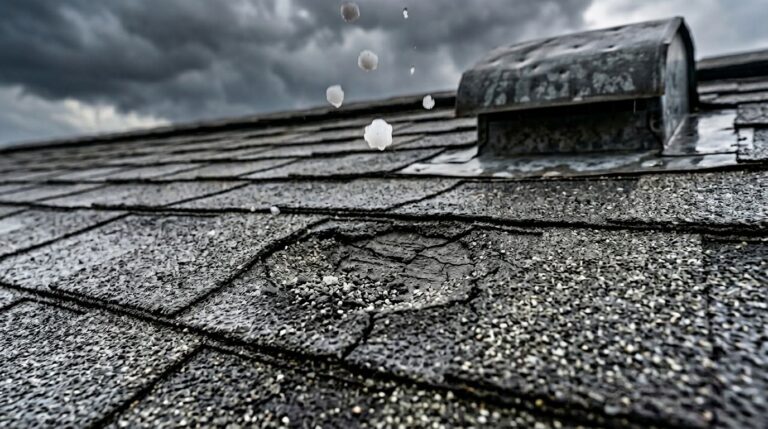
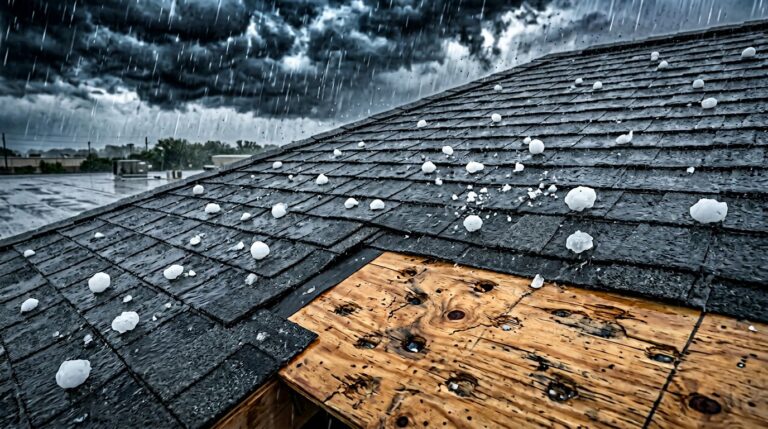
Yes. Hail can damage a roof while gutters and siding stay intact or only show minor marks. Roof membranes, seams, flashing, and edge metal take impacts in a different way than wall cladding or downspouts, so the storm can bruise, puncture, or loosen the roof without leaving obvious damage on the rest of the exterior.
That pattern is common on commercial buildings. A hail-damaged roof can look calm from the ground while water moves under the membrane, soaks insulation, or starts a leak that shows up later inside.
When This Applies
Why the roof can take the hit first
Low-slope and flat roofs are exposed in a broad, open way. Hail lands on the field of the roof, seams, curbs, parapet edges, and penetrations, while gutters and siding may sit at a different angle or get partial shelter from overhangs and nearby structures.
That difference matters because roofing materials do not react the same way. A single storm can leave a membrane bruised, a seam lifted, or flashing cracked, while the siding still looks clean. The NRCA hail guidance notes that hail falls in random patterns, so one part of a building can take the hit while another part looks untouched.
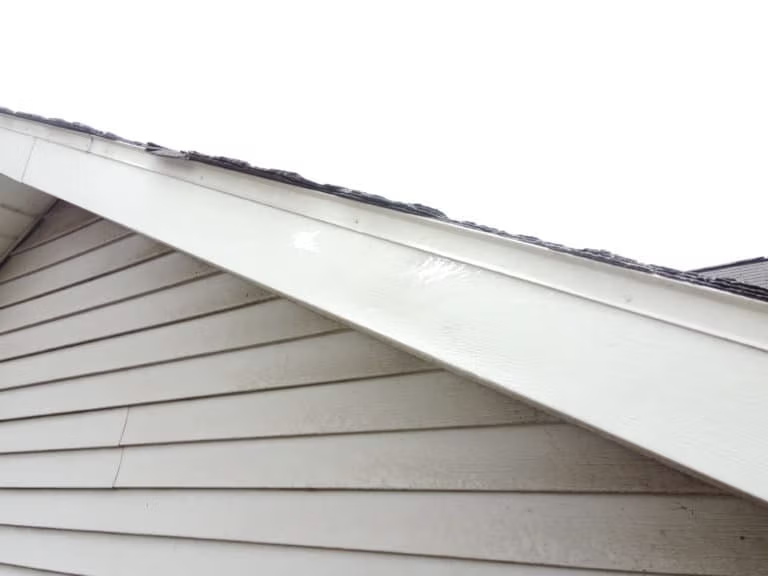
A roof can take the brunt of hail and still leave gutters and siding looking normal.
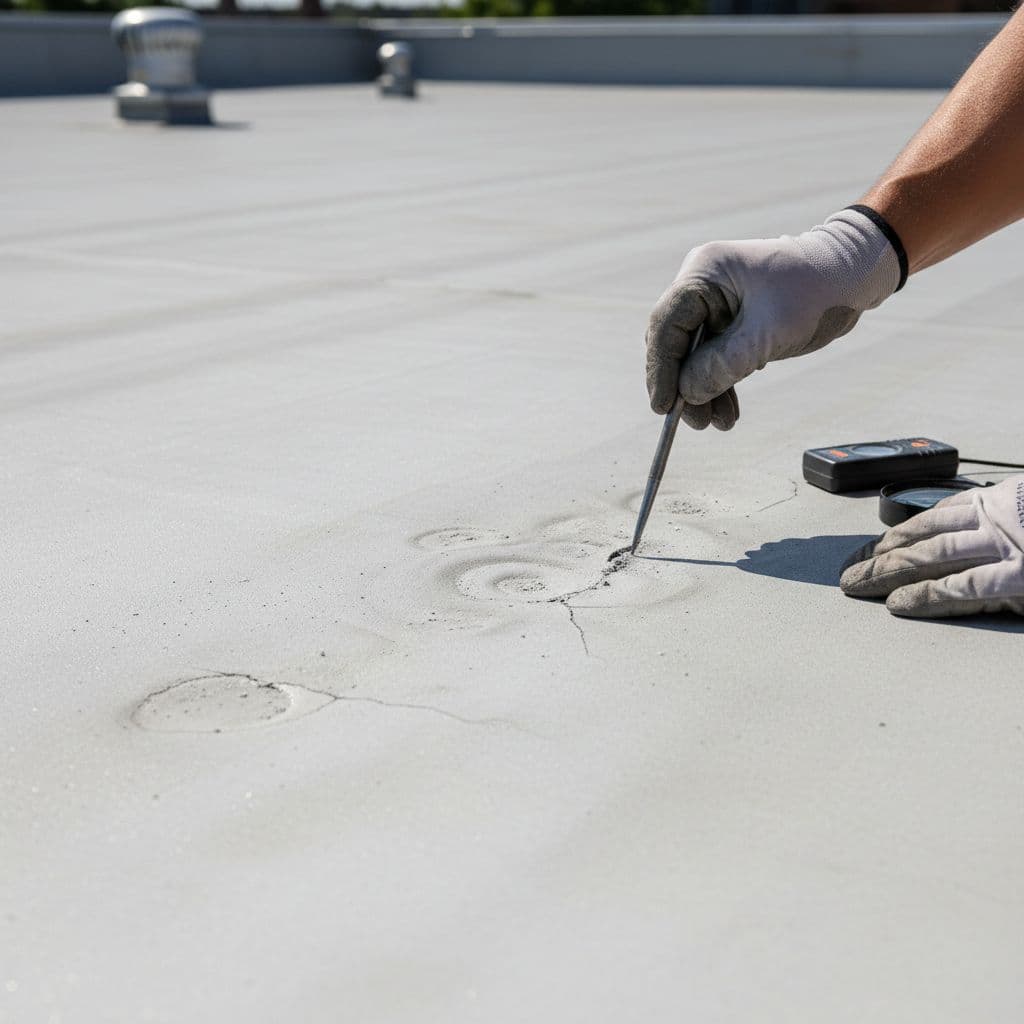
This is especially important when a commercial roof needs repair after a storm. If the damage is hidden, waiting for a gutter dent or siding mark can waste time.
When it does not apply
Sometimes the opposite happens. Strong wind can push hail or debris into the edge of the building, so the gutters, fascia, or siding show the most visible damage first. That does not rule out roof damage, but it changes the search pattern.
If the roof surface is steep, shaded, or partially shielded, the exterior walls may show more obvious impact than the roof field. Still, the roof should get checked whenever the storm was hard enough to dent metal, crack trim, or open seams.
If stains, soft spots, or a recurring drip show up inside, commercial roof leak detection can find the entry point before the damage spreads.
Step-by-Step
1. Inspect the roof surface before you compare the rest of the exterior
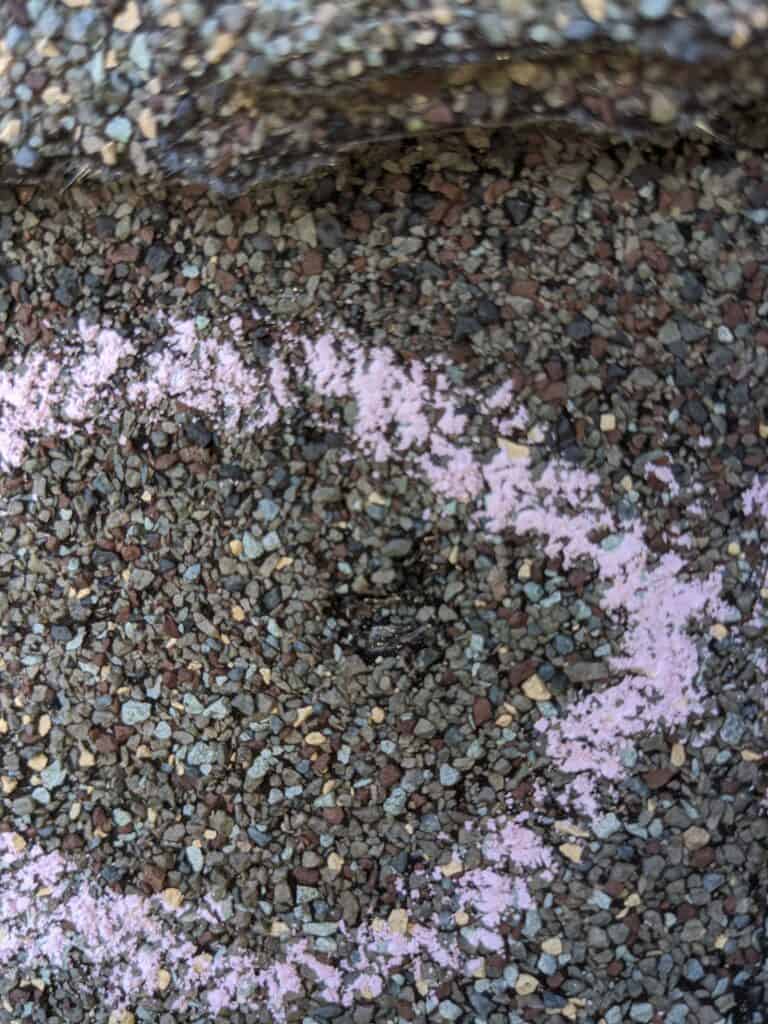
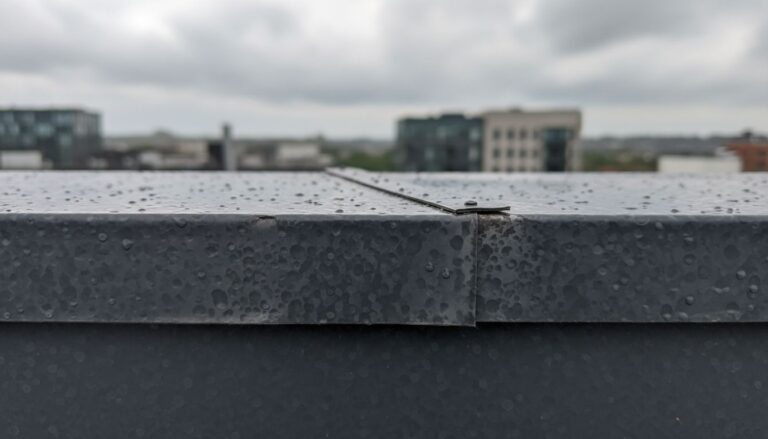
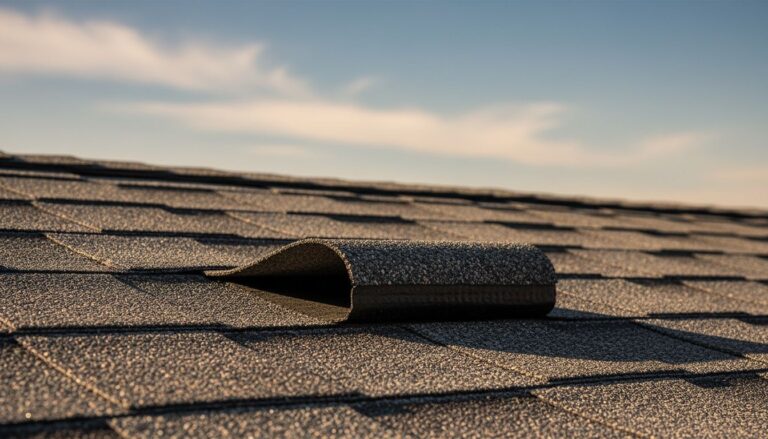
Start where the storm had the best access. Look at the membrane, seams, flashing, edge metal, drains, curbs, and rooftop units. On commercial roofs, hail damage often shows up as bruising, punctures, seam stress, or small splits that are easy to miss from the ground.
A local inspection from commercial roofing services in Saint Paul can separate fresh storm damage from old wear. That matters because old scuffs and weathering can look a lot like hail at first glance.
If the roof is metal, look for finish loss, dings, and opened joints. If it is TPO or EPDM, look for punctures, surface impact marks, and seam movement. If the roof needs commercial flat roof repair, the damaged area may be small, but the proof still needs to be clear.
2. Look inside for signs the roof took damage before the walls did
Interior clues often show up before exterior ones. Ceiling stains, damp insulation, musty odors, and wet wall lines can point back to a roof problem even when the gutters and siding look fine.
That is where the roof tells the real story. Water can travel far from the entry point, especially on a large commercial roof. A stain over one office bay may have started at a seam or puncture several feet away.
If you see that kind of pattern, photograph it right away. Then compare the inside evidence with the outside storm date, roof condition, and any recent weather reports. The goal is to connect the leak to the hail event, not to guess at it.
3. Compare roof damage with gutter and siding damage instead of waiting for one to prove the other
This is where many owners get tripped up. They assume the building must fail all at once, but hail rarely works that neatly. The roof can take direct impact while gutters stay useful and siding stays clean.
The hail damage myths guide explains that thinner exterior parts often show different damage patterns than the roof surface. That mismatch is normal, not suspicious.
So compare what each part of the building does. Gutters manage runoff. Siding resists side impacts. The roof keeps water out. When hail only harms one of those systems, the missing damage on the others does not cancel the first problem.
4. Decide whether the roof needs repair or replacement
A few isolated hits may call for commercial flat roof repair. A handful of punctures, a lifted seam, or a damaged flashing detail can often be fixed without touching the whole system.
Broader damage changes the math. If hail opened several seams, soaked insulation, or damaged a wide field of membrane, commercial roof replacement may be the safer long-term move. The same is true when repairs would leave the roof patched in too many places.
This choice should follow the evidence, not the hope that a smaller job will hold. The roof has to match the damage it took.
5. Document everything before temporary protection covers the proof
Take photos before crews patch, tarp, or dry-in the roof. Save the storm date, the roof maps, moisture readings, measurements, and every invoice tied to emergency work. Temporary protection is fine, and it often needs to start right away, but it should not erase the proof.
That record matters if the claim turns into a supplement later. It also helps if the adjuster says only part of the damage is covered and asks for more support. Clear notes keep the story straight.
When people share the job, make sure everyone knows who sends documents and who speaks for the claim. Mixed messages slow the file down.
Conclusion
The signal to trust
A hail storm does not need to damage gutters or siding to create a real roof problem. In fact, roof-only damage is common on commercial buildings because the roof takes direct impact in a different way.
The safest response is simple. Check the roof first, then compare the rest of the exterior, and keep proof before anything gets covered up. If the roof shows impact, seam issues, or indoor moisture, treat it as a roof problem first.
FAQ
Can hail damage a roof and leave gutters untouched?
Yes. That happens often. Roof surfaces are wide and exposed, while gutters can miss the main impact path or take only light strikes. A clean gutter line does not mean the roof escaped damage.
Does hail always dent siding if the roof was hit?
No. Siding and roofing materials take different angles and different levels of exposure. A storm can bruise or puncture a roof membrane without leaving a visible mark on the walls.
What are the first signs of hidden hail damage on a commercial roof?
Look for fresh impact marks, loose flashing, lifted seams, punctures, and soft or wet insulation. Interior stains and ceiling tile spots matter too, because they can show where water entered after the storm.
When should I call for leak detection after hail?
Call right away if you see a stain, drip, damp insulation, or a musty smell inside. It also makes sense after a hard storm when the roof looks questionable but the entry point is not obvious.
Can roof-only hail damage still lead to commercial roof replacement?
Yes, if the damage is widespread or the wet area extends beyond one repair zone. A small, isolated hit may only need a fix, but broad seam failure or saturated insulation can make replacement the better option.
Need a roof inspection in Saint Paul or the Twin Cities? Call Sellers Roofing Company at +1-651-703-2336 or schedule a free estimate. We are a black-owned, NMSDC-certified MBE roofing contractor with 9+ years experience.