Last updated: 2026-09-28 by Ted Sellers, Owner
A serious roof leak can make parts of a home difficult or unsafe to use, but hotel coverage depends on the cause of loss and the exact policy language. This guide separates the roof issue from the insurance question so homeowners can make better decisions.
Does Homeowners Insurance Cover Hotel Costs After a Roof Leak?
Homeowners insurance may cover hotel costs after a roof leak when a covered loss makes the home uninhabitable and the policy includes additional living expense coverage. Review the policy, document the damage, save receipts, and confirm the carrier’s instructions before booking extended lodging.
Yes. Hotel costs roof leak coverage can apply if wind, hail, or another covered event opens the roof and makes the home uninhabitable. Payment usually comes from loss-of-use, also called additional living expense coverage. A leak tied to aging materials, long-term seepage, or missed maintenance usually doesn’t qualify, even if you need another place to sleep.
A soaked ceiling isn’t the test. The insurer must connect your temporary move to a covered loss and determine whether staying home is unsafe or impractical during repairs.
Minnesota homeowners have two urgent jobs: limit the water and build a clean claim record. What happens in the first day can affect both the roof payment and temporary housing approval.
When This Applies
A covered event makes the home unsafe to occupy
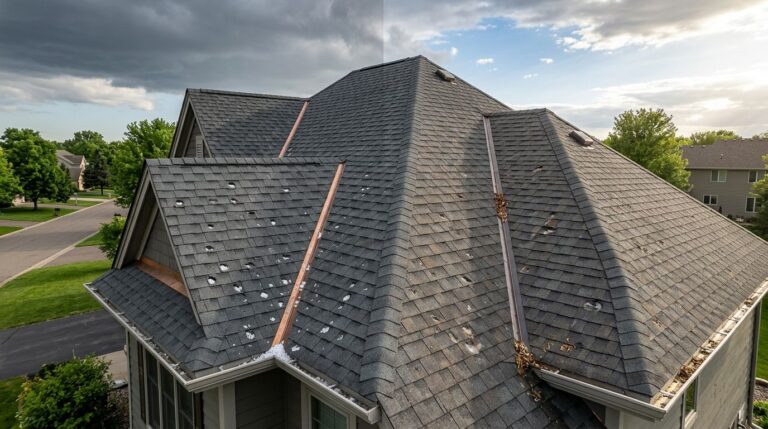
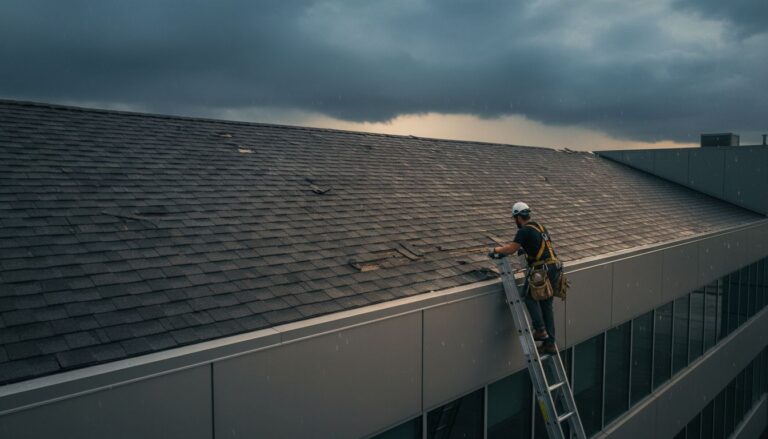
Homeowners insurance may pay hotel costs when a covered peril creates sudden roof damage and forces you out. Common examples include wind lifting shingles, hail puncturing a roof, a tree limb breaking through the deck, or wind-driven rain entering through a new opening.
Most policies place this protection under loss of use or additional living expenses, often called ALE. NAIC’s ALE guidance explains that the coverage is for necessary extra costs while a covered home is repaired.
The house must be more than inconvenient
A home does not need to be destroyed to be unlivable. Active water near electrical equipment, a collapsed ceiling, no usable bathroom, mold-contaminated rooms, or major construction can support a temporary move.
A bedroom leak alone may not justify a hotel for the whole household if the rest of the home remains safe. Ask the adjuster to explain the occupancy decision in writing.
The repair period controls the duration
Loss-of-use coverage usually lasts for the reasonable time needed to repair the covered damage or relocate. It is not an open-ended hotel budget. Your policy’s ALE limit, wording, and the carrier’s approved repair scope set the boundary.
When Hotel Costs Roof Leak Coverage Is Denied
Maintenance problems are not covered events
Insurance is built for sudden accidental damage, not an old roof reaching the end of its life. Worn asphalt shingles, rusted metal roofing, failed sealant, chronic ponding, and prior leaks can give the insurer a maintenance basis for denial.
A roof-leak coverage overview makes the same distinction: hail, wind, and falling debris can be covered causes, while age and normal wear usually are not.
An older roof can still have new covered storm damage. The claim turns on the cause of the current leak, not the roof’s birthday.
Ice dams need careful documentation
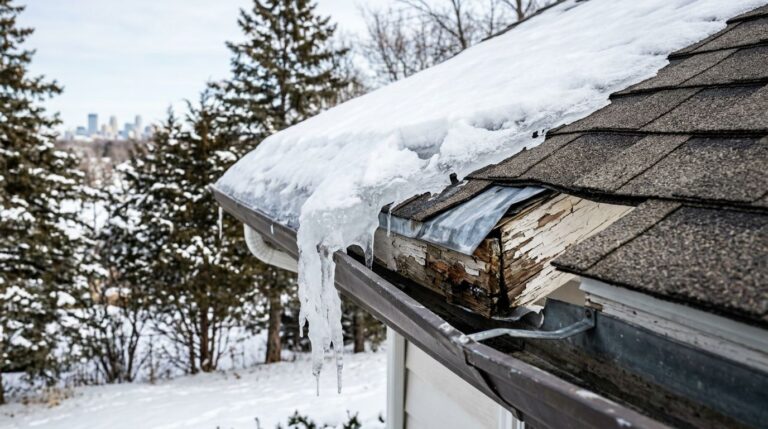
Ice dam removal can limit more interior damage, but it does not automatically create coverage. Photograph snow buildup, the ice ridge, interior staining, and the date water appeared. Minnesota policies handle ice-related water damage differently, so the policy language matters.
A hail-damaged roof or storm-damaged roof should be documented before permanent work hides the fresh impacts, torn shingles, broken flashing, or displaced vents.
Step-by-Step
Stop active water and preserve the condition
- Keep people away from sagging ceilings, wet electrical fixtures, and slippery attic access. If water is entering now, Call 651-703-2336 for 24/7 Emergency Roofing after dangerous weather has passed.
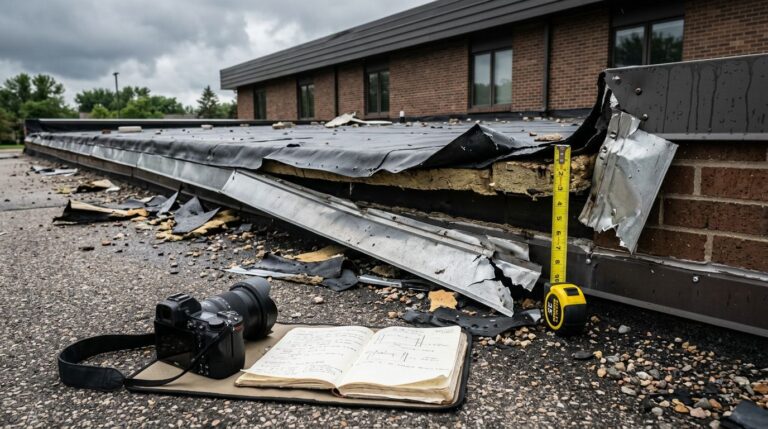
- Take wide and close photos of exterior damage, ceiling stains, wet flooring, damaged belongings, and temporary protection. Record the date, time, weather, and when the leak first appeared.
Open the claim with facts and receipts
- Report the roof insurance claim promptly. State the known facts, such as “wind displaced shingles and rain entered the attic,” rather than guessing at the full scope.
- Follow Minnesota Commerce’s residential claim instructions, including saving receipts, keeping a log of insurer contacts, and waiting for adjuster direction before broad repair work.
- Use tarping, temporary sealing, water extraction, and interior protection to prevent added damage. Avoid full tear-off, permanent patching, or discarding wet materials before the roof is photographed and inspected.
Track Extra Living Costs, Not Every Household Cost
Build a receipt file with a normal-cost baseline
Hotel costs roof leak claims need more than a stack of receipts. The carrier usually compares your temporary costs with what you normally spend at home.
Save hotel invoices, short-term rental agreements, parking, laundry, pet boarding, extra fuel, and restaurant receipts. Meals may be reimbursed only above your normal grocery expense. Examples of eligible ALE expenses often include lodging, food, transportation, and other necessary increases.
Ask how payment will be handled
Some carriers reimburse after receiving receipts. Others may issue an advance when the home is uninhabitable. Keep the claim number on every document and ask whether the hotel rate must be approved first.
The property deductible usually applies to the covered roof and interior damage claim. ALE often has no separate deductible, but policy terms control.
Get a Roof Finding Before a Big Repair Decision
A cause-based report protects the claim
A contractor report should state the likely cause, damaged roof components, moisture path, emergency work completed, and whether the damage is localized or widespread. An interior stain can sit far from the actual opening.
Ask the roofer to separate old wear from fresh storm damage. That distinction matters if the insurer finds an aged repair in one area but a new wind tear or hail strike elsewhere.
Repair and replacement are different decisions
Localized damage with dry decking and insulation may support residential roof repair. Broad damage, repeated failures, saturated materials, or a roof system that cannot be restored may support residential roof replacement.
For a written scope that matches the visible and hidden condition, review Minnesota roof leak insurance coverage before agreeing to a settlement. If your home needs work, Get a Free Residential Roof Estimate.
Minnesota Weather Changes the Evidence
Document what the weather did to the roof
A Minnesota roofing claim should identify the storm date, wind direction, hail reports, snow conditions, and visible damage. Freeze-thaw cycles can widen small openings and push water below shingles, flashing, and underlayment.
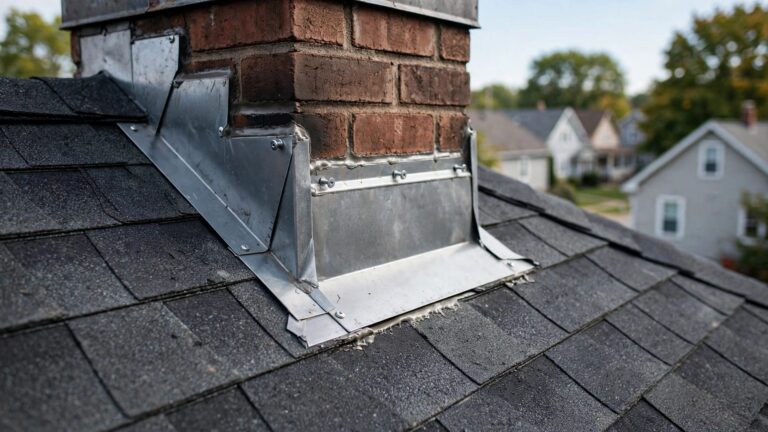
Saint Paul roofing crews see the same weather patterns as Minneapolis roofing crews and other Twin Cities roofing teams. That includes hail, heavy snow, wind-driven rain, and ice buildup around valleys, vents, chimneys, and low-slope additions.
Vet the contractor and the estimate
Minnesota law does not allow a roofing contractor to promise to pay or waive your insurance deductible. A legitimate contractor can document damage and prepare a scope, but the deductible remains the policyholder’s responsibility.
Ask for a written estimate, license verification, photos, and proof of credentials. Sellers Roofing Company provides union-built roofing through crews connected with IUPAT Local 96 Roofers and holds MN License 803862. A GAF certified contractor should still explain the cause of damage and the work proposed, line by line.
Commercial and Mixed-Use Roofs Need Different Claim Files
Hotel coverage is not the commercial standard
Owners of apartments, offices, retail buildings, and mixed-use properties may have business-income, rental-value, or loss-of-rents coverage instead of homeowner ALE. Property coverage pays for physical damage. Lost income requires its own policy coverage and proof of an actual financial loss.
Flat roofs require system-specific evidence
A commercial flat roof can leak far from the ceiling stain. TPO roofing, EPDM, modified bitumen, and BUR systems may fail at seams, flashings, drains, edge metal, or hidden insulation.
A commercial roof inspection should identify moisture spread before work begins. Commercial roof leak detection can help trace the water path when the source is unclear. Limited damage may support commercial roof repair, while widespread wet insulation can support commercial roof replacement.
Commercial roof restoration and commercial roof coatings can extend the life of a sound system. They do not correct saturated insulation, active leaks, or failed attachment. For a documented assessment, Get a Free Commercial Roof Inspection.
Final Takeaway
Prove the cause, the displacement, and the expense
A roof leak can lead to hotel reimbursement, but only after a covered event makes the home unlivable. The strongest file connects the storm damage, the temporary move, and every added cost with photos, reports, dates, and receipts.
Fast mitigation is smart. Permanent repairs should wait until the condition is documented well enough to support the claim.
Frequently Asked Questions
Will insurance pay for restaurant meals while we are in a hotel?
It may pay the added amount above your usual food budget. Save itemized receipts and keep a simple record of what you normally spend on groceries. Alcohol, entertainment, and unusually expensive meals may be excluded as nonessential costs.
Can I book a hotel before the adjuster approves it?
Yes, if the home is unsafe or clearly uninhabitable, but keep the lodging reasonable and notify the insurer right away. Ask whether the carrier has rate limits, preferred temporary housing vendors, or required documentation.
What if we can stay with family instead of a hotel?
You may still have extra costs, such as added fuel, laundry, storage, or meals. A relative’s free guest room does not automatically create a hotel payment, but documented necessary increases may be considered.
What deductible applies to hotel costs roof leak claims?
The deductible normally applies to the underlying covered property loss. Loss-of-use coverage often has no separate deductible. Check the declarations page and ask the adjuster how the deductible affects the roof, interior repairs, and ALE payment.
Can I finish the roof repair before the adjuster visits?
Stop active leaks with temporary dry-in work. Avoid broad permanent repairs unless the insurer directs or approves them, or safety requires immediate action. Early tear-off can remove the evidence needed to show whether the damage was fresh storm damage or old wear.
For the larger documentation and claim process, read our Minnesota roof storm damage and insurance claims guide.
Need a roof inspection in Saint Paul or the Twin Cities? Call Sellers Roofing Company at +1-651-703-2336 or schedule a free estimate. We are a black-owned, NMSDC-certified MBE roofing contractor with 9+ years experience.