Last updated: 2026-08-30 by Ted Sellers, Owner
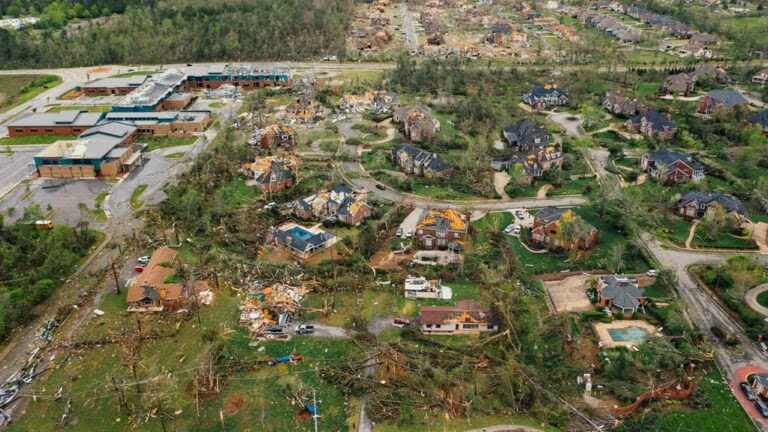
Homeowners insurance usually covers roof leaks from wind-driven rain in Minnesota (known as Minnesota roof leak insurance), but only when the damage is sudden and accidental, with wind, a covered peril, damaging the roof first and allowing wind-driven rain to enter through that new opening. In Minnesota, such coverage often pays for roof repairs, related interior water damage, and sometimes temporary living costs. It usually won’t pay for leaks caused by age, worn shingles, failed maintenance, or long-term seepage.
Key Takeaways
- Homeowners insurance covers Minnesota roof leaks from wind-driven rain only if wind creates a sudden opening as the covered peril; it excludes age, wear and tear, failed maintenance, or gradual seepage.
- Document storm damage thoroughly—tarp immediately, photograph roof and interior, check policy for deductibles, report quickly, get independent inspection, and keep records to support claims for roof repairs, interior water damage, and related costs.
- Older roofs face denial risks and depreciation under actual cash value; full replacement isn’t guaranteed, and keep homeowners claims separate from commercial or mixed-use properties with stricter rules.
- Act fast after storms to prevent mold and further damage; ice dams may qualify if sudden, but delays weaken proof that wind—not neglect—caused the leak.
When This Applies
Who this fits, and what makes the leak covered
This fits Minnesota homeowners with a standard owner-occupied policy that includes dwelling coverage after a recent windstorm. It does not fit most commercial buildings, many mixed-use properties, or leaks that appeared without any storm-created opening.
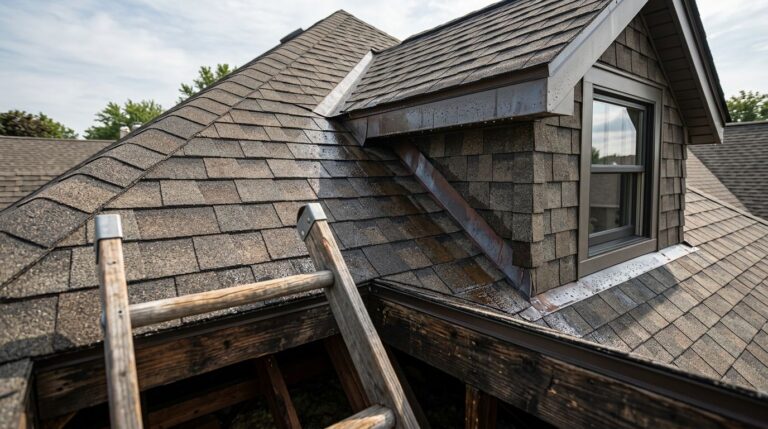
Think of rain as the passenger, not the driver. In most claims, the real issue is whether wind lifted shingles, bent flashing, or opened another part of the roof, causing roof damage. If that happened, the leak is often part of a covered loss.
That cause-and-effect test lines up with Experian’s summary of sudden versus gradual roof leaks. When the storm creates the opening, the dwelling coverage may pay for the roof, damaged ceilings, flooring, insulation, and personal items inside.
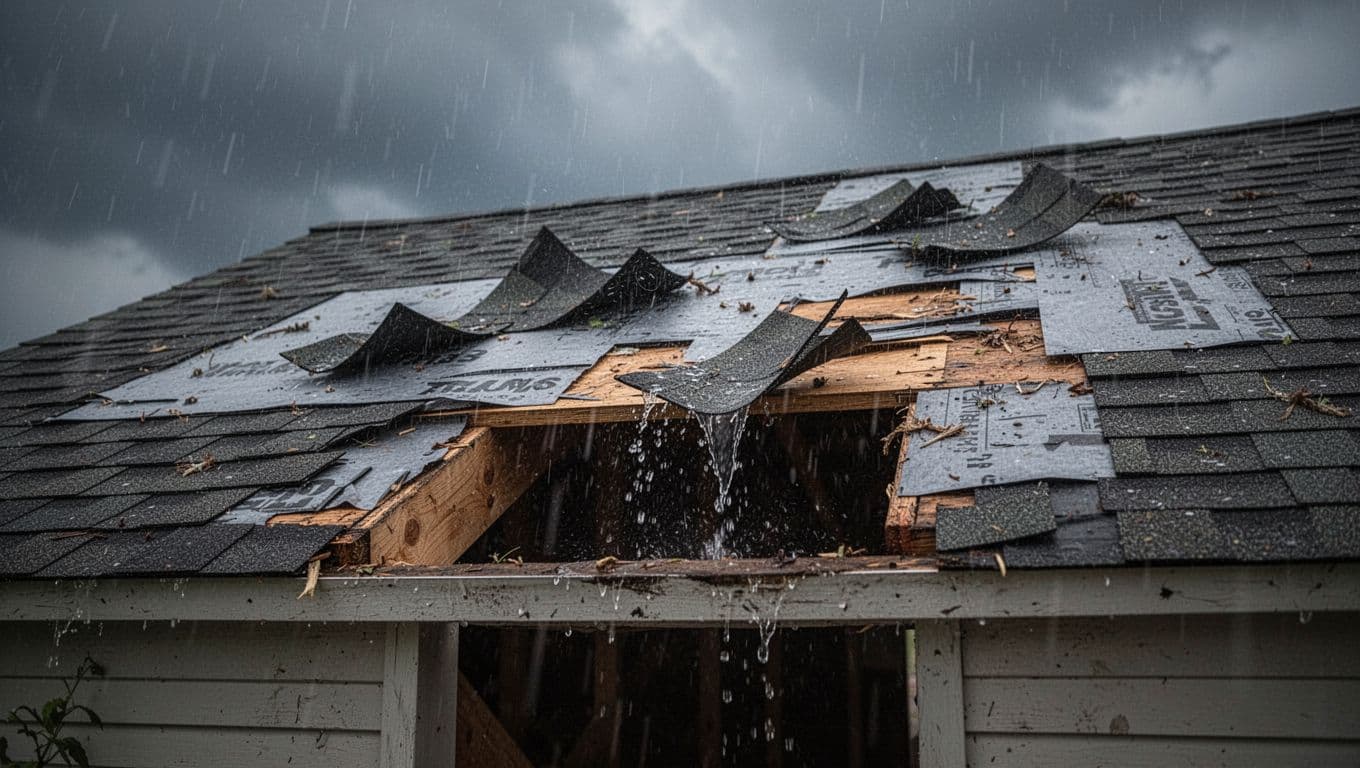
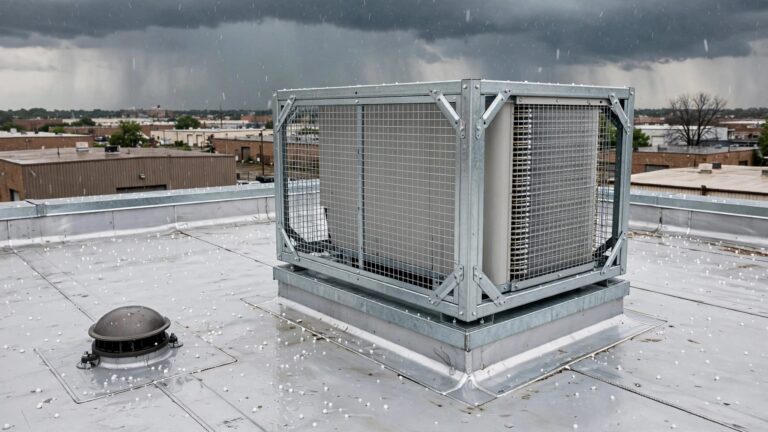
Minnesota weather makes this a common fight. Wind and hail, hard rain, and fast temperature swings can turn one lifted shingle into a soaked attic in a single night.
If wind didn’t create the opening, many insurers treat the leak as maintenance, not storm damage.
When insurers usually deny the claim
Claims often fail when the roof was already worn out. Curled shingles, rusted flashing, cracked sealant, and repeated past leaks all give the carrier a simple defense: the roof failed from wear and tear, not from the storm damage.
That’s why Minnesota roof leak insurance disputes often come down to timing and proof. A Minnesota-focused roof damage overview reaches the same bottom line, sudden storm damage may be covered, but neglect and normal wear and tear usually are not.
Your payout may still shrink on an older roof
Approval doesn’t always mean full replacement cost. With actual cash value coverage, the insurer subtracts depreciation for factors like roof age and condition. With replacement cost value coverage, the policy usually pays more after the deductible, once the work is completed. Insurers also distinguish cosmetic damage, which rarely qualifies for roof replacement, from functional roof damage caused by wind and hail events.
If you own a business, keep homeowners and commercial claims separate
Many owners wear two hats. You may own a house, a duplex, and a shop, but the policy rules are not the same.
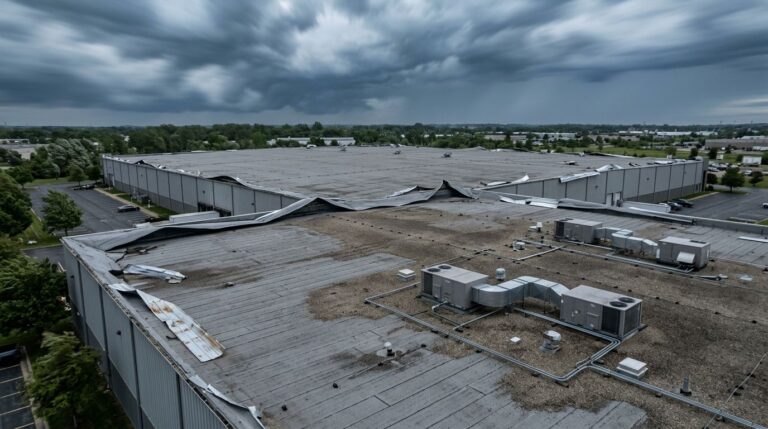
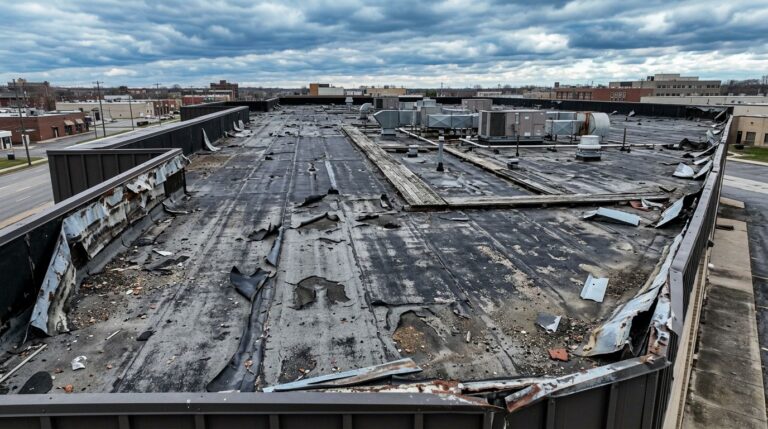
If a commercial roof needs repair, don’t assume your home claim experience applies. Commercial policies often carry separate wind and hail deductibles, stricter notice rules, and different water-damage limits. For building-specific help, Saint Paul commercial roofing experts can document storm damage and repair options.
On low-slope buildings, moisture travels. What starts as minor commercial flat roof repair can become a larger commercial roof replacement once wet insulation and hidden damage spread across the assembly.
Step-by-Step
Follow this step-by-step claims process after the storm
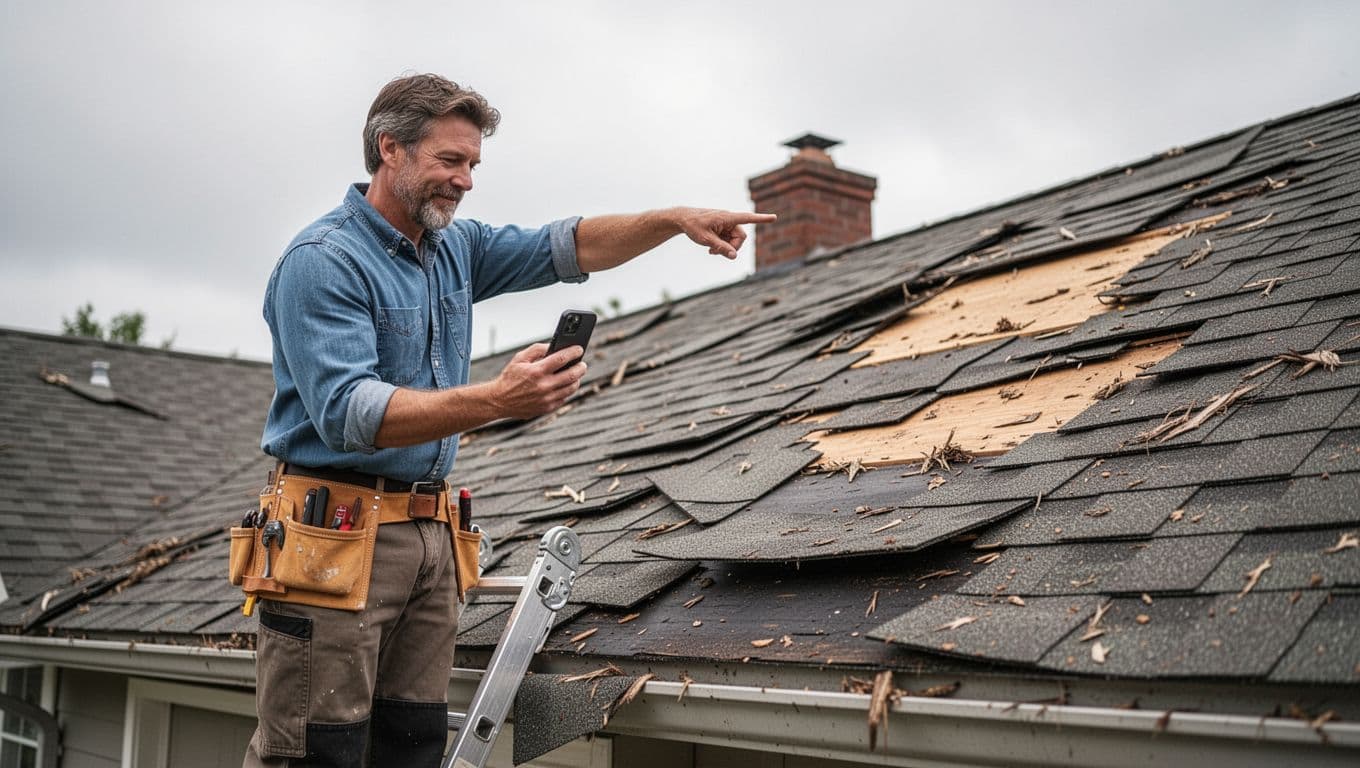
- Stop further damage first. Tarp the opening, move valuables, and dry wet areas. Most policies require you to prevent extra damage after the storm to support your insurance claim.
- Photograph the roof and the interior to document damage. Take wide shots, close-ups, and photos of soaked insulation, stained ceilings, and damaged contents. If nearby homes lost shingles too, note that as storm context.
- Pull your policy before you call. Check whether the form limits coverage to named perils, whether you have actual cash value or replacement cost coverage, and whether there’s a separate wind or hail deductible, as Minnesota policies often have a percentage deductible for wind events. Some recent renewals tightened roof terms in Minnesota, so don’t assume last year’s policy still applies. U.S. News’ roof damage guide gives a clear overview of how those terms affect payout.
- Report the insurance claim quickly. Give the carrier the storm date, what you saw, and what you did to limit damage. State facts, not guesses.
- Get an independent roof inspection. A contractor can document lifted shingles, bent flashing, and fresh storm damage before temporary repairs hide the evidence. If the property is commercial rather than residential, start with commercial roof leak detection Saint Paul so the file includes moisture mapping and leak-source proof.
- Meet the insurance adjuster with your photos and receipts. Walk through every damaged area, checking for interior damage including insulation and interior finishes while ensuring adherence to policy limits. If the scope misses items, ask the insurance adjuster for a written revision.
- Keep every invoice and email. Final claim disputes often come down to timing and proof, and good records make the file much stronger.
FAQ After a Minnesota Wind-Driven Rain Claim
Does insurance cover ceiling stains and wet flooring too?
Usually yes, if wind damaged the roof first and rain entered through that opening. The inside damage is often covered with the roof work, subject to your policy limits.
What if the roof was old but the storm made it leak?
Age doesn’t always kill the claim, but it makes the fight harder. If the storm clearly caused fresh damage, coverage may still apply.
Why older roofs are tougher to claim
Older materials give the insurer room to argue that wear, not wind, caused the failure. This contrasts with clearer cases like fire damage or falling objects, where causation is easier to prove. Even with approval, depreciation may cut the payment.
Does insurance cover roof leaks from ice dams?
Ice dams cause many roof leaks in Minnesota winters and are typically covered if the weight of ice or snow creates sudden damage. Unlike gradual deterioration, this peril requires proof that a specific storm event triggered the ice dam formation.
Can I wait a few weeks before filing?
That’s risky. Delay makes it harder to prove the storm caused the leak, and it gives the carrier a chance to blame later damage on your failure to protect the property.
Does homeowners insurance pay for mold after a roof leak?
Sometimes, but only when the mold came from a covered loss and you acted fast to dry the area. If mold grew because the leak sat for weeks, that part may be denied.
Fast cleanup matters
Save drying invoices, fan rentals, and mitigation photos. Those records help show you tried to stop the damage from spreading.
What if I own a mixed-use building with a shop below and an apartment above?
Don’t assume it’s a homeowners claim. Mixed-use property often falls under landlord or commercial coverage, even if you live in part of the building. The policy form matters more than the mailing address.
Will the insurer pay for a full roof replacement from one leak?
Not always. If the damage is isolated and repair can restore the roof, the carrier may only pay for the damaged section. Full replacement is more likely when matching issues, code rules, or widespread wind damage make partial repair unrealistic. Upgrading to impact-resistant materials can mitigate future risk and may help lower your deductible.
The main test is simple: did wind open the roof, or did water find an old weakness? That single fact drives most Minnesota roof leak insurance decisions.
Act fast, document everything, and keep home claims separate from business-property claims. When the proof is clear for storm damage and potential roof replacement, the outcome usually is too.
{“@context”:”https://schema.org”,”@type”:”BlogPosting”,”@id”:”https://roofingexpertsstpaul.com/minnesota-roof-leak-insurance/#article”,”mainEntityOfPage”:{“@type”:”WebPage”,”@id”:”https://roofingexpertsstpaul.com/minnesota-roof-leak-insurance/”},”headline”:”Does Homeowners Insurance Cover Roof Leaks From Wind-Driven Rain in Minnesota?”,”description”:”Homeowners insurance usually covers roof leaks from wind-driven rain in Minnesota (known as Minnesota roof leak insurance), but only when the damage is sudden and accidental, with wind, a covered peril, damaging the roof first and allowing wind-driven rain to enter through that new opening. In Minne”,”datePublished”:”2026-04-11T03:20:53″,”dateModified”:”2026-04-11T03:20:56″,”author”:{“@type”:”Organization”,”name”:”Sellers Roofing Company”,”url”:”https://roofingexpertsstpaul.com”},”publisher”:{“@type”:”Organization”,”name”:”Sellers Roofing Company”,”url”:”https://roofingexpertsstpaul.com”,”logo”:{“@type”:”ImageObject”,”url”:”https://roofingexpertsstpaul.com/wp-content/uploads/2025/05/sellers-roofing-logo.png”}},”url”:”https://roofingexpertsstpaul.com/minnesota-roof-leak-insurance/”,”inLanguage”:”en-US”,”about”:{“@type”:”Thing”,”name”:”Roofing, Hail Damage, Storm Repair, Insurance Claims”},”isPartOf”:{“@type”:”Blog”,”@id”:”https://roofingexpertsstpaul.com/blog/”}} {“@context”:”https://schema.org”,”@type”:”WebPage”,”url”:”https://roofingexpertsstpaul.com/minnesota-roof-leak-insurance/”,”speakable”:{“@type”:”SpeakableSpecification”,”cssSelector”:[“h1″,”h2″,”.speakable”]}} {“@context”:”https://schema.org”,”@type”:”FAQPage”,”mainEntity”:[{“@type”:”Question”,”name”:”Does insurance cover ceiling stains and wet flooring too?”,”acceptedAnswer”:{“@type”:”Answer”,”text”:”Usually yes, if wind damaged the roof first and rain entered through that opening. The inside damage is often covered with the roof work, subject to your policy limits.”}},{“@type”:”Question”,”name”:”What if the roof was old but the storm made it leak?”,”acceptedAnswer”:{“@type”:”Answer”,”text”:”Age doesn’t always kill the claim, but it makes the fight harder. If the storm clearly caused fresh damage, coverage may still apply.”}},{“@type”:”Question”,”name”:”Does insurance cover roof leaks from ice dams?”,”acceptedAnswer”:{“@type”:”Answer”,”text”:”Ice dams cause many roof leaks in Minnesota winters and are typically covered if the weight of ice or snow creates sudden damage. Unlike gradual deterioration, this peril requires proof that a specific storm event triggered the ice dam formation.”}},{“@type”:”Question”,”name”:”Can I wait a few weeks before filing?”,”acceptedAnswer”:{“@type”:”Answer”,”text”:”That’s risky. Delay makes it harder to prove the storm caused the leak, and it gives the carrier a chance to blame later damage on your failure to protect the property.”}},{“@type”:”Question”,”name”:”Does homeowners insurance pay for mold after a roof leak?”,”acceptedAnswer”:{“@type”:”Answer”,”text”:”Sometimes, but only when the mold came from a covered loss and you acted fast to dry the area. If mold grew because the leak sat for weeks, that part may be denied.”}},{“@type”:”Question”,”name”:”What if I own a mixed-use building with a shop below and an apartment above?”,”acceptedAnswer”:{“@type”:”Answer”,”text”:”Don’t assume it’s a homeowners claim. Mixed-use property often falls under landlord or commercial coverage, even if you live in part of the building. The policy form matters more than the mailing address.”}},{“@type”:”Question”,”name”:”Will the insurer pay for a full roof replacement from one leak?”,”acceptedAnswer”:{“@type”:”Answer”,”text”:”Not always. If the damage is isolated and repair can restore the roof, the carrier may only pay for the damaged section. Full replacement is more likely when matching issues, code rules, or widespread wind damage make partial repair unrealistic. Upgrading to impact-resistant materials can mitigate future risk and may help lower your deductible. The main test is simple: did wind open the roof, or did water find an old weakness? That single fact drives most Minnesota roof leak insurance decisions. Act fast, document everything, and keep home claims separate from business-property claims. When the proof is clear for storm damage and potential roof replacement, the outcome usually is too.”}}]}Need a roof inspection in Saint Paul or the Twin Cities? Call Sellers Roofing Company at +1-651-703-2336 or schedule a free estimate. We are a black-owned, NMSDC-certified MBE roofing contractor with 9+ years experience.