Last updated: 2026-08-01 by Ted Sellers, Owner
Yes. Ice dams can bend gutters, pull fasteners from fascia, split wood trim, and loosen roof-edge flashing before water ever reaches the interior of your home. This type of structural damage often occurs when melting snow refreezes at cold roof eaves, building a heavy ridge of ice that traps additional water and exerts constant, destructive force on the entire gutter line. Because ice dams create significant weight and pressure, you should inspect your roof perimeter for signs of stress even if you have not yet spotted a ceiling leak.
Key Takeaways
What to watch for
- Ice dam gutter damage often appears first as sagging gutters, separated seams, loose hangers, or cracked fascia paint.
- An absence of water damage on your interior ceiling does not mean the roof edge is safe, as water can be backing up under asphalt shingles or metal roofing without immediate visible signs.
- Utilizing a roof rake to remove melting snow from the eaves is an essential step to prevent the formation of ice dams before they start.
- A roof edge problem may involve poor attic insulation, attic air leaks, compromised flashing, or improper gutter attachment.
- Ground-level snow removal and professional steam-based ice dam removal are significantly safer than chopping ice with manual tools.
- Document fresh damage before permanent repairs are made if you suspect a storm damage roof or roof insurance claim may be involved.
When This Applies
Cold roof edges carry the highest risk
This problem fits homes with pitched roofs, deep eaves, gutters, and the repeated freeze-thaw cycle typical of Minnesota weather. Saint Paul, Minneapolis, Roseville, Maplewood, Shoreview, New Brighton, and other Twin Cities communities see this pattern every winter.
Melting snow occurs higher on the roof where heat loss escapes from the house. That water runs down to the colder overhang and freezes. The ice grows outward, upward, and behind the gutter. Ice damming does not need to cause an interior leak before it starts damaging the roof edge.
Older homes are common candidates, especially where attic insulation is thin, R-value materials are inadequate, or bathroom fans dump moist air into the attic. Homes with poor roof ventilation, complex valleys, dormers, skylights, chimney areas, and large north-facing roof sections also hold snow longer.
Heavy snow makes the load worse. A gutter is built to carry rainwater, not a solid bar of ice attached to the eave.
When it is not a classic ice dam
A leaking gutter may come from bad slope, loose hangers, clogged gutters, or age-related corrosion without any ice buildup. Wind can also bend edge metal and pull fascia boards loose. Blocked downspouts can also create water backup issues that mimic ice damage.
A low-slope commercial roof has different failure points. Ice can block drains, scuppers, and downspouts, but it usually does not form the same eave dam found under shingles. A commercial flat roof needs a system-specific review of drainage, seams, insulation, and perimeter metal.
How Ice Dam Gutter Damage Starts
Weight, expansion, and trapped water
An ice dam works like a frozen curb at the roof edge. Meltwater cannot drain into the gutter, so it creates a significant water backup that ponds behind the ice. This trapped water can work beneath your roof shingles, underlayment, flashing, and roof-edge metal, though a properly installed ice and water shield often serves as the final line of defense against interior leaks.
At the same time, the ice gets heavier with every thaw and refreeze. Gutters twist under that load. Hangers pull away, and fascia fasteners loosen. Painted wood starts to crack where the metal edge moves against it, leading to moisture buildup within the roof-edge assembly.
Ice also expands inside seams and joints. A small opening in a gutter end cap can turn into a split section after several freeze cycles. Aluminum gutters may crease, and steel gutters can rust where protective coatings break.
A gutter that sags during winter is not a cosmetic issue. It may be pulling on the fascia and roof-edge assembly behind it.
Gutters are often the first visible failure
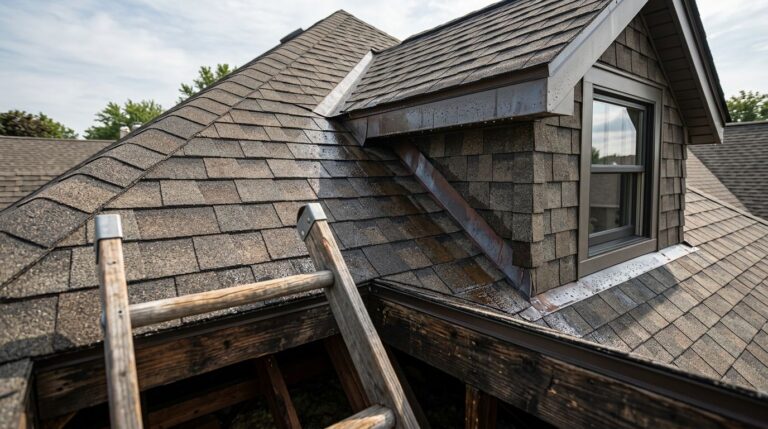
Look from the ground after a thaw to identify signs of ice dam gutter damage. Warning signs include a gutter that no longer runs straight, icicles forming behind the gutter, a visible gap between fascia and gutter, or water dripping from the soffit.
Other clues are less obvious. Stained siding, peeling paint below the eave, loose drip edge, and dark roof decking visible at the overhang can mean water has already reached the assembly.
You may notice stained ceilings much later. Water can travel along decking, framing, insulation, and wall cavities before it finds a place to drip. The first visible stain is often the end of the water path, not the source.
Why metal roofing can still have ice trouble
Metal roofing sheds snow faster than asphalt shingles in many conditions. That does not remove the risk. Snow can slide, pack at snow guards, refreeze at cold eaves, and overload gutters.
Snow guards must be planned for the roof system and attachment method. Randomly adding hardware or drilling through metal panels can create a new leak path.
Step-by-Step: What to Do Before the Thaw
Reduce the load and protect the evidence
- Check the roof edge from the ground. Look for sagging gutters, separated fascia, ice behind the gutter, and water marks on siding. Do not climb onto a snowy roof or stand beneath falling ice.
- Remove loose snow with a roof rake if conditions are safe. Work from the ground and pull melting snow down in thin layers. Keep the roof rake blade off shingles, flashing, and gutters. Do not pry on ice or use an axe, hammer, or sharp shovel.
- Use professional ice dam removal for thick ice. Steam removal breaks the ice without beating up the roofing surface. If water is entering now, Call 651-703-2336 for 24/7 Emergency Roofing for temporary protection and safe roof access. Hiring a professional ice dam removal service is the safest way to clear stubborn buildup without causing further structural issues.
- Photograph damage before permanent work starts. Take wide photos of the roof edge and close photos of loose hangers, cracked fascia, bent gutters, interior stains, and ice buildup to document potential water damage. Include the date and keep invoices for emergency work.
- Have the cause checked after the ice is gone. A Get a Free Residential Roof Estimate appointment can separate a gutter-only repair from damaged shingles, flashing, decking, or ventilation issues. Once the area is dry, you may also want to discuss whether installing heating cables is a viable long-term preventative measure for your home.
Do not seal over wet wood and call it finished. Fascia that has stayed wet can rot behind the gutter where the damage is hard to see. The repair needs to address the water path, not only cover the visible split.
Flat Roofs, Mixed Roofs, and Commercial Properties
Ice at the edge can expose larger roof failures
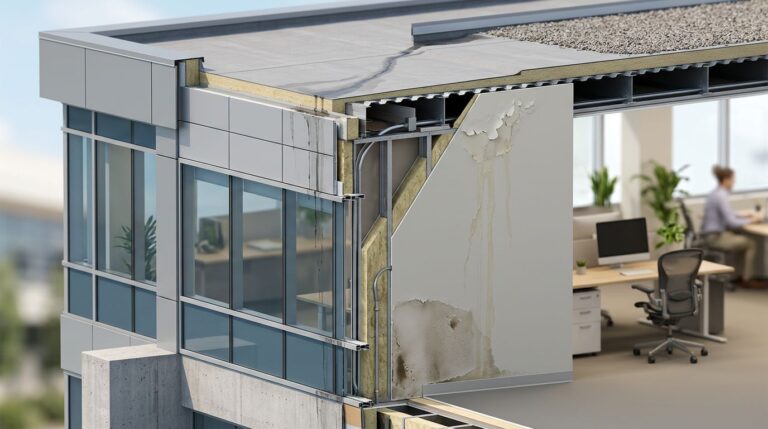
Commercial buildings often feature a combination of steep-slope entrances, mansard sections, rooftop mechanical areas, and low-slope roof zones. While an ice issue might originate at a guttered slope, it frequently connects to broader drainage or flashing problems.
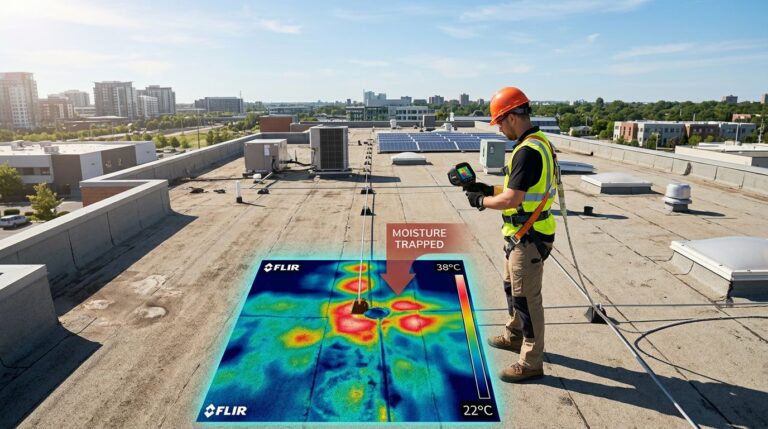
A commercial flat roof surfaced in TPO roofing, EPDM, modified bitumen, or BUR does not typically fail through shingle backup. Instead, it fails when ice blocks downspouts or internal drains, leading to trapped ponding water at seams, split flashing, or displaced perimeter metal. Because commercial structures often span massive surface areas, this type of moisture buildup can result in water damage that is far more extensive than that found on residential properties.
A proper commercial roof inspection checks the entire drain path, edge details, membrane laps, wall transitions, and the condition of the insulation. In many cases, water backup allows liquid to travel under a membrane for several feet before it eventually appears inside the building.
Localized damage may support commercial roof repair. However, widespread wet insulation, recurring seam failures, or failed attachment across connected sections can push the required scope toward commercial roof replacement.
Coatings are not an ice-dam repair
Commercial roof restoration and commercial roof coatings can extend the life of a suitable low-slope system, but they do not correct blocked drainage, loose metal, wet insulation, or a failed gutter line.
If the source of the leak is unclear, commercial roof leak detection can accurately trace the entry point before a crew covers the evidence with a broad patch.
Document Damage Before Calling It Maintenance
Ice damage and storm damage can overlap
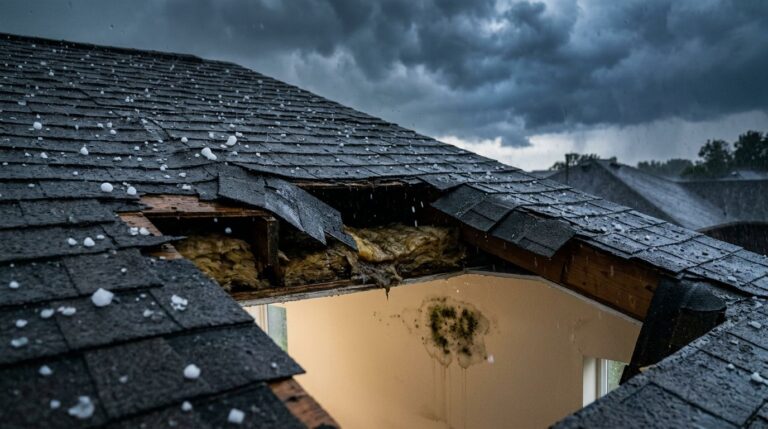
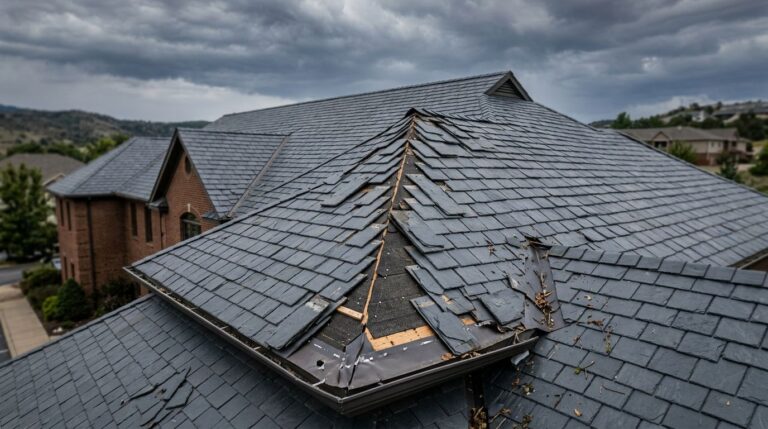
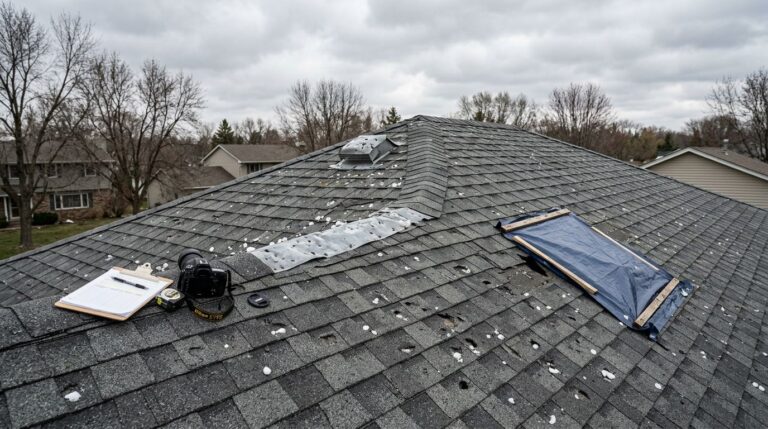
A roof may have old wear and fresh damage at the same time. Hail can dent edge metal, and wind can loosen a gutter. Ice can then pull on a weakened section until it separates from the fascia.
That matters on a hail damage roof or storm damage roof claim. When filing a claim with your homeowners insurance, coverage often turns on the cause of the loss. An insurer may view long term rot, neglected gutter cleaning, or old failed sealant as maintenance, whereas sudden ice damming events are typically treated differently under your dwelling coverage. Because insurance companies often scrutinize your attic air leaks and roof ventilation during inspections, documenting the specific cause is vital.
Keep photos from before and after the event when possible. Save weather dates, tenant reports, repair history, and contractor notes. Temporary mitigation helps protect the building, but broad permanent repairs before an inspection can make the origin harder to prove.
For Minnesota roofing work, contractor qualifications also matter. Sellers Roofing Company is a Saint Paul roofing contractor with union-built roofing crews, including IUPAT Local 96 members, and MN License 803862. GAF certified installation standards matter when roof-edge repairs connect to a larger residential roof repair or residential roof replacement scope.
Minneapolis roofing and Twin Cities roofing projects often need a combined approach: remove the ice safely, repair the damaged edge, then correct the attic heat loss or drainage condition that fed the dam.
Conclusion
Protect the roof edge before the ceiling leaks
Ice dams can damage gutters and fascia long before a wet ceiling makes the problem obvious. Sagging metal, cracked trim, loose hangers, and ice behind the gutter are early warnings that deserve immediate attention to prevent costly structural issues.
The most effective repair starts with safe ice removal, clear documentation of the site conditions, and a thorough inspection to determine the root cause. Addressing ice dam gutter damage is significantly easier and more affordable before trapped water migrates into the roof deck, insulation, or results in stained ceilings and ruined interior finishes. By taking proactive steps, you can secure your home against the long-term impact of ice dams and keep your exterior systems functioning through the winter.
FAQs
Can an ice dam pull a gutter completely off the house?
Yes. Thick ice can overload gutter hangers and pull fasteners from the fascia board. If the fascia is already softened by moisture or rot, the gutter may detach along with part of the wood trim.
Will gutter guards prevent ice dams?
Not reliably. Gutter guards are effective at keeping debris out of your system, but they do not stop roof meltwater from freezing at the eave. If ice does build up, it can block your downspouts, preventing proper drainage. Additionally, some guards can make winter cleaning and inspection more difficult.
Should I use salt or calcium chloride on an ice dam?
Avoid rock salt because it can damage roofing, gutters, plants, and siding. Calcium chloride products are sometimes used in fabric tubes to create limited melt channels for ice damming, but professional steam removal is safer for thick, roof-wide ice. For long-term management, some homeowners choose to install heating cables along the roof edge to prevent buildup before it starts.
Can ice-damaged fascia be repaired without replacing the roof?
Often, yes. If shingles, flashing, and roof decking remain sound, a contractor may replace the fascia, drip edge, gutter sections, and damaged hangers. Hidden rot or widespread water backup can expand the scope of the repair.
Does homeowners insurance cover ice dam damage?
It depends on the policy and the specific cause of the damage. Sudden interior water damage may be covered by your dwelling coverage in some cases, while long-term deterioration, poor maintenance, and repeated leakage may be excluded. Clear photos and prompt mitigation are essential to strengthen a homeowners insurance claim.
Need a roof inspection in Saint Paul or the Twin Cities? Call Sellers Roofing Company at +1-651-703-2336 or schedule a free estimate. We are a black-owned, NMSDC-certified MBE roofing contractor with 9+ years experience.