Last updated: 2026-11-14 by Ted Sellers, Owner
Yes, steam removal can damage shingles or flashing if the operator uses excessive pressure, forces ice loose, or directs heat beneath roofing laps. Controlled, low-pressure wet steam normally removes bonded ice without harming sound roofing because it avoids striking and scraping. Brittle shingles, loose flashing, and existing leaks still require careful handling and inspection.
What Actually Causes Ice Dams on Shingle Roofs in Harsh Winter Climates
When this applies
This guidance applies to bonded ice at eaves, valleys, gutters, and roof transitions, especially where water backs beneath asphalt shingles. It also applies to property owners comparing steam equipment with heated pressure washers.
However, clearing the blockage doesn’t repair an existing roof defect. Water can continue entering through failed flashing, cracked shingles, or damaged underlayment after the blockage disappears.
A commercial flat roof needs a different assessment because snow can conceal drains, membrane seams, and saturated insulation.
How heat loss creates the blockage
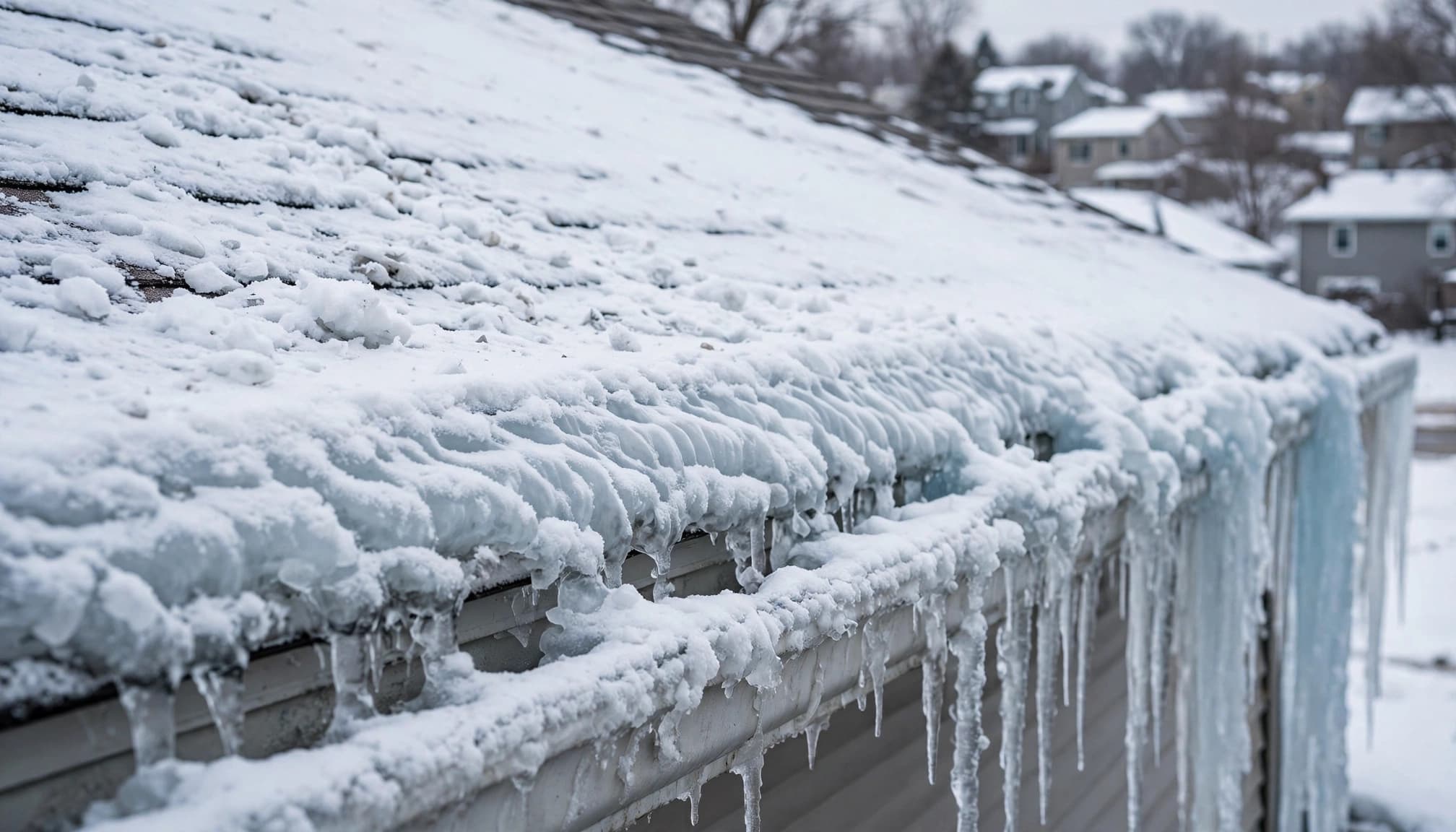
Indoor heat escaping through ceiling penetrations warms the roof deck. Snow melts above the heated space, then refreezes over the colder overhang. Additional runoff collects behind that ridge.
Heavy snowfall, prolonged cold, and freeze-thaw cycles increase exposure, but extreme cold isn’t required. The necessary combination is snow, a warm roof area, and a colder drainage edge.
Contractor Steve Kuhl describes conditions involving nights around 5°F to 20°F and days around 20°F to 30°F. Dams can develop within a week; an intensive removal season may last a week to a month, depending on weather.
The University of Minnesota’s ice dam guidance explains why ceiling air sealing should precede additional insulation.
How to Inspect and Document the Damage (Field Checklist)
What the contractor should examine
Start indoors and at ground level. Roof-level inspection comes after the crew establishes safe access and exposes the affected covering.
- Photograph interior stains, wet insulation, roof leaks, and the corresponding exterior roof area before removal.
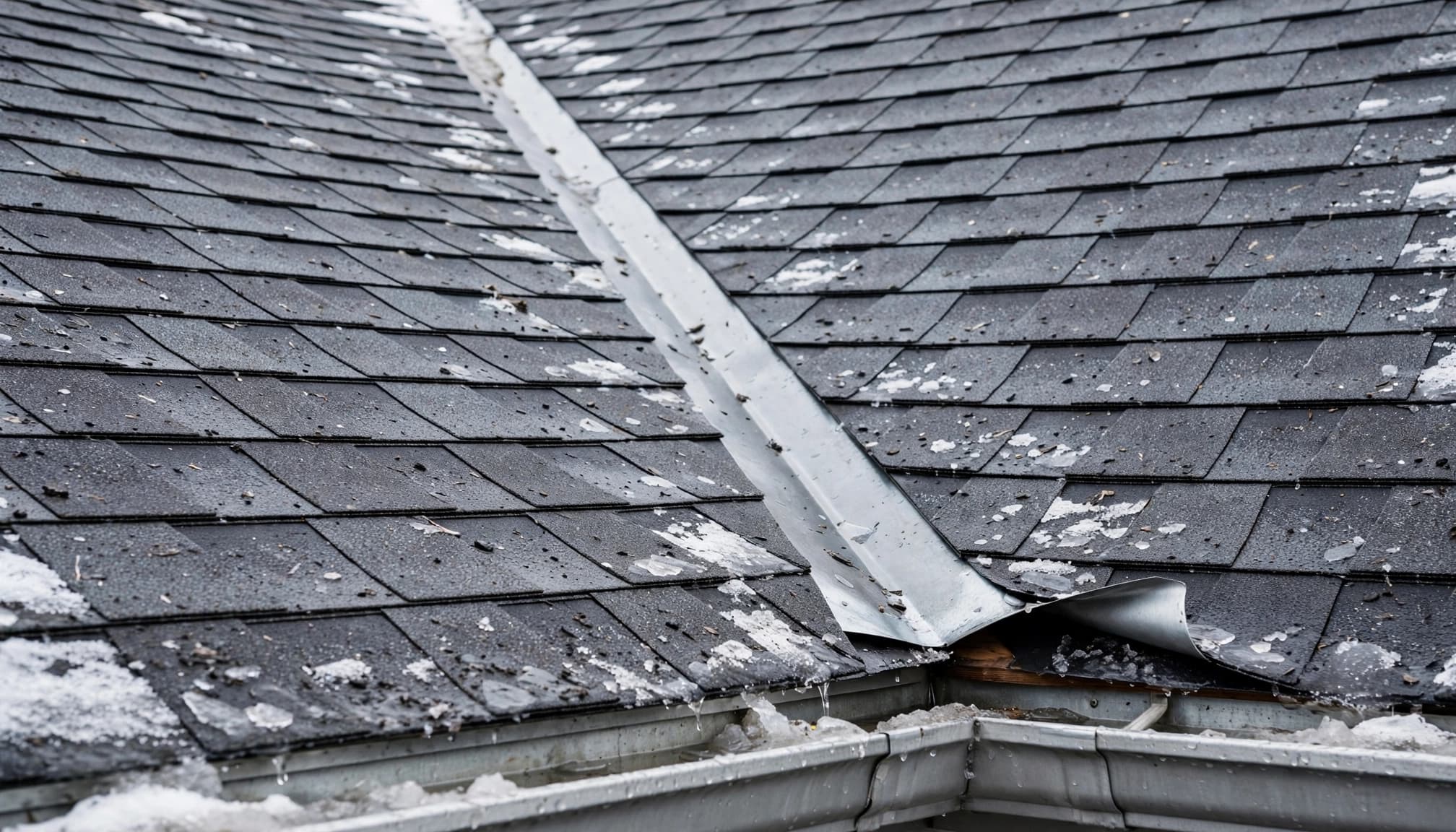
- Examine gutters, fascia, drip edge, and flashing separation along the eave.
- Trace the valley condition uphill, including trapped debris and displaced shingles.
- Record the granule loss pattern, cracked tabs, and exposed asphalt. Broad abrasion differs from isolated impact marks.
- Inspect pipe boot cracking, chimney transitions, skylight curbs, and wall flashing.
- Assess deck deflection and soft sheathing without walking onto an unstable area.
A sagging ceiling, sudden roof deformation, or cracking sounds require immediate isolation of the affected space. Keep people away and arrange emergency assessment.
How to distinguish existing damage from removal damage
Before-and-after photographs establish whether shingles were already lifted or flashing had already separated. Record the same roof details at both stages.
Fresh scuffing along tool paths, torn tabs, or newly bent flashing require explanation. However, melting ice can also expose deterioration that was previously hidden.
Color differences alone don’t prove damage. The inspection should identify physical changes, moisture, and the actual water path.
Repair vs. Replace: The Decision Framework
When localized repair makes sense
The blockage itself doesn’t automatically justify residential roof replacement. If surrounding materials remain serviceable, residential roof repair can address a failed flashing detail, several damaged shingles, or a limited section of sheathing.
A contractor should inspect the roof before recommending replacement. The decision depends on documented condition, not the size of the icicles.
These factors separate a targeted repair from a broader replacement scope.
| Factor | Targeted repair | Full replacement |
|---|---|---|
| Cost basis | Steam removal plus exposed repair work | Entire roof assembly scope |
| Remaining service life | Surrounding roof remains serviceable | Widespread aging or failure limits repair value |
| Hidden moisture | Localized wet materials can be removed | Moisture affects extensive decking or insulation |
| Material compatibility | Matching, compatible repairs are practical | Brittle or incompatible materials prevent durable patching |
| Policy coverage implications | Documents direct damage and mitigation | Requires evidence supporting replacement scope |
The governing issue is whether the remaining assembly can support a durable repair.
When replacement deserves consideration
Replacement becomes more reasonable when inspection finds widespread brittle shingles, repeated leaks across separate areas, or extensive deteriorated decking.
For commercial roofs, moisture testing helps distinguish localized commercial roof repair from commercial roof replacement. Commercial roof restoration and coatings cannot correct trapped wet insulation.
If ice removal exposes damaged roofing, Get a Free Residential Roof Estimate for a written repair or replacement scope.
Material Specs That Matter for This Repair or Replacement
Shingles and membranes require different treatment
GAF Timberline HDZ, CertainTeed Landmark, and Malarkey Legacy are architectural-shingle options. Legacy carries a Class 4 impact-resistance rating, but that rating doesn’t establish resistance to tools, pressure washing, or careless ice removal.
On low-slope buildings, identify the assembly before applying heat. TPO roofing, EPDM, modified bitumen, and BUR have different seams, flashings, and repair requirements.
A 60-mil TPO membrane specification doesn’t establish a safe steaming temperature. Likewise, choosing 60-mil rather than 45-mil EPDM doesn’t make aggressive scraping acceptable. Thickness cannot compensate for damaged seams.
Metal roofing requires attention to panel seams, fasteners, and sliding-ice exposure. If a low-slope leak remains unexplained, you can Get a Free Commercial Roof Inspection.
Underlayment must control backed-up water
Synthetic underlayment and felt provide secondary water shedding. Neither automatically substitutes for a properly detailed ice-and-water barrier.
Where must the barrier extend?
Where the applicable code requires an eave ice barrier, coverage generally extends at least 24 inches inside the exterior wall line, measured horizontally. That is different from extending 24 inches upslope from the gutter.
Valleys require coverage and detailing appropriate to the roof system and applicable Minnesota State Building Code provisions. A self-adhered membrane meeting ASTM D1970 is a common specification.
The repair must restore continuous drainage laps. Smearing sealant over a gap doesn’t rebuild the concealed waterproofing.
Insurance Documentation and the Claim Process
What coverage usually addresses
A homeowners policy may cover sudden, accidental damage caused by an ice dam. However, resulting water damage, preventive removal, worn roofing, and long-term deterioration are separate coverage questions.
Progressive’s ice damage explanation distinguishes sudden losses from damage involving deterioration or inadequate maintenance. Policy language, exclusions, and deductibles control payment.
The presence of a blockage alone doesn’t establish a covered roof claim. Likewise, an old roof doesn’t automatically eliminate coverage for a separate covered event.
What belongs in the claim record
Photograph roof-edge ice before removal, then document exposed defects and interior water intrusion. Include dates, room locations, removal invoices, drying records, and temporary protection.
For suspected storm damage, photograph hail strikes with scale and wider context. Document wind-lifted tabs without lifting cold shingles yourself.
The contractor records material condition, moisture extent, and the repair scope. The adjuster evaluates coverage and payment under the policy.
Keep hail damage and wind damage separate from recurring attic heat-loss conditions. Accurate documentation explains which condition caused which damage.
Don’t postpone reasonable mitigation while water continues entering. Preserve evidence as the emergency work proceeds.
What a Professional Roof Contractor Does Differently
Equipment and technique come first
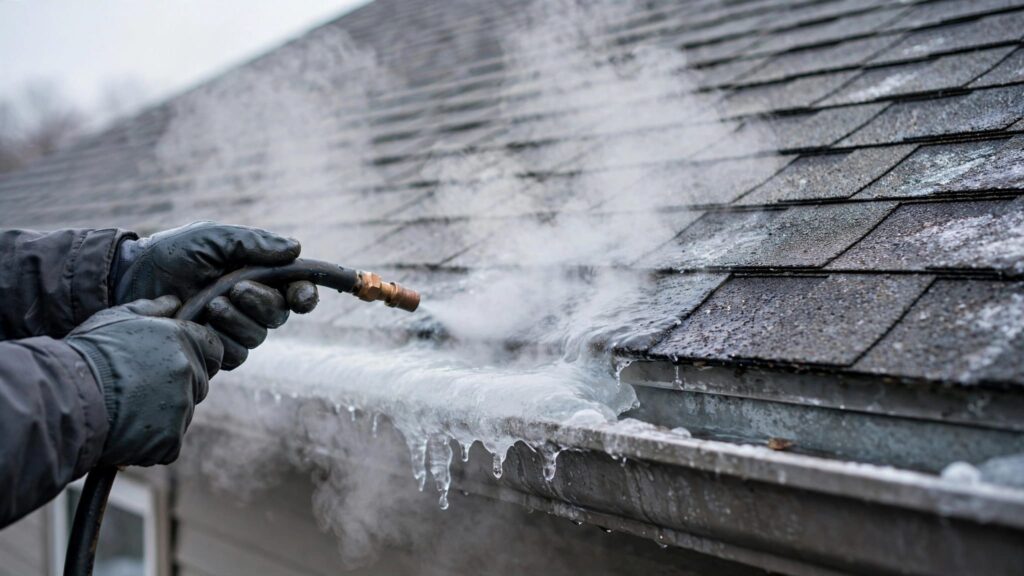
An ice dam removal specialist uses an ice dam steamer that delivers wet steam at about 215°F at the nozzle and approximately 1 to 2 gallons per minute. This controlled approach supports safe ice dam removal, but it isn’t a homeowner operating specification.
Wet steam transfers heat as vapor condenses and hot water contacts ice. Water delivery helps melt and flush the cut; temperature alone doesn’t establish effectiveness.
Steam avoids striking, scraping, rubbing, ripping, or burning the roof. However, a hot pressure washer remains a pressure washer.
Jesse Lofgren, founder of IDSAFE, rates ordinary roofing danger at 2 out of 10 and removal work at 10. That’s his assessment, not an accident statistic. IDSAFE equipment verification doesn’t replace liability coverage or trained operation.
Step-by-Step
- Locate leaks and identify electrical, structural, and falling-ice hazards.
- Photograph existing roof, gutter, and interior conditions.
- Move vehicles and establish a restricted drop zone.
- Shield gas meters, AC units, vents, and egress windows without blocking airflow or escape.
- Identify gutter damage, guards, cables, and concealed roof transitions.
- Prepare safe access and required fall protection.
- Connect an accessible, freeze-safe water supply without forcing a frozen spigot.
- Purge winterizing antifreeze before steaming; manage discharge appropriately.
- Use snow removal methods that clear loose snow without scraping the roof covering.
- Start at the overhang and establish drainage.
- Steam intersecting grooves in a tic-tac-toe pattern.
- Release manageable sections without prying; control the descent of ice chunks.
- Clear bonded ice and feeding snow throughout the agreed affected area.
- Inspect exposed roofing and document remaining defects.
- Arrange repairs, drying, and attic heat-loss correction.
- Winterize the steamer afterward, typically requiring about 15 minutes.
This chunk-cutting technique avoids melting the entire dam top-down. Our St. Paul winter roof-clearing guidance explains safe removal around vulnerable roof details.
Cost Ranges for Ice Dam Steam Removal in Minnesota
Hourly rates and likely totals
Pulse Exterior publishes $400 to $600 per hour for ice dam removal cost, with most homeowner jobs taking 1 to 3 hours. That produces a calculated range of approximately $400 to $1,800, before minimum charges or other fees.
Cleaner Times reports contractor billing rates of $300 to $600 per hour, with many projects taking 2 to 3 hours from arrival to departure. These figures are market examples, not a Sellers Roofing quote.
Neither estimate establishes a whole-roof price. Several elevations, heavy ice, steep slopes, and restricted access can extend work beyond three hours.
What changes the final bill
A quote from an ice dam company should state the minimum charge, when billing starts, and whether travel, setup, winterization, or emergency premiums apply. No standard emergency surcharge applies across the industry. Same-day ice dam removal may be available, depending on dispatch volume, access, and weather.
Removal, roof repair, and interior drying are separate work categories. Sheathing replacement, disposal, access equipment, and permits can add cost to permanent repairs.
Stopping an active leak is the immediate priority. However, leaving substantial feeding snow and bonded ice can allow another dam to form. The quote should define what gets cleared and what remains.
For recurring Minneapolis and Saint Paul roof problems, attic air sealing and ice dam prevention address heat leakage. Ventilation assessment should include intake paths and net free area calculations; adding vents alone won’t correct major ceiling leakage.
Frequently Asked Questions
What if water keeps dripping after the ice dam is removed?
Water already inside insulation or ceiling cavities may continue draining. However, persistent dripping can also indicate remaining ice, failed flashing, or another opening. The next step is moisture assessment and leak tracing, followed by drying. Don’t close wet materials behind new finishes.
Can an ice dam cause damage without an indoor leak?
Yes. Ice can distort gutters, loosen flashing, and wet concealed sheathing before a ceiling stain appears. The warning signs of gutter damage include displaced hangers, separated joints, and fascia deterioration. A dry ceiling doesn’t establish that the roof edge stayed dry.
Can I use calcium chloride socks while waiting for a crew?
Don’t rely on DIY ice dam removal with chemical tubes, salt pucks, or loose ice-melt as a routine method. Calcium chloride can open channels, but runoff and placement create metal, vegetation, and access risks. Never substitute rock salt. Avoid pressure washers, torches, striking tools, or roof rakes against bonded ice.
Will gutter guards or heat cables remove an existing ice dam?
Neither is a dependable removal method for thick bonded ice. Guards don’t stop attic-driven snowmelt, and ice can form around them. Properly designed heat cables may maintain drainage paths as mitigation, but installing them during an active event adds electrical and access hazards. Neither measure corrects heat loss.
Will insurance pay to remove an ice dam before it leaks?
Preventive removal generally falls under maintenance rather than covered damage. Once a covered loss occurs, reasonable mitigation expenses may receive different treatment under the policy. AAA’s ice dam coverage guidance addresses resulting interior water damage. Keep removal and repair invoices separate because they describe different expenses.
Stop the Leak Without Creating Roof Damage
What are the key takeaways?
Controlled steam is a lower-risk removal method, but operator judgment still matters. The work must protect roofing laps, release ice without force, and leave the affected drainage area clear.
What should you do next?
If water is entering, protect occupied areas and Call 651-703-2336 for 24/7 Emergency Roofing. After removal, base permanent repairs on exposed damage and correct the heat leakage that allowed the dam to form.
Need a roof inspection in Saint Paul or the Twin Cities? Call Sellers Roofing Company at +1-651-703-2336 or schedule a free estimate. We are a black-owned, NMSDC-certified MBE roofing contractor with 9+ years experience.
