Last updated: 2026-08-01 by Ted Sellers, Owner
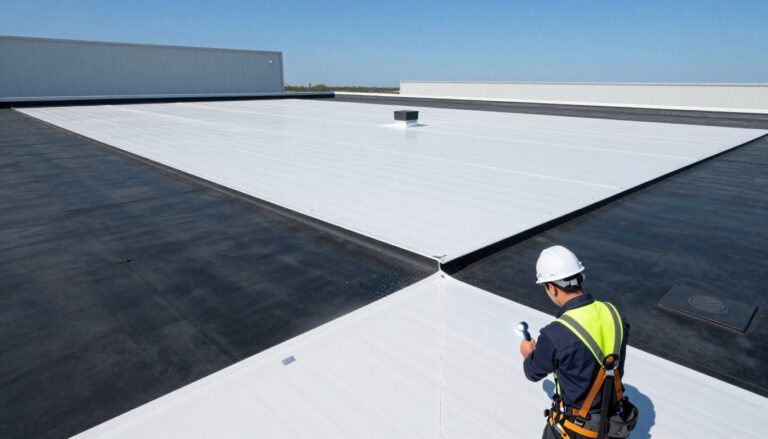
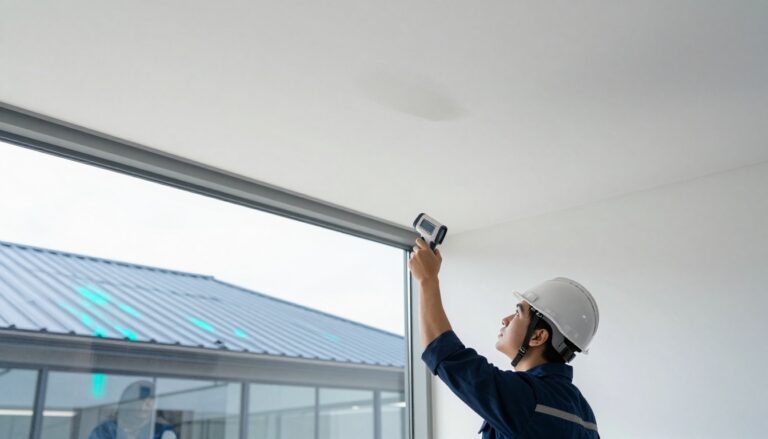
Infrared thermography roof leaks” detection on TPO flat roofs uses a thermal imaging camera to spot temperature differences caused by trapped moisture under the membrane. Wet insulation heats and cools slower than dry areas, so the thermal imaging camera can “see” hidden damp zones during the right conditions. This non-invasive diagnostic testing guides targeted repairs and helps avoid tearing into the wrong spot.
When This Applies
Good candidates for infrared scans on TPO roofs
Infrared works best when you suspect a leak but can’t trace it. During flat roof inspections on low-slope roofs, water travels sideways, so the ceiling stain rarely sits under the entry point. Thermal imaging helps narrow the search to specific roof sections, often saving hours of trial-and-error.
This approach fits many commercial properties, including retail, warehouses, offices, and medical buildings, especially building owners who need answers fast and can’t shut down operations. It’s also useful when you’re deciding between commercial flat roof repair and a larger scope. If the scan shows scattered wet areas across big sections, your “small leak” might be a system problem.
Infrared is also a strong fit when:
- The roof has many penetrations (HVAC curbs, pipes, skylights).
- Signs of moisture intrusion appear after storms, but the membrane damage isn’t obvious.
- You want documentation before budgeting a commercial roof replacement.
- You need a plan for phased repairs instead of a full tear-off.
For Saint Paul area properties, pairing infrared with a contractor who handles leak detection for flat commercial roofs can speed up the whole process. See how a full investigation is typically handled through commercial roof leak detection in Saint Paul.
The camera doesn’t “see water.” It sees thermal signatures that often correlate with moisture, then testing confirms the cause.
When timing matters most
Infrared needs the right thermal cycle. In many cases, late evening works well after the roof has absorbed heat from a day of solar radiation and solar loading, then starts cooling.
When infrared can mislead (and how to avoid bad calls)
Thermal images can flag temperature differences that have nothing to do with leaks. For example, rooftop units, exhaust vents, saturated ponding areas, and even different deck types can create hot and cool shapes mimicking suspicious thermal signatures.
Common edge cases on TPO systems
- Recent rain or washing: Surface moisture can mask the thermal signature below.
- Windy nights: Wind strips heat away fast, reducing contrast.
- Highly reflective white TPO: Glare and uneven warming can distort readings.
- Thick cover boards: Added layers can delay heat flow, shifting the best scan window.
Because of this, infrared should guide decisions, not replace verification, as a key part of leak detection for modern facilities. Manufacturer guidance also stresses that thermal imaging is a moisture detection method, not a membrane breach locator. A helpful overview is IKO’s explanation of thermal imaging for commercial roof moisture.
Step-by-Step
Set up for a clean thermal image
- Confirm the roof type, then note if it’s mechanically fastened, adhered, or ballasted, because assemblies have different thermal mass and cool differently.
- Pick the right weather window, aiming for a dry roof surface, light wind, and a clear warm-up and cool-down cycle.
- Schedule the scan for evening or early morning, based on how the roof gains and loses heat that day.
- Walk the roof first, documenting obvious issues like open seams, punctures, failed flashing, clogged drains, and ponding areas.
- Create a scan grid for moisture detection on the roof membrane (sections, lanes, or roof zones), so you can tie thermal findings to exact locations later.
- Certified thermographers set radiometric thermal imaging camera basics (focus, temperature span, and reference points), then take a few test images to confirm contrast.
- Plan safe access and routes around skylights, soft spots, and equipment, then keep foot traffic consistent to avoid heat footprints.
Scan, map, and verify findings
- Scan each grid zone slowly, or use drone roof inspection for large TPO decks, keeping the camera angle consistent to reduce reflection effects on white TPO.
- Mark “thermal anomalies” for moisture detection on a roof map as you go, then label each spot with a photo number and location notes.
- Watch for shapes that match real roof details, because a rectangle near an HVAC curb can be structure-related, not moisture.
- Re-scan questionable areas from a second angle, since reflection and glare can mimic a hot spot on smooth membranes.
- Correlate anomalies with likely entry points on the roof membrane, especially TPO seam transitions, penetration flashings, edge details, and drain bowls.
- Verify each suspect zone with moisture meter readings, targeted core samples, or other methods for moisture detection, since thermography alone can’t prove a leak path (see background on the method in infrared thermography for roofing diagnostics).
- Produce a findings report with annotated images, estimated affected areas, and repair priorities, so budgeting stays grounded.
- Choose the right scope in this nondestructive evaluation roof inspection: isolated moisture often supports commercial flat roof repair, while widespread saturation may signal your commercial roof needs repair at a system level.
- Fix confirmed defects (seam rewelds, flashing repairs, drain corrections), then re-check the area after the next rain event or inspection cycle.
- If moisture is extensive or insulation has degraded, use the scan results to plan a staged or full commercial roof replacement with minimal disruption.
For owners who want one team to handle both diagnosis and next steps, start with a local commercial roofing provider like Sellers Roofing Company in Saint Paul.
FAQ
Can infrared thermography pinpoint the exact hole in a TPO membrane?
Infrared thermography excels at moisture detection, usually finding the wet insulation area from water leaks, not the exact breach. Water can enter at a seam or flashing and spread before soaking insulation. Crews use the thermal map to narrow the search, then confirm with targeted testing to locate the true entry point.
What to expect in the report
Most reports mark suspect zones and recommend verification points, rather than claiming a single “leak dot.”
What’s the best time of day to scan a white TPO roof?
In many cases, late evening is ideal because the roof starts releasing heat and wet areas “lag” behind. Early morning can work too, depending on conditions. The key is a strong heat cycle, dry surface, and low wind, not a specific clock time.
Will ponding water show up as a leak on thermal imaging?
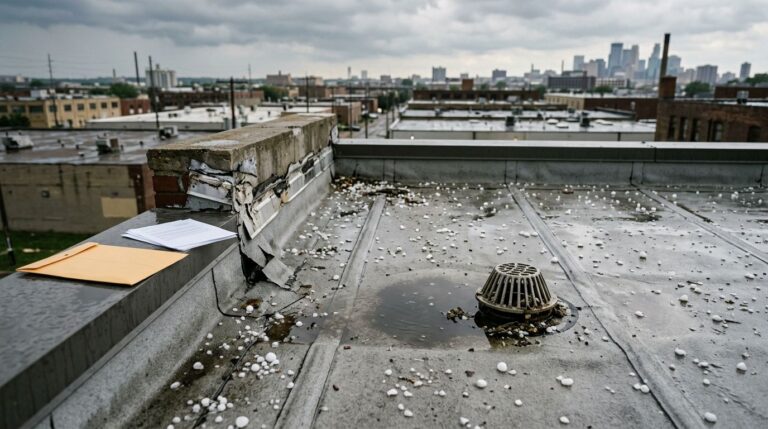
It can. Standing water changes surface temperatures and may hide or mimic subsurface moisture. That’s why inspectors document drainage issues during the walk-through. If ponding is chronic, correcting slope or drains may matter as much as patching the membrane.
Can infrared help decide between repair and replacement?
Yes, when it’s interpreted correctly during a roof inspection. Infrared thermography supports predictive maintenance and helps maintain energy efficiency through early detection. A few isolated hot spots may support targeted repairs. In contrast, widespread anomalies across multiple zones often suggest soaked insulation and reduced R-value. That’s when a repair-only plan may turn into a larger restoration or commercial roof replacement conversation.
What if the scan shows moisture but there’s no interior leak yet?
That’s common in roof inspections with moisture detection. Moisture can sit in insulation for months before it stains a ceiling.
Treat it like rust under paint: the surface looks fine until it doesn’t. Early correction often prevents deck damage, mold risk, structural damage, and surprise shutdowns later, especially if your commercial roof needs repair but hasn’t announced it loudly yet.
Need a roof inspection in Saint Paul or the Twin Cities? Call Sellers Roofing Company at +1-651-703-2336 or schedule a free estimate. We are a black-owned, NMSDC-certified MBE roofing contractor with 9+ years experience.