Last updated: 2026-05-26 by Ted Sellers, Owner
What is the difference between commercial and industrial roofing? Commercial roofing typically covers offices, retail centers, and other low-slope buildings where upfront cost, energy reflectivity, and straightforward maintenance guide material selection.
Industrial roofing serves warehouses, factories, and heavy-use facilities and emphasizes durability, load capacity, and resistance to chemicals, heat, and abrasion. Scale and performance requirements drive the main differences; the sections below compare common materials such as TPO, EPDM, PVC, metal, and built-up systems and explain structural and maintenance considerations to help you pick the right roof for your building.
What you need to know
Here are the practical points to keep in mind when you ask “what is the difference between commercial and industrial roofing.” Focus on how building size, rooftop equipment, and exposure affect material choice, installation method, and long-term cost.
- Core difference: commercial roofs emphasize cost control, reflectivity, and easy repairs; industrial roofs require higher load capacity, abrasion and chemical resistance, and longer service life.
- Materials: expect TPO, EPDM, or PVC on low-slope commercial roofs; industrial sites favor metal, reinforced single-ply, modified bitumen, or built-up systems.
- Structural needs: long spans and heavy rooftop equipment on industrial buildings require engineered decks, specific attachment methods, and ponding mitigation.
- Budget and lifespan: cheaper membranes reduce upfront cost but may need earlier replacement; include maintenance, access, and warranty terms in lifecycle estimates.
- Next steps: schedule a local inspection, request a written membrane comparison, and hire contractors with experience on your building type.
Commercial vs industrial roofing: quick side-by-side for property managers
Property managers often balance cost control, tenant disruption, and predictable maintenance when selecting roof systems. For office and retail buildings, single-ply membranes like TPO, EPDM, and PVC are common because they offer a balance of price, UV resistance, and relatively simple repairs. Industrial properties, such as large warehouses or manufacturing sites, typically require metal roofs, reinforced single-ply, modified bitumen, or heavy built-up systems to handle point loads, abrasion, and chemical exposure.
Roof size and logistics change installation methods and maintenance planning. Small-to-medium commercial roofs allow staged repairs, while long industrial runs need fast-seaming, extended staging, and often crane access, which raise cost and downtime. For procurement, specify load capacity, chemical resistance, and thermal movement for industrial sites, and prioritize reflectivity and straightforward repair procedures on commercial projects.
Materials and membranes: which systems suit each facility
Low-slope commercial roofs most often use single-ply membranes such as TPO, EPDM, and PVC because they offer reflectivity, ease of repair, and predictable lifespans. Typical installed costs vary: EPDM around $4 to $8 per square foot with a 20- to 30-year life, TPO about $5 to $9 with 15 to 25 years, and PVC roughly $6 to $12 where chemical resistance matters. These materials are relatively straightforward to flash, patch, and recoat, which helps keep maintenance predictable for offices and retail centers.
Built-up roofing and modified bitumen remain sensible on compact commercial footprints and areas with heavy foot traffic because multiple layers provide redundancy and durable waterproofing. Single-ply tends to dominate large flat jobs, while built-up and modified systems work well where access or frequent traffic requires a tougher surface. Choose based on rooftop access, expected foot traffic, and whether you prefer lower upfront cost or simpler long-term repairs.
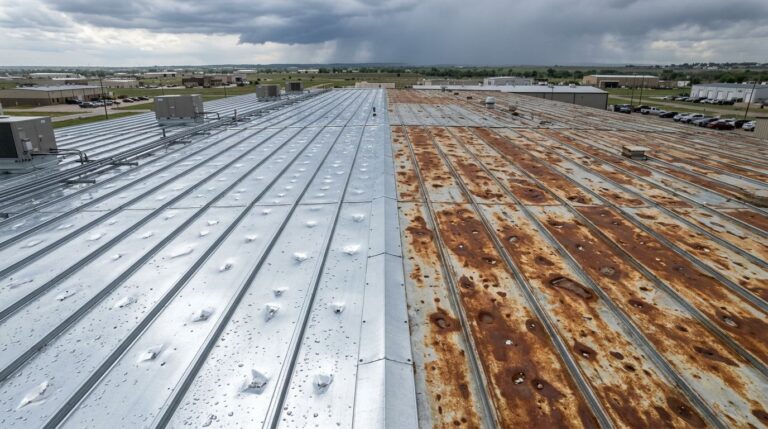
Industrial sites typically favor metal, reinforced single-ply, PVC, and modified bitumen to resist chemicals, high heat, abrasion, and vibration from heavy machinery. Metal roofs generally deliver the longest service life—often 40 to 60 years or more—with higher initial cost but lower lifecycle expense.
Reinforced membranes and modified built-up systems commonly last 20 to 30 years depending on exposure, and many industrial owners accept higher upfront prices to reduce downtime and replacement frequency. For more detail on the chemical performance of single-ply products under harsh exposures, see the analysis of the chemical resistance of single-ply membranes.
- Chemical or oil exposure: choose PVC or coated metal.
- High heat or radiant load: select metal or heat-stabilized single-ply membranes.
- Heavy foot traffic or abrasion: use reinforced membranes or modified bitumen.
These guidelines help match cost, durability, and maintenance plans to each site’s conditions. Next, structural and equipment demands explain how the roofing solution changes with scale.
Structural engineering and rooftop equipment: what changes with scale
Scale changes how a roof handles loads and rooftop equipment. Industrial buildings often have longer spans and larger structural members, so roofing systems must account for movement, deflection, and concentrated loads before any membrane is installed.
When HVAC units, cranes, or conveyors sit on a roof, engineers will specify curb pads, point-load plates, or reinforcement that ties into the structure below. Installing those elements ahead of the membrane protects warranties and extends service life.
Rooftop equipment also drives safety and maintenance design. Address vibration isolation, sealed pipe penetrations, permanent walkways, and access hatches to support safe service work. Involve a structural consultant and your safety officer early to coordinate the roofing contractor, engineer, and operations team and avoid costly rework.
Costs, lifespans and maintenance: budget with confidence
Installed costs vary by membrane and site complexity, so plan using per-square-foot ranges rather than a single number. For smaller commercial jobs expect roughly $4 to $15 per square foot depending on system and access: EPDM around $4 to $8, TPO $5 to $9, PVC $6 to $12, built-up roofing $6 to $12, and metal $8 to $18 installed. Large industrial projects use similar unit prices but cover much greater areas, so totals can move into six figures quickly. For regional benchmarking and replacement averages, consult the average cost of commercial roof replacement.
Industrial projects add line items that increase budgets: structural upgrades, removal and reinstallation of rooftop equipment, staging and crane time, extended mobilization, and safety compliance can add 10 to 30 percent to a base estimate. Build contingency into bids and include access and equipment work in the initial price rather than addressing them after contract signing. Planning those items up front reduces surprises and schedule slips.
Maintenance links directly to life expectancy and warranty coverage. For most single-ply membranes, schedule an annual inspection with seam checks and perform semiannual cleaning in harsh climates or after storms; see our steps for a thorough commercial roof inspection for a checklist you can use on-site. For an overall program, follow a written commercial roof maintenance guide to document cleaning, seam repairs, and seasonal checks.
Typical warranties run 15 to 30 years for TPO, PVC, and EPDM, 20 to 30 years for built-up systems, and 30 to 50 years or more for metal systems. For context on expected service life and planning reserves, review guidance on the expected lifespan of a commercial roof. Keep documented inspections and routine service records to maintain warranty coverage and protect asset value.
Practical budget steps include keeping a written maintenance log, storing inspection photos, and setting aside a small annual replacement reserve. Those measures protect warranties and smooth your cash flow. The next section lists questions to include in every bid and how to vet contractors.
Choosing the right system and contractor: checklist and next steps
Use this checklist when vetting bids and narrowing contractors. These questions cut through sales claims and reveal capability, cost, schedule, and long-term protection.
- Are you licensed, bonded, and insured for my jurisdiction and project size?
- Have you completed projects of similar size and exposure (warehouse vs office)?
- Which membrane or material do you recommend for my building and why?
- What is the detailed cost per square foot and total installed estimate?
- Will a structural engineer be involved and who is responsible for that cost?
- What warranties do you provide for materials and labor, and what conditions apply?
- What regular maintenance plan do you offer to protect the warranty and life of the roof?
- How will you minimize tenant or operations disruption during work?
- Can you provide references and case studies for similar industrial or commercial jobs?
- Do you offer emergency response and insurance claims support after storm events?
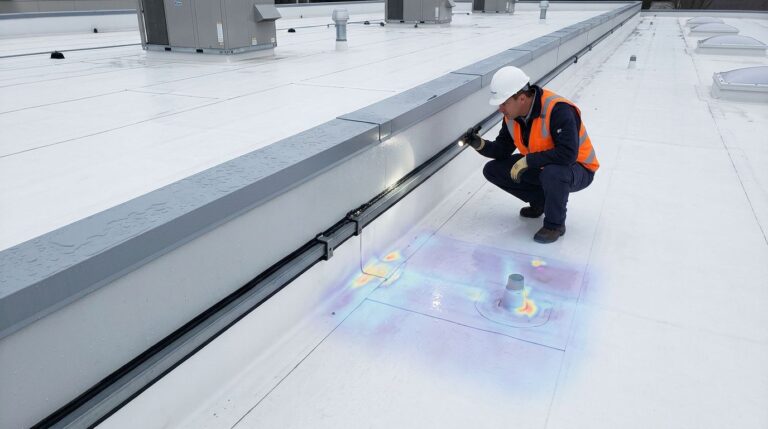
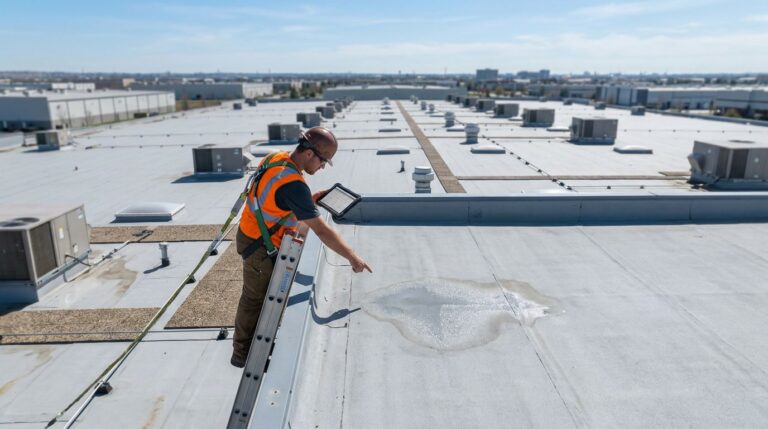
At Sellers Roofing Company we follow a documented workflow so your decision is evidence-based and defensible. We begin with a free, documented roof inspection that includes field checks for span, deck type, and penetrations, plus high-resolution photos and drone overviews when useful. That inspection identifies stressors and informs recommendations for TPO, EPDM, PVC, metal, or built-up systems best suited to the building’s exposure and lifecycle priorities.
Our written report compares lifecycle costs, maintenance obligations, and warranty trade-offs, and it includes a clear estimate with scheduling options designed to reduce tenant disruption. We offer 24/7 emergency support and storm-claims assistance to help you move from inspection to action with minimal downtime. Contact Sellers Roofing Company for a no-cost assessment in Saint Paul and the Twin Cities area.
How to tell the difference between commercial and industrial roofing: next steps
When you need a concise external reference that outlines the major distinctions and selection criteria, consider a detailed industry comparison of commercial vs industrial roofing to complement the site-specific recommendations above.
Need a roof inspection in Saint Paul or the Twin Cities? Call Sellers Roofing Company at +1-651-703-2336 or schedule a free estimate. We are a black-owned, NMSDC-certified MBE roofing contractor with 9+ years experience.