Last updated: 2026-08-01 by Ted Sellers, Owner
Hail damage shingles on three-tab asphalt shingles usually shows up as random, round impact marks where granules are knocked loose, leaving dark “bruises,” small divots, or exposed asphalt. You may also see creased tabs, cracked corners, or scuffed edges that don’t match normal aging. True hail hits look scattered, not uniform, and often come with dents on roof vents, gutters, or metal flashing.
When This Applies
When three-tab shingles are the roof you’re judging
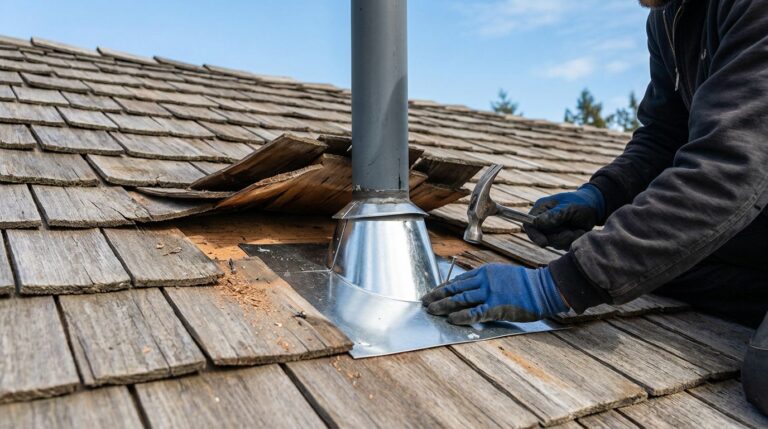
Three-tab asphalt shingles have a flat, repeating pattern with three distinct tabs per shingle. These are not wood shingles, which show damage differently.
Many small commercial properties still have them, especially on steep-slope sections like entry canopies, mansard roofs, dormers, and older office buildings. They also show up on accessory structures that matter to a business, like detached garages or storage buildings.
This matters because three-tab shingles can hide damage until the next thaw or heavy rain. A roof can look “fine” from the ground, yet still have bruised areas that later become leaks. If you manage multiple locations, one hailstorm can create a mix of outcomes, some roofs take obvious hits, others get subtle granule loss that shortens lifespan.
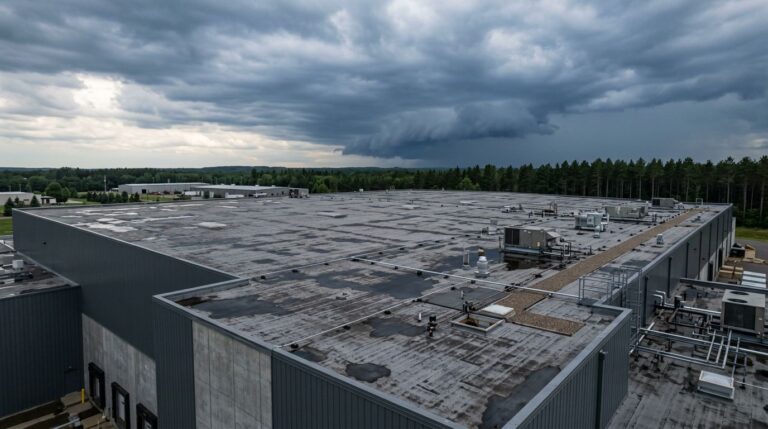
However, this doesn’t apply if your roof is a single-ply system (TPO, EPDM, PVC) or a built-up roof. In that case, you’re looking for punctures, seam stress, or membrane splits, and the next steps change. Still, many buildings have both types. A shingled entry roof can fail while the main roof needs commercial flat roof repair after the same storm.
When marks look like hail but aren’t
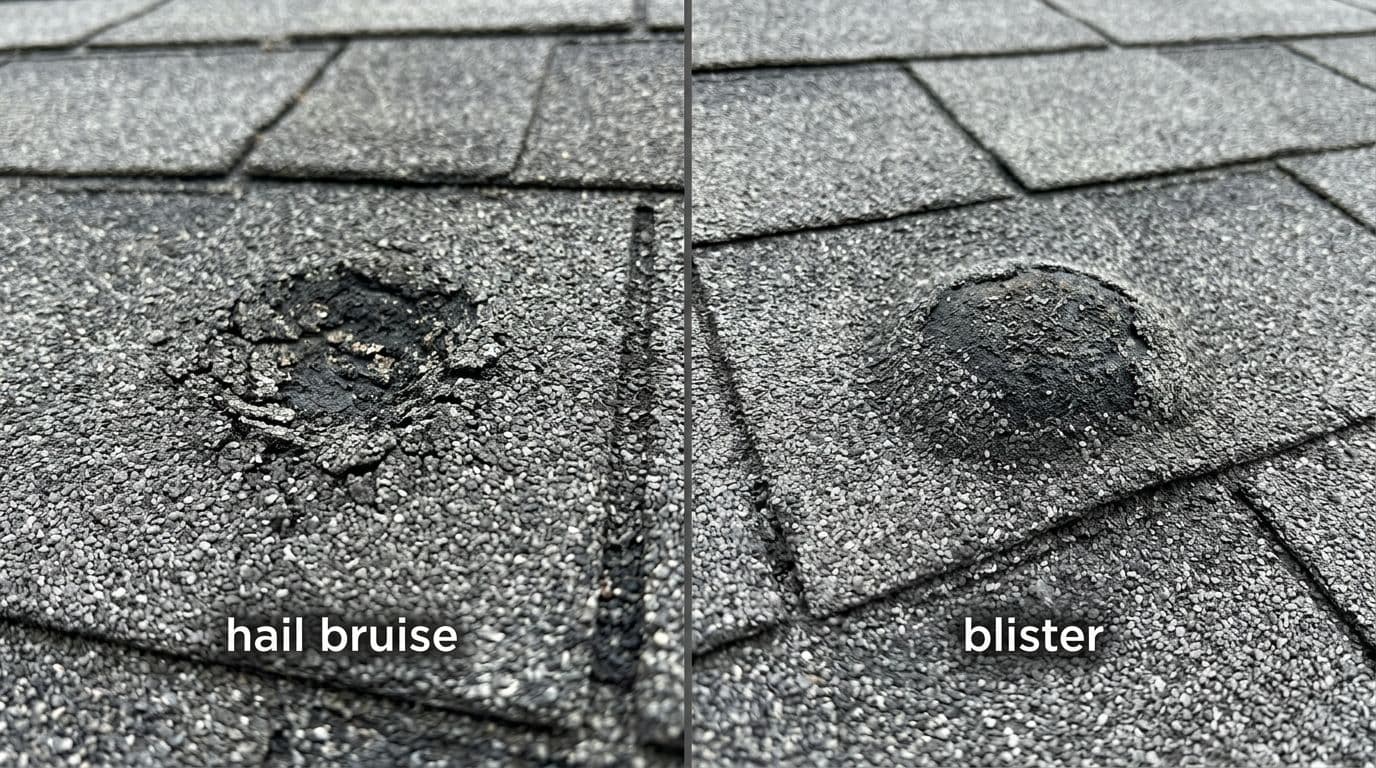
Side-by-side view of a hail bruise versus a blister on three-tab shingles.
Blisters, wear, and foot traffic can fool you
Blisters are often mistaken for hail damage shingles. A blister is usually a raised bump that later pops and sheds granules. Hail, on the other hand, tends to drive downward, leaving a bruise or divot and sometimes a soft spot. Consider upgrading to impact resistant shingles for better protection against such impacts.
Sun wear also strips granules evenly across large areas. Hail damage looks more like a peppered pattern. For deeper visuals on what inspectors look for, see how hail damage presents on asphalt shingles.
Edge cases that change what “damage” looks like
Cold-weather impacts can crack brittle tabs, while warm-weather impacts can bruise the mat without cracking. Hail size and wind speed affect these patterns, so wind-driven hail may hit one slope harder, usually the side facing the storm. Storm damage in these scenarios often leads to granule loss.
If the roof has “perfect circles” in tidy rows, you’re probably not seeing hail. Real hail is messy and uneven.
For another perspective on patterns and false positives, review InterNACHI’s hail damage inspection guidance.
Step-by-Step
Step 1: During your roof inspection, confirm you’re looking at three-tab shingles
- Stand back and look for a flat, repeating pattern with three tabs per shingle.
- Check for uniform tab cutouts and a more “grid-like” look than architectural shingles.
- Note the roof age if you can, older three-tab shingles bruise faster.
Step 2: Look for collateral storm clues first
- Walk the perimeter and check gutter downspouts, gutter runs, and window wraps for dents.
- Inspect metal vents you can safely see (drip edge, caps, flashing) for dings.
- Photograph any consistent denting, because it supports the case that hail actually hit.
Step 3: Identify hail damage through true hail impact marks on the shingle surface
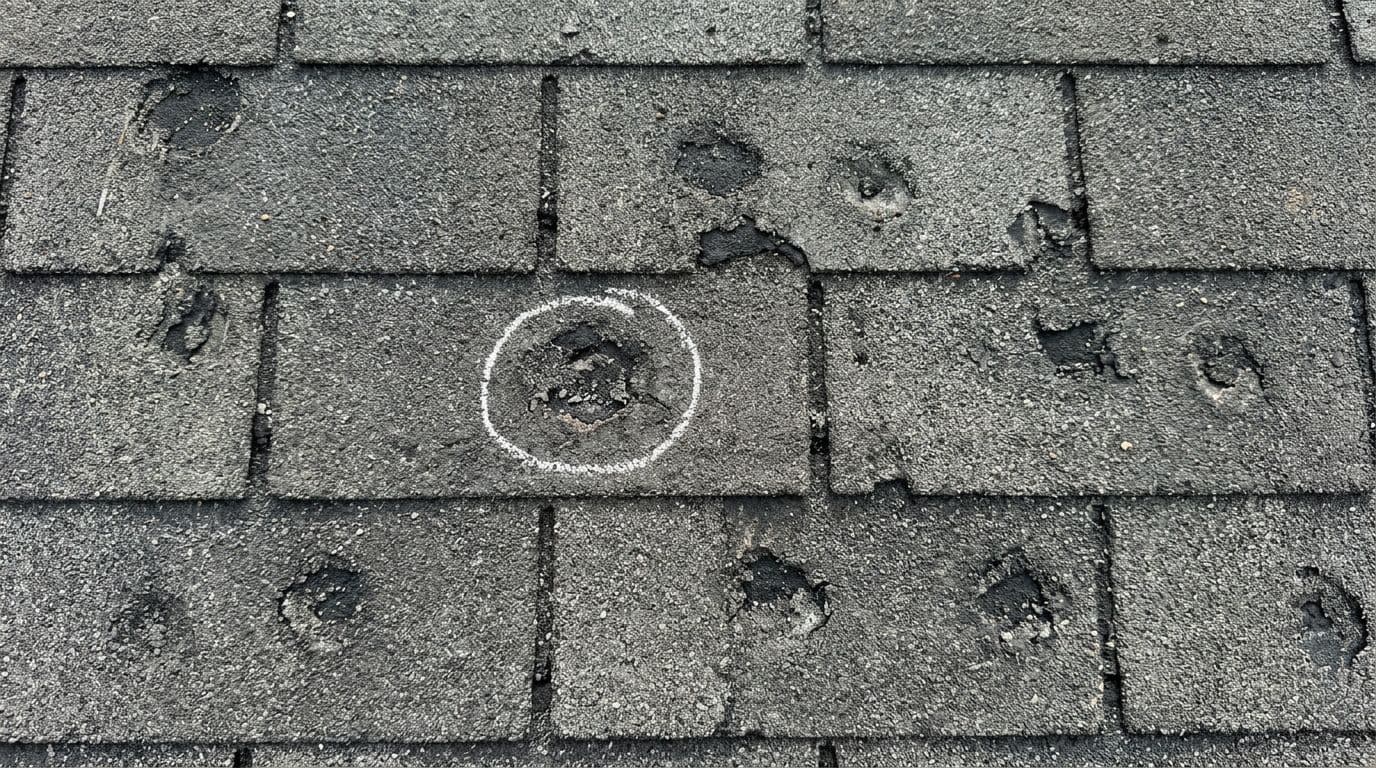
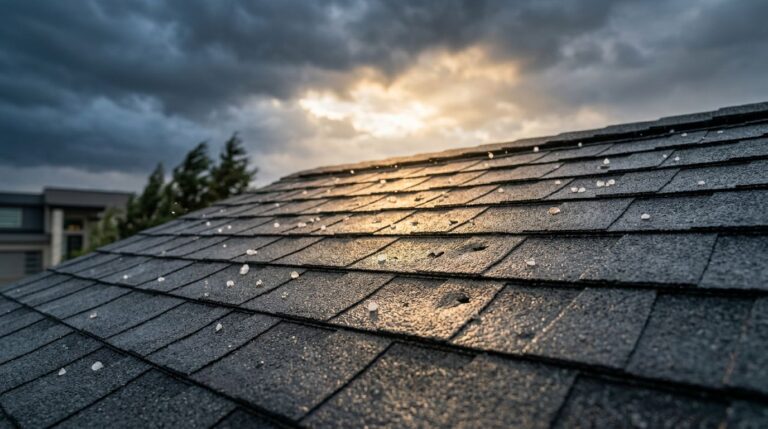
Classic hail impacts with granule loss and bruising on three-tab shingles, created with AI.
What to look for up close (without tearing anything)
- Find random dark spots or soft spots where shingle granules are displaced, these are common “bruises.”
- Look for shingle granule loss that exposes black asphalt, often in a round or irregular circle.
- Check for small divots or cratered marks, not long scrapes.
- Lightly rub the spot with your fingers. If granules come off easily only at impacts, that supports hail.
If you suspect blisters instead of hail
- Look for a raised area, blisters often feel like a small bubble.
- Compare several spots. Blisters tend to repeat across wide areas, hail is scattered.
- Document both types, because mixed conditions happen on older roofs.
Step 4: Check tabs and edges for creases, cracks, and corner breaks on cracked shingles
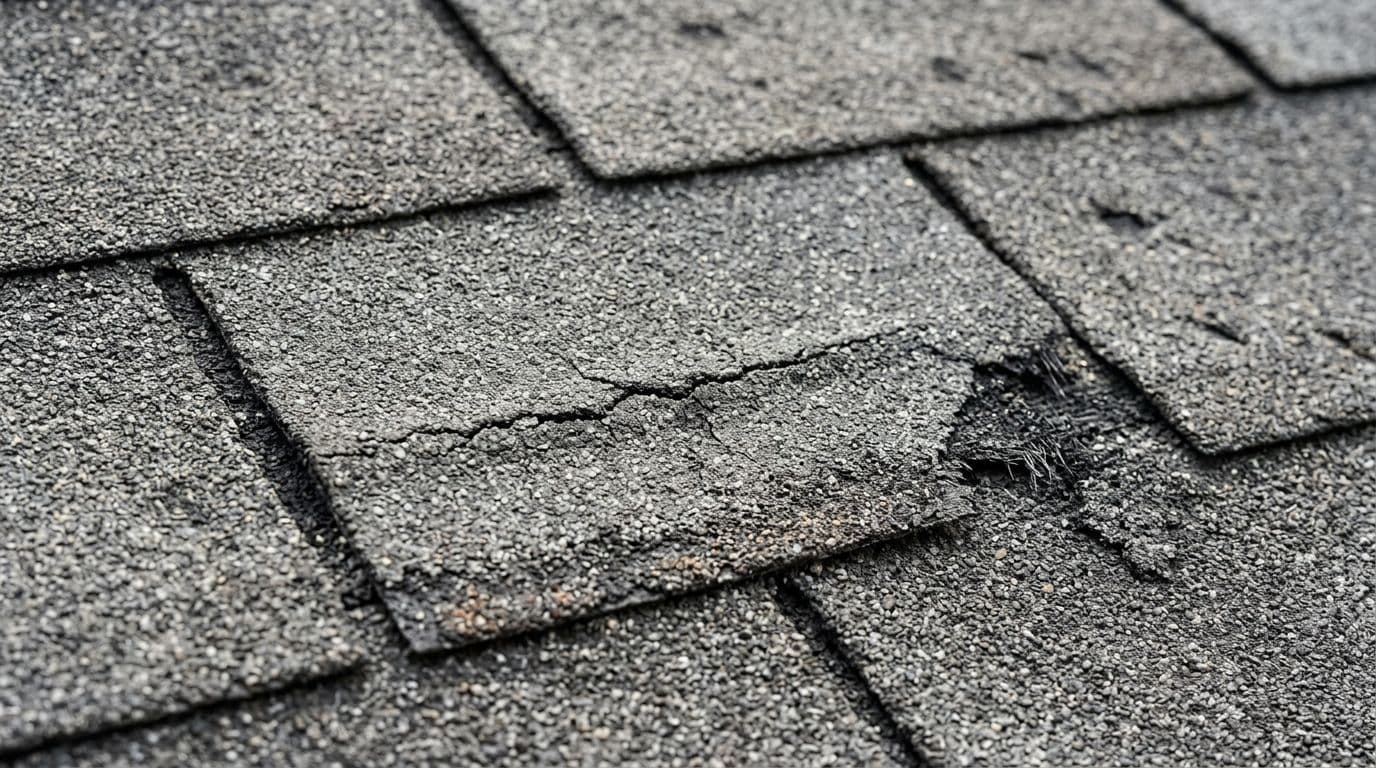
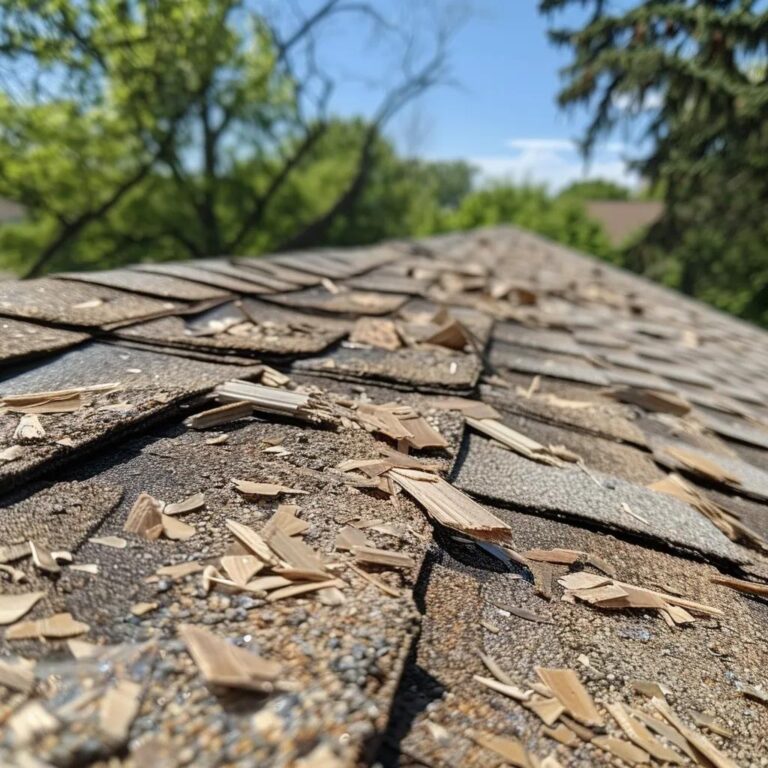
Creased tab and edge damage that often follows hail strikes on three-tab shingles.
- Inspect the lower edge of tabs for hairline cracking, shingle split, or a sharp crease line.
- Look at corners and keyways (the cutouts) for chips or small tears.
- Note any lifted tabs. Hail plus wind can break the seal strip, then wind finishes the job.
Step 5: Decide if you need a roofing contractor inspection now
- If you see bruises plus collateral dents, schedule a professional inspection quickly.
- If you manage a site where water entry shuts down operations, don’t wait for a ceiling stain.
- If your commercial roof needs repair, document it early so you can plan scopes, tenants, and budgets.
For Saint Paul area properties with mixed roof types, a Saint Paul commercial roofing company can inspect steep-slope shingle sections and tie findings into your overall roof plan.
Step 6: Watch for water leaks that lag behind the storm
- Check top-floor ceiling tiles, wall corners, and mechanical rooms for water stains after the next heavy rain.
- Track musty odors or new humidity swings, wet insulation changes how a building feels.
- If water shows up but the entry point isn’t obvious, use commercial roof leak detection in Saint Paul to avoid repairing the wrong area.
FAQ
Will insurance cover three-tab shingle hail damage on a commercial building?
Coverage depends on your policy, roof age, and documentation to support your insurance claim. Take date-stamped photos of collateral dents and shingle impacts. Also keep storm reports and maintenance records to share with the insurance adjuster. Even when the main roof is flat, insurers may treat shingled sections as part of the same claim.
How many hail hits are “enough” to call it damage?
There’s no single universal number. Severity depends on mat bruising, granule loss, and whether tabs crack. What matters is functional impact to the roof deck, meaning water shedding and expected life. Use a consistent inspection method and compare test areas on multiple slopes.
What if the roof looks fine, but tenants report odors or staining later?
Delayed leaks are common after hail, because bruised areas or missing shingles can open with heat cycles. When symptoms show up indoors, act fast to limit insulation saturation. For facility-focused guidance, review this hail damage roof checklist for buildings.
Can hail on shingles mean I also need commercial flat roof repair?
Yes, especially on buildings with both systems. The same storm can bruise shingles and puncture membranes, crack sealant, or stress seams on low-slope areas. Pair your shingle inspection with a flat-roof walk-through so you don’t miss hidden damage.
When does hail damage turn into commercial roof replacement instead of spot fixes?
Roof replacement comes into play when impacts are widespread, tabs are cracking across slopes, or repairs won’t restore reliable shedding. If the roof is already near end-of-life, hail can push it over the edge. In those cases, commercial roof replacement planning can reduce downtime versus repeated emergency calls.
Hail damage shingles don’t always announce themselves right away. When three-tab shingles take hits from a hailstorm, the clues are usually bruised shingles, granule loss on roofing materials, and tab cracking in an uneven pattern.
Treat early photos and a qualified inspection like a balance sheet safeguard, because small storm damage issues with bruised shingles often grow into bigger interior costs. The safest next step is to document what you see now, then confirm the scope before the next storm tests it.
Need a roof inspection in Saint Paul or the Twin Cities? Call Sellers Roofing Company at +1-651-703-2336 or schedule a free estimate. We are a black-owned, NMSDC-certified MBE roofing contractor with 9+ years experience.