Last updated: 2026-08-01 by Ted Sellers, Owner
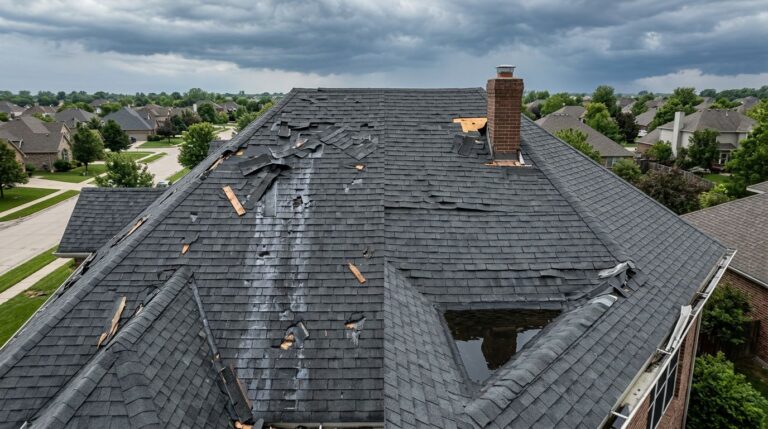
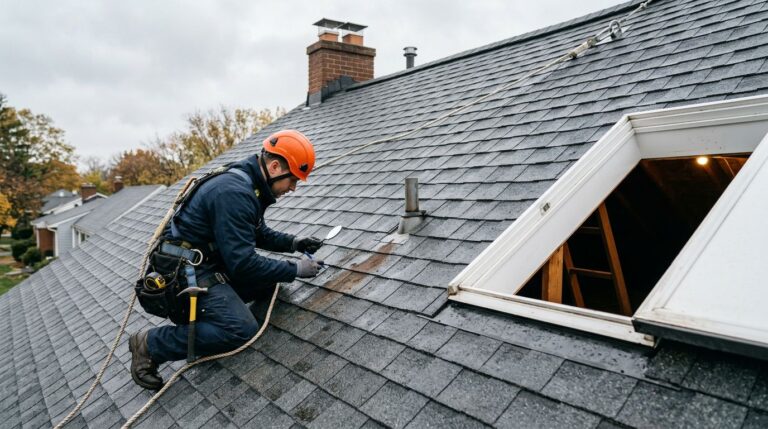
Yes, you usually can replace roof flashing without replacing shingles if the nearby shingles are still flexible, intact, and easy to lift. A roofer can remove the old metal, install new flashing, and reset the shingles. If the shingles crack, curl, or have worn thin, both materials should come out together.
When This Applies
A flashing-only repair works on localized, younger roof sections
This applies to commercial buildings with shingled roof areas, such as offices, churches, apartments, and retail storefronts. It also applies when the problem is limited to one roof detail, like a vent, wall intersection, chimney, or valley.
If the metal is rusted, loose, or pulling away, but the shingles still lie flat, the repair is often local. In that case, the roofer lifts a small area, replaces the flashing, then re-seals or re-sets the shingle tabs. That keeps cost and disruption down.
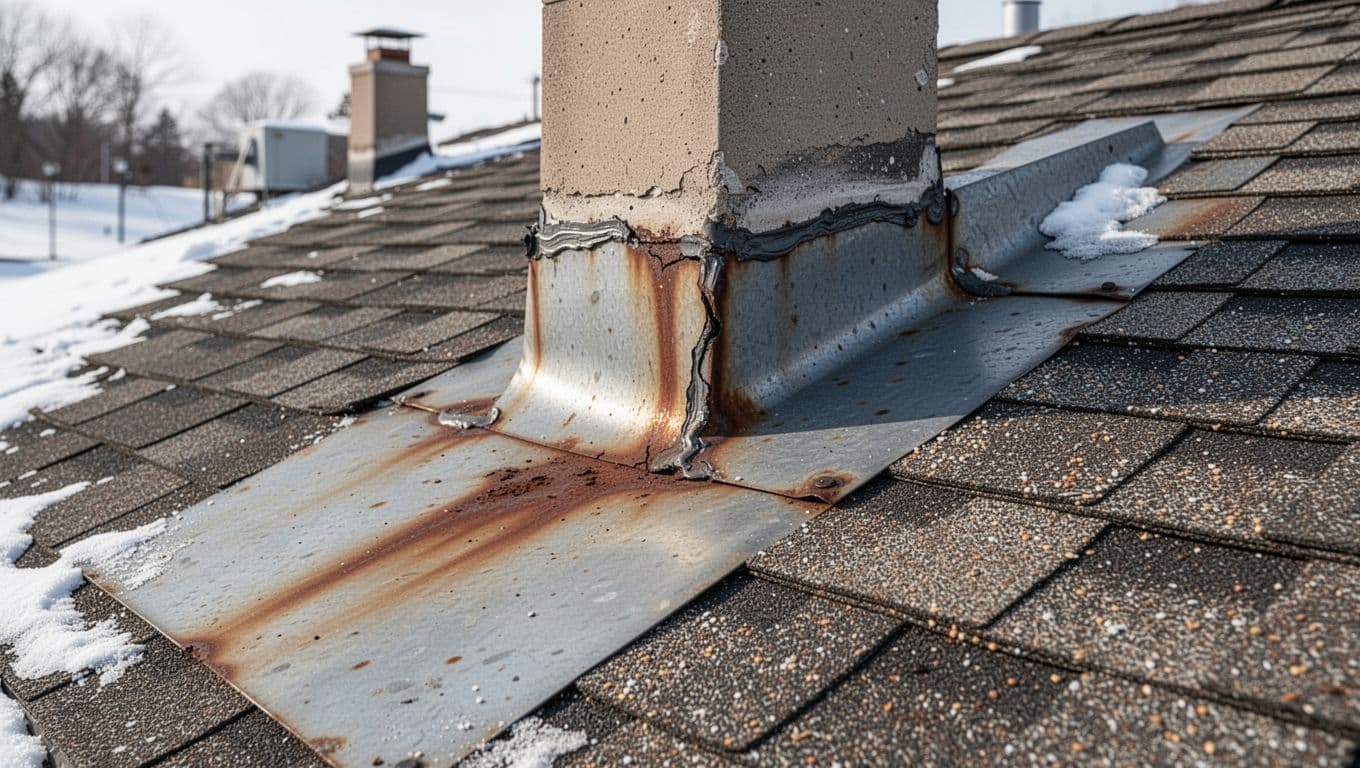
This approach makes sense when the leak is recent and the deck below is still dry. It’s also common after harsh winters, because sealant and metal joints often fail before the surrounding shingles do.
Shingle replacement becomes part of the job when the field roofing is worn out
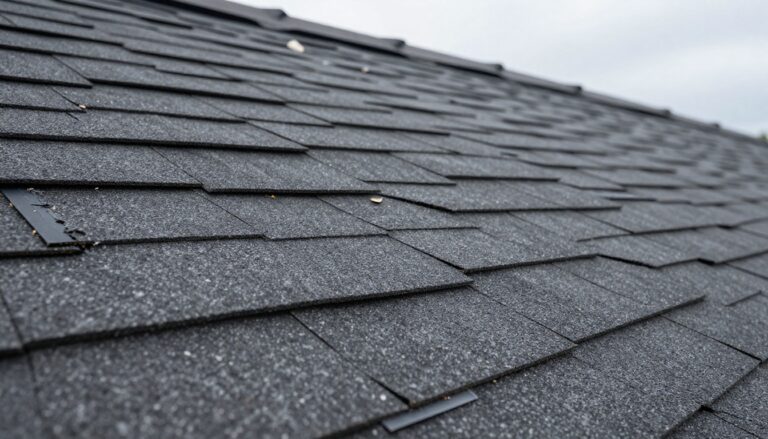
Age changes the answer fast. Older shingles often bond together, lose granules, and split when lifted. Once that happens, the roofer can’t replace the flashing cleanly and leave a reliable roof behind.
If the shingles crack when lifted, a flashing-only repair won’t last.
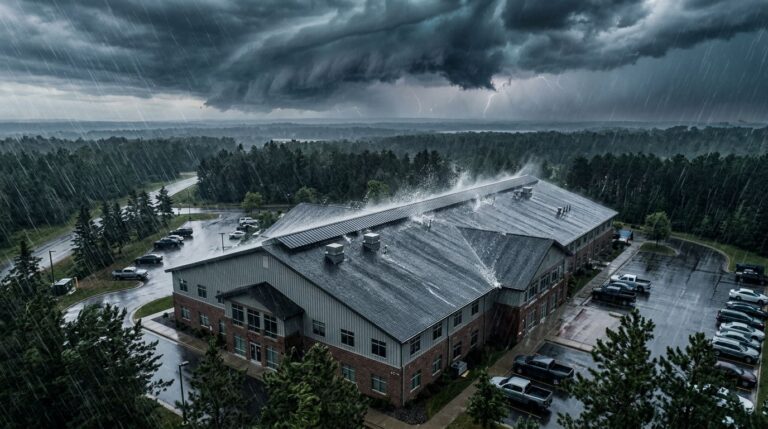
The same limit applies when water has traveled farther than expected. Interior stains, wet insulation, moldy decking, or repeat leaks point to a larger problem. If that sounds familiar, start with commercial roof leak detection services before you approve any repair scope.
If you own a low-slope building, the detail may not involve shingles at all. A failed curb, parapet, or edge metal detail is usually a commercial flat roof repair issue. And if multiple weak points show up at once, your commercial roof needs repair beyond one metal joint, which can put commercial roof replacement back on the table.
Edge cases on mixed commercial roofs
Some buildings have both shingle accents and membrane roof sections. In those cases, the leak may start at a transition where the two systems meet. Masonry counterflashing can also fail while the step flashing below still works. Those details need a roofer who can inspect the full assembly, not only the visible stain.
Step-by-Step
How a roofer replaces flashing while keeping the shingles in place
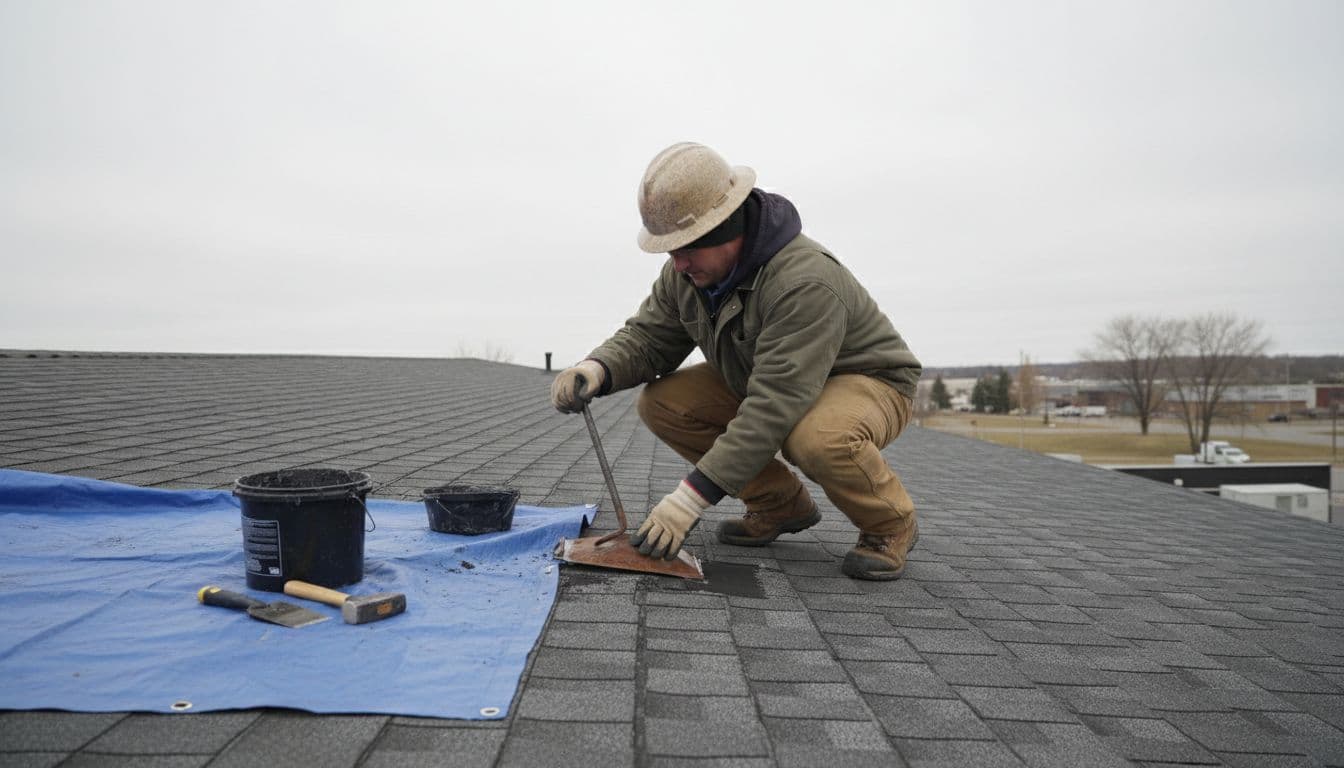
- Confirm the leak source first. The roofer inspects the flashing, nearby shingles, underlayment, and deck. On commercial buildings, they also check wall caps, rooftop units, and nearby penetrations because water often travels before it shows inside.
- Test whether the shingles can be lifted. This is the key decision point. If the tabs separate cleanly and the shingle stays flexible, the repair can move forward without opening a much larger area.
- Remove the failed flashing with a tight work area. The roofer loosens only the courses needed to access nails and sealant. Care matters here, because tearing surrounding shingles creates a second repair.
- Install the right flashing profile and metal. Pipe boots, step flashing, apron flashing, and counterflashing all shed water in different ways. The overlap has to face the drainage path, or wind-driven rain can get behind the repair.
- Re-seat the shingles and seal selective points. Good flashing should move water by shape and overlap, not by a heavy layer of exposed caulk. A small amount of hand-sealant may be used where tabs were lifted, but large beads of mastic often hide weak work.
- Check for hidden moisture before closing the job. If the deck feels soft or staining continues below, the roofer should widen the scope. That protects you from paying twice for the same leak.
- Document the repair and the surrounding roof condition. Commercial owners need photos, notes, and a clear view of what was fixed and what still has life left. That’s where a Sellers Roofing commercial roofing team can help, especially if the leak sits near other aging details.
This process is careful work, but it isn’t magic. If the roof around the flashing has lost its strength, the smart move is a broader repair, not a delicate patch.
Conclusion
What to remember
You can often replace roof flashing without tearing off the surrounding shingles, but only when those shingles can survive being lifted and re-set. The flashing may be the leak source, yet the shingle condition decides whether the repair stays local.
For a business owner, that distinction matters. It helps you avoid paying for reroof work you don’t need, and it also keeps you from under-scoping a leak that will return.
FAQ
How much of the roof has to be opened to replace flashing?
Usually only the courses that cover the flashing. A careful roofer keeps the opening small, then resets those shingles. If the repair area keeps expanding during removal, that’s a sign the surrounding shingles have aged out.
What if the leak comes back after new flashing is installed?
That usually means the first repair caught a symptom, not the full water path. Nearby penetrations, masonry joints, wet insulation, or wall details may also be involved. At that point, the roof needs a wider inspection.
Can flashing be replaced during cold weather?
Yes, but conditions matter.
When cold weather makes the job harder
Shingles get brittle in low temperatures, and sealants cure more slowly. A roofer may postpone lifting older shingles until a warmer day, or they may adjust the repair method if the risk of cracking is too high.
Is caulk enough if the flashing only has a small gap?
Rarely. Caulk can slow a leak for a short time, but it doesn’t fix rust, bad overlap, loose fasteners, or metal fatigue. If the flashing detail has failed, replacement is usually the lasting repair.
Will replacing flashing affect warranties or insurance claims?
It can. Some manufacturer warranties require approved materials and documented repairs. Insurance may also ask when the damage happened and whether a covered event caused it. Good photos and a written scope help protect your position.
Need a roof inspection in Saint Paul or the Twin Cities? Call Sellers Roofing Company at +1-651-703-2336 or schedule a free estimate. We are a black-owned, NMSDC-certified MBE roofing contractor with 9+ years experience.