Last updated: 2026-10-30 by Ted Sellers, Owner
Yes. Malarkey lists Legacy Scotchgard shingles as meeting UL 2218 Class 4, the standard’s highest impact-resistance classification. Class 4 testing uses a 2-inch steel ball dropped from 20 feet, but the rating doesn’t make an installed roof hail-proof or guarantee insurance coverage. Malarkey’s Legacy Scotchgard product specifications identify the qualifying product.
When This Applies
Which Legacy product carries the rating?
The documented Malarkey Legacy Class 4 rating applies to Legacy Scotchgard. That full product name belongs in the proposal, material order, invoice, and insurance documentation.
An older invoice that says only “Legacy” doesn’t establish the specification of every production version. Product identity matters when documenting an existing roof or comparing replacement bids.
Scotchgard identifies an algae-protection feature. Algae resistance, impact resistance, wind resistance, and warranty coverage are separate specifications. One doesn’t establish the others.
Does this apply to commercial roofs?
Yes, where the commercial building has a steep-slope roof designed for asphalt shingles. Offices, churches, apartment buildings, and mixed-use properties can have qualifying shingle sections.
A commercial flat roof needs a different evaluation. TPO roofing, EPDM, modified bitumen, and BUR aren’t covered by a Legacy shingle classification.
On mixed-roof buildings, separate the shingle slopes, membrane fields, drains, and transitions in the inspection report. A Class 4 canopy doesn’t establish the impact performance of the warehouse roof behind it.
What Actually Causes Hail Damage on Shingle Roofs in Harsh Winter Climates?
What does the Class 4 test measure?
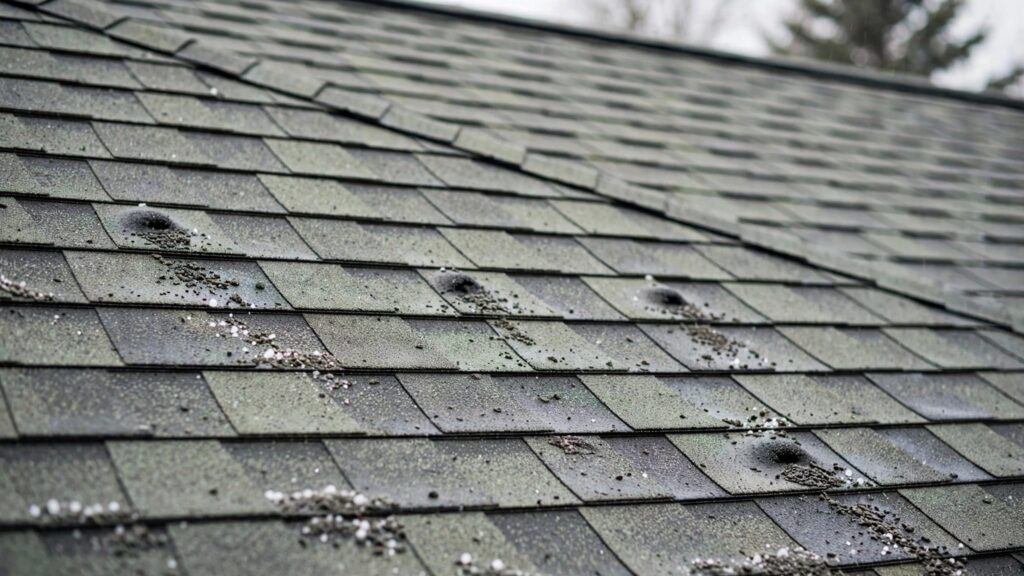
A hail strike can displace granules, deform the asphalt coating, and fracture the reinforcing mat. Damage depends on impact energy, roof support, material condition, and where the strike lands.
Under UL 2218’s impact-testing standard, roof-covering specimens receive controlled steel-ball impacts at vulnerable locations. Class 4 uses a 2-inch ball dropped from 20 feet, with repeated impacts at the test location.
Passing concerns the specified damage criteria. It doesn’t establish that every granule remains attached.
A 2-inch steel-ball test doesn’t establish immunity to 2-inch natural hail. Ice hardness, shape, wind, temperature, and roof aging change field conditions.
How do winter conditions affect the roof?
Polymer-modified asphalt improves flexibility, but cold weather still changes material behavior. Existing cracks and deteriorated flashing remain potential leak points.
An ice dam forms when roof snow melts and refreezes near a colder eave. Backed-up water can move beneath shingles. Freeze-thaw cycling can worsen existing openings, while snow loading stresses framing and decking.
Class 4 testing doesn’t establish snow-load capacity or prevent ice dams. Ice dam removal also requires methods that won’t damage shingles or flashing.
How to Inspect and Document the Damage (Field Checklist)
What does the exterior inspection cover?
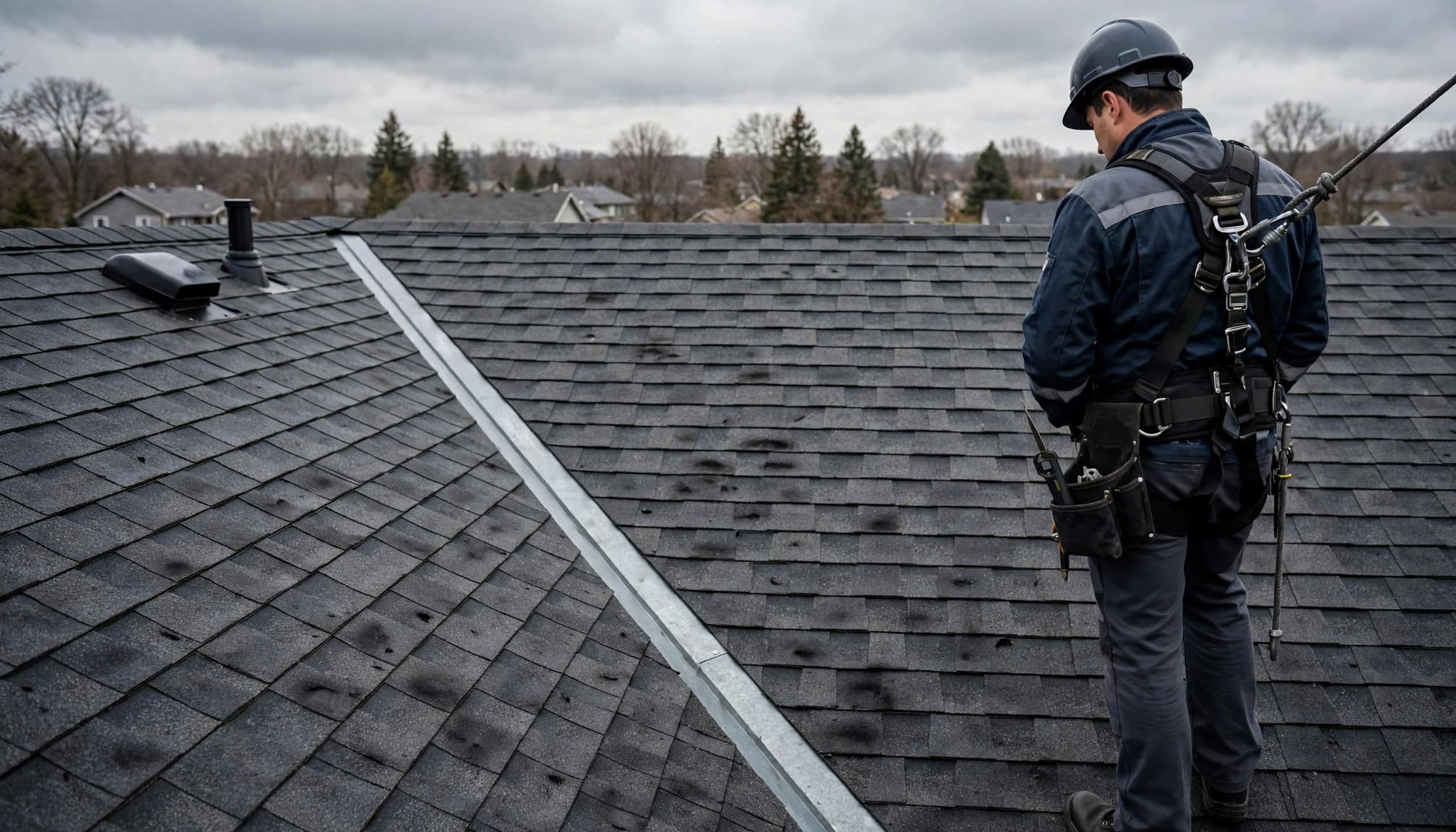
A contractor starts with ground-level conditions before accessing the roof. Wet, icy, steep, or structurally damaged surfaces require access controls.
- Record the storm date, affected elevations, displaced materials, and visible gutter or siding impacts.
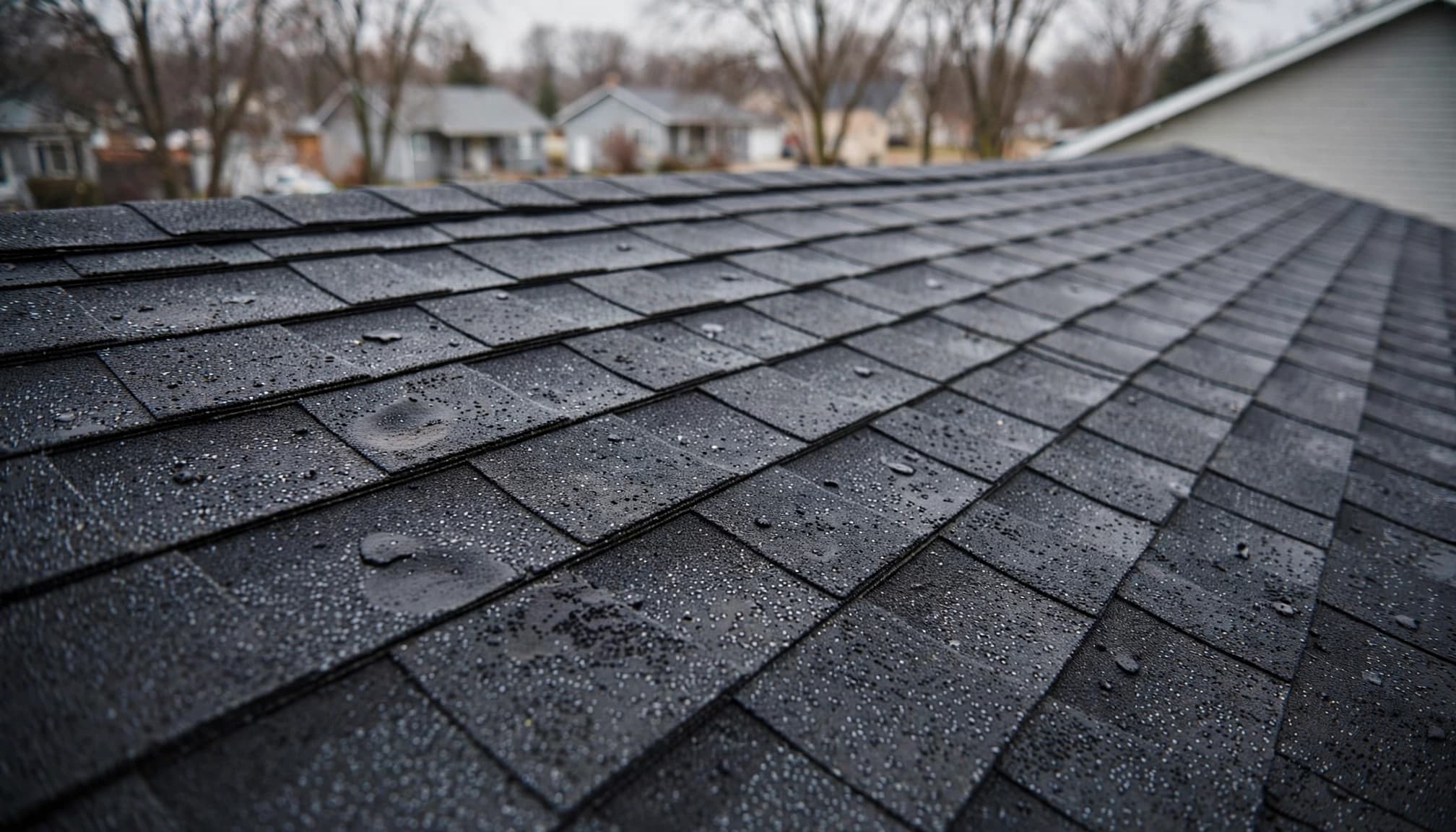
- Map granule-loss patterns across each slope, distinguishing scattered impacts from uniform aging or foot traffic.
- Document fractured shingles, exposed mat, displaced tabs, and disturbed seal strips without forcing shingles upward.
- Photograph flashing separation at walls, chimneys, skylights, and roof transitions.
- Inspect valley condition, drainage restrictions, pipe boot cracking, and damaged ventilation components.
- Record visible deck deflection or soft areas, then stop access where structural support is uncertain.
Close-ups need location context. A photograph of one mark without its slope and surrounding roof area has limited value.
What else needs documentation?
Inside the building, record water stains, wet insulation, ceiling damage, and attic moisture. Photograph the leak location before finishes are removed.
Roof accessories can fail while shingles remain serviceable. Our explanation of hail damage to roof vents covers that inspection gap.
A complete storm-damage roof assessment separates impact damage, installation defects, aging, and ice-related leakage.
Repair vs. Replace: The Decision Framework
When does repair make sense?
Residential roof repair fits isolated damage when surrounding shingles remain flexible, securely attached, and compatible with replacement materials. Repairs must restore the assembly without breaking neighboring shingles.
Use these factors to compare the two scopes.
| Factor | Repair | Full replacement |
|---|---|---|
| Cost range | Scope-dependent; small jobs don’t price reliably by square | Preliminary architectural-shingle allowance: $450 to $900 per square |
| Remaining service life | Retains the existing roof’s condition and limitations | Starts a new system’s service period |
| Insurance implications | May address a localized covered loss | Requires support for the covered replacement scope |
| Material compatibility | Matching exposure, dimensions, and thickness matters | Establishes a consistent new system |
| Damage distribution | Isolated, repairable areas | Widespread fractures or multiple failing components |
The deciding issue is whether a repair restores dependable service without leaving related damage unresolved.
When does replacement make sense?
Residential roof replacement becomes more reasonable when hail fractures are widespread, shingles break during repair, or decking and flashing need extensive correction.
Age alone doesn’t prove storm damage. Likewise, a Class 4 label doesn’t prove an existing roof survived undamaged.
Our Class 3 and Class 4 comparison addresses the upgrade decision once replacement is justified.
Material Specs That Matter for This Repair or Replacement
Which shingle specifications belong in the scope?
Specify Malarkey Legacy Scotchgard, its UL 2218 Class 4 classification, color, and compatible accessories. Malarkey’s impact-resistance explanation distinguishes the impact rating from broader roof-system performance.
Polymer-modified asphalt is relevant to flexibility and impact response. Granule adhesion, fastening, seal-strip engagement, and deck support also affect service performance.
A proposal naming GAF Timberline HDZ or CertainTeed Landmark still needs that exact product’s stated impact classification. Architectural appearance doesn’t establish a rating. Metal roofing also requires its own product and assembly specifications.
What belongs beneath the shingles?
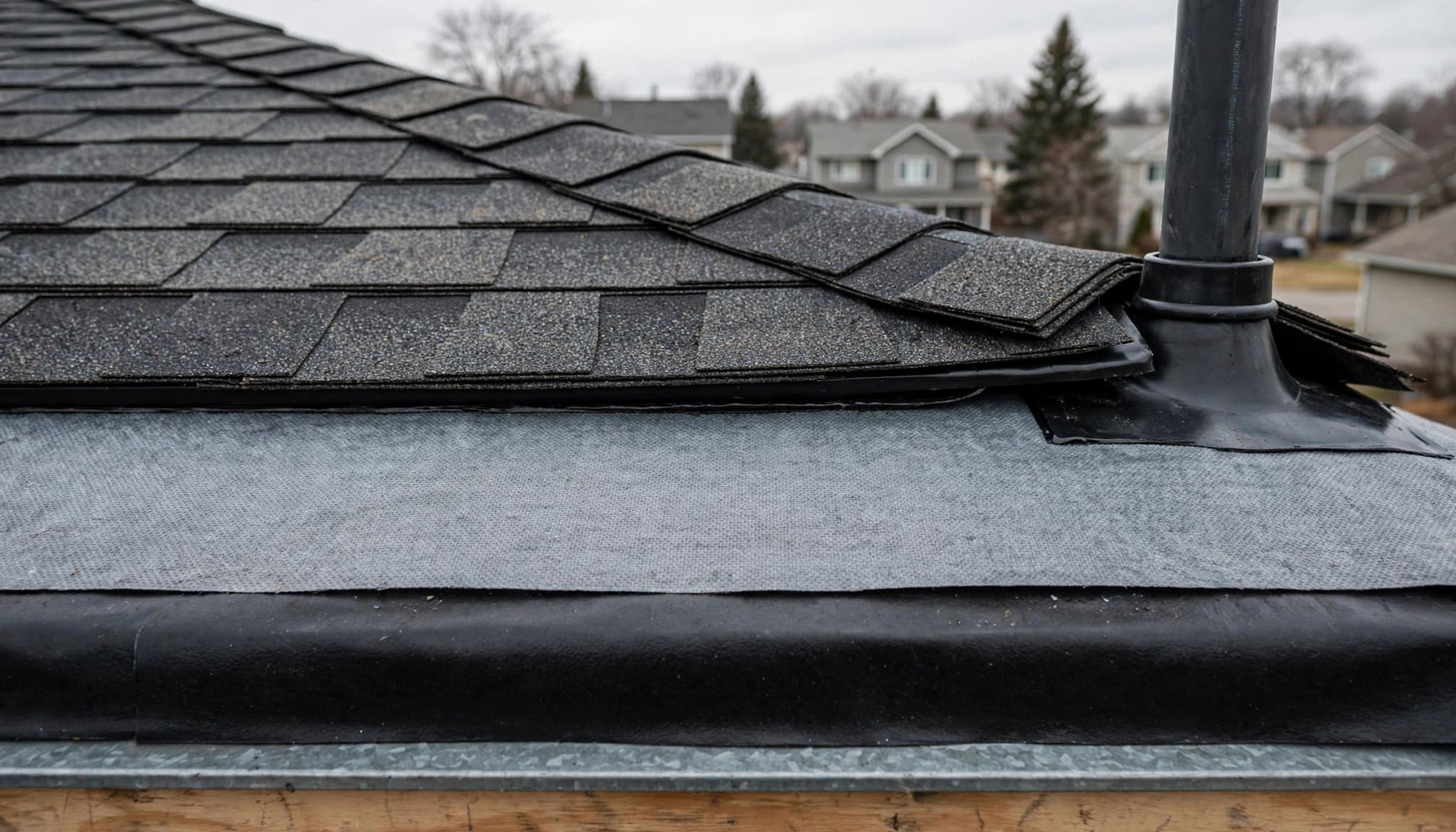
Synthetic underlayment and asphalt-saturated felt are different materials. Neither replaces a specified self-adhered ice barrier. The scope should identify underlayment, eave protection, valley treatment, starter, ridge caps, and flashing.
How far must the eave barrier extend?
Minnesota’s eave ice-barrier requirement extends protection at least 24 inches inside the exterior wall line. That distance isn’t measured simply 24 inches uphill from the gutter. Overhang depth and roof pitch affect coverage.
Valleys require their own specified treatment. The eave measurement isn’t a universal valley-width rule.
For low-slope sections, specify the complete assembly. A 60-mil TPO membrane and 45-mil versus 60-mil EPDM differ in thickness; reinforcement, insulation, attachment, seams, and drainage also matter.
Insurance Documentation and the Claim Process
What does the adjuster evaluate?
An adjuster evaluates reported damage against policy terms, covered causes, deductibles, exclusions, and settlement provisions. A contractor documents physical conditions and the work required to restore the roof.
Those are separate responsibilities. A roof insurance claim needs evidence connecting the reported event to observable damage. Installation defects and ordinary deterioration shouldn’t be labeled hail damage.
The file should distinguish shingle damage, soft-metal impacts, damaged accessories, and interior water intrusion.
What photographs and records help?
Photograph each affected slope, then take contextual and close-up images of representative strikes. Record wind-lifted tabs and creases without lifting sound shingles to create access.
Interior photographs should show the room, stain location, and affected materials. Dates and locations belong in the report.
Keep product specifications, invoices, permits, and completion photographs together. Our Minnesota hail-claim guide explains deductibles and claim documentation.
Some policies offer impact-resistant roofing discounts. There is no universal Minnesota discount percentage, and a Class 4 installation doesn’t change coverage automatically.
What a Professional Roof Contractor Does Differently
What happens after tear-off?
Removing the shingles exposes conditions that surface photographs can’t establish. The deck inspection covers decay, delamination, unsupported joints, fastening, and damaged areas around penetrations.
Rotted sheathing needs removal back to sound, properly supported material. Replacement thickness, edge support, and fastening must suit the existing assembly. Damage photographs and defined change-order pricing keep that work traceable.
Pipe boots and flashing receive a replacement standard in the scope. Reusing a brittle boot under new shingles leaves an avoidable leak point.
How is ventilation addressed?
Ventilation uses net free ventilating area, or NFA, rather than vent count. The baseline residential calculation is generally 1:150 of the ventilated area. A 1:300 ratio applies only when the code’s qualifying conditions are met.
Intake restrictions, blocked baffles, air leakage, and insulation gaps also need attention. Ventilation alone won’t stop heat escaping through an unsealed attic floor.
Our Saint Paul roofing scopes distinguish these corrections from shingle selection. Our MN Builder Contractor License is 803862.
Step-by-Step
- Define the roof sections. Separate steep-slope shingles from low-slope membranes, metal sections, and transitions. Assign damage locations to each section so one product rating doesn’t get applied to the whole building.
- Record the specified product. Put Legacy Scotchgard and UL 2218 Class 4 in the written scope. Retain matching material records instead of relying on a verbal description such as “premium shingles.”
- Set the repair boundary. Use documented damage distribution, shingle repairability, deck condition, and material compatibility to establish localized repair, slope replacement, or full replacement. Keep unrelated maintenance outside the storm-damage scope.
- Define the complete installation. Include tear-off, decking allowances, underlayment, ice barriers, flashing, boots, ventilation, permits, and disposal. State concealed-damage pricing before work starts and obtain authorization for added work.
- Close out the record. Keep installation photographs, invoices, permit records, product documentation, and warranty information together. These establish what was installed and support future maintenance, insurance submissions, and warranty administration.
Cost Ranges for Malarkey Legacy Roofing in Minnesota
What does the replacement allowance cover?
The $450 to $900 per-square allowance above is a preliminary architectural-shingle budget, not a fixed Legacy Scotchgard price. One roofing square equals 100 square feet of roof surface.
At that allowance, a 20-square project calculates to $9,000 to $18,000. Roof area differs from building floor area because pitch, overhangs, and additional roof sections affect quantities.
Premium impact-rated specifications can exceed that allowance. A current project price needs a defined material and labor scope; an advertised shingle price doesn’t describe an installed roof.
What changes the total?
Deck deterioration, multiple tear-off layers, steep access, disposal, flashing complexity, permits, and ventilation corrections change project cost. Saint Paul and Minneapolis roofing projects can have different access conditions despite similar roof sizes.
For commercial roof replacement, insulation and attachment requirements add separate cost drivers. Commercial roof repair or restoration addresses different conditions; commercial roof coatings don’t convert an assembly into a Legacy Class 4 system.
Frequently Asked Questions
Can Class 4 shingles still leak after a hailstorm?
Yes. Flashing, pipe boots, vents, and other components can fail even when field shingles remain intact. An impact classification doesn’t rate every component’s watertightness or the quality of its installation.
Does Class 4 mean the roof has a Class A fire rating?
No. Class A fire performance and Class 4 impact resistance describe separate tests. A product can carry both, but neither classification establishes the other.
Does the Legacy impact rating include a hail-damage warranty?
The rating alone doesn’t establish hail coverage. Malarkey’s Legacy technical data sheet identifies product and warranty information separately. Warranty protection depends on the written terms, covered defects, and installation conditions.
Will Class 4 shingles prevent damage from falling branches?
No. A branch can concentrate force through a sharp end, puncture decking, or damage framing. UL 2218 steel-ball testing doesn’t establish resistance to every tree-impact condition.
What if the commercial roof looks fine but water appears indoors?
The leak requires a separate investigation. Membrane seams, drains, rooftop equipment, and transitions can admit water without obvious shingle damage. Owners can Get a Free Commercial Roof Inspection to establish the affected assembly and repair scope.
Conclusion: Specify the Rated Product and Complete System
Malarkey Legacy Scotchgard meets UL 2218 Class 4. That documented rating supports material selection, but installation, winter waterproofing, and post-storm damage still require separate evaluation.
For a Twin Cities replacement proposal that identifies the product and complete installation scope, Get a Free Residential Roof Estimate. The proposal should make clear what is being installed, what is being corrected, and what the rating establishes.
Need a roof inspection in Saint Paul or the Twin Cities? Call Sellers Roofing Company at +1-651-703-2336 or schedule a free estimate. We are a black-owned, NMSDC-certified MBE roofing contractor with 9+ years experience.
