Last updated: 2026-08-01 by Ted Sellers, Owner
Pick Class 4 shingles if your building sits in a hail-prone, severe weather Minnesota area, you can’t afford repeated storm-related shutdowns, or your insurer pushes impact-resistant roofing for superior impact resistance. Choose Class 3 shingles when hail risk is lower, budgets are tight, or the roof section is less critical. Either way, the rating helps, but installation quality and roof design still matter.
When This Applies
This decision fits some commercial roofs better than others
If you own a steep-slope commercial property (small offices, retail, multifamily, churches, mixed-use buildings), impact-rated architectural shingles made from asphalt shingles can be a smart upgrade. These asphalt shingles help protect against hail that bruises surfaces, loosens granules, and shortens service life, which often leads to more inspections, more repairs, and more insurance back-and-forth.
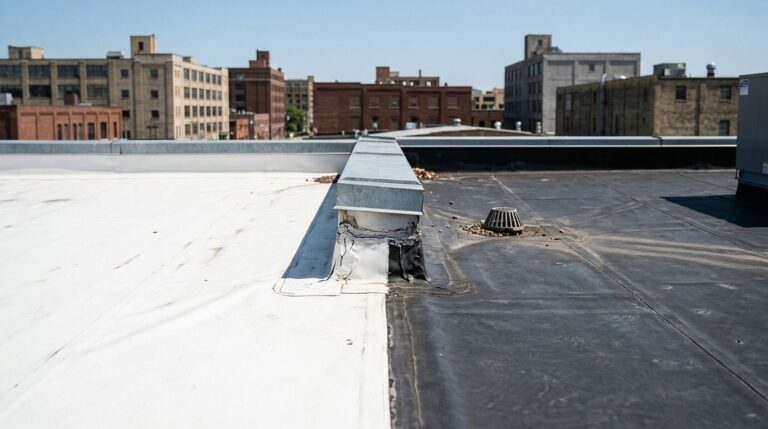
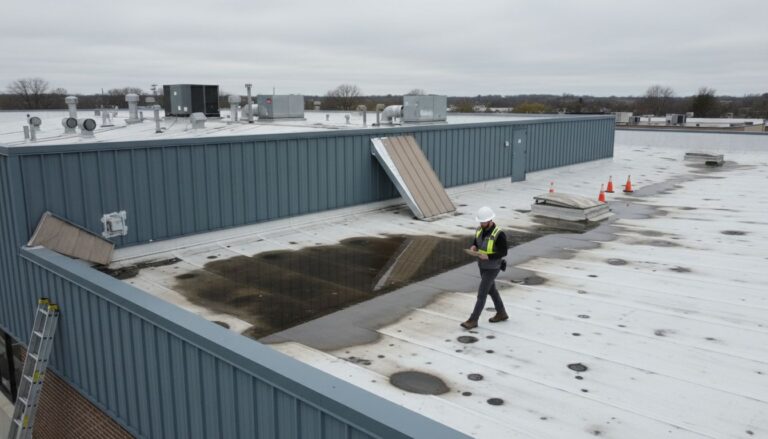
If your building is mostly low-slope, shingle class ratings may not apply to the main roof field at all. Many commercial properties in Saint Paul and the Twin Cities use TPO, EPDM, PVC, SBS modified asphalt, or polymer modified asphalt on the primary roof.
These technologies provide higher impact resistance, but in that case, the better question is whether your commercial flat roof repair plan is ready for hail-driven seam stress, punctures from rooftop traffic after a storm, or clogged drains from loosened debris.
A good rule: use shingle class ratings for the parts of your building that actually have shingles, then choose the right impact and puncture performance for the flat system separately. If you’re scoping the whole property, working with a Saint Paul commercial roofing contractor helps you avoid mixing specs that don’t match the roof you own.
UL 2218, in plain English
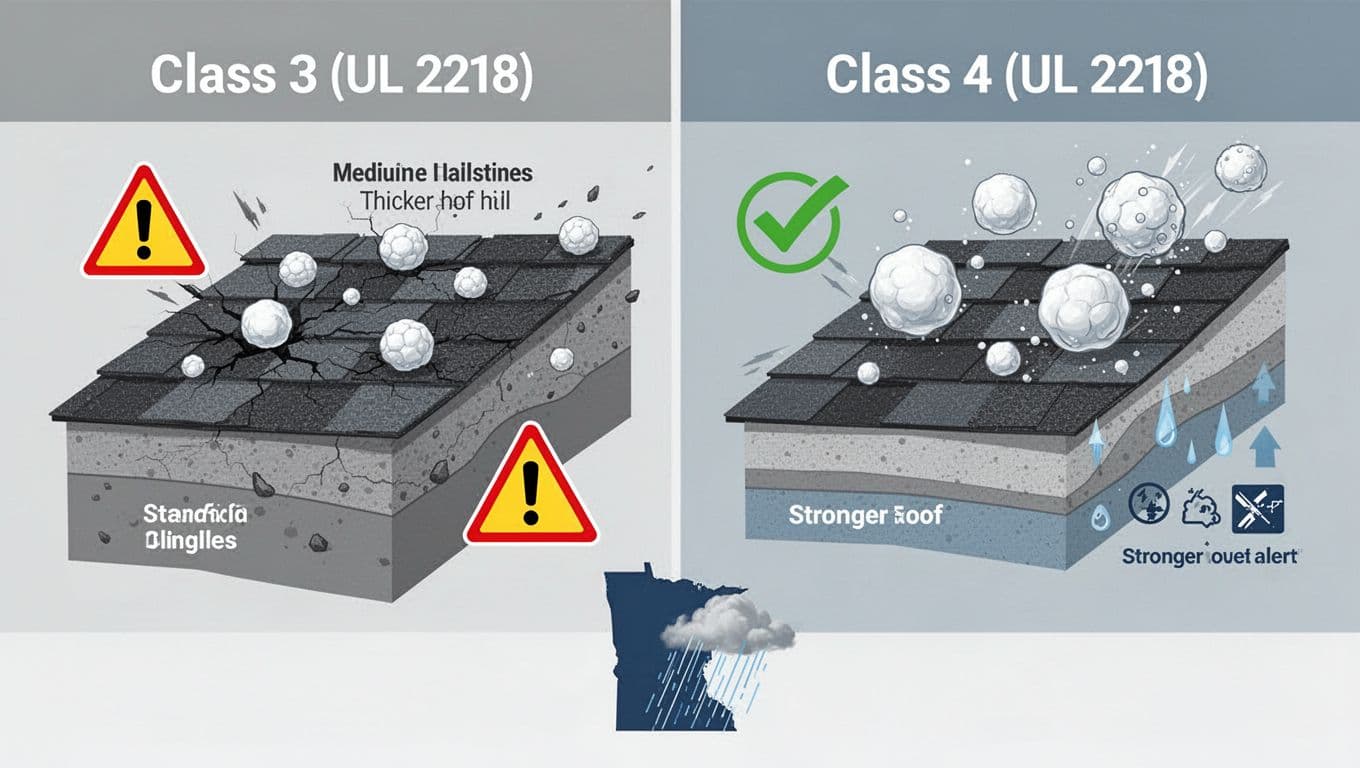
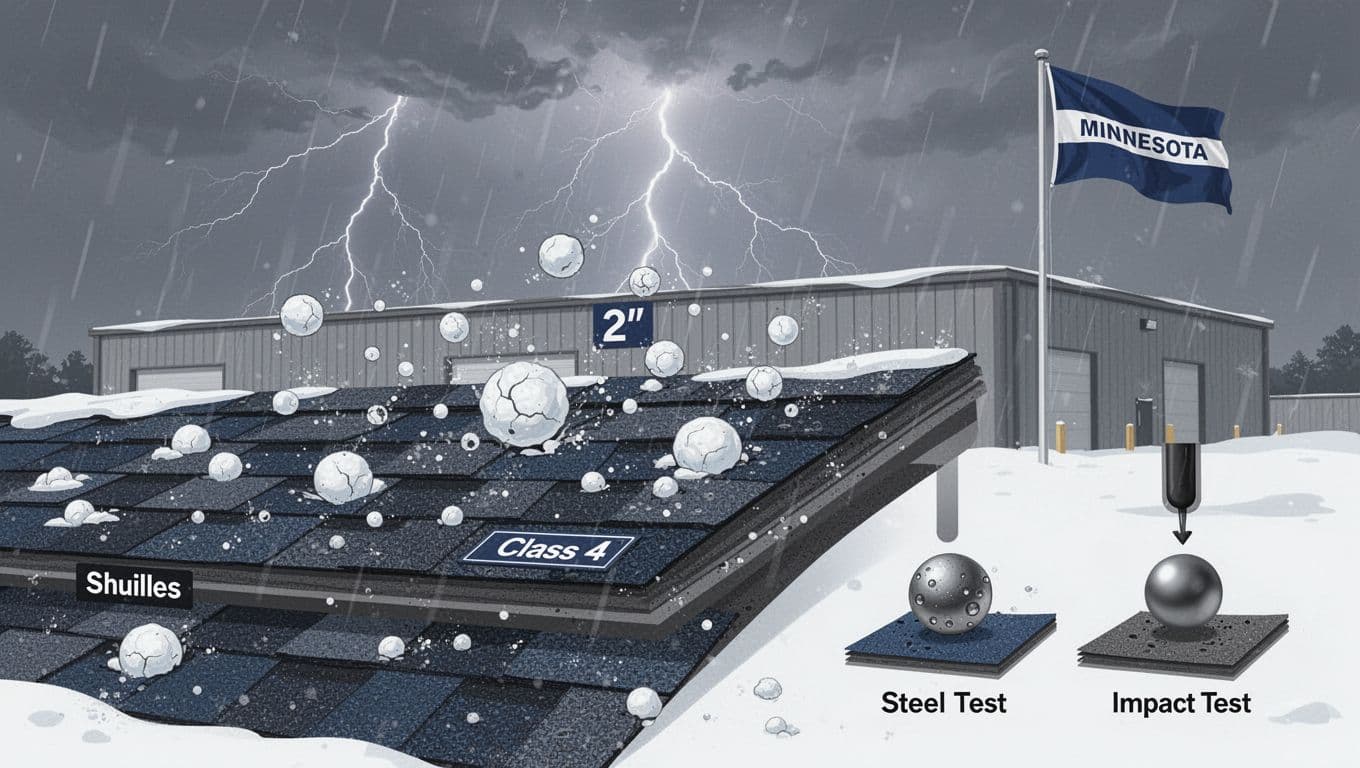
Class ratings (Class 1 to Class 4) commonly refer to UL 2218 impact testing, the steel ball test. The test drops a steel ball onto shingles to simulate hail impacts. Class 3 uses a 1.75-inch steel ball, while Class 4 withstands a 2-inch steel ball to evaluate hail damage resistance. Class 4 is the highest rating in that standard, and it generally signals better impact resistance than Class 3.
When Class 3 is enough, and when Class 4 is the safer bet
Class 3 shingles can make sense when you’re managing a property with a shorter hold period, a tight capital plan, or less exposure (fewer storms, less wind-driven hail, fewer roof facets that face prevailing weather). Class 3 shingles can also be reasonable for secondary structures where a cosmetic hit is acceptable.
Class 4 shingles earn their keep when downtime is expensive, particularly in hail-prone areas. If your building houses inventory, sensitive equipment, or tenant spaces that can’t tolerate leaks, Class 4 shingles mean you’re not only buying a tougher shingle. You’re buying fewer headaches after the storm passes. For a quick primer on how impact-resistant shingles are intended to reduce hail damage, see this overview of hail-resistant shingles.
Edge cases that change the answer fast
Insurance requirements and building ownership timelines can flip the decision. If your carrier offers a discount for Class 4 (not guaranteed, always confirm), the payback can be real. If you’re already near end-of-life and your commercial roof needs repair today, jumping straight to Class 4 during replacement can prevent a “fix it twice” cycle.
Step-by-Step
Set the scope before you pick a class rating
- Confirm what roof sections are actually asphalt shingle roofing. Many commercial buildings only use shingles on entry canopies, mansards, or steep-slope accents, while the main field is a membrane system.
- Write down your real risk, not the rumor. If your site has had multiple hail claims, frequent emergency calls, or repeated “mystery leaks,” you’re already paying the hail tax.
- Decide what counts as failure for your business. A few cosmetic dings might be fine on one property, but unacceptable on another if they harm curb appeal, tenants complain, signage areas look worn, or water intrusion risks increase.
Choosing shingle class ratings
- Use Class 3 shingles when budget control is the top priority. You get improved impact performance compared to standard shingles and better control over upfront cost, without the typical price jump to Class 4.
- Choose Class 4 shingles when you want fewer post-storm problems. Class 4 shingles offer superior durability and lifespan against severe weather and are designed to handle impact better in UL 2218 testing, which often means less bruising and cracking from hail events.
- Ask your insurer, in writing, what they recognize. Some carriers require specific documentation (product name, UL listing, or impact rating proof) and some offer no credit at all.
Lock in the right product, then protect the rating with good details
- Verify the exact product rating on the submittal sheet. Don’t accept “impact-resistant” as a blanket term. Confirm it’s UL 2218 Class 3 or Class 4 for the shingle you’re buying.
- Match accessories to the roof design. Hail exposure is only part of the story. Correct underlayment, flashing, ventilation, and drip edge reduce blow-off risk and moisture issues that look like hail damage later.
- Plan the replacement around operations. If you’re scheduling a larger commercial roof replacement, consult a roofing contractor and ask for a phased plan, staging areas, and a cleanup method that protects customer entrances and parked vehicles.
(If you’re comparing shingle types and profiles for steep-slope sections, this guide to asphalt shingle types can help you frame options before you review bids.)
FAQ
Will Class 4 shingles prevent hail damage completely?
No. Class 4 is a test rating for impact-resistant roofing, not a promise of zero damage regardless of hailstone size or weather conditions. These high-rated asphalt shingles offer secondary benefits such as enhanced wind resistance, but shingles can still show scuffs, granule loss, or dents, and hail can still damage soft metals, skylights, HVAC fins, and gutters.
What to watch after a storm
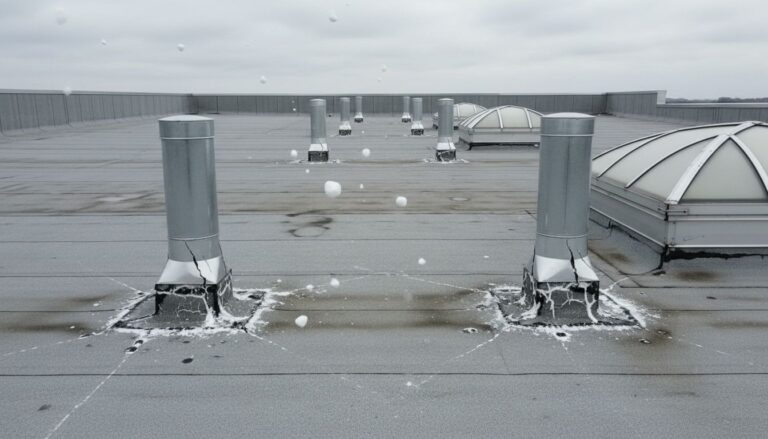
If you see downspout dents, cracked vents, or displaced flashing, book an inspection even if the shingles “look fine” from the ground.
Are Class 4 shingles worth it for a commercial building with a flat roof?
Sometimes, but usually only for the steep-slope sections that actually use shingles. For the main roof field, you’ll get more value from selecting the right membrane and having a clear commercial flat roof repair and maintenance plan.
Common mismatch
Owners sometimes upgrade a canopy to Class 4 and forget the flat roof drains and seams that cause most leak calls.
Do Class 4 shingles qualify for insurance discounts in Minnesota?
It depends on the carrier and policy, including homeowners insurance or similar commercial coverage structures. Some insurers offer insurance premium discounts for impact-resistant roofing, some don’t, and some require proof after installation. This Minnesota-focused discussion of Class 4 impact-resistant shingles and homeowner benefits highlights why documentation matters.
If my roof needs repair after hail, should I jump straight to Class 4?
If the roof is near end-of-life, repeated patching can cost more than it feels like. When a commercial roof needs repair after multiple storms, upgrading during replacement can reduce future claims and disruptions. If the roof is newer, targeted repairs and better accessories may be the smarter first move.
What should I demand in bids so “Class 4” isn’t just sales talk?
Ask for the exact manufacturer and product line, the UL 2218 Class rating, and the full scope for flashing, ventilation, and underlayment. Also ask how the crew will protect landscaping, entrances, and parked vehicles, because jobsite control is where many “good materials” projects go sideways.
Choosing between Class 3 shingles and Class 4 shingles is really choosing how often you want to revisit hail damage problems in your Minnesota roofing setup. If you’d rather spend money once and think about your roof less, Class 4 shingles are often the cleanest answer for hail-prone Minnesota properties.
Need a roof inspection in Saint Paul or the Twin Cities? Call Sellers Roofing Company at +1-651-703-2336 or schedule a free estimate. We are a black-owned, NMSDC-certified MBE roofing contractor with 9+ years experience.