Last updated: 2026-09-24 by Ted Sellers, Owner
A hailstorm can blur the line between an old roof defect and fresh damage. Keep a Minnesota roof insurance file with your current homeowners insurance policy, roof records, dated condition photos, and inspection reports. Add warranties, permits, paid invoices, and renewal notices to help document storm damage after wind, hail, or ice.
When This Applies
Homeowners preparing for hail, wind, or winter damage
This applies if you own a home in Minnesota and want to document the roof’s condition for homeowners insurance before a loss. It’s useful for asphalt shingles, metal roofing, and low-slope sections over additions. It also matters if your insurer has requested a roof inspection or changed your renewal terms.
An old roof is not automatically an uninsured roof. Coverage depends on the policy and what caused the damage. Records help distinguish a fresh wind-lifted shingle from a long-standing leak at a chimney.
Commercial properties and other exceptions
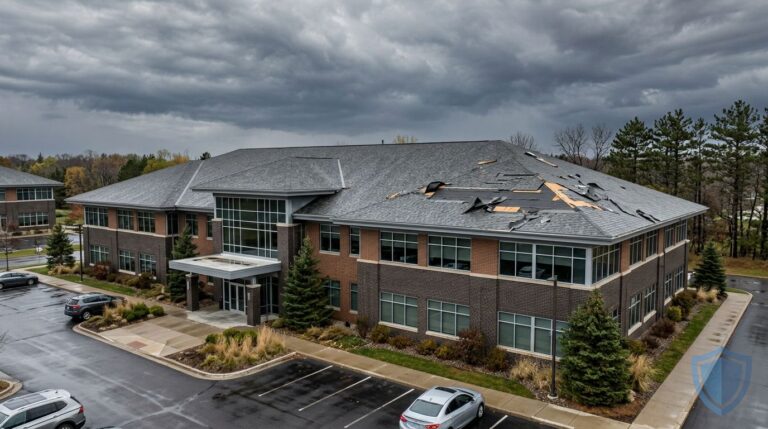
Commercial owners need the same baseline, but their file should include roof plans, maintenance logs, drainage records, and system-specific inspections. A commercial flat roof can hold moisture beneath a membrane without an obvious ceiling stain.
This checklist is preparation, not a Minnesota legal requirement. It won’t establish coverage for wear, poor maintenance, or a loss outside the policy period. A workmanship warranty is separate from property insurance, so keep both documents without treating them as interchangeable.
Step-by-Step
Build the file before storm season
- Save your current declarations page and full policy. Include endorsements, roof-specific terms, the deductible, and any renewal or inspection letters. Replace old copies when coverage changes.
- Find proof of the roof’s age. Save the signed installation contract, paid invoice, permit and final inspection records if available, warranty, and material details.
- Photograph the roof’s current condition. Capture every visible slope or roof area, plus gutters, vents, flashing, edges, and any existing defects. Photograph interior ceilings where leaks have occurred.
- Request a written, dated assessment when the condition is uncertain. Ask for photos, identified defects, repair recommendations, and the inspector’s assessment of likely causes. A homeowner roof inspection checklist can help you check whether the report covers the areas that matter.
Keep the record usable
- File repairs as they happen. Keep the original inspection finding, the repair scope, before-and-after photos, the paid invoice, and any updated warranty terms together.
- Store copies away from the building. A cloud folder or off-site copy lets you retrieve the file if storm damage makes the property inaccessible. Use dates and roof-area names in filenames so an adjuster can follow the sequence.
Which Minnesota Roof Insurance Terms Belong in the File?
Coverage and deductibles can change at renewal
For a home, keep more than the declarations page in your homeowners insurance file. The full policy and endorsements explain covered causes of loss, exclusions, claim duties, the policy limit, and how the insurer values roof damage. Check whether roof damage is covered at replacement cost or actual cash value. With actual cash value, depreciation can substantially change the initial payment.
Look for a separate wind or hail deductible, including one stated as a percentage. Save each renewal notice beside the policy it changed, and note any premium change. Don’t use last year’s terms to estimate this year’s claim.
Roof age and materials affect the discussion
A dated installation invoice is stronger evidence of age than a seller’s recollection. Keep the product name and warranty for asphalt shingles, standing-seam metal, or another installed system. If a prior claim paid for a repair rather than a full roof replacement, retain the scope showing exactly what was done.
Your Minnesota roof insurance file should also contain written insurer communications about roof condition. If an inspection finds deterioration, save the report and the completed repair records. That creates a clearer timeline than an invoice by itself.
What Should Residential Roof Photos Show?
Record the whole roof, then the details
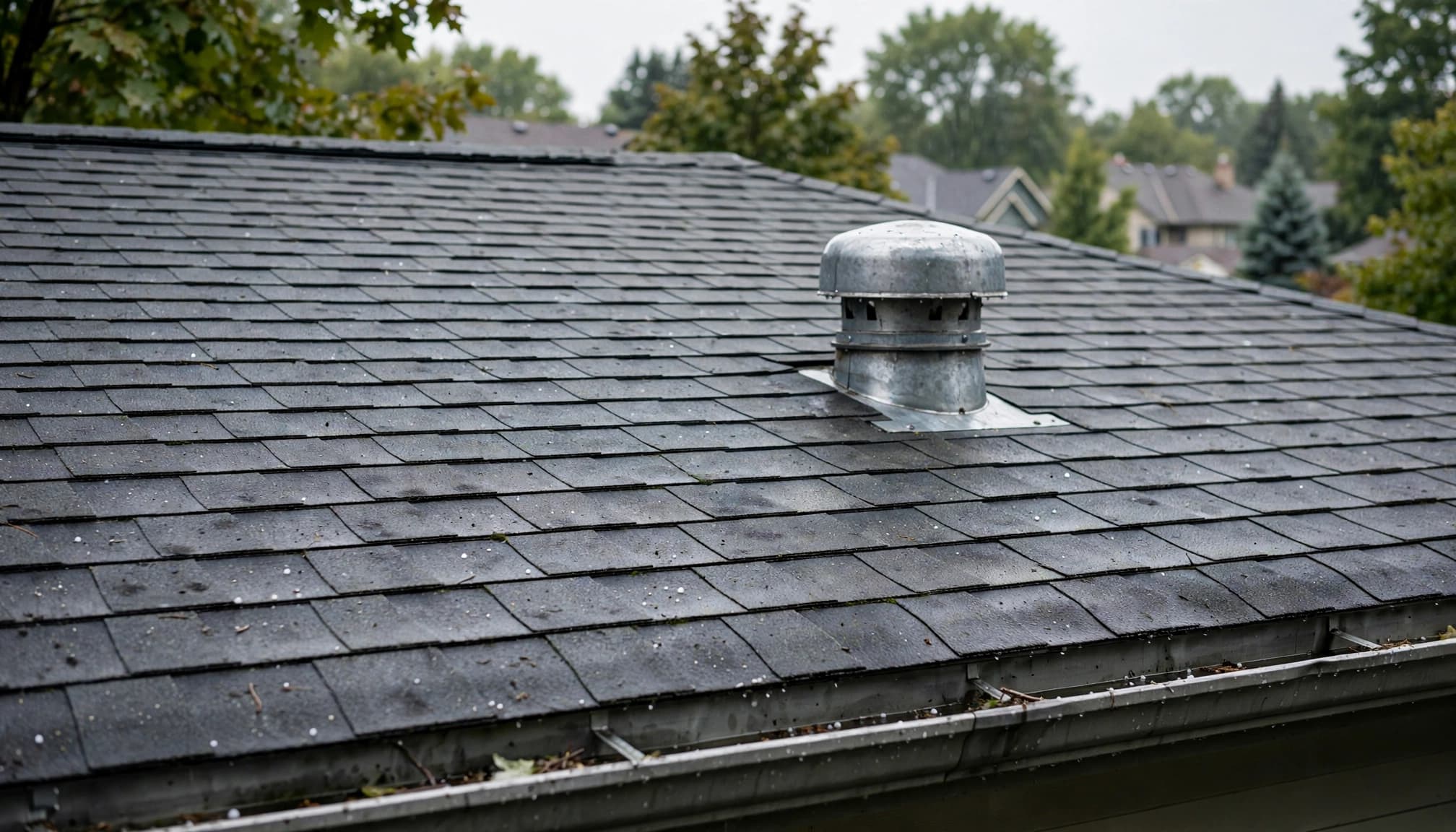
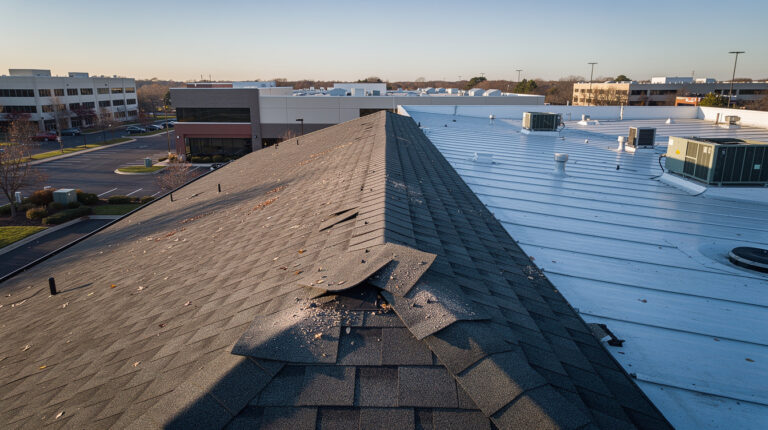
Start with wide views of each roof slope from a safe location. Then capture shingles, ridge caps, vents, pipe boots, valleys, chimney flashing, gutters, and downspouts. Include siding and window screens. These surfaces can help an inspector assess whether later marks fit a storm pattern.
A close-up alone can be hard to place. Pair it with a wider image that identifies the roof area. Keep original image files with their dates. Don’t climb a steep or icy roof for a better angle; a roofer can document areas you can’t safely see.
Separate existing defects from later storm damage
Photograph any existing patch. Record a pre-existing stain, loose flashing, or missing shingle without trying to make the roof look perfect. If hail damage appears later, the earlier record helps show what changed.
Minnesota weather makes this especially useful. Wind-driven rain, freeze-thaw cycles, and ice dams can create different water-entry paths. Save ice dam removal invoices and photos as a separate dated event. Don’t mix winter seepage records with a later summer hail loss.
What Records Does a Commercial Roof Need?
Identify the system and map prior work
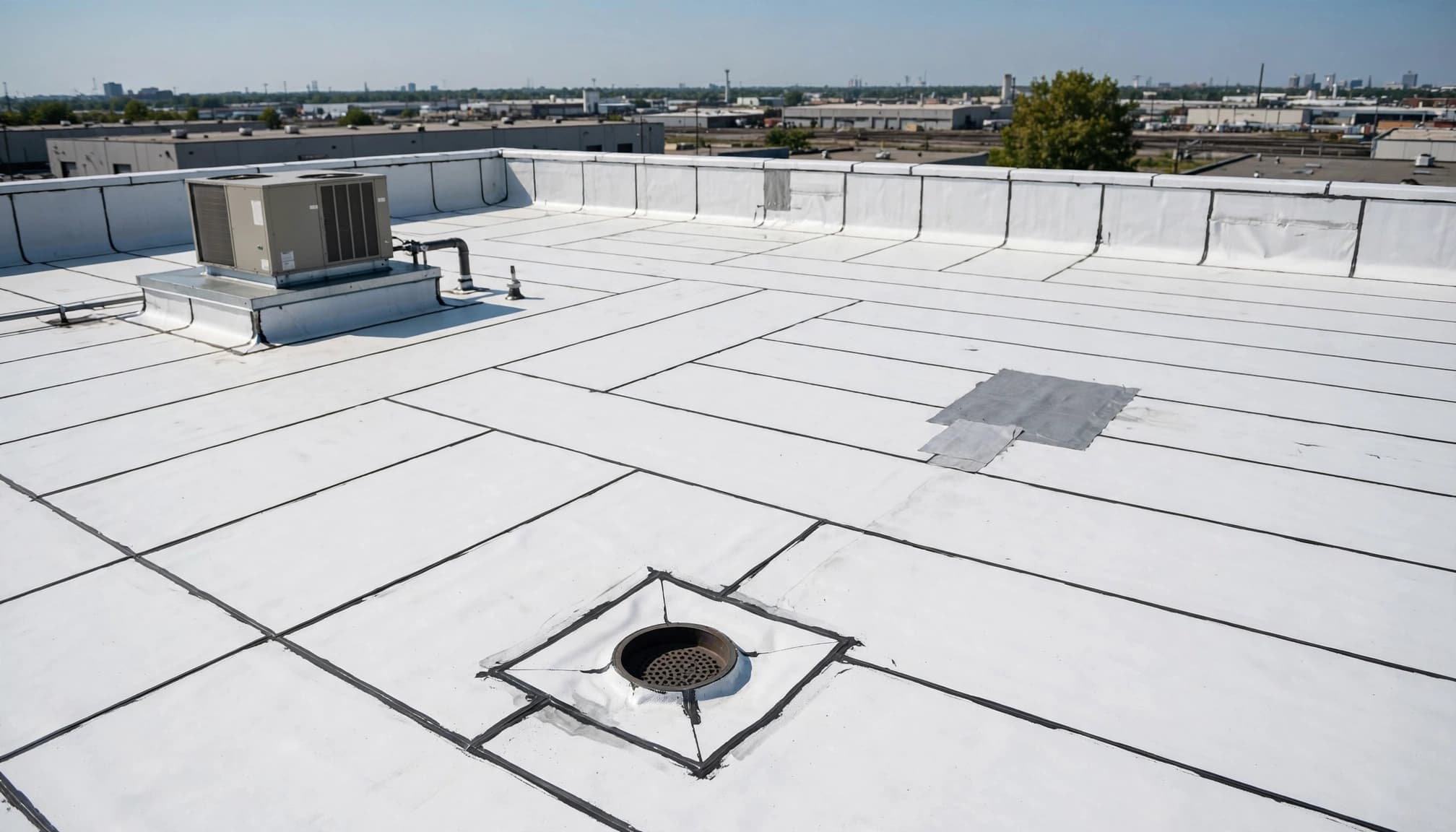
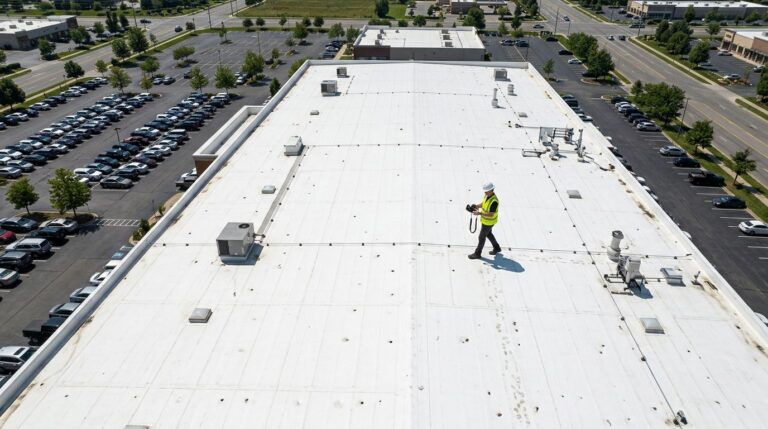
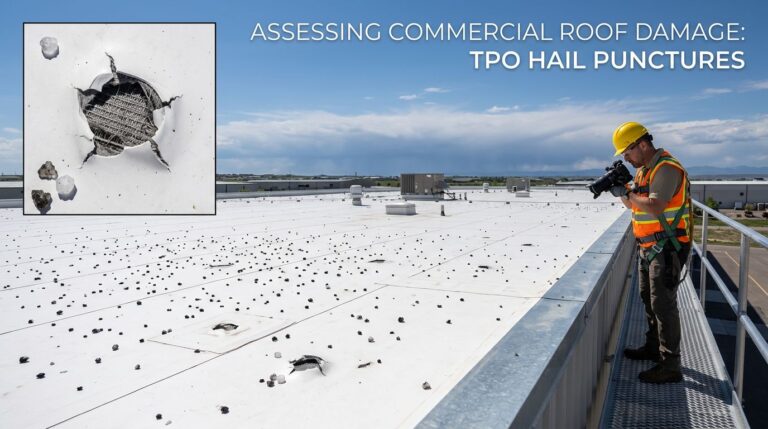
A commercial roof inspection should identify the roof system, its installation history, and distinct roof sections. TPO roofing, EPDM rubber, modified bitumen, and built-up roofing (BUR) don’t show damage in the same way. Save plans and prior reports that locate seams, drains, parapets, penetrations, and repair patches.
For a Saint Paul warehouse or Minneapolis multifamily property, date photos by roof area and nearby rooftop equipment. A commercial roof condition report guide describes findings worth retaining, including drainage, moisture, flashing, and repair priorities.
Retain maintenance and leak evidence
Save drain-cleaning logs, service reports, coating records, and manufacturer-required inspection records. If commercial roof coatings or restoration work were completed, keep the scope showing which areas were treated. This helps a later contractor decide between commercial roof repair and roof replacement.
When a stain appears below a low-slope roof, the entry point may be elsewhere. A roof leak detection report for insurance claims should document tested areas, moisture findings, and the likely water path. If your building lacks a current baseline, you can Get a Free Inspection for Commercial Roofs before the next storm.
What Should You Add After a Storm?
Document damage before permanent repairs
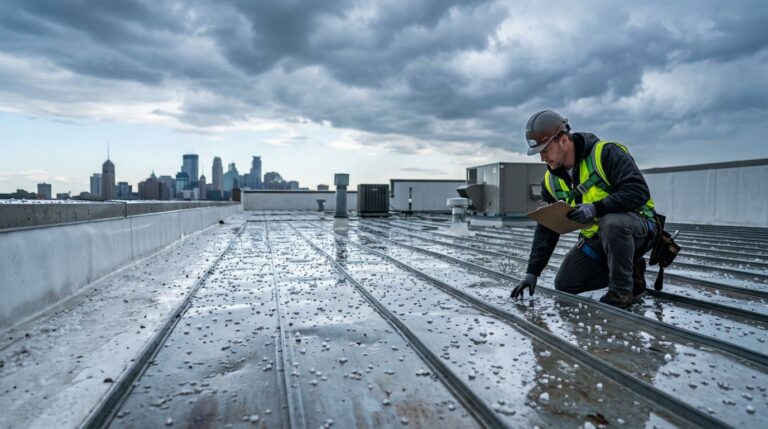
Record the storm date, when you discovered storm damage, and what you observed. Photograph wide areas first, then fresh shingle damage, displaced metal, torn flashing, damaged rooftop equipment, interior stains, and affected contents. Note where each image was taken to connect it to the property damage. A neighborhood hail report can support the date, but property-specific evidence of hail damage shows what happened to your roof.
Limit active water entry and keep receipts for temporary work. The Minnesota Department of Commerce’s residential claim guidance says an insurer may need to inspect damage before repairs. It also advises keeping damaged property until the adjuster says it can be discarded. If you have homeowners insurance, tell your carrier about urgent mitigation rather than leaving an opening exposed.
Compare the inspection with the adjuster’s scope
Report an insurance claim promptly under your policy’s notice terms. Give the insurer the facts: the storm date, visible damage, interior effects, and steps taken to protect the property. An independent roofer can document whether a hail-damaged roof has functional damage, old wear, or both.
Ask for a written, area-by-area inspection report. On a commercial storm-damaged roof, moisture readings may show wet insulation beyond a visible puncture. Share the report, prior condition records, and repair estimate with the insurance adjuster. If the estimate misses an area, request the insurer’s full scope and submit the missing evidence for review.
What If an Insurer Questions Your Roof’s Condition?
Respond to a replacement demand with records
Insurers may inspect aging roofs before renewal and raise concerns about worn shingles, failed flashing, prior patches, leaks, or remaining service life. A request for full replacement deserves a written explanation. Ask which findings require replacement and whether documented residential roof repair would address them.
Send installation records, current photos, and a qualified roofer’s condition report. If the roof needs work, request a written scope that distinguishes isolated defects from widespread failure and explains whether roof replacement is necessary. No single roof age determines the answer for every Minnesota policy.
Check the contractor and keep the decision in writing
If coverage is denied, limited, or subject to a renewal condition, request the insurer’s findings and the policy language behind the decision. Keep related correspondence, including any non-renewal notices, and compare them with the dated evidence. Ask about review options; don’t assume a disagreement guarantees a different result. Minnesota Commerce has also issued a consumer alert about post-storm insurance claims.
Keep the contractor’s written estimate, license information, and insurance documentation. If supplied, keep proof of general liability insurance and workers compensation insurance. ACORD Certificates document coverage, but don’t change policy terms. The Minnesota Department of Labor and Industry’s residential contractor guidance explains licensing requirements for roofing contractors working directly with residential owners. Sellers Roofing Company, based at 801 Transfer Road in Saint Paul, holds MN Builder Contractor License 803862. The contractor documents roof conditions; the insurer decides coverage under the policy.
Frequently Asked Questions
What if I can’t find the original roof installation invoice?
Check closing documents, the prior owner’s records, the contractor, permit records, and any warranty registration. An inspection can describe the roof’s present condition, but it may not establish an exact installation date. Tell the insurer which date is documented and which is only an estimate.
Should I file a claim for small hail marks with no leak?
Get the marks inspected before deciding. Cosmetic marks and functional hail damage aren’t the same, and a roof can have storm damage without an interior leak. Compare the documented repair need with your deductible and policy terms. Don’t claim damage based only on hail reported nearby.
Can an insurer require a new roof even if it doesn’t leak?
An insurer can set roof-condition requirements for homeowners insurance at renewal, without waiting for an active leak. Ask for the inspection findings, whether roof replacement is required, the deadline, and the policy or renewal terms in writing. A roofer’s report can help you discuss whether repair is possible, but it doesn’t compel the insurer to accept it.
Do ice dams and hail belong in the same claim file?
Keep one property file, but separate the events by date. Save winter photos and ice dam removal receipts apart from summer hail photos and inspection findings. The policy may treat the causes differently, and a single unexplained leak photo won’t establish which event caused it.
Does a roofer need to attend the adjuster’s inspection?
It’s helpful to have a roofer present during a roof inspection when damage is hard to see or the roof has several systems and older repairs. A roofer can point out documented areas and explain repair methods. The adjuster can still inspect without one; send the roofer’s written findings afterward if scheduling doesn’t line up.
Keep the Before-and-After Record Clear
The hardest question after a storm is often what changed. Dated condition evidence gives your insurer, adjuster, and roofer a starting point they can all examine.
Keep the current policy beside the roof’s installation, inspection, and repair history. If a storm hits, add new photos and emergency receipts without overwriting the earlier record.
Need a roof inspection in Saint Paul or the Twin Cities? Call Sellers Roofing Company at +1-651-703-2336 or schedule a free estimate. We are a black-owned, NMSDC-certified MBE roofing contractor with 9+ years experience.