Last updated: 2026-08-01 by Ted Sellers, Owner
On Minnesota commercial PVC roofs, hail damage usually shows up as small punctures, star-shaped cracks, scuffed circles, split seams, bruised membrane, or soft spots where insulation crushed below the sheet. Severe strikes can expose the scrim or crack flashing near drains and rooftop units. The hardest part is that serious damage often looks subtle from a distance.
When This Applies
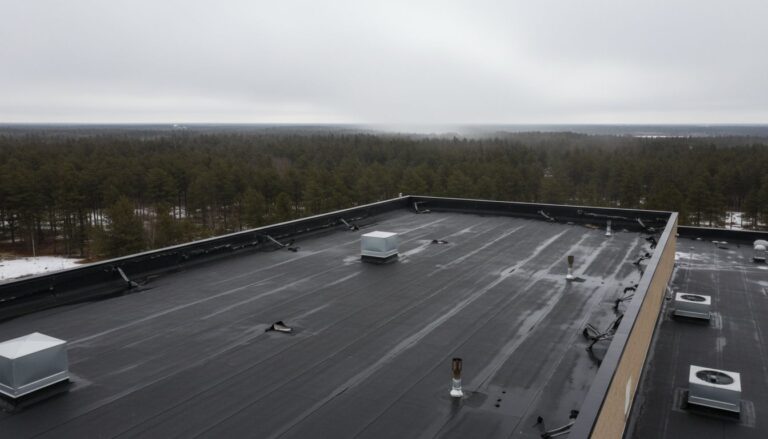
This fits most low-slope commercial PVC membrane roofs
This applies to offices, retail buildings, warehouses, schools, and other properties with a PVC single-ply roof. If a storm dropped hail large enough to dent metal trim, gutters, or HVAC covers, your roof deserves a closer look.
PVC doesn’t usually show hail the way metal does. You won’t always see deep dents. Instead, pvc roof hail damage often appears as small round bruises, half-moon scuffs, pinholes, spider cracks, or thin splits at welded seams. In harder hits, the white top layer can fracture and expose the darker reinforcement scrim below.
Damage also tends to gather around weak points. Look near penetrations, curb corners, drains, parapet edges, and rooftop equipment first. Those spots already flex more, so hail can turn a minor weakness into a leak path. On some roofs, the field membrane looks mostly normal while the detail work takes the real hit.
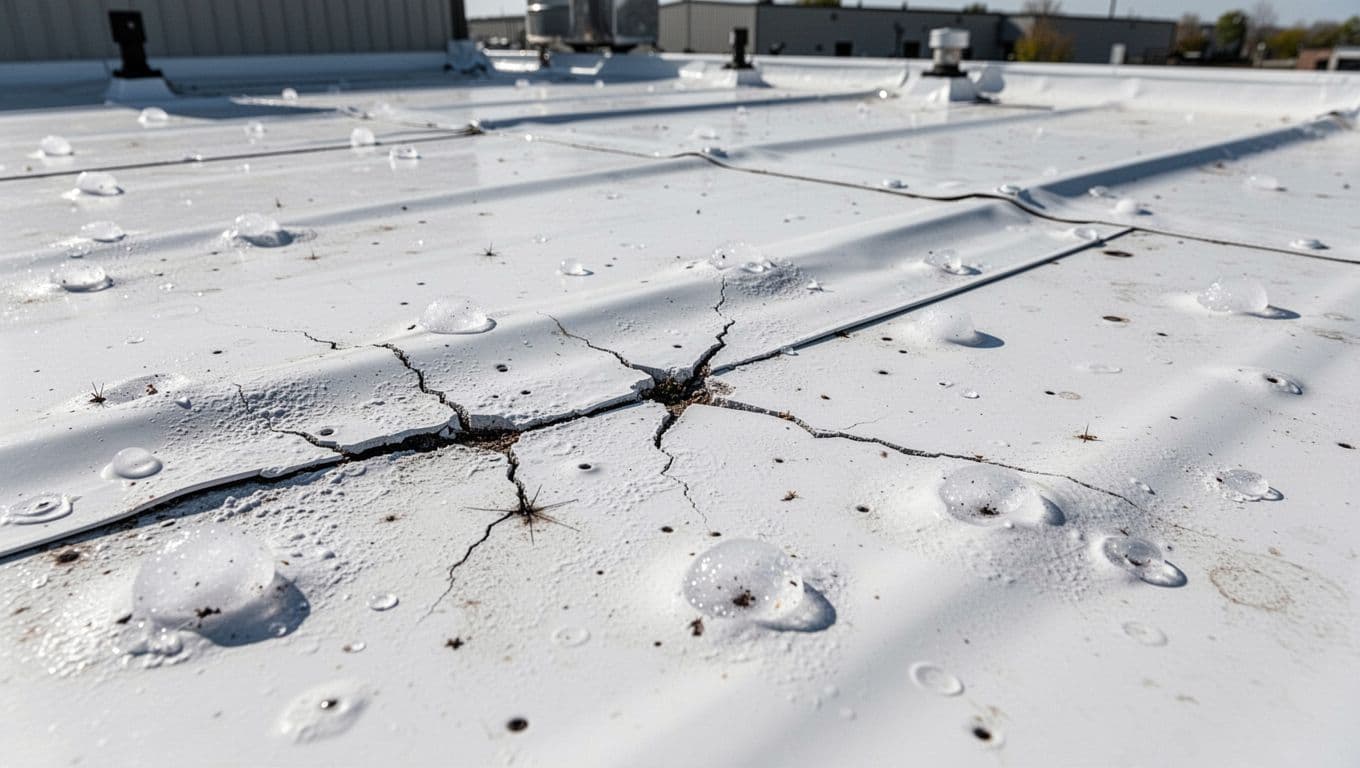
That mix of marks is what makes hail damage easy to miss from the access hatch.
When the marks may not be hail
This doesn’t apply to shingles, metal panels, or EPDM, because those systems fail in different ways. It also doesn’t fit every mark on a PVC roof. Foot traffic often leaves long scuffs. Dropped tools make sharper cuts. Grease from kitchen exhaust can stain or soften the surface without any storm at all.
Service traffic also tends to create worn paths to rooftop units, not random strike patterns. By contrast, hail marks usually look scattered and storm-driven.
Edge cases on older Minnesota roofs
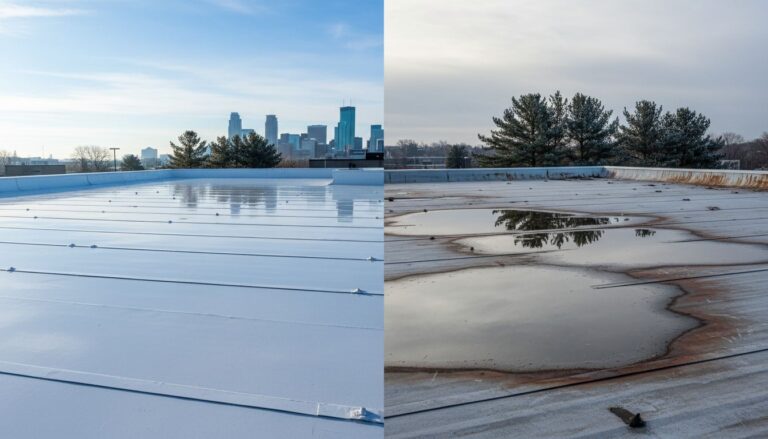
Cold winters change the picture. An older membrane can turn stiff and brittle, so smaller hail may crack it more easily. On a weathered, dirty, or coated roof, the damage may be hard to see, even when water has already reached the insulation.
Step-by-Step
How should you inspect a PVC roof after hail?
Use a careful, repeatable process. That keeps you from missing hidden impact zones or blaming hail for old wear. It also helps you decide whether the next call is for a quick patch or a broader review.
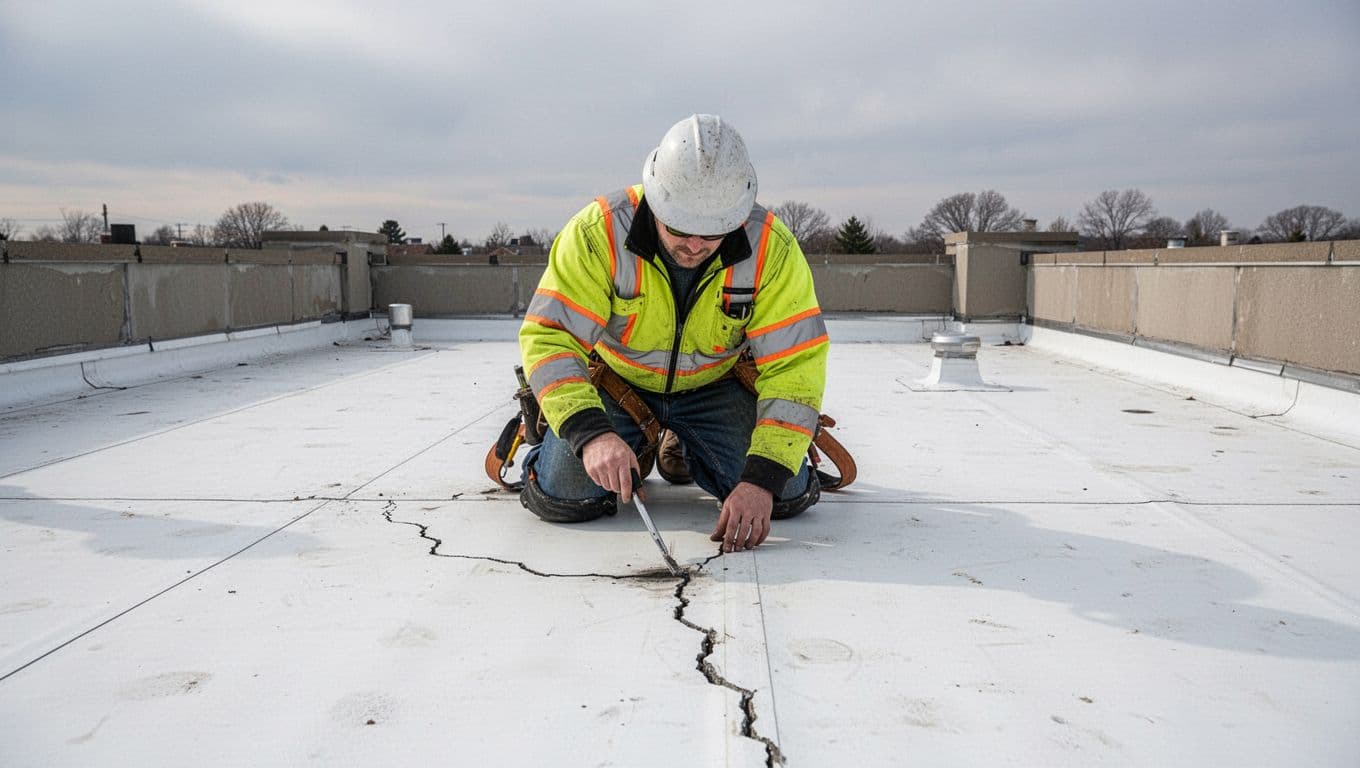
- Start with the storm record. Note the date, hail size, wind direction, and any reports from staff or tenants. That timeline helps separate fresh damage from older wear.
- Check the building interior next. Fresh ceiling stains, damp smells, wet wall tops, or new drips after the storm can point you toward the roof section that took the hit.
- Look at rooftop metal for clues. Dents on HVAC panels, vent caps, edge metal, and downspouts often confirm storm severity before you study the membrane itself.
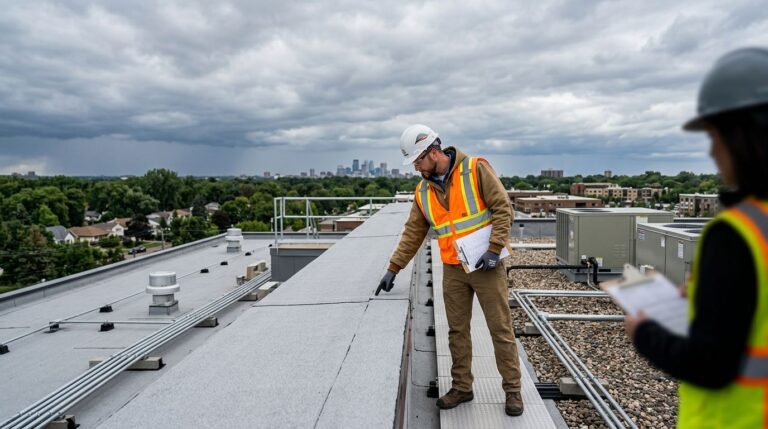
- Walk the PVC field in a grid pattern. Watch for circular scuffs, star cracks, tiny punctures, exposed scrim, and spots where the surface looks bruised or slightly crushed.
- Compare suspect areas with cleaner sections nearby. Real hail damage usually breaks the surface pattern. Dirt, age, and foot traffic tend to look more uniform.
- Slow down at seams, flashings, drains, and penetrations. Hail often opens existing weak points first, especially where the membrane bends around curbs or terminates at metal edges.
- Pay attention to feel, not only sight. A soft or spongy area can mean the insulation below fractured on impact, even if the surface damage looks minor. Don’t stab the membrane with a screwdriver or sharp probe if you aren’t trained.
- Document everything with close and wide photos, then mark locations on a roof plan. If water may have gotten below the membrane, schedule professional commercial leak detection before moisture spreads sideways through the assembly.
Hidden damage is why many owners miss early problems. On a low-slope roof, the leak rarely shows up right under the impact point.
When does hail damage mean repair or replacement?
What damage usually points to repair?
If impacts are isolated, the membrane still flexes, and insulation stays dry, commercial flat roof repair is often enough. A contractor can patch punctures, re-weld split seams, and replace damaged flashing without touching the full roof system.
That approach makes sense when the roof still has useful service life and the damage stays limited to a few sections. In plain terms, the commercial roof needs repair when the problem is real but contained.
What damage starts to point toward replacement?
A broader pattern changes the math. When hail fractures the membrane across large areas, exposes scrim in many spots, crushes insulation, or adds to years of aging, commercial roof replacement may cost less than repeated patching.
Replacement also becomes more likely when moisture testing finds wet insulation in many areas, or when new repairs would cover a large share of the roof. At that point, patching can feel like taping a cracked windshield.
A Minnesota exception to keep in mind
Freeze-thaw cycles widen hairline cracks faster than many owners expect. So even subtle hail marks on an older PVC roof deserve a serious review, especially if the building already has a leak history.
FAQ
Can hail damage a PVC roof without obvious holes?
Yes. Hail can bruise the membrane or crush insulation first. The roof may look mostly fine, yet water can still enter later through stressed seams or hairline fractures.
Are dents on rooftop metal useful evidence?
They are. PVC may show light surface damage while nearby metal shows clear impact. Matching those signs helps confirm the storm was strong enough to hurt the roof.
Should I wait for an active leak before calling someone?
No. Waiting costs more because water travels under low-slope membranes. By the time a ceiling stain appears, the wet area below the roof may be much larger.
How soon should a commercial roof be checked after hail?
As soon as it’s safe to access the roof. Fresh damage is easier to document, and fast action helps separate storm impact from older wear or maintenance scars.
What happens if I delay repairs until the next season?
Small openings can widen through winter. Snow load, ponding water, and freeze-thaw movement can turn a simple patch into a much larger repair scope by spring.
Final Takeaway
What should a business owner remember most?
On Minnesota PVC roofs, hail damage rarely looks dramatic. It usually appears as small surface changes that hide bigger problems, such as pinholes, split seams, bruises, soft spots, and broken detail work around penetrations.
That quiet damage is the risky kind. If a storm hit your property and the roof shows even subtle impact marks, treat them as a warning, not cosmetic noise.
Need a roof inspection in Saint Paul or the Twin Cities? Call Sellers Roofing Company at +1-651-703-2336 or schedule a free estimate. We are a black-owned, NMSDC-certified MBE roofing contractor with 9+ years experience.