Last updated: 2026-08-01 by Ted Sellers, Owner
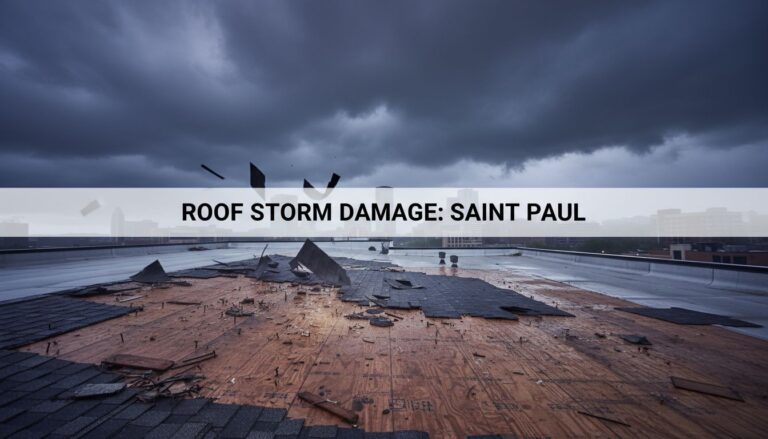
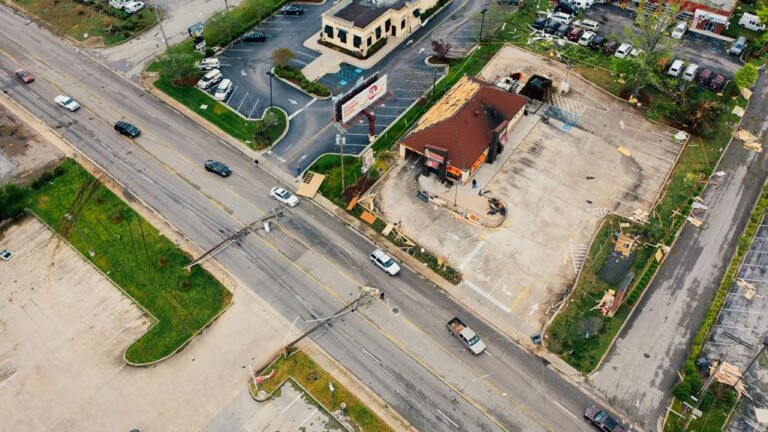
Collateral hail damage is damage to nearby roof components or building surfaces, like collateral indicators on soft metal components, that helps show a hailstorm had enough force to harm the roof. Think dents on metal vents, HVAC covers, gutters and downspouts, flashing. Identifying these marks is a vital step in a professional roof inspection to support an insurance claim. It supports a claim, but by itself it doesn’t guarantee roof approval, repair payment, or full replacement.
Key Takeaways
- Collateral hail damage on soft metals like vents, gutters, and HVAC covers proves hail force for roof claims, especially on commercial low-slope roofs where membrane damage is subtle—but it supports, doesn’t guarantee, approval or replacement.
- Distinguish cosmetic marks (e.g., granule loss) from functional damage (e.g., punctures, seams, waterproofing failure); strongest claims tie collateral evidence to roof findings via inspections and moisture scans.
- Document immediately with photos, storm records, and pro inspections; protect the site without altering evidence, then meet adjusters with clear reports focusing on functional impacts.
- File claims promptly—don’t wait for leaks; one-sided or accessory-only damage can still help if consistent, but old dents or foot traffic weaken the case.
When This Applies
What insurers usually mean by collateral hail damage
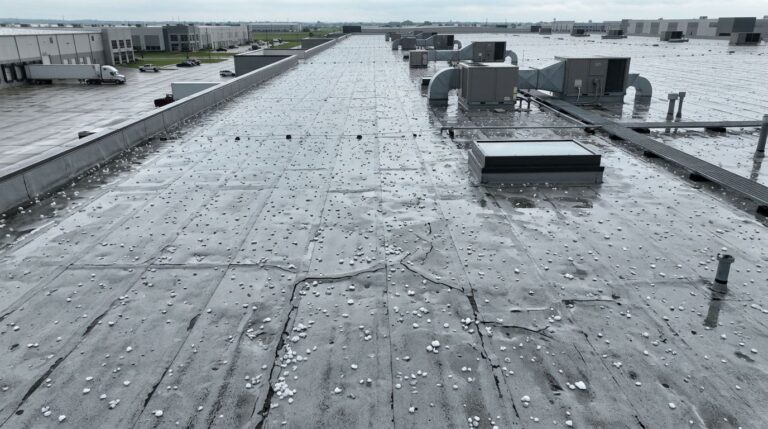
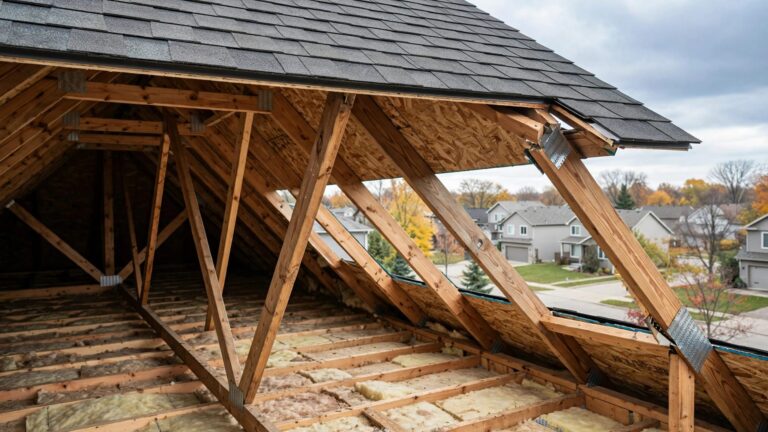
This applies to commercial property owners filing a storm claim after hail. It’s most useful when roof damage is hard to spot from the ground, especially on low-slope systems like TPO, EPDM, modified bitumen, and metal. Unlike residential roofs covered in asphalt shingles, where hail readily causes granule loss or cracks on three-tab shingles and dimensional shingles, commercial membranes often show subtler signs.
Insurers and inspectors often look for hits on “soft metals” first. These include roof vents, edge metal, drain bowls, rooftop units, and gutter systems. Why? Because hail often leaves clear dents there, even when the roof membrane looks normal at first glance. It’s like seeing dents on a truck hood after a storm. You know the storm had force, but you still need to check the engine. They also examine spatter marks on window screens or siding and trim as indicators of hailstone size, helping determine if it met the threshold size for a valid claim.
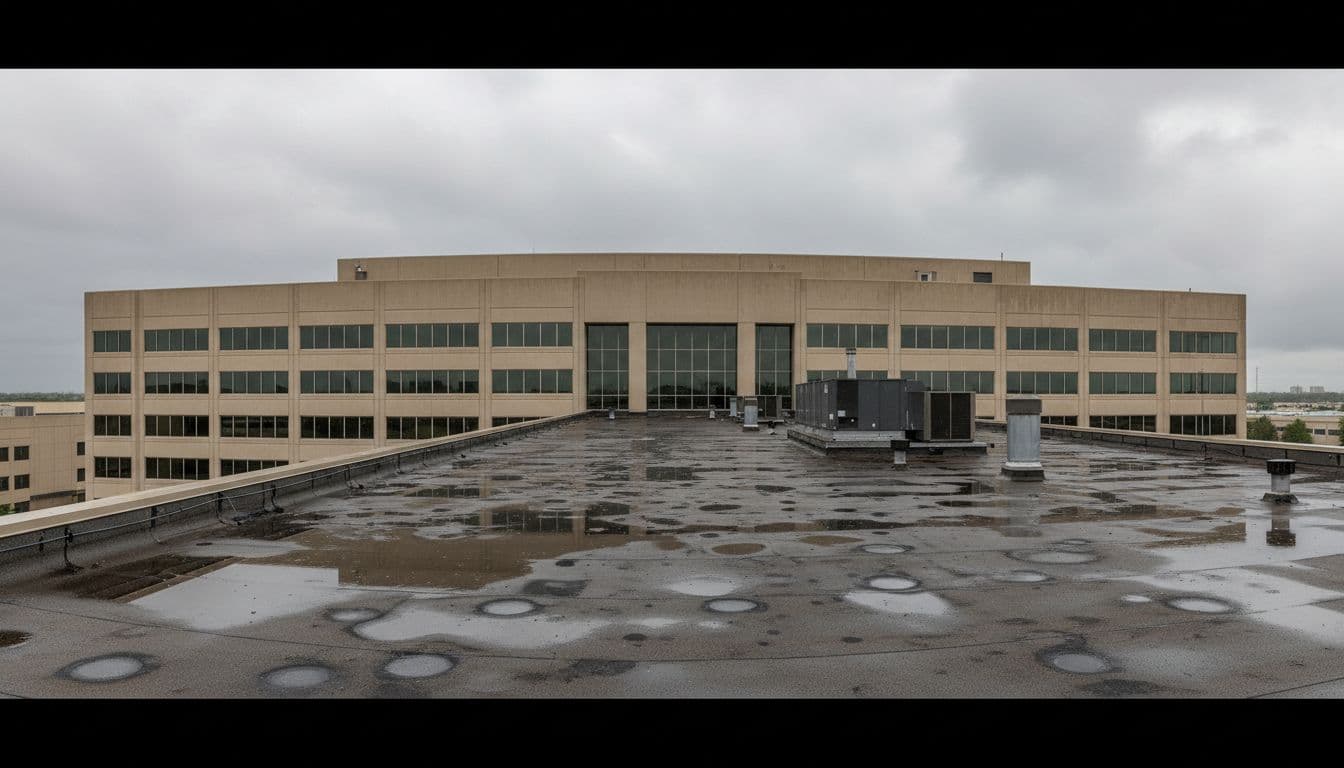
For business owners, collateral hail damage matters most when paired with roof evidence, moisture findings, and date-of-loss records. If water entry is suspected, leak detection after hail damage can help connect surface impact to hidden problems.
Collateral hail damage is supporting evidence, not automatic proof that the whole roof should be replaced.
When it doesn’t apply, and the exceptions that matter
It doesn’t help much if the dents are old, caused by foot traffic, tools, or other trades. It also may not help if the hail only marked accessories and left the roof covering with no functional damage, such as on asphalt shingles showing only cosmetic marks.
Cosmetic marks versus functional roof damage
This is the key split in many claims. Cosmetic damage changes appearance, like granule loss or missing granules on asphalt shingles. Functional hail damage affects waterproofing, seams, fasteners, coating, or the roof’s service life. A dented metal cap may support the storm story. A punctured membrane or bruised insulation supports payment.
Edge cases matter, too. A metal roof may show visible dents but still resist leaks. A single-ply roof may show little from above, yet have punctures near seams or flashing. That’s why a claim can end in commercial flat roof repair on one building and commercial roof replacement on another.
Step-by-Step
How to handle a commercial roof claim when collateral damage shows up
Use a clear process, because speed and records often shape the outcome as much as the storm itself.

- Document the site right away. Take photos of roof edges, gutters and downspouts, metal caps, HVAC housings, and any interior signs of water. Also save storm dates, weather alerts, and tenant reports, because timing matters in a claim.
- Protect the building without changing the evidence. If water is getting in, stop active leaks with temporary measures. Keep receipts and photos before and after, so emergency work doesn’t erase proof.
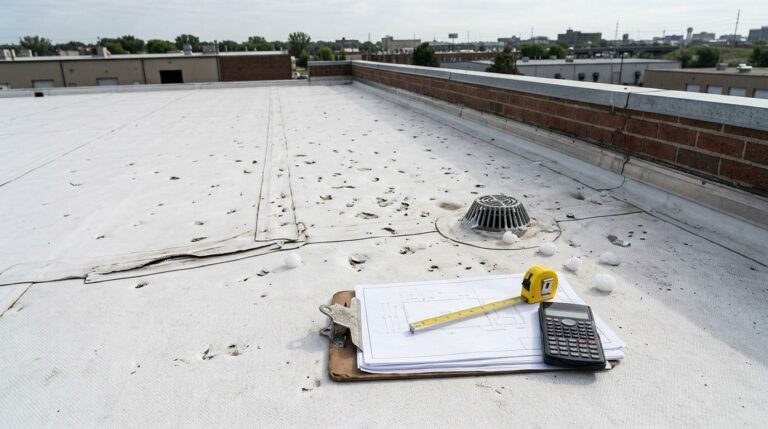
- Get a commercial roof inspection, not a quick glance. Ask for a close review of soft metals, membrane seams, flashing, rooftop units, and drainage areas. If your roofing contractor like the Saint Paul commercial roofing team handles claims, ask for photo-marked findings you can share with the adjuster.
- Separate collateral damage from direct roof damage. Your report should show what was dented, what was punctured, and what was saturated, including functional shingle damage such as mat breakage of the fiberglass mat or bruising that exposes the underlying bitumen in a random pattern. That’s the point where an owner learns whether the commercial roof needs repair, a limited section replacement, or a broader claim.
- Meet the insurance adjuster with evidence in hand. Walk the site with photos, inspection notes, a roof diagram, and test square methodology for documenting hits. Keep the focus on functional damage, not guesswork. If collateral hits line up with roof hits, the claim gets stronger.
- Match the remedy to the actual damage. Some claims support localized repairs. Others support a full commercial roof replacement when damage is widespread, insulation is wet, water penetration has occurred, or the system can’t be restored to a watertight condition.
FAQ
Can collateral hail damage get my whole roof approved?
Not by itself. It helps prove storm impact, but the carrier still wants proof that the roof covering suffered covered damage. Unlike asphalt shingles, where granule loss can indicate widespread issues, on commercial roofs, that often means punctures, broken seams, coating loss, or trapped moisture.
If the roof is low-slope
Low-slope systems can hide damage well, including missing granules and other subtle signs. That’s why surface dents alone rarely settle the issue.
What if the adjuster sees dents on HVAC units but not on the membrane?
That can happen, even if roof vents show similar dents. In that case, the insurance adjuster may approve payment for damaged metal items but not the full roof. A second inspection, moisture scan, or more detailed roof testing may show whether the roof also took functional hits.
Should I wait for a leak before filing a hail claim?
No. Waiting can muddy the timeline and make causation harder to prove. Hail damage doesn’t always leak right away, especially on commercial systems where water can travel before it shows inside.
Can an older storm hurt my current claim?
Yes. Old dents create a date problem due to weathering. If past storms hit the property, weathering on prior damage, such as discoloration or erosion, requires better records, fresh photos, and a careful inspection to separate it from the current event.
What if only one side of the building shows hail marks?
That isn’t unusual. Wind direction, roof height, nearby buildings, and storm angle can all concentrate hail on one elevation, causing elevation damage. A one-sided pattern can still support a valid claim if the evidence is consistent.
Dents on metal parts can open the door to a roof claim, but they don’t finish the case. The strongest claims tie collateral hail damage to clear roof findings and solid documentation.
For a business owner, the smart move is simple: inspect early, record everything, and focus on functional damage. That keeps the claim grounded in facts, not assumptions.
Need a roof inspection in Saint Paul or the Twin Cities? Call Sellers Roofing Company at +1-651-703-2336 or schedule a free estimate. We are a black-owned, NMSDC-certified MBE roofing contractor with 9+ years experience.