Last updated: 2026-08-01 by Ted Sellers, Owner
To detect a commercial roof scupper leak, trace water from the inside out, then confirm the source at the roof edge. Start by mapping interior stains, inspect the scupper opening and roof flashing, and check the roof membrane upslope where water feeds the scupper. Finish with a controlled water test or professional moisture testing to pinpoint the exact breach.
When This Applies
Roof designs where scupper leaks are common
This applies to commercial buildings with a flat roof or low-slope roofs that drain through wall openings at the edge. You’ll often see scuppers on roofs with a parapet wall, such as retail centers, offices, warehouses, and multi-tenant properties.
Scupper-related leaks are most likely when:
- You notice leaks after heavy rain, not after snowmelt only.
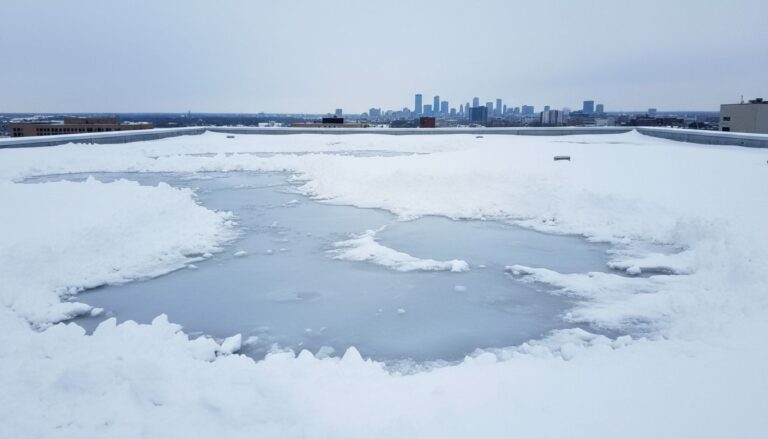
- Ponding water near the perimeter, then “disappears” toward the wall.
- The scupper area shows rust streaks, staining, or repeated patching.
If you want a quick refresher on what scuppers do and how they’re built into roof edges, this roof scupper guide offers helpful context.
When it doesn’t apply (or scuppers are a red herring)
Sometimes the scupper gets blamed because it’s visible, not because it’s guilty. This may not apply if your roof drains to an internal roof drain instead of scuppers, or if standing water suggests issues with the drainage system, or if the leak happens during cold snaps with no precipitation (often condensation or mechanical issues).
Also, don’t assume the nearest scupper caused the leak. Water can enter at a seam, travel in the insulation, and show up at the edge, even if ponding water is farther away.
If the ceiling stain sits 20 feet from the wall, the leak source can still be at the scupper, or it can be the opposite. On low-slope roofs, water behaves more like spilled coffee on a table than a drip straight down.
Step-by-Step
A practical process to confirm a commercial roof scupper leak
-
Start your roof inspection with safe timing and access. Pick a dry day first, since active rain hides pathways. Use proper fall protection and follow your building’s roof access rules.
-
Map the interior evidence before you go up. Note which rooms leak, how far from exterior walls, and whether it happens only during wind-driven rain. If you have drop ceilings, look for the “first wet tile,” not just the worst stain.
-
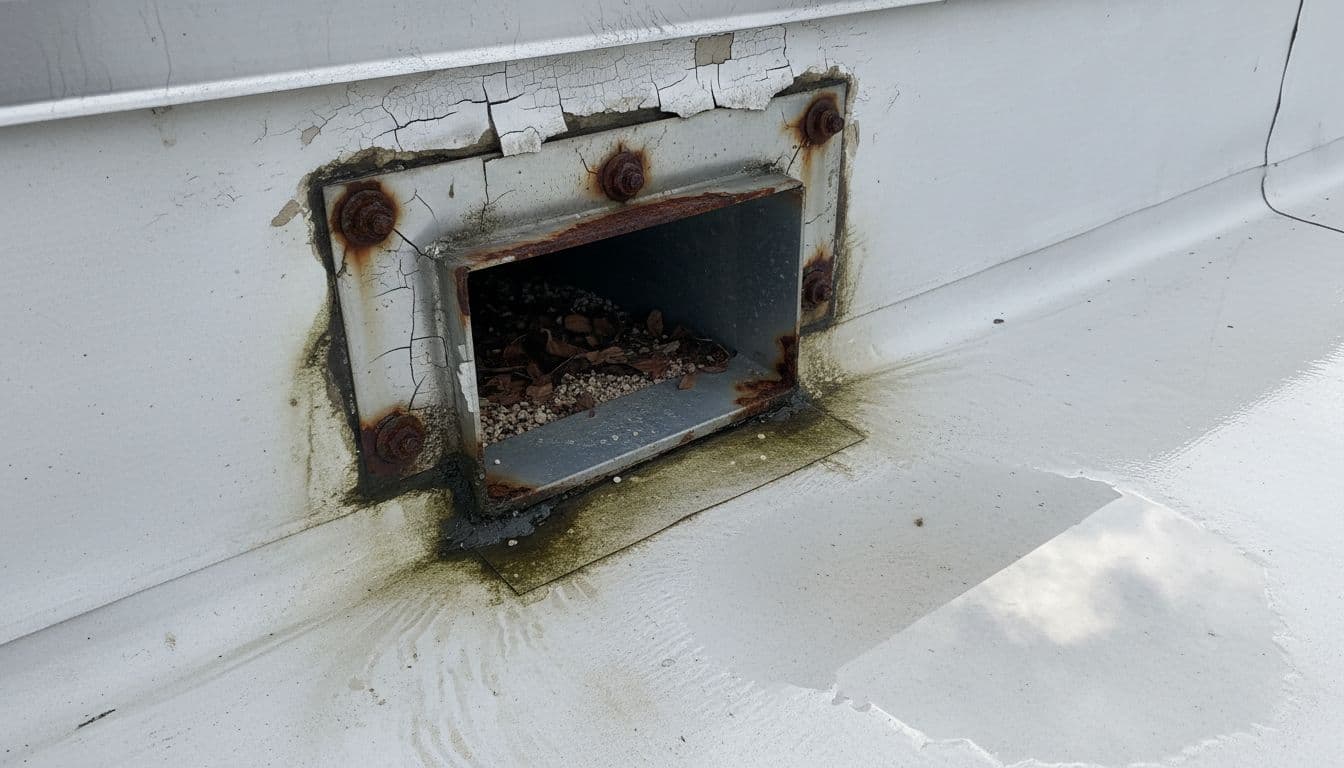
Inspect the scupper opening for obvious failure on box scuppers or through-wall scuppers. Clear leaves, roofing granules, and trash. Then look for rust, gaps at seams, and water staining under the scupper exit on the wall face.
-
Check the scupper roof flashing and corners at roof level. Focus on the transition where roof membrane meets metal (or where coating meets metal) on TPO roofing or PVC roofing. Look for cracked sealant and sealant failure, open lap joints, loose fasteners, and tiny splits at inside corners. Corner failures are common because thermal expansion concentrates movement there.
-
Look upslope where water feeds the scupper. Walk 10 to 20 feet back from the opening. Check for open seams and roof flashing issues, punctures from foot traffic, “fishmouths” in roof membrane laps, membrane damage, and wrinkles that steer water sideways.
-
Inspect the parapet cap and parapet wall details above the scupper. Coping joints, counterflashing edges, roof penetrations, and termination bars can let water into the wall cavity. That water can reappear at the scupper area and mimic a scupper leak.
Edge case: wind-driven rain
If leaks show up only with strong wind, prioritize wall and coping joints. Wind can push water upward into small gaps.
-
Verify the discharge path isn’t backing up. A scupper can leak because water can’t leave. Check the downspouts connection, conductor head, and any below-grade drain for clogs and clogged drains. During a storm, a partial blockage can raise water level with standing water at the scupper box and force water into seams. These elements support secondary drainage via overflow scuppers and downspouts.
-
Run a controlled water test in short zones. Use a hose at low pressure (no spray nozzle blast). Wet one area at a time for 10 to 15 minutes: first the scupper box, then the immediate perimeter, then seams upslope. Have someone inside watching. Stop as soon as you reproduce the leak so you don’t create new confusion.
-
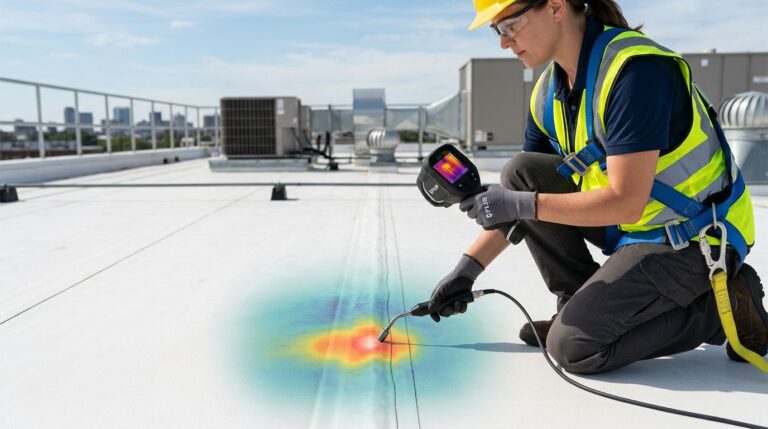
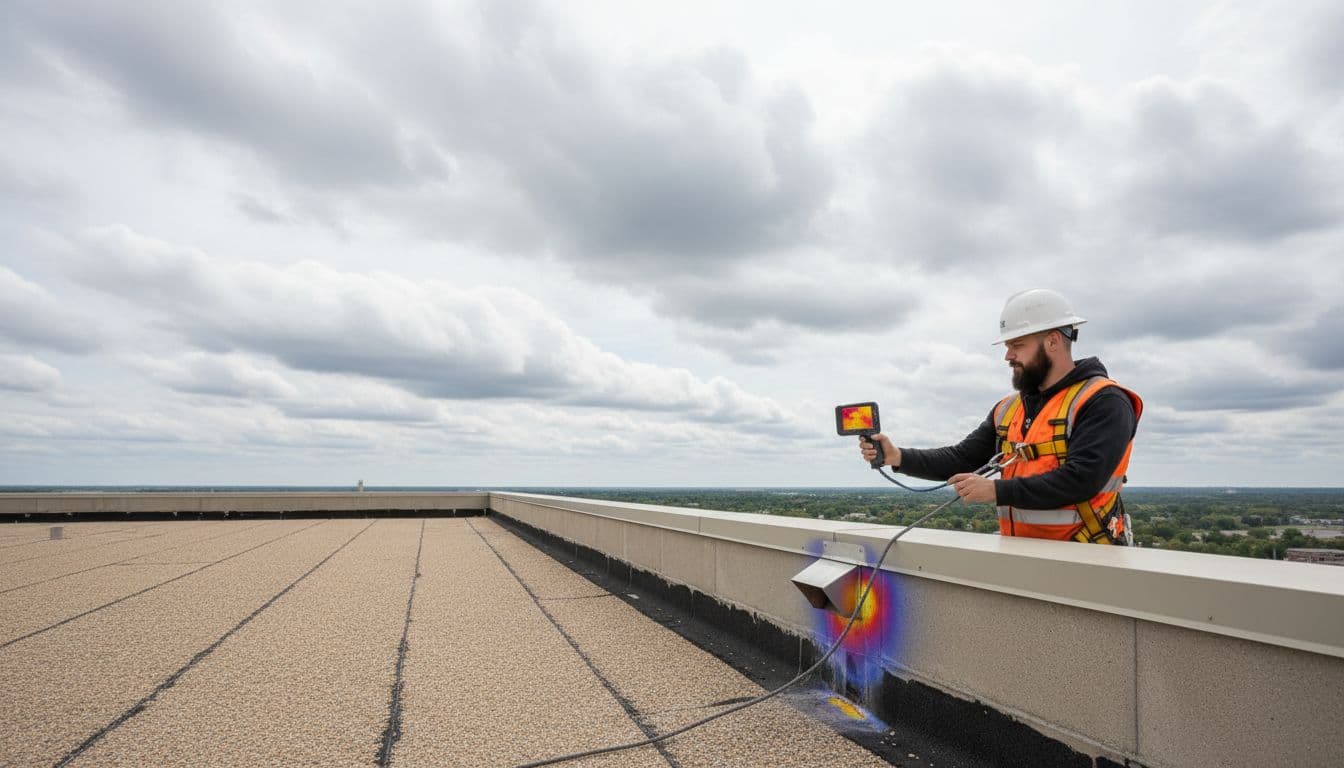
Confirm with moisture tools when the leak is stubborn. Infrared scans and electronic testing can find wet insulation and pinhole breaches that eyes miss. For complex buildings, it’s often faster and cheaper than guessing. In Saint Paul, a specialized professional roof inspection like commercial roof leak detection in Saint Paul can help you avoid repairing the wrong spot.

-
Document, then decide the smallest effective fix. Take photos, mark suspect seams, and record test times. Even if you plan repairs now, documentation helps warranties, insurance, and repeat troubleshooting.
After You Find the Source: Repair or Replace?
How to choose the next move without overspending
Once you confirm the entry point, match the fix to the cause, not the symptom. If the issue is a single open seam or a small puncture near the scupper on your flat roof, targeted emergency roof repair or commercial flat roof repair may solve it fast. If the scupper metal is rusted through or poorly integrated with the membrane, the right fix may involve removing the old roof flashing and installing prefabricated roof flashings for reliable waterproofing.
Drainage problems deserve equal attention. A clean scupper and downspouts in the drainage system that discharge freely reduces ponding water stress on seams and terminations. If you’re setting a preventative maintenance plan, this guide on clogged scupper cleaning explains why simple cleaning can prevent repeat leaks.
Still, some findings raise the stakes. If you discover widespread wet insulation, soft decking, structural damage, or chronic edge failures across multiple scuppers, your commercial roof needs repair at a system level to protect the building envelope. At that point, a broader scope, sometimes even commercial roof replacement, can cost less over time than repeated patches.
For owners comparing repair versus replacement options, it helps to speak with a local commercial roofing contractor that handles both, such as this Saint Paul commercial roofing team that works on low-slope systems common across the Twin Cities.
FAQ
Can a scupper leak show up far from the scupper inside?
Yes. On flat roof assemblies, water can travel along the deck, vapor barrier, roof membrane, or insulation seams. As a result, the interior drip point may sit well away from the roof opening. That’s why mapping stains and running zoned water tests matters.
What’s a safe temporary fix if it’s leaking during a storm?
Reduce damage inside first, then protect the roof surface without risky shortcuts.
Practical options
A roofing-grade tarp secured with ballast (not fasteners through the membrane, which risks membrane damage) can buy time. Avoid generic caulk at the scupper; it often fails fast and can complicate the real repair later.
Should I seal around the scupper with caulk to stop the leak?
Only if you know the material compatibility and the gap location. Many leaks come from movement at laps, corners, or roof flashing around roof penetrations, where surface caulk cracks again. A lasting fix usually involves proper membrane work, metal repair, or a new termination detail.
How often should commercial scuppers be cleaned?
At least twice a year for many properties, plus after major storms. If your building sits near trees, rooftop gravel, or windblown debris, check more often. A five-minute blockage can turn into hours of ponding water and interior damage. Regular cleaning supports essential preventative maintenance.
Who should perform electronic leak detection on a commercial roof?
Use a qualified commercial roofing contractor or leak detection specialist with the right equipment and training. Electronic testing can pinpoint breaches, but setup and interpretation matter. A poor test can miss leaks or send you to the wrong area.
A scupper leak feels small until it isn’t. Like a roof drain in the drainage system, catching a commercial roof scupper leak early keeps repairs focused, protects tenants, and limits downtime. If your scupper area or roof drain keeps leaking after patches, treat it like a signal, not a nuisance, and confirm the real source before you spend again.
Need a roof inspection in Saint Paul or the Twin Cities? Call Sellers Roofing Company at +1-651-703-2336 or schedule a free estimate. We are a black-owned, NMSDC-certified MBE roofing contractor with 9+ years experience.