Last updated: 2026-10-15 by Ted Sellers, Owner
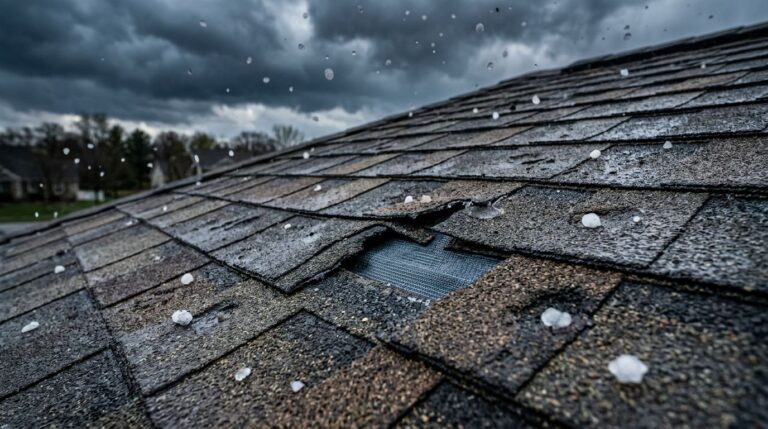
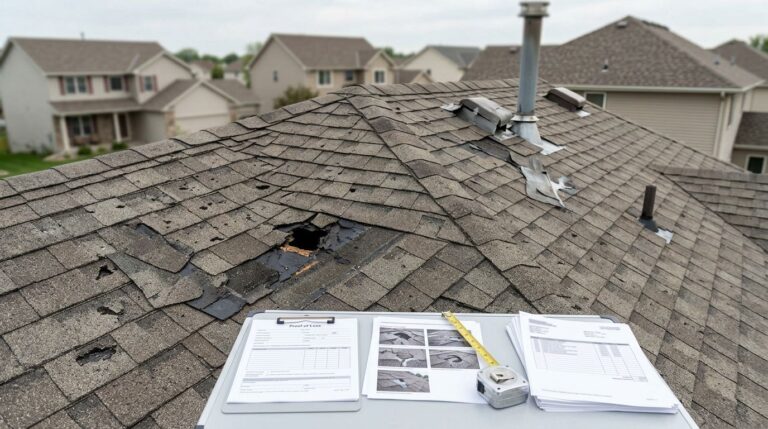
Yes. Heavy rain on roof snow and melting snow can cause winter roof leaks in St. Paul when blocked drainage prevents water from leaving the roof. Existing ice dams can push trapped water beneath shingles and flashing. Storms can also expose damaged roofing without an ice dam. Active dripping needs immediate attention, even when a thaw is forecast.
Contents
- When This Applies
- Step-by-Step
- Which Roof Components Need Repair?
- How Do You Prevent Repeat Winter Leaks?
- Frequently Asked Questions
- Stop Water Entry Before Planning Permanent Repairs
Key Takeaways
- Heavy rain and melting snow can cause roof leaks when frozen or blocked drainage traps water beneath shingles and flashing. Damaged roofing can also leak without an ice dam.
- Move belongings, protect people from sagging ceilings and wet electrical fixtures, and document the damage. Don’t climb onto a snowy roof or chip bonded ice.
- Have a roofer locate the entry point and check the affected components. Gutters, valleys, flashing, skylights, pipe boots, and roof-to-wall joints need different repairs.
- Reduce repeat leaks by sealing attic air leaks, correcting insulation coverage, keeping soffit baffles clear, and scheduling roof inspections. Persistent moisture needs assessment even after dripping stops.
When This Applies
Rain meets snow and frozen drainage
Rain-on-snow roof leaks occur when heavy rain and melting snow overwhelm frozen or obstructed drainage.
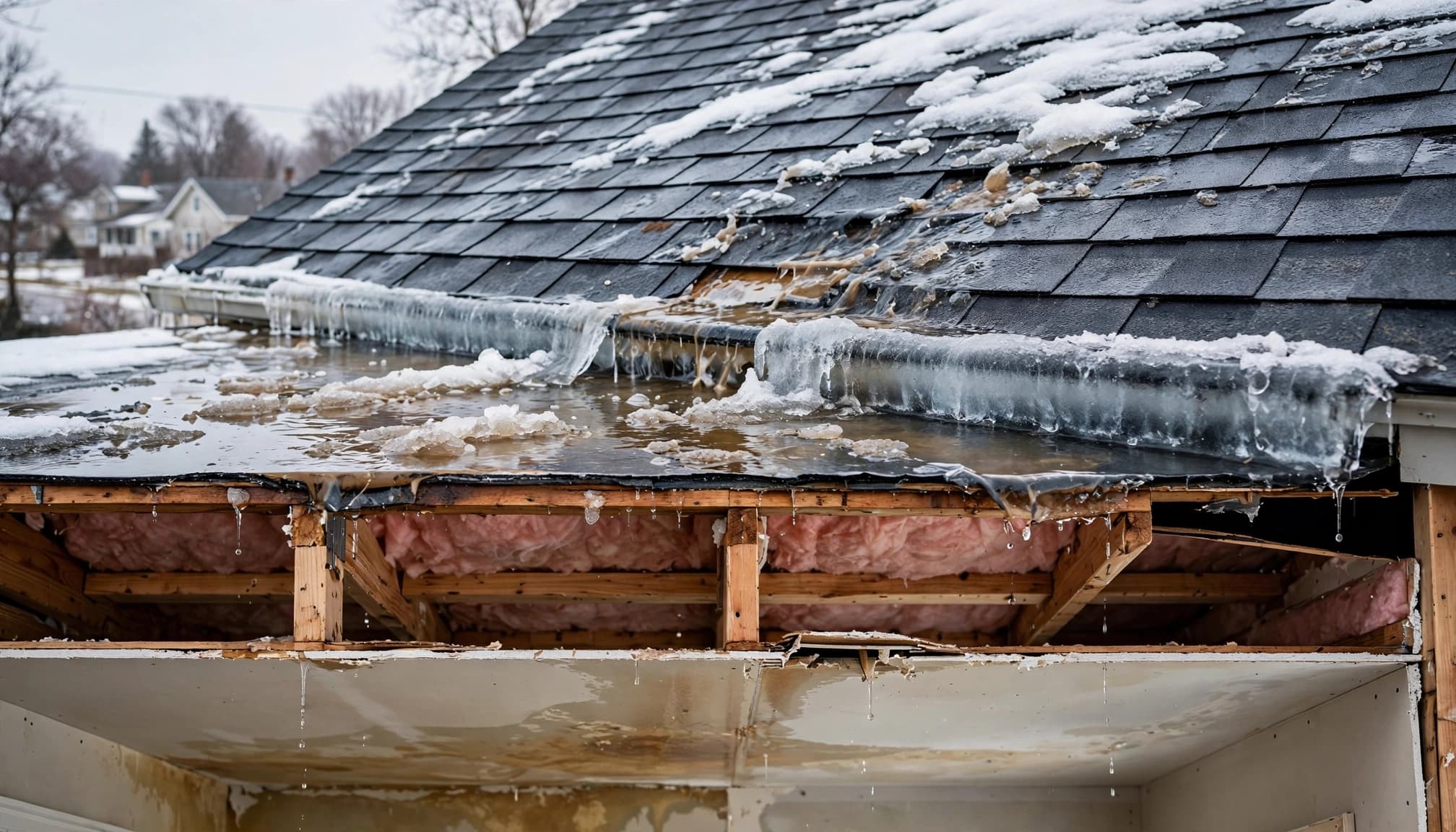
In St. Paul and the Twin Cities, freeze-thaw cycles can form ice dams at colder eaves beyond heated walls. Household heat escaping into the attic warms the upper roof deck, causing snow to melt and refreeze at the eaves. The resulting ridge traps runoff. University of Minnesota Extension’s ice dam guidance explains how backed-up water damages ceilings, walls, and insulation.
Similar symptoms can have different causes
Leaks near frozen eaves suggest backup. Leaks around chimneys or skylights during snow-free rain may point to defective flashing or seals. Neither pattern proves the source.
Widespread attic frost may indicate condensation instead. Prolonged moisture can contribute to mold growth, but a leak doesn’t always lead to it. Cathedral ceilings need a different inspection because insulation and water paths are concealed.
Step-by-Step
Protect occupants and document the event
- Move belongings and place containers beneath drips. Keep people away from sagging ceilings and wet electrical fixtures. Photograph water stains, peeling paint, roof-edge ice, and damaged belongings to document water damage. For active water entry, Call 651-703-2336 for 24/7 Emergency Roofing.
- Record rainfall, thaw conditions, when melting snow began, and when dripping started. Musty odors and wet attic insulation warrant moisture assessment.
Locate the problem without climbing
- Photograph clogged gutters, valleys, missing shingles, and roof penetrations from the ground. Water travels along decking and framing, so the ceiling stain may be several feet from the opening. The guide to hidden ice dam damage explains why insulation can get wet first.
- Have a professional roofer perform a roof inspection and arrange temporary protection. Don’t climb onto a snowy roof or chip bonded ice. Ice dam removal may use steam. Calcium chloride in a nylon stocking can open drainage channels, but can harm metals and vegetation. Don’t use rock salt.
Which Roof Components Need Repair?
Gutters and valleys concentrate runoff
Clogged gutters can push water beneath shingles and into eaves and walls. Gutter shields reduce debris entry, but they don’t prevent ice dams.
Valleys collect runoff from adjoining slopes and can develop ice blockages. A roofer can clear obstructions, replace damaged shingles in the valley, and install ice-and-water shield where the assembly requires it.
Extend downspouts at least 5 feet from the house to reduce foundation-side pooling.
Flashing, skylights, and pipe boots need different fixes
A failed skylight lens seal may need manufacturer-compatible 100% silicone. Failed perimeter flashing needs replacement flashing and affected shingles, not a superficial application of roofing cement.
Temperature cycles harden vent pipe boots until they crack. If the underlying flashing is sound, a compatible replacement boot overlay and sealed connections may restore protection.
Chimney and wall intersections need roof-to-wall flashing diagnosis. Cold-rated sealant suits compatible joints, but can’t replace missing flashing. Conventional roofing cement needs dry surfaces above approximately 4°C. Follow product instructions for application.
How Do You Prevent Repeat Winter Leaks?
Seal attic air leaks before adding attic insulation
Seal bypasses around attic hatches, wiring, plumbing, and ceiling fixtures first. Chimneys and hot components require fire-safe materials and clearances.
Then correct insulation coverage. Attic insulation depth of around 16 to 20 inches may be appropriate for some products, but R-value determines performance. Minnesota attic upgrades often target R-49 to R-60, depending on the assembly. Visible joists commonly indicate thin coverage.
Keep soffit baffles clear and balance intake with exhaust ventilation.
Separate maintenance from replacement decisions
Schedule a roof inspection in spring and fall. Inspectors should check for missing shingles, damaged shingles, cracks, flashing defects, and soft decking. Metal roofing also needs sound penetrations and drainage details.
A localized defect may need residential roof repair. Residential roof replacement becomes reasonable when deterioration, wet materials, or repeated failures extend beyond a repairable area.
A thaw stopping the drip doesn’t establish that insulation and decking are dry. Check persistently wet materials for mold growth before closing ceilings. Document moisture conditions.
Frequently Asked Questions
How much does roof repair for a winter leak cost?
The cost depends on the leak source, how much material is wet, roof access, and whether the work is temporary or permanent.
How long can dripping continue after an ice dam is removed?
Water trapped in insulation, decking, or wall cavities can keep draining. Persistent moisture needs assessment even after roof-edge backup stops.
Can a commercial flat roof have the same problem?
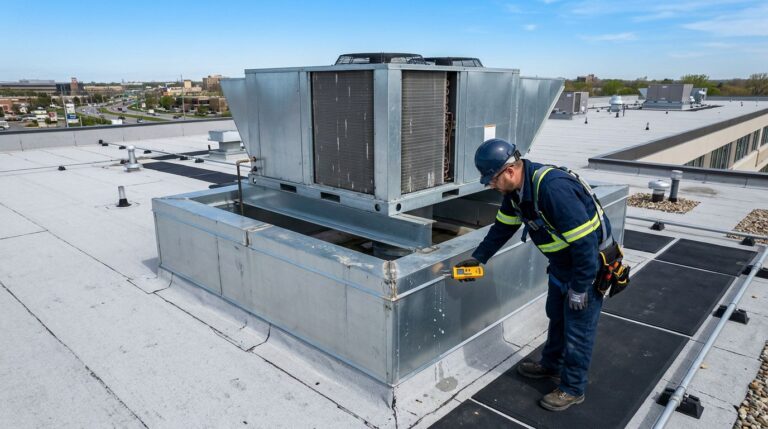
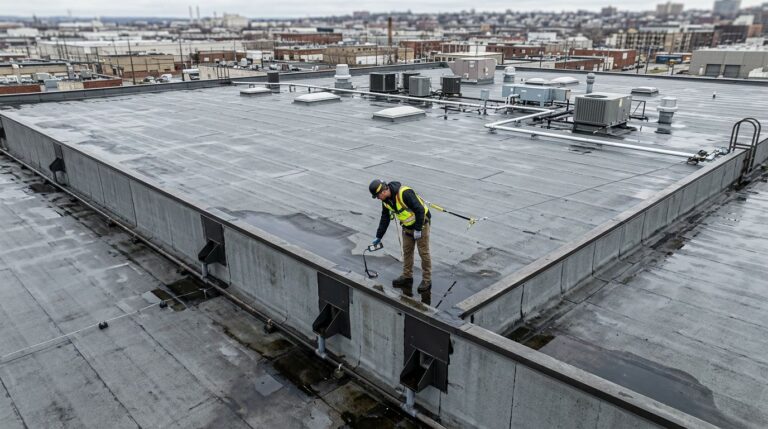
Yes. Frozen drains and scuppers can cause ponding. TPO roofing, EPDM, modified bitumen, and BUR need system-specific seam and flashing inspections. Moisture mapping helps determine whether commercial roof repair or replacement is needed.
Should temporary repairs wait for an insurance adjuster?
No. Minnesota’s residential claim guidance recommends temporary repairs to prevent further damage before inspection. Keep photographs, receipts, and written estimates for a roof insurance claim. Some policies require timely mitigation.
Would a powered attic fan prevent another ice dam?
UMN Extension advises against mechanical attic ventilation for ice dams. Powered exhaust can draw more household air through ceiling leaks instead of correcting them.
Stop Winter Roof Leaks Before Planning Permanent Repairs
Rain-on-snow events add runoff while winter drainage is restricted. Repairs must address both the entry point and the conditions causing the leak.
Protect occupants first. Then document moisture, restore drainage safely, and correct roof defects or attic heat loss. A dry ceiling after thawing doesn’t prove the roof assembly has dried.
Need a roof inspection in Saint Paul or the Twin Cities? Call Sellers Roofing Company at +1-651-703-2336 or schedule a free estimate. We are a black-owned, NMSDC-certified MBE roofing contractor with 9+ years experience.