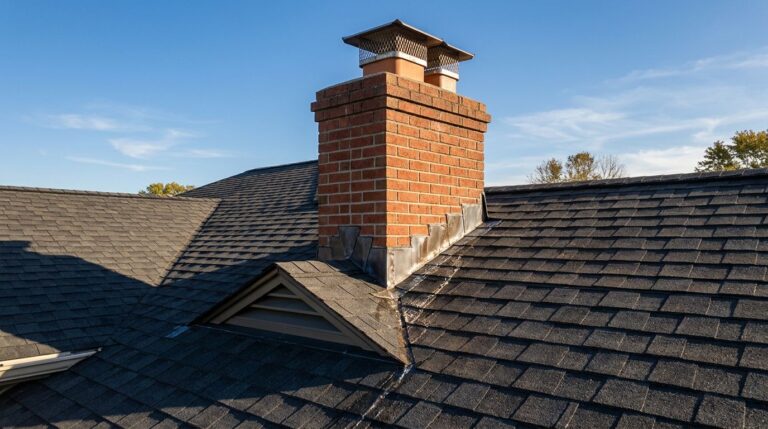
Last updated: 2026-08-01 by Ted Sellers, Owner
Usually, yes. In most commercial roof hail damage insurance claims, the policy covers interior water damage if hail created the roof opening that let water in. Coverage often gets limited or denied when the carrier finds old leaks, wear, poor upkeep, or flood water instead. Your deductible, roof age, and valuation method still shape the payout.
When This Applies
This fits most commercial hail claims
This applies to commercial business owners, property managers, and facility teams who find leaks after a hailstorm. It fits low-slope roofs, metal systems, and membranes such as TPO and EPDM.
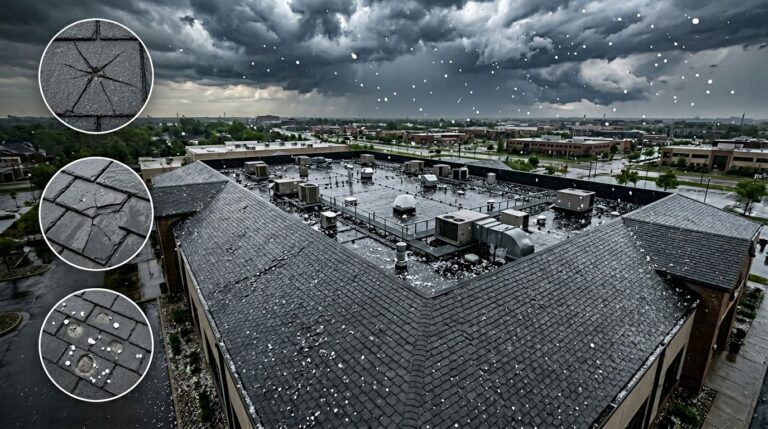
In Minnesota, hail is usually a covered peril under commercial property coverage. So if hail split a seam, cracked flashing, or punctured the membrane, the insurer often pays for the roof damage and the inside damage tied to that same event.
That may include wet insulation, stained ceiling tiles, damaged drywall, and sometimes flooring. If stock or equipment sat below the leak, those items may fall under a separate business personal property limit.
If hail created the opening, the interior leak is usually part of the same covered loss.
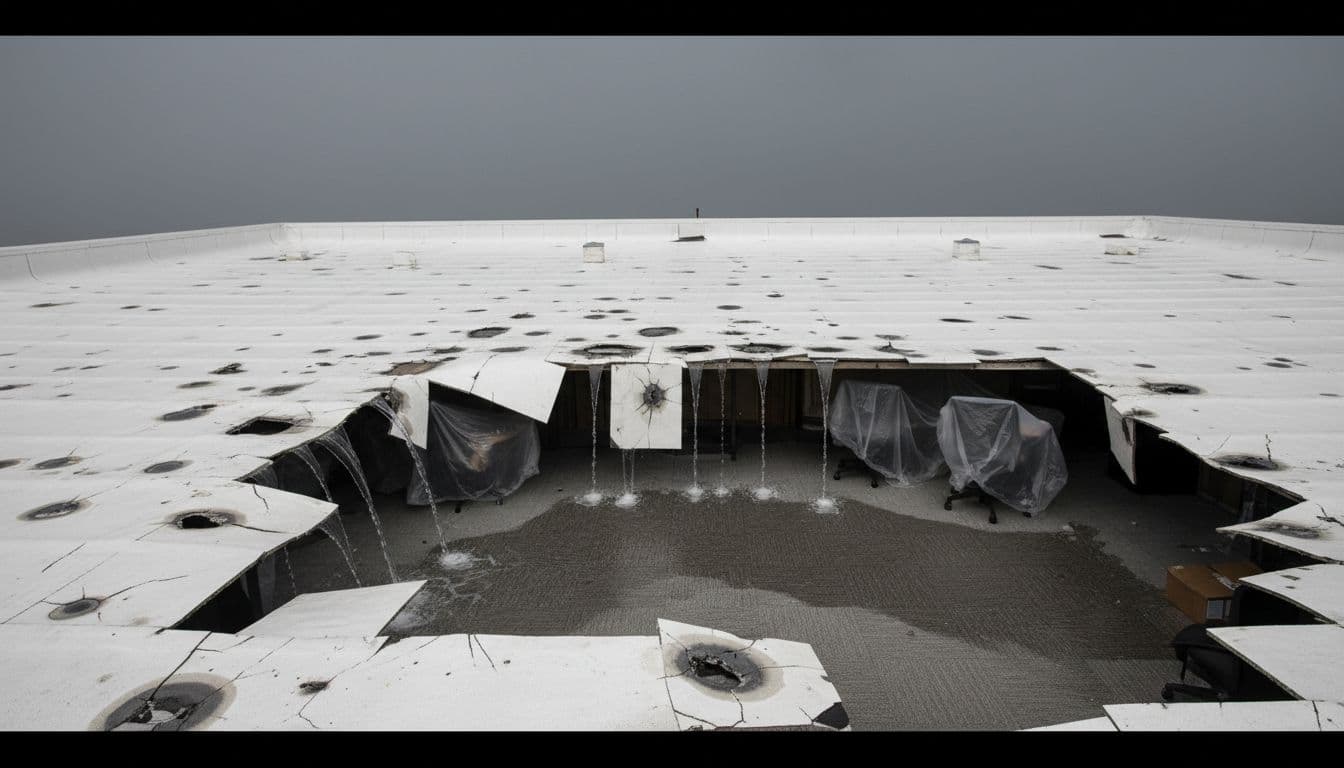
A flat roof can hide the source for days. Water often travels sideways before it drops, which is why commercial roof leak detection Saint Paul can connect an interior stain to the real breach.
When coverage gets weak or stops
The claim gets harder when the roof was already failing. Carriers often deny all or part of the loss if they see ponding, open seams, old patchwork, rusted flashing, or long-term moisture that predates the storm.
Timing also matters. If you wait too long to report the leak, the insurer may argue that the water spread because the owner did not act fast enough. That is why emergency drying, photos, and temporary protection matter on day one.
Read the deductible and roof valuation
Many Twin Cities commercial policies now use hail or wind deductibles based on a percentage of building value. Some older roofs are paid at actual cash value, not full replacement cost. Before you count on a check, read the hail deductible, roof endorsement, and any exclusions for cosmetic damage.
Step-by-Step
Right after the storm
- Make the space safe and stop the spread. Move inventory, cover electronics, and get temporary dry-in work done if it can be done safely. Save every receipt because mitigation costs are often part of the claim.
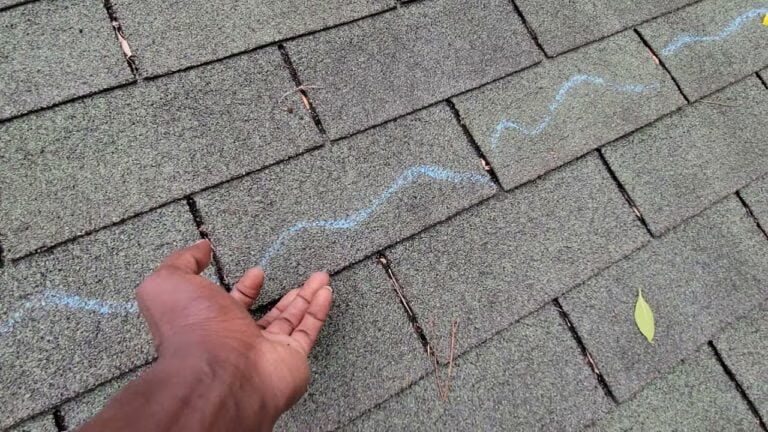
- Document both sides of the loss. Photograph roof impacts, rooftop units, ceiling stains, wet insulation, damaged finishes, and affected contents. Also save the storm date, time of discovery, and notes from staff who first saw the leak.
- Get a professional inspection before the adjuster arrives. On commercial buildings, a visible stain may sit far from the actual puncture. A team of Saint Paul commercial roofing experts can map the damage and show whether the commercial roof needs repair now or broader replacement later.

While the claim is open
- File fast and ask direct questions. Confirm whether the policy pays replacement cost or actual cash value, whether the hail deductible is separate, and whether interior contents sit under another coverage part. In short, know the rules of your roof hail damage insurance before you argue scope.
- Meet the adjuster with evidence, not guesses. Share photos, leak maps, prior roof records, and bids. For larger buildings, the file gets stronger when your roofer explains why a spot patch, commercial flat roof repair, or full commercial roof replacement matches the actual damage.
- Approve repairs that fit the loss. If hail caused a few punctures and the membrane is still sound, targeted repair may work. If seams, insulation, or deck sections are widely compromised, small patches can act like bandages on a cracked pipe. For larger facilities, this guide to industrial building hail damage claims shows why scope and documentation matter.
FAQs About Interior Water Damage and Hail Claims
Will insurance pay for wet ceiling tiles and insulation?
Usually yes, if those materials were damaged by water entering through hail-related roof damage. However, the carrier may limit payment if it finds long-term moisture, mold from delay, or older leaks mixed into the same area.
What if the leak starts days after the hailstorm?
That can still be covered. Hail may weaken seams or flashing first, then the leak shows up with the next rain. That delayed pattern is common in hidden water intrusion after hail.
Can an old roof still qualify for payment?
Yes, but older roofs get more scrutiny. The insurer may pay less if the policy uses actual cash value, or deny parts tied to age and neglect.
Age changes the math
An old roof can still suffer sudden hail damage. The bigger fight is often over how much the carrier owes, not whether hail happened.
Are tenant improvements or stored products covered too?
Maybe. Building damage and business personal property often sit in different coverage buckets. So if water ruined inventory, furniture, or equipment, check those limits and deductibles separately.
Should repairs wait until the claim is approved?
No. You should stop active leaking right away and prevent more loss. Still, do not throw out damaged materials or erase evidence before the adjuster or contractor documents the scene.
The Bottom Line
Act before the leak spreads
When hail opens the roof, interior water damage is usually covered. The faster you document, mitigate, and connect the leak to the storm, the stronger the claim becomes.
If water is already inside, move now. Protect the space, get the roof inspected, and push for a repair scope that matches the real damage, not the cheapest guess.
Need a roof inspection in Saint Paul or the Twin Cities? Call Sellers Roofing Company at +1-651-703-2336 or schedule a free estimate. We are a black-owned, NMSDC-certified MBE roofing contractor with 9+ years experience.