Last updated: 2026-11-18 by Ted Sellers, Owner
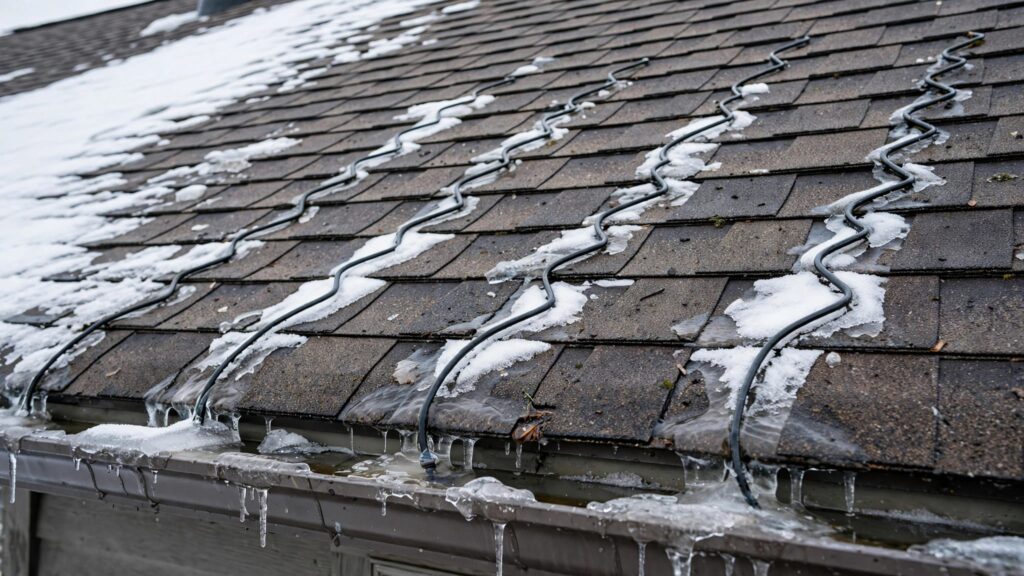
Yes. Roof heat cables create uneven ice melt because they warm narrow paths while surrounding asphalt shingles stay cold. This pattern is usually normal, but meltwater can refreeze where coverage ends or drainage is blocked. Cables can assist drainage as part of ice dam prevention, but they don’t fix attic heat loss, blocked drainage, or roof defects.
What Actually Causes Uneven Ice Melt on Shingles in Harsh Winter Climates?
Why does ice remain between heated channels?
A de-icing cable transfers heat into the snow and ice immediately around it. Its output doesn’t normally clear the entire roof edge. Snow remaining between zigzag cable runs doesn’t, by itself, indicate a failure.
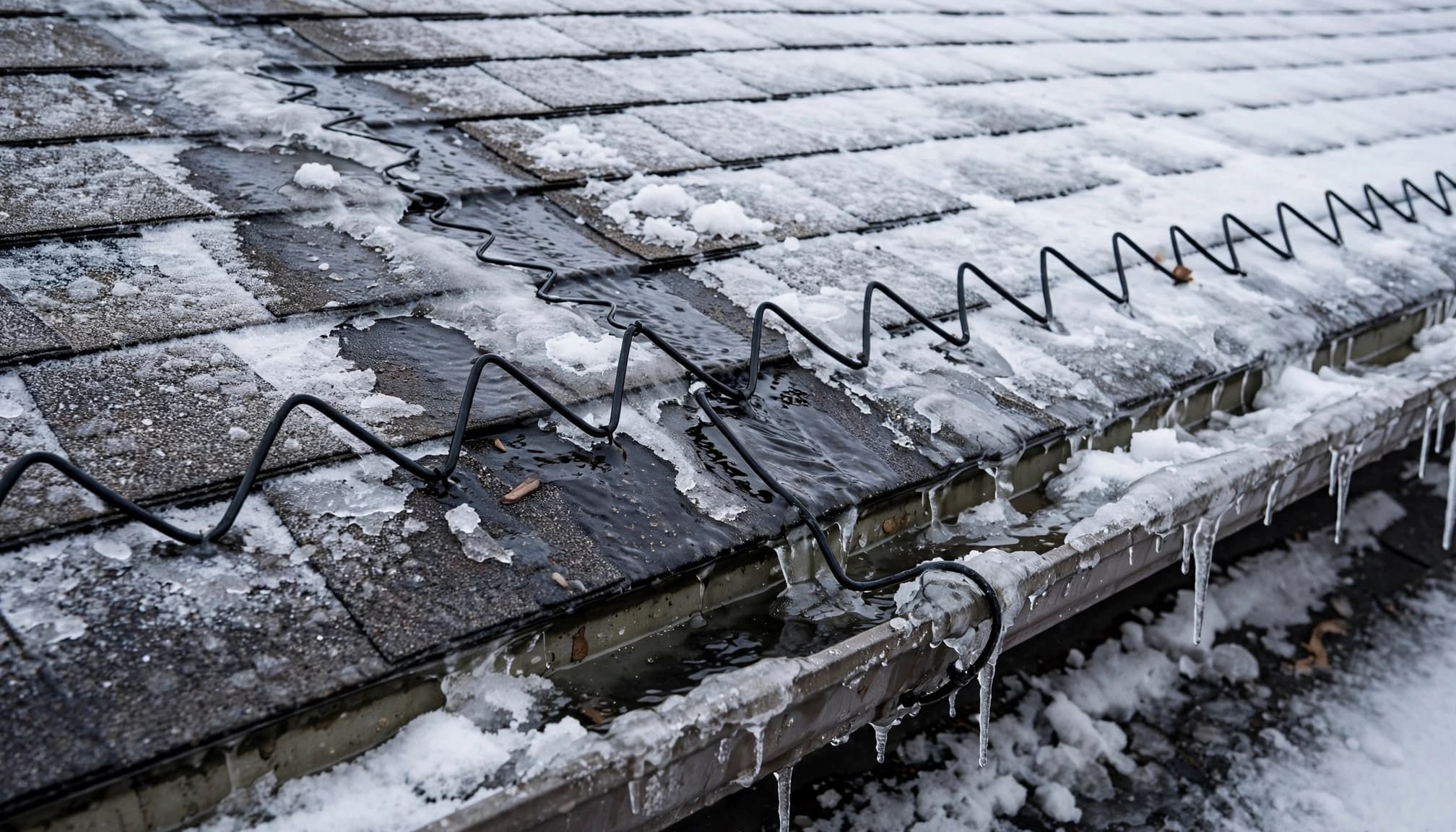
Trouble starts when those channels discharge onto another frozen surface. A cable may open the eave while a packed gutter or frozen downspout still prevents drainage. Water then collects and refreezes downstream.
Meanwhile, household heat can warm the roof deck beneath the snow. Meltwater flows toward the colder overhang and freezes there. Repeated freeze-thaw cycles enlarge that obstruction.
When This Applies
This guidance applies to Minnesota homeowners with cables along shingle eaves, valleys, gutters, or downspouts. On shingle roofs in Hamburg, MN, and Maple Grove, MN, narrow channels that follow the cable usually reflect normal operation.
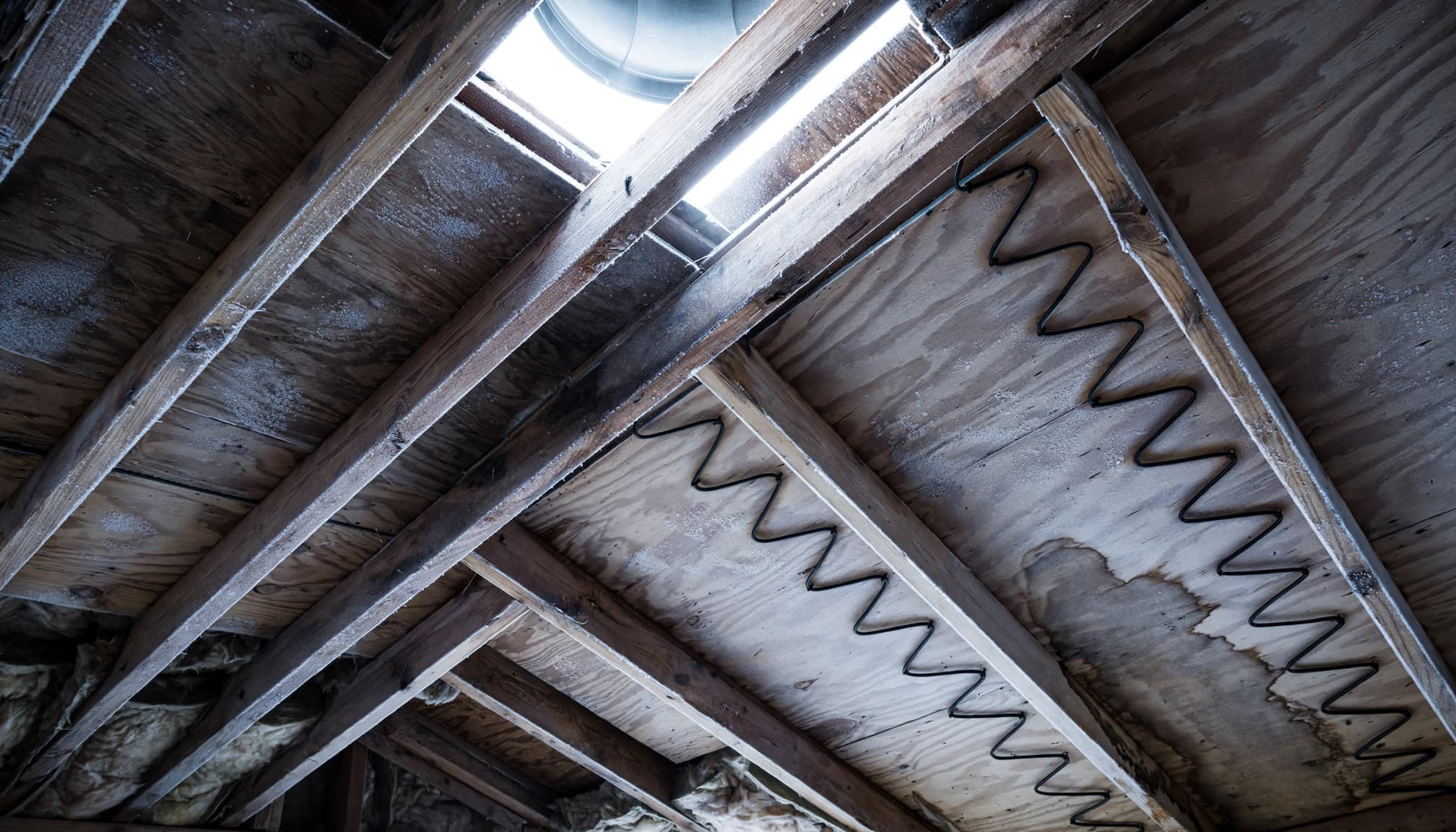
Broad bare patches above the cable deserve a different assessment. Attic bypasses, missing insulation, sunlight, and wind can produce uneven snow cover independently.
Cathedral ceilings and commercial buildings need assembly-specific evaluation because they may lack a conventional attic. Also, heat cable doesn’t remove enough snow to establish structural safety. Visible roof sagging requires prompt professional assessment.
Our explanation of the benefits and limits of heated cables separates drainage assistance from repairs to the underlying roof system.
How to Inspect and Document the Damage (Field Checklist)
What should the field checklist include?
Start from the ground and inside the building. Leave icy roof access to a trained crew.
- Trace the cable pattern, gutter discharge, downspout outlet, and any ice above entrances.
- Inspect accessible attic areas for wet insulation, stained sheathing, and deck deflection.
- Record granule loss patterns, exposed asphalt, cracked shingles, and displaced tabs.
- Follow valleys for debris, ice backup, damaged lining, and concentrated runoff.
- Examine flashing separation at walls, chimneys, skylights, and roof transitions.
- Inspect pipe boot cracking and cable attachments for deterioration or roof penetrations.
Minnesota’s residential inspection checklist addresses sheathing, ventilation, flashing, and ice barriers. A cable inspection shouldn’t stop at the electrical component.
Which photographs help identify the cause?
Take a wide photograph showing the entire slope, then closer views of each drainage interruption. Include the gutter outlet and interior staining, with dates and weather conditions.
Photograph the roof before removal work changes the evidence. However, don’t delay emergency protection just to preserve an ice formation.
Compare cable-shaped channels with larger bare areas. Our guidance on uneven snow melt and insulation gaps explains why those patterns can point to different problems.
Repair vs. Replace: The Decision Framework
When does localized repair make sense?
Uneven melting alone doesn’t justify residential roof replacement. A sound roof with a damaged boot, loose flashing, or isolated shingle failure may need targeted residential roof repair.
However, replacing cable won’t repair deteriorated roofing beneath it. Separate the drainage problem, electrical condition, and roof damage before approving work.
These factors help distinguish the scopes.
| Factor | Repair | Full replacement |
|---|---|---|
| Cost basis | Localized scope; electrical work and ice removal priced separately | Architectural-shingle planning allowance of $450 to $900 per roofing square |
| Remaining service life | Preserves the existing roof; doesn’t reset its age | Starts a new covering’s service life |
| Insurance implications | Must address documented covered damage | Requires evidence supporting the broader scope |
| Material compatibility | Replacement components must work with existing roofing | Allows coordinated shingles, flashing, and underlayment |
The replacement allowance is a budgeting figure, not a Sellers Roofing Company quote. One roofing square equals 100 square feet.
What conditions support replacement?
Replacement becomes reasonable when deterioration extends across the roof, repeated repairs have failed, or removal exposes widespread unsound decking.
Brittle shingles can also prevent a durable localized repair because lifting adjacent courses causes further damage. Still, one stained ceiling doesn’t establish that the entire roof has failed.
We assess the roof condition before recommending replacement. A written scope should identify the failed components, explain why repair will or won’t hold, and distinguish roofing work from electrical work.
Material Specs That Matter for This Repair or Replacement
Which shingle and underlayment details matter?
GAF Timberline HDZ, CertainTeed Landmark, and Malarkey Legacy are named shingle options, but none corrects attic heat loss. Malarkey Legacy’s Class 4 impact rating describes laboratory impact performance, not immunity to hail damage.
Synthetic underlayment and felt provide secondary protection beneath shingles. Neither automatically replaces a self-adhered ice barrier.
Cold-climate eave protection extends at least 24 inches inside the exterior wall line, not merely 24 inches above the gutter. Wide overhangs require additional membrane width. The Department of Energy’s cold-climate eave guidance explains that measurement.
Valley protection must also suit the roof design and shingle instructions. Cable cannot compensate for an open valley seam or missing waterproofing.
How do cable products and roof profiles differ?
“Heat tape products” and “heat cable” often describe the same de-icing product category. A homeowners guide to heating cable should start with products listed for roof-and-gutter use, not pipe-only protection. For heating cable for roof installation, check the product listing and placement requirements; heating cable for roof installers should include published wattage and approved attachment methods.
Heat Tape Pro, SKU HTP-1-001, starts at $78.95. It’s a self-regulating product with a published 6-watt-per-foot rating. ThermaCord TC-2000 and Cable Guard CG-00 are other named components in Radiant Solutions’ product guide, not interchangeable cable specifications.
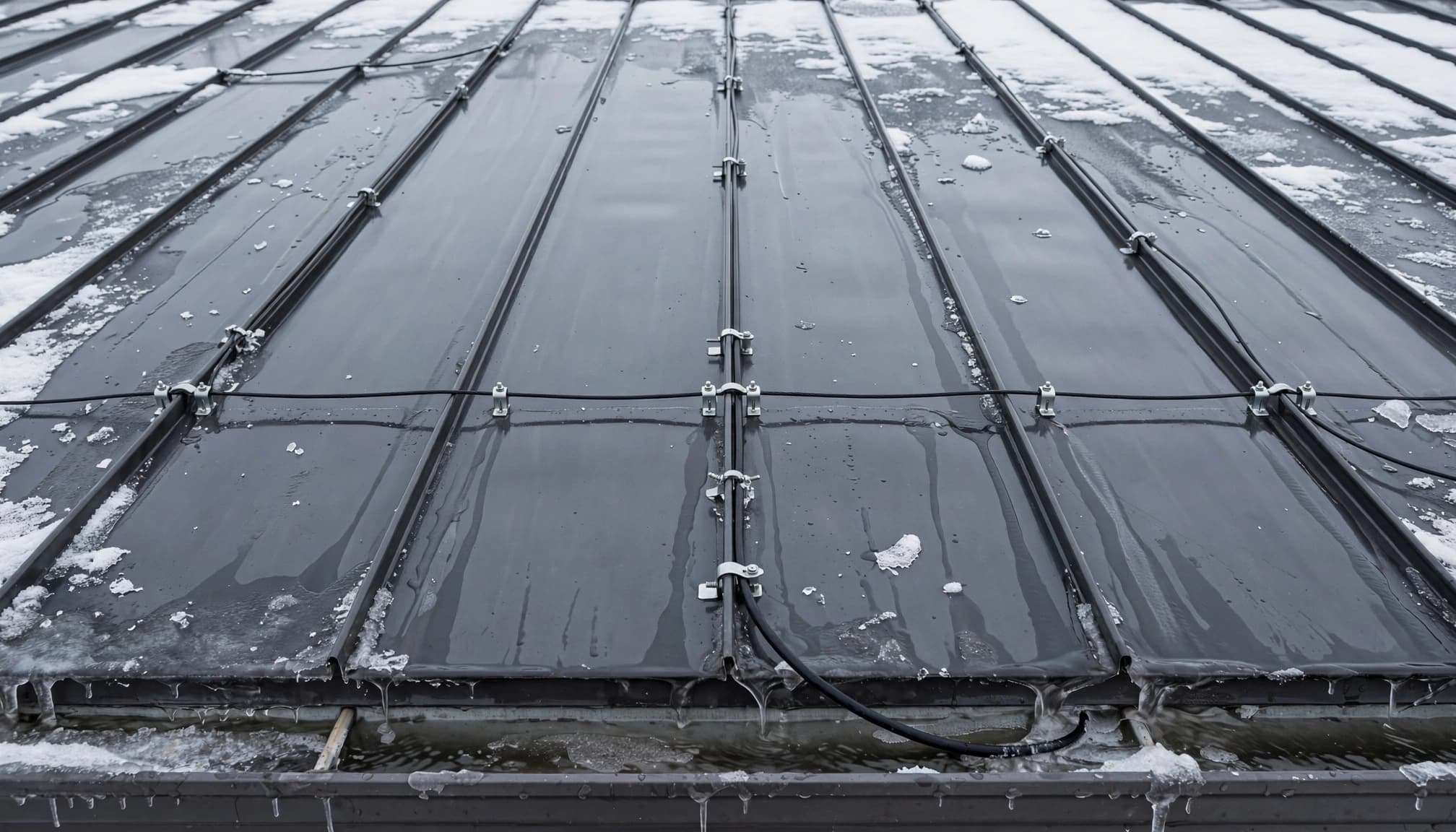
Radiant Solutions groups metal roof systems into standing seam roof, R-Panel roof, corrugated roof, batten seam roof, and flat seam roof. On a metal roof, attachment requirements vary by profile, so metal roof clips and other hardware must match the specific system.
Insurance Documentation and the Claim Process
What does an adjuster need to distinguish?
A roof insurance claim needs evidence of the loss, its cause, and the resulting damage. A photograph of melting snow doesn’t establish storm damage or a covered roof failure.
For suspected hail damage, document impact locations and surrounding roof conditions. For wind damage, record displaced or lifted tabs without bending shingles to create a photograph.
Interior evidence matters too. Photograph ceiling stains, wet insulation, damaged finishes, and affected belongings. Record when water appeared relative to snowfall, warming temperatures, and refreezing.
Coverage depends on the policy and cause of loss. Ordinary deterioration and preventive cable installation don’t automatically qualify because an ice dam is present.
What should the contractor document separately?
The contractor’s record should distinguish storm-created openings, installation defects, aging materials, and water backup at the eave. Those conditions can require different repairs.
Keep emergency mitigation, ice dam removal, electrical work, and permanent roof repair as separate invoice items. This makes the work understandable without implying that every charge receives coverage.
Also document hidden moisture where access permits. Water can wet insulation before a ceiling stain appears, as our guidance on ice dam damage inside the attic explains.
If water is entering, protect the interior and arrange safe mitigation. Don’t chop bonded ice, pry against shingles, or use a pressure washer.
What a Professional Roof Contractor Does Differently
Step-by-Step
- Identify the water path and make active leakage safe before adding equipment.
- A heating cable for roof installers requires a check that separates cable or electrical faults from roof defects and attic heat-loss conditions.
- Inspect exposed decking during roofing removal and cut damaged sheathing back to sound, supported boundaries.
- Calculate ventilation using net free area, accounting for actual intake and exhaust capacity.
- Replace failed pipe boots and flashing, then coordinate drainage and electrical scopes.
Minnesota roof sheathing requirements depend on panel rating, support spacing, loading, and the roof covering. There isn’t one plywood or OSB thickness that answers every roof.
Minnesota’s building-code resources address roof work within the broader permit and inspection process. Adding cable doesn’t waive requirements for related reroofing, structural repairs, or other roof installation projects.
What changes on a commercial flat roof?
A commercial roof inspection must evaluate drains, scuppers, insulation, seams, and perimeter details. Edge heating may miss the actual restriction.
For example, 60-mil TPO roofing needs compatible welded repairs. EPDM commonly comes in 45-mil and 60-mil thicknesses, but thickness alone doesn’t determine repair compatibility. Modified bitumen and BUR require different repair materials again.
Commercial roof coatings and restoration don’t correct saturated insulation or failed drainage. The findings determine whether commercial roof repair, restoration, or replacement is appropriate.
On Saint Paul and Minneapolis roofing projects, a flat-roof drainage problem needs its own scope rather than a copied shingle-eave cable layout.
Cost Ranges for Roof Heat Cables in Minnesota
How much electricity do cables use?
A typical constant-wattage cable rated at 5 watts per foot maintains that nominal draw regardless of outside temperature. Therefore, 100 feet draws 500 watts and consumes 0.5 kWh each operating hour.
Self-regulating products behave differently. Some produce about 6 watts per foot at 32 degrees F, with output changing as conditions change.
The following calculation assumes 5 watts per foot, continuous operation for 30 days, and an illustrative electricity price of $0.15/kWh.
| Cable length | Power draw | Monthly energy | Monthly cost |
|---|---|---|---|
| 100 feet | 500 watts | 360 kWh | $54 |
| 200 feet | 1,000 watts | 720 kWh | $108 |
| 400 feet | 2,000 watts | 1,440 kWh | $216 |
Runtime and cable length explain HomeAdvisor’s broad operating range of about $40 to $200 or more monthly. The table estimates cable operating costs, not roof replacement or installation costs. A metal roof cost estimate is a separate roofing quote. The EIA state electricity-price table provides averages; use the energy rate on your electricity bill for your calculation.
What changes the installed price and operating cost?
Cable price alone excludes attachment hardware, controls, circuit work, access equipment, and labor. Roof pitch, valleys, gutter configuration, and existing damage change the scope.
Deck repairs, disposal, and permits affect roofing costs when cable work accompanies reroofing. A starting product price doesn’t describe a complete installed system.
Turn manual cables off in summer when de-icing isn’t needed. Suitable moisture-and-temperature controls reduce unnecessary runtime. However, a daytime timer alone can leave water exposed to overnight refreezing.
Thermal improvements need a separate assembly-specific estimate because cavity depth and access determine the method.
Frequently Asked Questions About Roof Heat Cables
What should I do if my roof heat cable trips the breaker?
Leave the circuit off and have a qualified electrician assess it. Repeated trips can indicate damaged cable, moisture intrusion, or an electrical fault. Don’t repeatedly reset the breaker or bypass ground-fault protection.
Can an ice dam return after professional steam removal?
Yes. Removal opens drainage but doesn’t correct attic air leakage, insulation gaps, or obstructed ventilation. A dam can rebuild during another snow-and-freeze cycle if those conditions remain.
Does snow covering the cable mean it has stopped working?
No. A working cable may maintain only a narrow channel beneath the snow. Surface appearance alone can’t establish electrical performance. A qualified technician can test operation without disturbing frozen wiring or walking on icy shingles.
Can roof heat cable go underneath asphalt shingles?
Don’t tuck surface-mounted de-icing cable beneath shingles or underlayment. Its listing and installation instructions govern placement. Concealing cable in an unapproved location can trap heat and interfere with the roof covering.
Will adding more cable stop every ice dam?
No. Additional cable doesn’t correct heat loss, blocked drainage, or an existing roof opening. More footage also increases electrical demand. If ice persists beyond the heated area, assess where water stops draining before expanding the system.
Key Takeaways for Minnesota Property Owners
Which melt patterns need attention?
Narrow channels that follow roof heat cables are expected on Minnesota shingles. The concern is water collecting beyond those channels, ice blocking discharge, or moisture entering the building.
Broader bare patches above the eaves deserve an attic and insulation assessment. Keep those findings separate from cable performance so the repair addresses the actual cause.
A cable can assist a sound roof with a stubborn cold edge. It can’t restore damaged shingles, close failed flashing, or make wet decking serviceable.
What should happen before another winter cycle?
Document the drainage interruption and establish whether the roof needs localized repair or broader work. Keep roofing, electrical, and thermal improvements distinct in the written scope.
For a home with recurring ice or leakage, Get a Free Residential Roof Estimate to assess the roof before adding more cable.
The goal is continuous drainage over a sound roof, supported by control of the heat escaping from the building.
Need a roof inspection in Saint Paul or the Twin Cities? Call Sellers Roofing Company at +1-651-703-2336 or schedule a free estimate. We are a black-owned, NMSDC-certified MBE roofing contractor with 9+ years experience.
