Last updated: 2026-05-26 by Ted Sellers, Owner
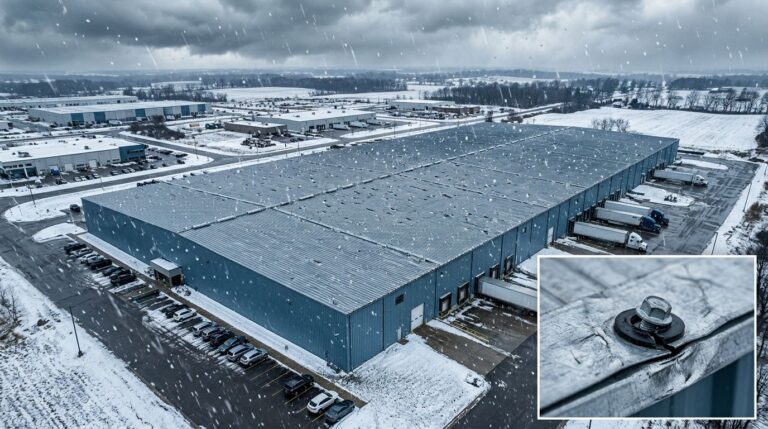
Most commercial roofs can be repaired when damage is localized, the membrane is still sound, and leaks come from seams, flashing, drains, or small punctures. Replacement makes more sense when the roof is near the end of its service life, wet insulation is widespread, repairs keep failing, or code and energy upgrades require a full system change. The right call protects cash flow and operations.
A commercial roof is a lot like a warehouse floor. One bad spot can be patched, but if the base is crumbling everywhere, patching turns into a monthly bill. The goal is to spot when your commercial roof needs repair before small issues spread into insulation, decking, and interiors.
When This Applies
This guidance fits most low-slope commercial roofs
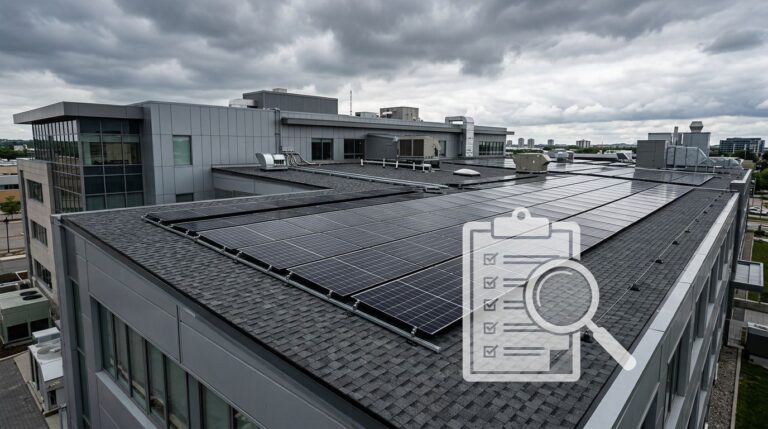
If you own or manage a retail strip, office building, warehouse, church, or multifamily property, this approach works well for common systems like TPO, EPDM, modified bitumen, and built-up roofs. It’s especially useful when you’re trying to avoid disruption while keeping tenants, inventory, or equipment protected.
A practical rule: if the problem is tied to a detail (seams, penetrations, edges, drains), commercial flat roof repair is often the smarter first move. If the problem is tied to the whole roof assembly (saturated insulation, failing attachment, chronic ponding), you start weighing a commercial roof replacement.
Where this does not apply (or needs extra caution)
If your roof has structural sagging, major deck deterioration, or interior ceiling collapse, skip “wait and see.” Those are safety issues. Also, if you’re dealing with suspected asbestos in older materials, inspection and handling must follow the right regulations.
Exceptions that push you toward replacement sooner
Some buildings have low tolerance for risk. A data room, medical tenant, food production space, or any area with high-value inventory may justify replacement earlier because one “minor” leak can shut down operations.
If insurance or code is driving the scope
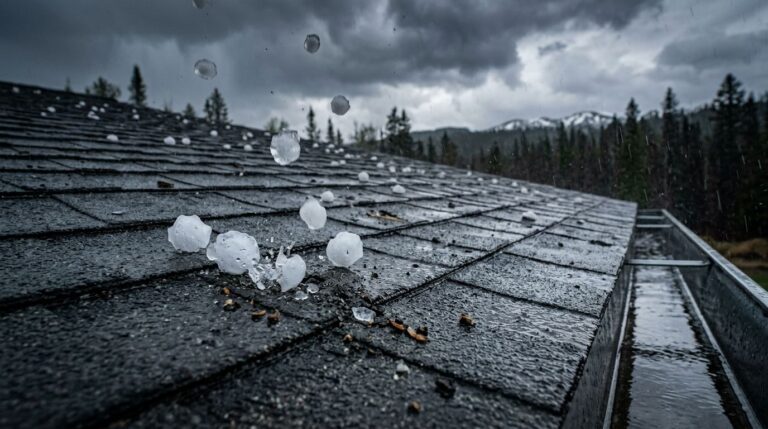
After a major hail or wind event, your decision may be shaped by policy requirements, code upgrades, or the need to match existing assemblies. In those cases, the best question isn’t “Can we patch it?” It’s “Will a patch satisfy performance and compliance for the next several years?”
For a broader discussion of common decision factors, see this overview on commercial roof repair vs replacement considerations.
Signs Your Roof Needs Repair (Not Replacement), and the Red Flags That Change the Answer
Repair usually makes sense when the damage is contained
Repairs tend to win when you can point to a specific entry path and the rest of the roof is doing its job. Watch for these patterns:
- One or two active leaks, especially after driving rain or rapid snowmelt, with no history of recurring issues.
- Open seams or small punctures from foot traffic, dropped tools, satellite mounts, or wind-blown debris.
- Flashing problems at curbs, skylights, HVAC stands, parapet walls, and pipe penetrations, common leak sources on low-slope roofs.
- Drain clogs and minor ponding where water sits because the roof can’t shed it fast enough, but the membrane is still intact.
- Limited surface wear (scuffs, minor cracking, small blisters) that hasn’t spread across large areas.
What “contained” looks like in real life
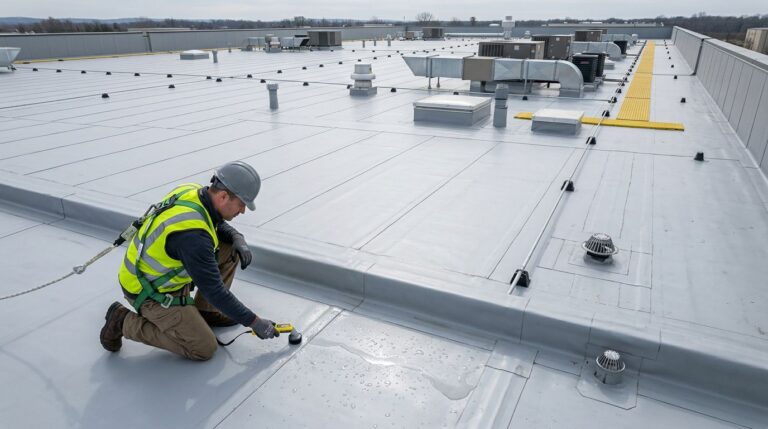
A contractor can trace the leak to one seam line, one penetration, or one transition. Moisture readings and test cuts (when needed) show insulation is dry beyond that zone. That’s a strong signal the roof can be restored with targeted work, not a full tear-off.
Replacement starts to make more sense when failures are repeating or widespread
At some point, repairs stop being “maintenance” and start being “rent.” These red flags usually mean your roof system is no longer dependable:
- Recurring leaks in different areas, even after prior repairs.
- Widespread wet insulation, which adds weight, reduces R-value, and keeps problems hidden until they’re expensive.
- Large sections of membrane shrinkage, splitting, or seam failure, not just one corner.
- Chronic ponding caused by settled insulation, poor slope, or structural deflection.
- Visible deck movement or soft, spongy areas, often a sign the assembly underneath is compromised.
A simple way to think about it
If you’re fixing the same type of problem everywhere (seams opening in multiple zones, flashing failing at many curbs), the roof isn’t “unlucky.” It’s aging out, installed wrong, or both.
If you want local context on service options and what a full system scope can look like, review these commercial roofing services in Saint Paul.
Step-by-Step
Step 1: Confirm the leak path, not just the stain
- Document where water shows up inside, include date, weather, and room location.
- Check roof access points, drains, and scuppers for clogs, ice, or overflow marks.
- Look for obvious exterior sources near that interior area, seams, curbs, and wall transitions.
If water shows up far from the leak
- Assume water may be traveling along decking or insulation.
- Don’t authorize random patches without leak tracing or moisture checks.
Step 2: Separate “detail failures” from “system failures”
- Ask your roofer to identify whether the issue is seams, flashing, penetrations, or drains.
- Request photos and a clear repair scope tied to specific defects.
- Confirm whether repairs will be heat-welded (TPO/PVC) or adhered (EPDM) as required.
What you’re listening for
- “The membrane is in good shape except here” points toward repair.
- “We’re seeing this everywhere” points toward replacement planning.
Step 3: Check for hidden moisture and repeated risk
- If leaks have been ongoing, ask about moisture scanning or test cuts.
- If wet insulation is found beyond a small area, price a larger section repair and a replacement option.
- Compare the business impact, frequent service calls, interior damage risk, and warranty limits.
Step 4: Decide with a 3-part filter: risk, runway, and ROI
- Risk: What happens if it leaks again, tenant issues, downtime, equipment damage?
- Runway: How many reliable years will the repair buy based on condition?
- ROI: Will repair costs stack up close to replacement within a short period?
For another perspective on decision triggers, this article on when to repair vs replace a commercial roof lays out common scenarios owners face.
FAQ
Can a roof be “repaired” if it’s already old?
Yes, if the failure is localized and the membrane still has strength. Age matters, but condition matters more. The key is whether repairs will hold, or if the roof is brittle and breaking around every new patch.
When age tips the scale
If repairs keep chasing new leaks, budgeting for replacement often reduces total spend.
What if tenants complain but there’s no visible leak yet?
Treat that as an early warning. Odors, bubbling paint, and stained ceiling tiles can mean slow moisture intrusion. Catching it early often turns a major project into a contained repair.
Is a roof coating a repair or a replacement?
A coating is usually a restoration step, not a replacement. It can extend life when the underlying roof is dry and stable. It’s not a fix for saturated insulation, failed attachment, or major seam separation.
How disruptive is commercial flat roof repair compared to replacement?
Repairs are typically less disruptive: smaller crews, shorter staging, fewer tear-off odors and noise. Replacement involves more material handling, more dumpsters, and tighter coordination around access, parking, and business hours.
What happens if I keep repairing and delay replacement too long?
The risk shifts from roof costs to building costs. Water can damage insulation, decking, wiring, drywall, and tenant spaces. At that point, replacement may still be required, plus interior remediation.
Repair is the right call when you can point to a problem, fix it once, and trust the rest of the system. Replacement is the right call when you’re buying the same repair over and over. If you want the best outcome, decide based on roof condition, not hope, because roofs don’t usually fail all at once, they fail in patterns.
Need a roof inspection in Saint Paul or the Twin Cities? Call Sellers Roofing Company at +1-651-703-2336 or schedule a free estimate. We are a black-owned, NMSDC-certified MBE roofing contractor with 9+ years experience.