Last updated: 2026-08-01 by Ted Sellers, Owner
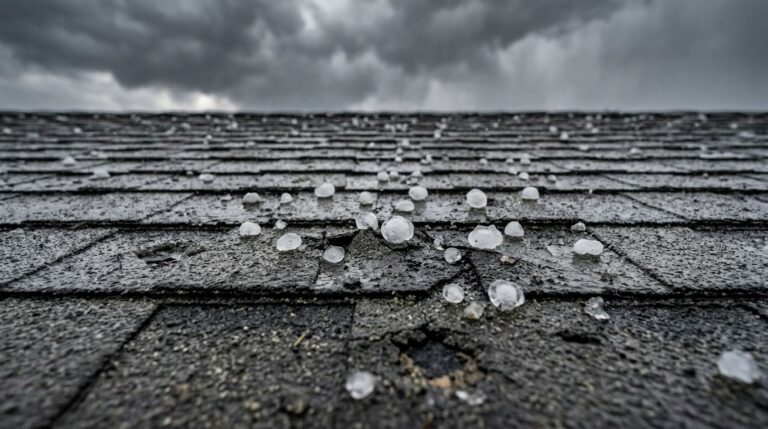
A storm-created opening is a new hole, tear, puncture, split seam, or lifted roof component caused by wind, hail, or debris during a covered storm. In a Minnesota roof claim, that detail matters because insurers often focus on one issue: did the storm create the breach before water entered the building?
When This Applies
The opening has to come from the storm
This issue applies to commercial property owners after hail, wind, or falling debris damages the roof system. On a flat roof, that can mean a punctured membrane, torn flashing, separated seam, or displaced edge metal that lets water in.
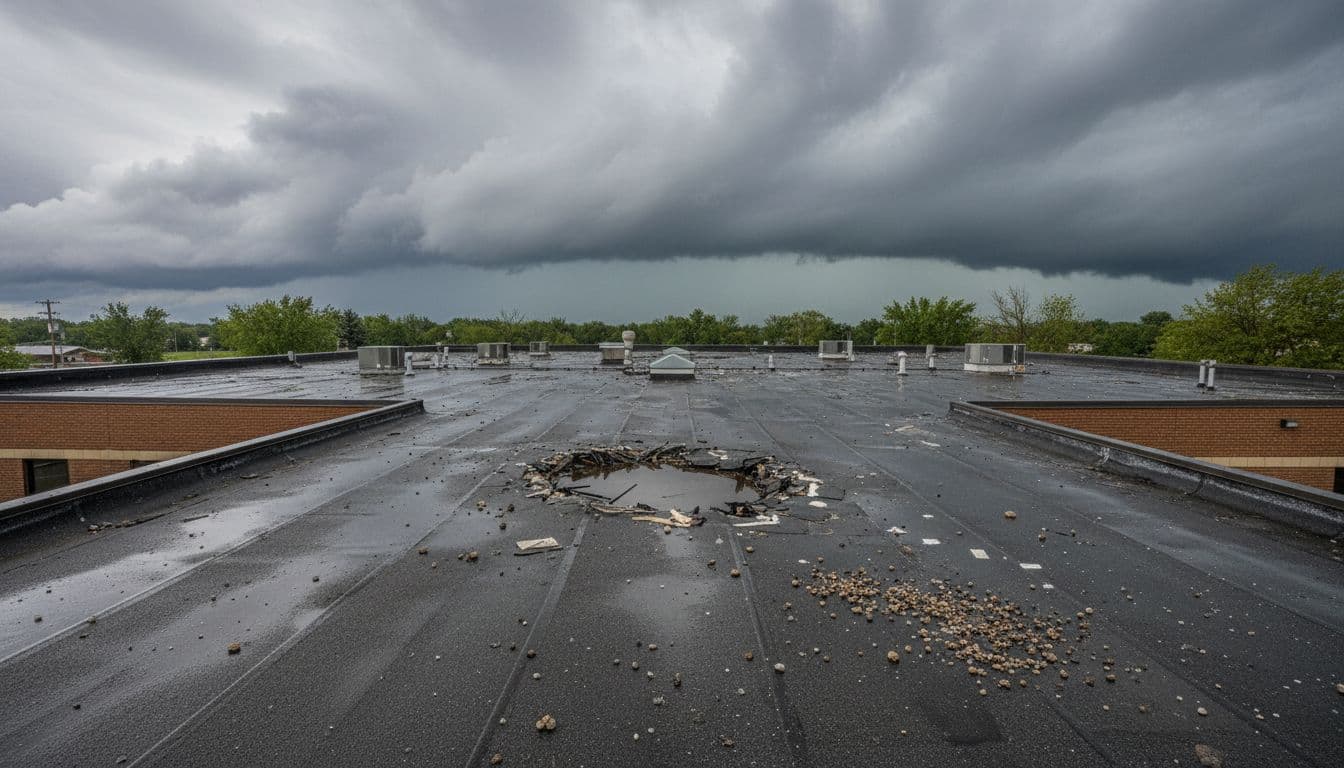
It does not usually apply when the roof leaked because of age, poor upkeep, old shrinkage, or worn sealant. In those cases, the storm may have exposed a problem, but it did not create the opening.
This quick guide helps sort the common scenarios:
| Situation | Likely storm-created opening? | Why |
|---|---|---|
| Hail punctures TPO or EPDM | Yes | The storm made a fresh breach |
| Wind pulls flashing loose | Yes | Water entered through storm damage |
| Old seam fails during rain | Usually no | Wear and age caused the leak |
| Mixed storm and age damage | Maybe | A roofer must separate causes |
If the storm did not create the breach, the claim often shifts from covered damage to maintenance.
Where Minnesota claims get disputed
Minnesota claims get messy because water often shows up after the storm. A roof can look fine from the ground while insulation is wet, seams are lifted, or metal trim has shifted. Freeze and thaw cycles can also widen existing weak spots, which gives insurers room to argue that the leak came from wear, not weather.
Edge cases matter. A storm-created opening can exist around rooftop units, curbs, drains, skylights, or wall flashings, not only in the main field of the roof. That’s why owners often need commercial roof leak detection in Saint Paul when staining appears far from the actual breach.
If interior water damage appears but no one can tie it to fresh exterior damage, the claim gets harder. The stronger the proof of a new opening, the stronger the position.
Step-by-Step
1. Stop more damage without erasing evidence
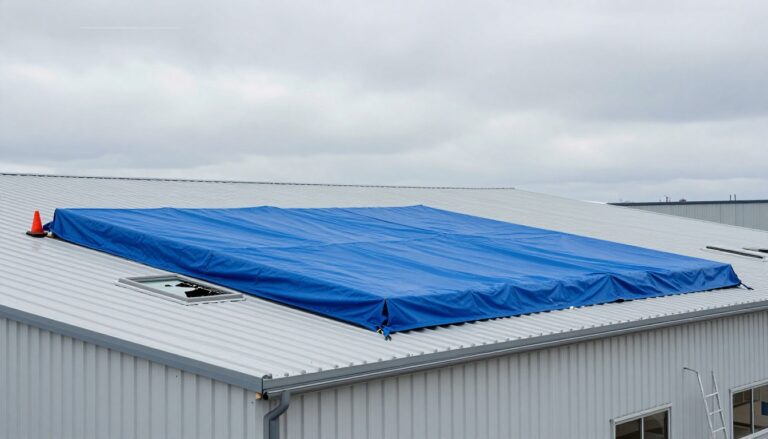
Protect people, inventory, and equipment first. Move stock, place containers under active leaks, and use temporary covering if water is entering fast.
Save what you remove
If a contractor removes torn flashing, punctured membrane, or broken roof parts, keep them when it’s safe. Those pieces can help show the storm caused the opening.
2. Record the opening and the path of water
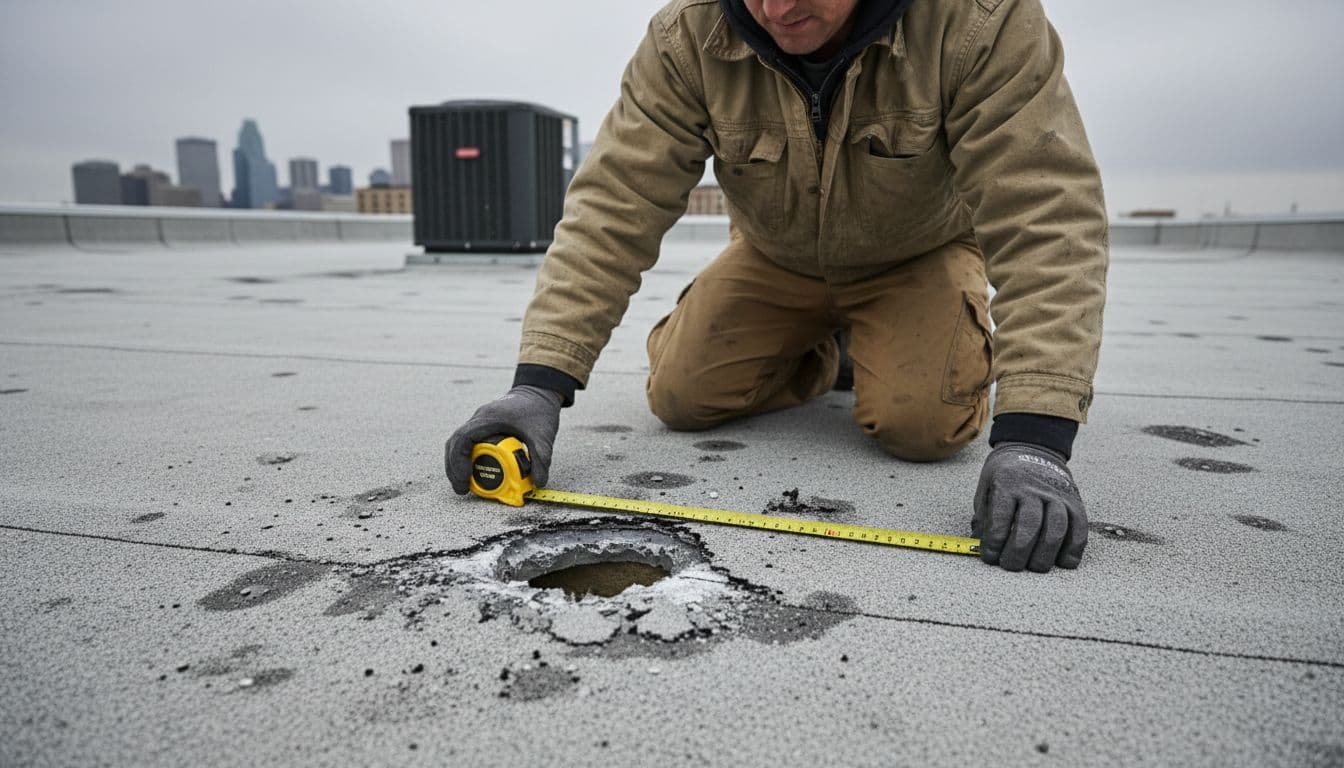
Take wide photos and close photos before repairs hide the damage. Include roof areas, drains, edge metal, rooftop units, ceiling tiles, wall staining, and any damaged contents.
Write down the storm date, when the leak started, and who first saw it. If tenants or staff noticed drips during the storm, that timing can matter.
3. Bring in a commercial roofer who can tie cause to damage
A claim rises or falls on cause. You need more than “the roof is leaking.” You need a report that connects the storm to a specific opening and then connects that opening to the water damage inside.
Ask for marked photos, moisture findings, repair notes, and a clear opinion on whether the damage is fresh or old. Owners dealing with large losses often want help with commercial roof insurance claims because adjusters look for detail, not guesses.
Ask for claim-ready findings
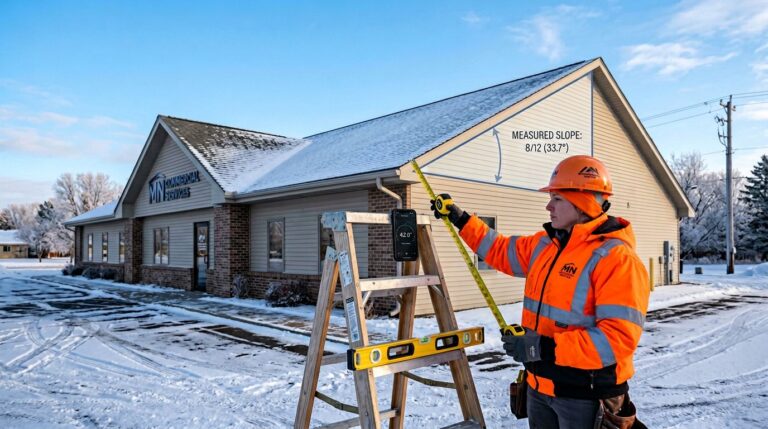
The inspection should note the roof type, puncture size, lifted seams, damaged flashing, wet insulation, and any code issues. That level of detail also helps decide whether the fix is local or broad.
4. Match the scope to repair or replacement
A small, isolated breach may call for commercial flat roof repair. However, multiple punctures, saturated insulation, or widespread seam damage may point to a larger scope.
This is where many owners misread the situation. A patch can stop visible leaking, but it may not restore the roof system. If the report shows the commercial roof needs repair in several areas, or that wet materials extend far beyond the leak point, the claim may move toward commercial roof replacement.
5. File the claim and keep one clean record
File fast and keep the record simple. Send the notice of loss, save all photos, hold repair invoices, and attend the adjuster visit if possible.
Consistency matters. If your contractor, manager, and adjuster all describe different damage locations, the file gets muddy. A clear timeline and one organized photo set can prevent that.
The bottom line
A storm-created opening claim is not about broad storm damage alone. It is about proving that the storm made a fresh breach, and that breach allowed water into the building.
For Minnesota business owners, the winning facts are usually simple: prompt mitigation, solid photos, and a roofer who can separate old wear from new storm damage. Clear proof beats a long debate.
FAQ
Does an interior leak prove there was a storm-created opening?
No. An interior leak proves water got in, but it does not prove how. The insurer will still ask whether the storm made a new opening or whether water entered through an old defect.
If the leak started after thaw
That timing can blur the cause. Freeze and thaw may widen an old weak spot, while wind-driven rain through fresh flashing damage may still qualify.
Can hail marks alone support a roof claim?
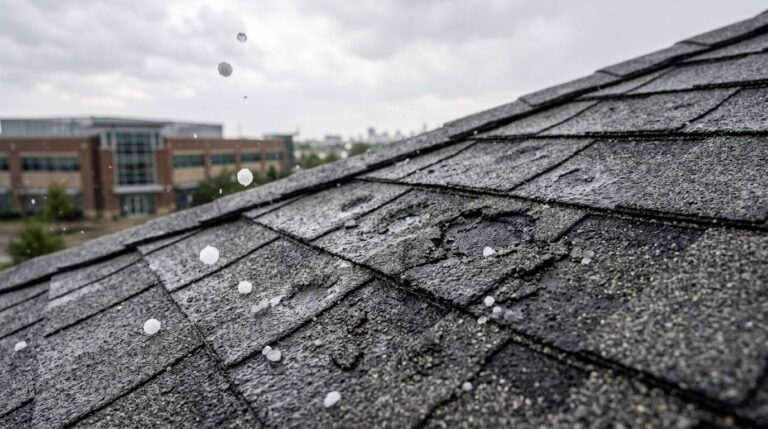
Not always. Cosmetic hits or surface dents may not be enough. The stronger claim shows that hail punctured the membrane, cracked a component, displaced flashing, or shortened the roof’s service life.
What if the roof was old before the storm?
Age does not automatically end the claim. If the storm created a new opening, that part of the damage may still be covered. Still, old condition often becomes part of the dispute, so documentation has to be strong.
When there are mixed causes
Adjusters often separate storm damage from maintenance items. A detailed inspection helps keep those categories from getting blended together.
Do temporary patches hurt the claim?
No, not if you document first and keep receipts. Owners are expected to limit more damage after a storm. The problem starts when emergency work removes the evidence and no one photographed it.
When does repair become replacement on a commercial roof?
Replacement becomes more likely when damage is widespread, insulation is saturated, seams fail across large sections, or repairs will not return the roof to code-compliant condition. In those cases, piecemeal work may cost more and solve less.
Need a roof inspection in Saint Paul or the Twin Cities? Call Sellers Roofing Company at +1-651-703-2336 or schedule a free estimate. We are a black-owned, NMSDC-certified MBE roofing contractor with 9+ years experience.