Last updated: 2026-05-26 by Ted Sellers, Owner
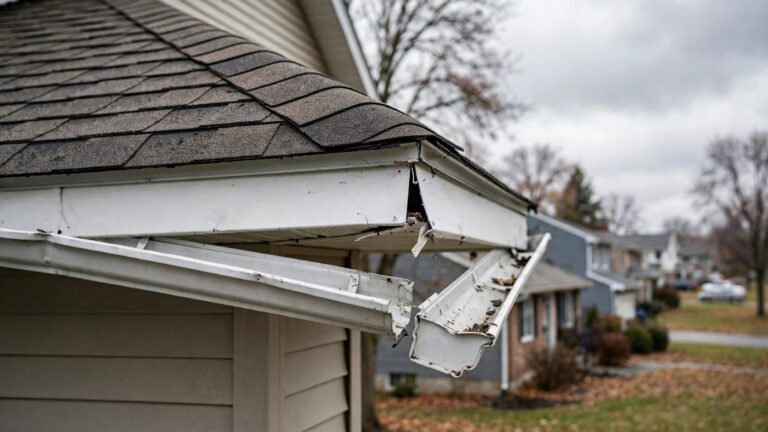
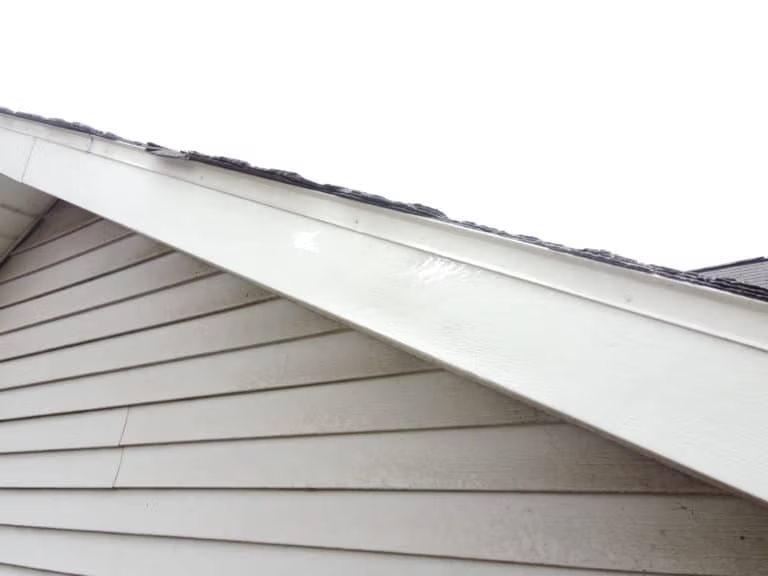
Yes. Hail can dent metal fascia, crack soffit panels, loosen joints, and damage roof-edge trim without leaving obvious shingle damage. On commercial buildings, that happens because the perimeter often takes side-impact from wind-driven hail. Shingles or membranes may look intact while the edge details are already compromised.
When This Applies
Buildings with exposed roof edges
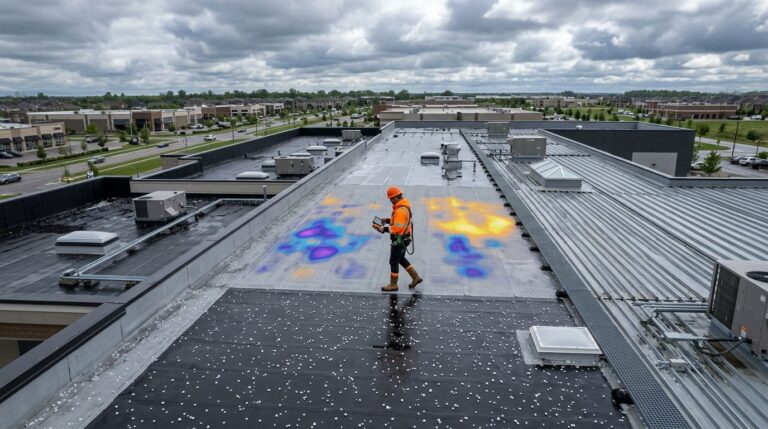
This applies to offices, retail centers, schools, churches, and warehouses with overhangs, canopies, metal fascia wrap, or vented soffits. Hail often hits those parts at an angle, so the roof edge shows damage first.
Corner exposures are common trouble spots. So are upper walls that face the storm path. If your building has a mixed roofline, the steep section may look fine while the lower edge trim takes the hit.
When a clean shingle field does not clear the roof
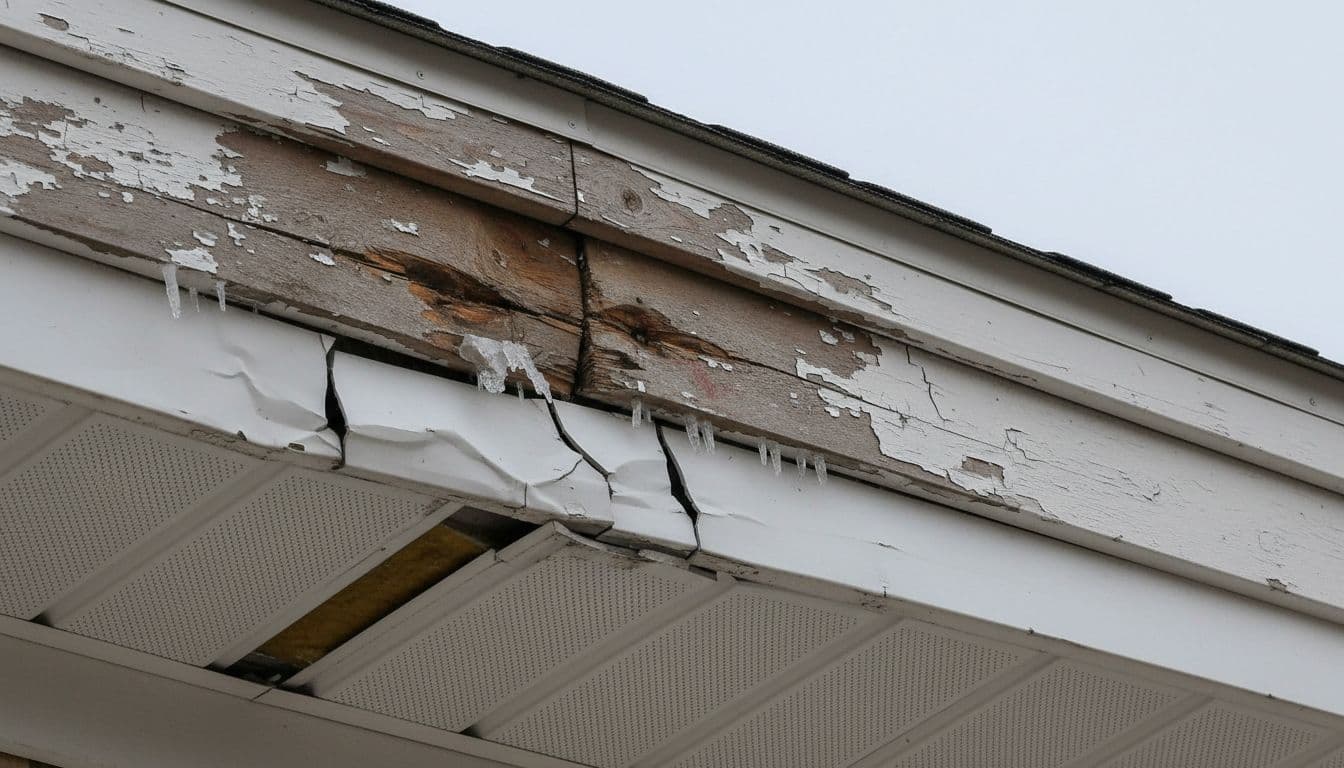
A roof covering can look normal after a storm and still have edge damage. Hail does not need to crack shingles to dent aluminum fascia, split vinyl soffit, or loosen trim fasteners. On low-slope buildings, the same idea applies to edge metal, coping, and membrane terminations.
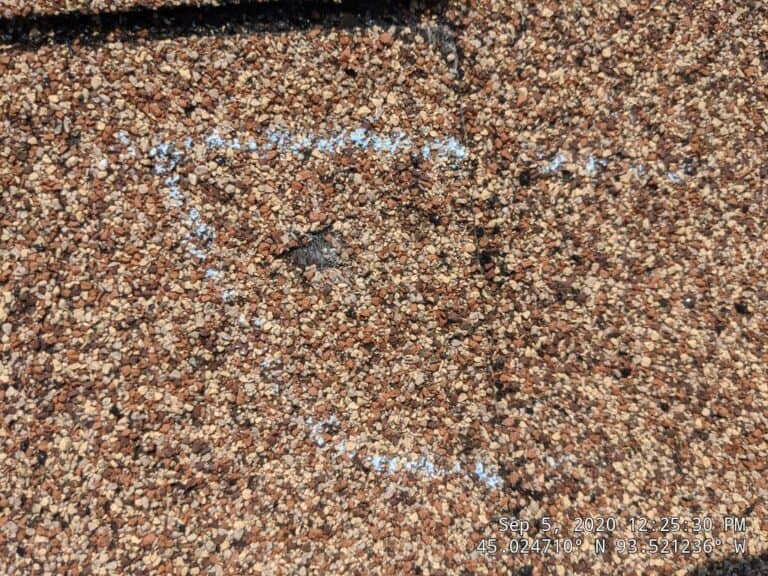
That is why owners should not stop at a ground-level look. Jewett Roofing’s inspection guide on hidden commercial hail damage explains how storm impact can stay hard to spot even when the field of the roof looks unchanged.
When this may not point to broader roof failure
Not every dent means the whole roof is failing. A few shallow marks on stable metal trim may be only cosmetic.
The exceptions that matter
If hail cracked panels, opened joints, bent edge details, blocked soffit vents, or pulled fasteners loose, the problem is no longer cosmetic. At that point, a commercial roof needs repair, even if no one has reported a leak. This also applies less directly to parapet-only buildings with no exposed soffit, but the edge metal can still suffer the same kind of impact.
Why Roof-Edge Damage Matters on Commercial Buildings
Fascia and soffit are part of the roof system
Fascia and soffit are not decorative extras. Fascia covers and protects the roof edge, and it often supports the gutter line. Soffit shields the underside of the overhang and may help feed intake ventilation.
Once hail cracks or loosens those parts, wind-driven rain can move behind the trim. Water may reach the deck edge, wall top, or insulation long before the main roof field shows a clear failure.
Functional damage changes the repair scope
For owners, the hard part is knowing what is cosmetic and what is functional. A dented face panel may only affect appearance. A split seam or bent edge transition is different, because it changes how the roof sheds water.
If hail opens joints or changes drainage at the perimeter, the damage is functional.
Material type also changes the risk. This commercial hail damage overview shows why impact can affect membranes, flashings, and insulation differently. What starts as trim damage can expand into commercial flat roof repair, sheet-metal replacement, or even commercial roof replacement if moisture spreads.
Step-by-Step
Before you approve any repair
- Confirm the storm date, hail size, and wind direction for your property. Claim disputes often start with weak storm records.
- Photograph every building elevation first, then move closer. Capture fascia faces, soffit panels, corners, gutters, downspouts, edge metal, and any fresh cracks or paint loss.
Inspect the perimeter, not only the roof field
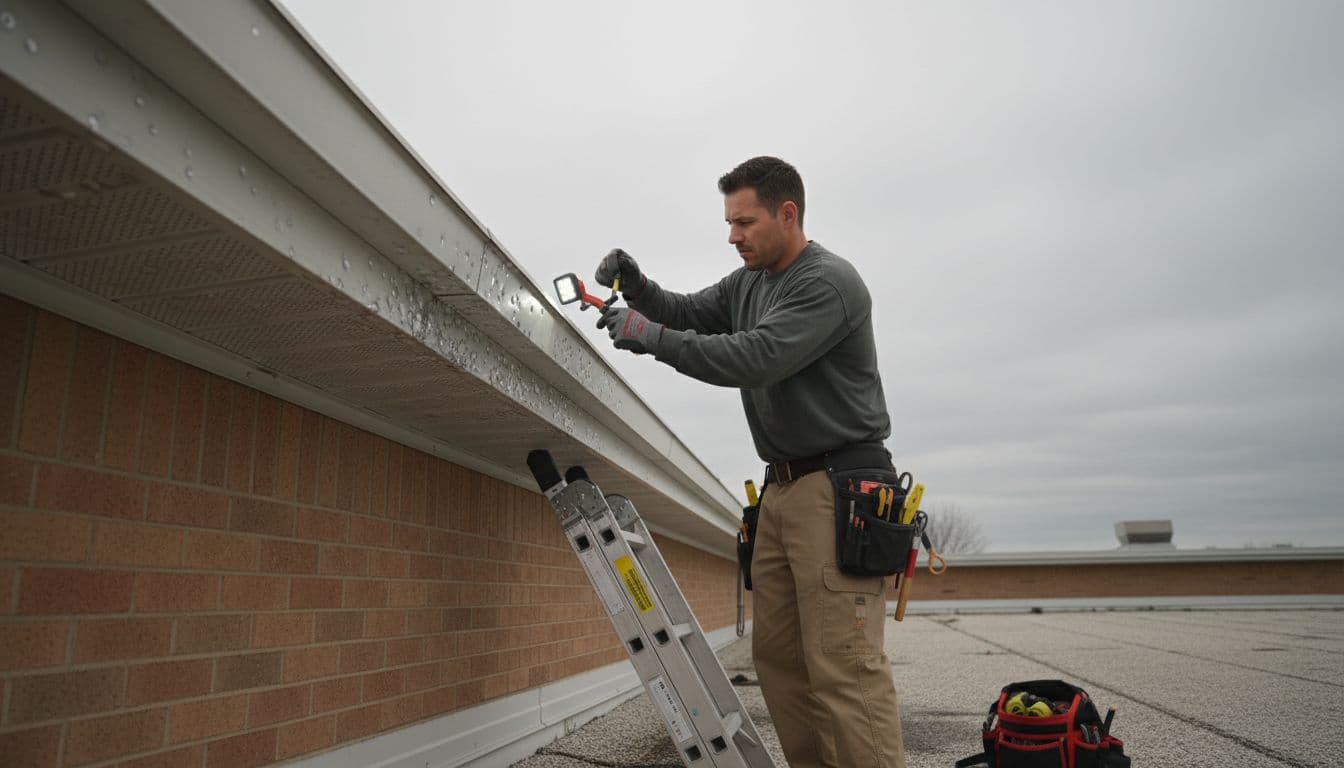
- Have a qualified roofer inspect the roof edge first. Ask for notes on fasteners, vented soffit sections, membrane terminations, coping, drip details, and any displaced trim.
- Check the inside of the building within 24 to 72 hours. Look near exterior walls for stained ceiling tiles, damp insulation, musty odor, or new drafts. Hail damage to fascia and soffit often shows up indoors later.
Choose the right repair scope
- Separate appearance damage from water-control damage. Replacing one dented panel is simple. Resetting loose trim, sealing edge transitions, or replacing wet substrate is a different job.
- Match the fix to the findings. If damage stays at the perimeter, targeted trim work and commercial flat roof repair may be enough. If hail also opened seams, weakened flashings, or wet insulation, the safer path may be commercial roof replacement for that roof section.
Final Thoughts
Keep the roof edge in view
Hail can damage fascia and soffit without obvious shingle damage, and commercial buildings see this often. The roof edge catches side-driven impact before the rest of the roof shows clear marks. If the perimeter is bent, cracked, or loose, treat it as roof-system damage, not minor trim damage.
FAQ
Will insurance care if only the fascia and soffit are damaged?
Often, yes. Carriers look for functional loss, not only shingle bruising. Clear photos, weather records, and a written inspection scope help show the storm caused the damage.
Can soffit damage lead to interior leaks later?
Yes. Open joints and broken vented panels can let water move behind the fascia or into the edge assembly. Ceiling stains and wall-top moisture may appear weeks after the storm.
Should my maintenance team replace dented panels right away?
Small dents can wait if they are only cosmetic. Cracked panels, loose joints, or bent flashing should not. If the repair affects drainage or membrane tie-ins, bring in a commercial roofer.
What if my building has a flat roof and no shingles?
The same idea still applies.
On parapet-only buildings
You may not have soffit, but hail can still damage coping, edge metal, scuppers, and membrane terminations. A clean roof surface does not rule out perimeter damage.
How fast should I schedule an inspection after hail?
Schedule it as soon as the site is safe, ideally within a few days. Early photos are stronger, temporary openings are easier to fix, and later rain is less likely to blur the source of damage.
Need a roof inspection in Saint Paul or the Twin Cities? Call Sellers Roofing Company at +1-651-703-2336 or schedule a free estimate. We are a black-owned, NMSDC-certified MBE roofing contractor with 9+ years experience.