Last updated: 2026-08-01 by Ted Sellers, Owner
TPO roof leak detection starts by tracing water inside the building, then checking the TPO membrane’s most common failure points, seams, penetrations, drains, edge metal, and rooftop equipment curbs. Because water can travel far on low-slope roofs, the interior drip spot often isn’t the roof entry point. Confirm the breach with targeted testing (not guesswork), then identify the source of leaks for repair, warranty, or insurance.
When This Applies
This method fits most occupied commercial buildings with TPO
Use this approach if you own or manage a commercial building with a TPO single-ply membrane and you see any of these: water stains, wet insulation odors, dripping near exterior walls, or leaks that show up after snowmelt or wind-driven rain. It also applies when you suspect your commercial roof needs repair due to moisture intrusion that could compromise its structural integrity, but you don’t want to waste money fixing the wrong area.
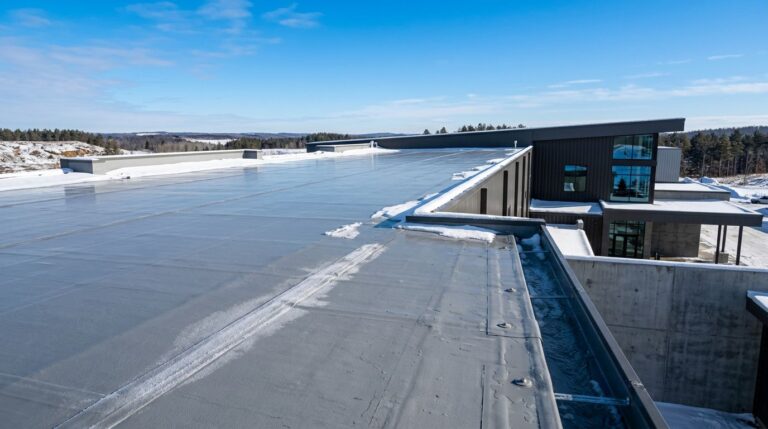
TPO roofing system acts like a big, welded sheet. When it’s intact, it sheds water well. When it fails, it usually fails at details, not in the open field. In other words, leak detection is less about “finding a hole” and more about checking the places where the system changes shape.
For quick triage, this table helps connect interior symptoms to likely roof zones:
| Interior symptom | What it often points to on a TPO roof |
|---|---|
| Stain near an exterior wall | Parapet/edge flashing, termination bar, coping joints |
| Drip near an HVAC closet | Curb flashing, condensate line supports, service damage |
| Wet spot far from walls | Open seam, puncture, split at a pipe boot |
| Leak after heavy wind | Corner/edge lifting, “blown-back” under flashing |
| Leak only during snowmelt | Ice at drains/scuppers, ponding near low areas |
Takeaway: Don’t assume the drip equals the entry point on a flat roof.
When it doesn’t apply, or you should stop early
This process isn’t a fit if the roof isn’t actually TPO (PVC and EPDM behave differently at seams), or if you have a steep-slope roof where gravity makes the path more direct.
Warranty and safety exceptions that change the plan
If your TPO is under warranty, unapproved repairs or aggressive testing can create headaches later. Also, if roof access is risky (icy surfaces, no tie-off points, or fragile skylights), stop and bring in a pro. For many owners, it’s smarter to schedule a comprehensive roof inspection with commercial roof leak detection in Saint Paul before you authorize any commercial flat roof repair.
Step-by-Step
Start inside, because the building tells you “when” the leak happens
- Log the leak timing and weather. Note wind direction, rainfall amount, or freeze-thaw timing. Patterns narrow the source fast.
- Mark the interior “first wet” point. Check above ceiling tiles, insulation, and the deck if visible. Mark it on a simple floor plan.
- Look for mechanical causes first. Condensate overflows, clogged drain lines, or humidifiers can mimic roof leaks, especially near HVAC rooms.
- Trace toward the nearest roof details. From the interior wet spot, identify what’s above it: HVAC curb, vent stack, drain, skylight, or a wall line.
Inspect the roof like a map, not like a scavenger hunt
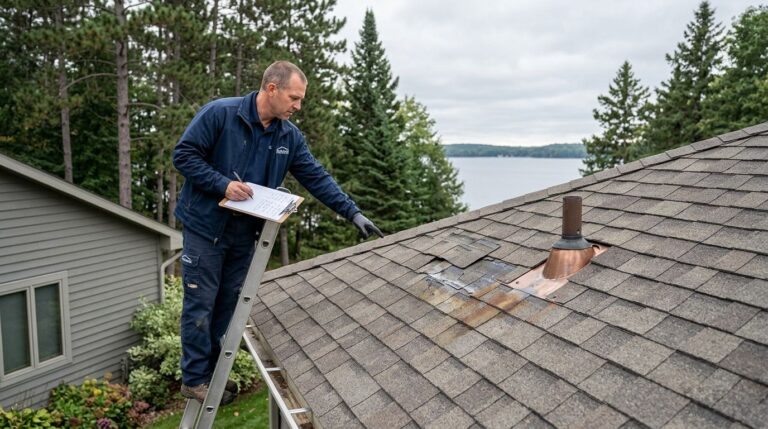
- Start the roof inspection at penetrations and curbs closest to your interior mark. On TPO, pipe boots, pitch pockets, and equipment curbs are frequent entry points.
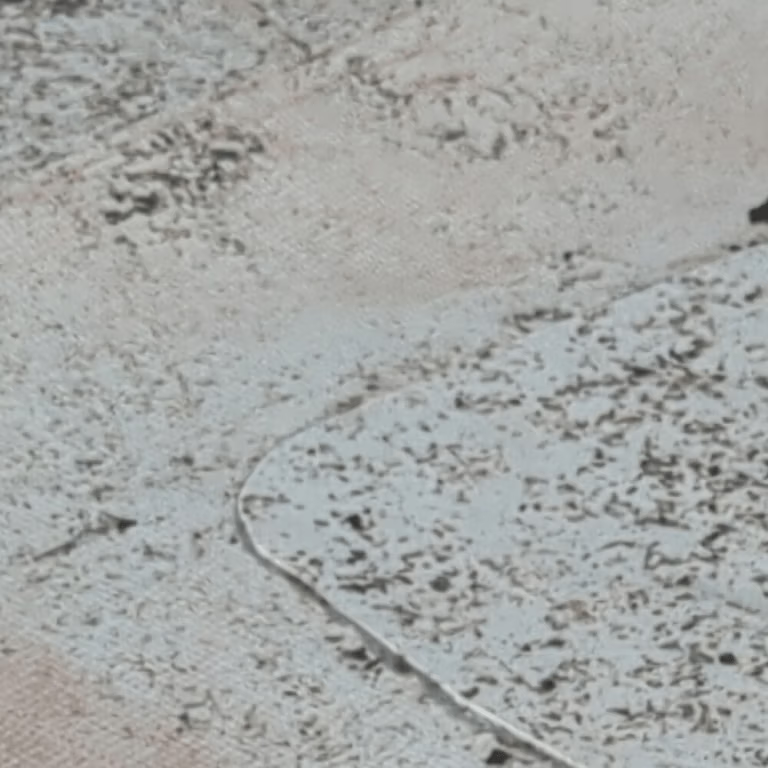
- Check TPO seams for signs of failure. Look for lifted edges, fishmouths, voids, or gaps at end laps in the roofing membrane. Roof seams should look flat and fully fused.
- Inspect termination points at walls and edges. Pay close attention to flashing where the membrane meets parapet walls, gravel stops, and metal edge systems.
- Walk drains, scuppers, and low areas. Clogged drains cause ponding, and ponding stresses seams and details over time.
- Look for “fresh” damage from service traffic. Tools dropped near HVAC units can puncture TPO. So can screws, sharp supports, and ladder feet.
- Scan for subtle membrane issues. TPO can show heat aging, surface crazing, or stress at transitions. If you’re unsure what typical TPO wear looks like, this TPO roofing guide on failures and lifespan gives useful context.
Confirm the leak without creating a new one
- Use controlled hose testing only when conditions are right to detect leaks. Start low and work upward, one small area at a time, while someone watches inside for water intrusion. Keep pressure low and avoid blasting seams.
- Choose wet testing vs. dry testing based on risk. Wet testing can help on simple roofs, but it can also push water into places it wouldn’t normally go. Dry methods (infrared or electronic testing) often pinpoint leaks without soaking the assembly. For a plain-language explanation of the difference, see wet vs dry leak detection methods.
- Escalate to professional tools when the leak is elusive. Infrared thermography and thermal imaging offer non-destructive testing with pinpoint accuracy for moisture mapping. Electronic Leak Detection, including low voltage testing or high voltage ELD, can locate breaches across large roof areas. This overview of commercial leak detection methods and technology explains why many teams rely on those tools for low-slope systems.
Decide what your findings mean for repair vs. replacement
- Match the fix to the failure. An open seam or puncture often needs a targeted membrane patch. Widespread saturated insulation, repeated seam failures, or failing edge metal can mean larger section replacement.
- Plan for the “next step” cost curve. If moisture is widespread or the roof is near the end of its service life, a commercial roof replacement can cost less over time than repeated callbacks and interior damage, achieving repair validation.
If you repair the wrong spot on a TPO roof, the leak doesn’t “get better.” It just moves, and the bill grows quietly above your ceiling.
FAQ
Will a TPO leak always show up right under the damage?
No. Water intrusion travels sideways on low-slope roofs, especially over smooth membranes and along insulation joints. As a result, the interior drip can be many feet from the entry point.
What makes water travel farther?
Wind-driven rain, ponding, and paths around penetrations or decking seams can all redirect flow.
What are the most common TPO leak locations on commercial roofs?
Most membrane breaches start at seams, penetrations (pipes, conduit), HVAC curbs, wall terminations, and drains in the roofing membrane. Open-field punctures happen too, but details fail more often because they move and flex.
Can my maintenance staff do first checks without voiding a warranty?
They can document interior symptoms and perform a visual roof walk if it’s safe for preventive maintenance on a flat roof. However, cutting the membrane, applying random sealants, or doing “trial patches” can create warranty disputes.
What’s safe to do first?
Photos, notes, drain clearing (if trained), and marking suspected roof zones are usually safe.
What if the leak only happens in winter or during snowmelt?
That pattern often points to blocked drains, ice at scuppers, or ponding that forms during thaw cycles. In those cases, focus on drainage paths and low areas first, not just seams.
How do I know when it’s time to stop chasing leaks and invest in bigger work?
If leaks recur in different areas, insulation readings show widespread moisture, or repairs are becoming routine, your commercial roof needs repair at a higher level than another patch. At that point, getting a contractor assessment through Sellers Roofing Company’s commercial roofing services in Saint Paul helps you compare targeted restoration versus full system work.
Finding a TPO leak is like finding the loose flashing on a raincoat. The drip isn’t the whole story, the seam or edge detail is. Use the building’s clues, perform a roof inspection of the TPO membrane‘s high-risk zones, and confirm with controlled testing to detect leaks. Professionals rely on commercial roof leak detection tools like moisture meters, infrared scans, or electric field vector mapping (note that a conductive primer is often needed under the waterproof layer for certain Electronic Leak Detection methods). When you can’t get a clean answer fast, professional leak detection often costs less than a month of downtime and interior repairs.
Need a roof inspection in Saint Paul or the Twin Cities? Call Sellers Roofing Company at +1-651-703-2336 or schedule a free estimate. We are a black-owned, NMSDC-certified MBE roofing contractor with 9+ years experience.