Last updated: 2026-08-01 by Ted Sellers, Owner
Wind damage on shingle ridge caps usually shows up as lifted edges, hard creases, cracks, missing cap shingles, exposed nails, and bare spots where granules blew off. You may also notice a wavy ridge line or small gaps along the peak. Those signs matter because ridge caps catch some of the strongest gusts and often fail before the rest of the roof.
What Wind Damage on Ridge Caps Looks Like
The obvious signs along the roof peak
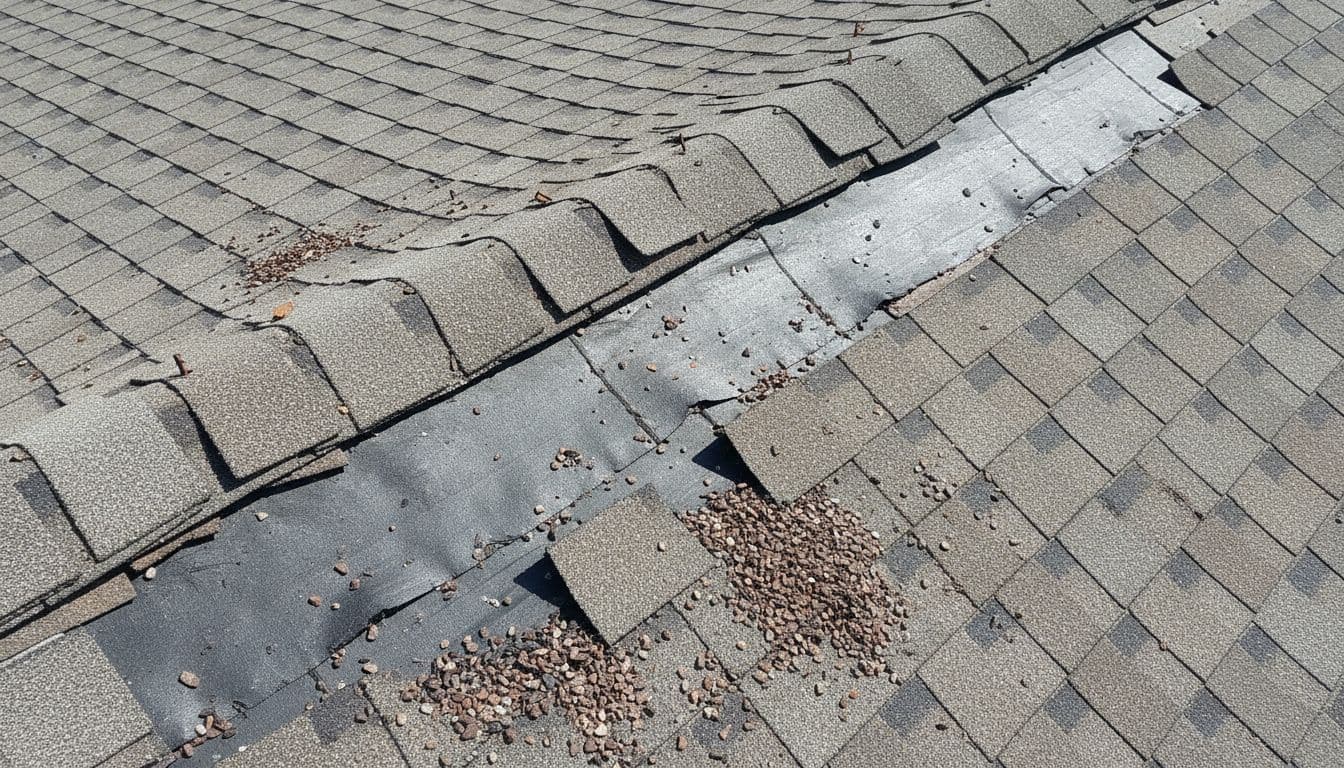
The clearest warning is a ridge cap that no longer sits flat. One edge may curl up, fold back, or sit higher than the next cap. After a stronger storm, a cap shingle may be gone, leaving dark underlayment, nail heads, or the ridge vent exposed.
Granule loss is another common clue. If the caps look patchy, shiny, or thinner than nearby shingles, wind likely scoured the surface. You might also find cap pieces in the parking lot, landscaping, or gutters.
Damage that hides in plain sight
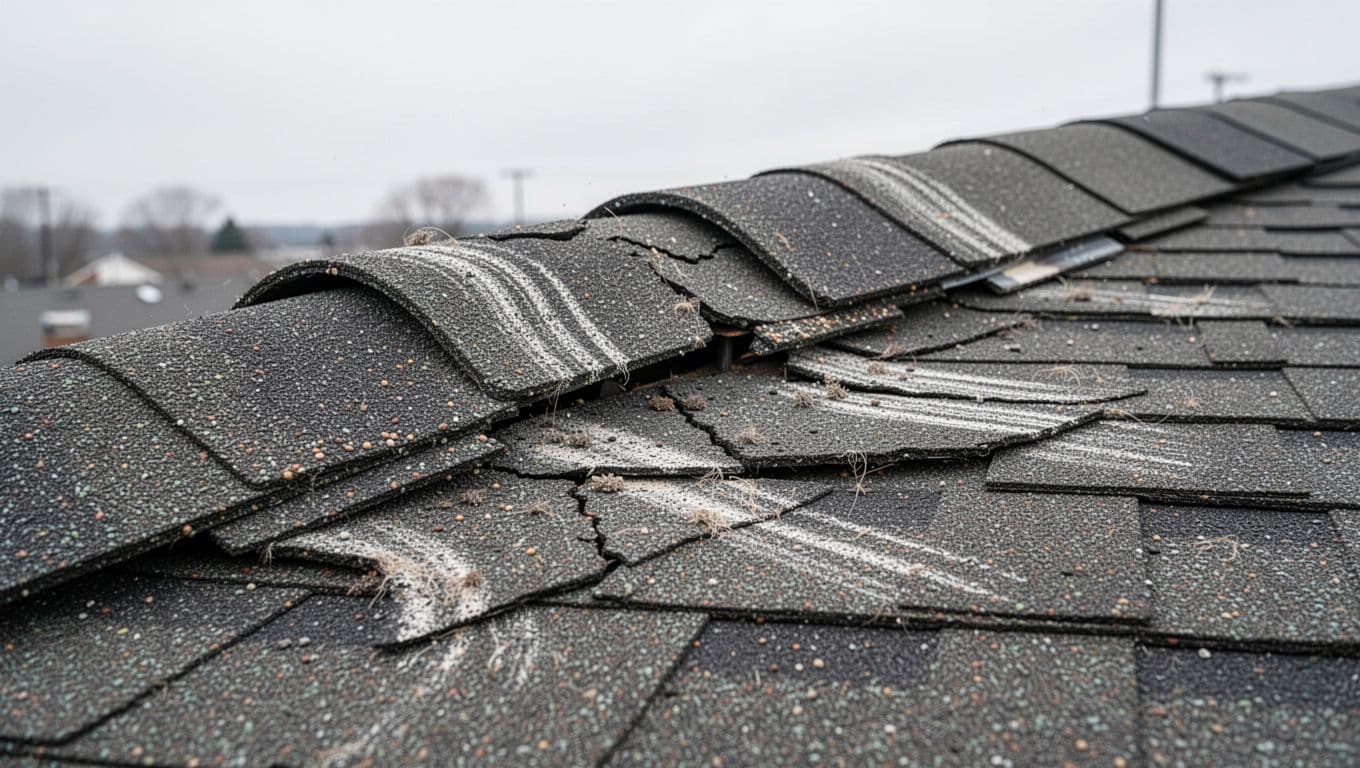
Some wind damage is harder to spot because the cap shingle can settle back down after it bends. From the ground, the ridge may look normal. Up close, the shingle often has a sharp crease across the fold line, and that crease weakens it.
A ridge cap can lie flat after a storm and still be wind-damaged if the asphalt is creased.
Watch for cracked corners, loose seal strips, and cap shingles that shifted sideways. If the ridge line looks uneven, or one cap overlaps strangely, the fasteners may have loosened. On some buildings, the first leak appears inside long before the missing cap is obvious.
When This Applies
Buildings where ridge cap checks matter
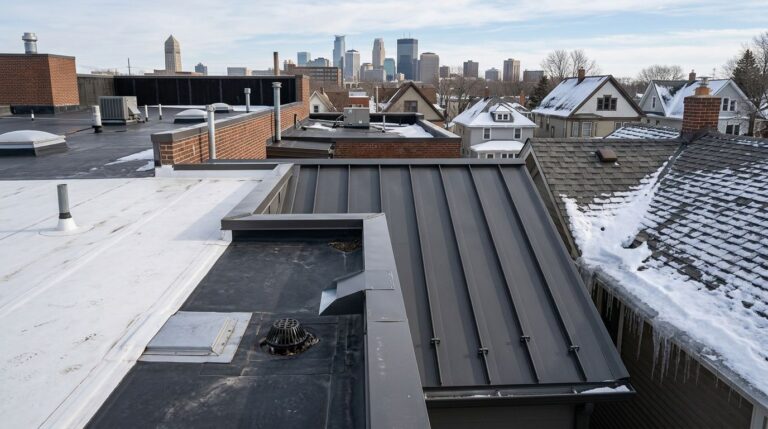
This applies to commercial buildings with sloped roof sections covered in asphalt shingles. Office buildings, churches, retail properties, and mixed-use buildings often have ridge caps even when other sections are low-slope.
Because the ridge is the highest point, it takes direct wind pressure. If your building had a recent wind event and the roof has a peak, this check belongs near the top of your storm review.
When ridge caps are not the main issue
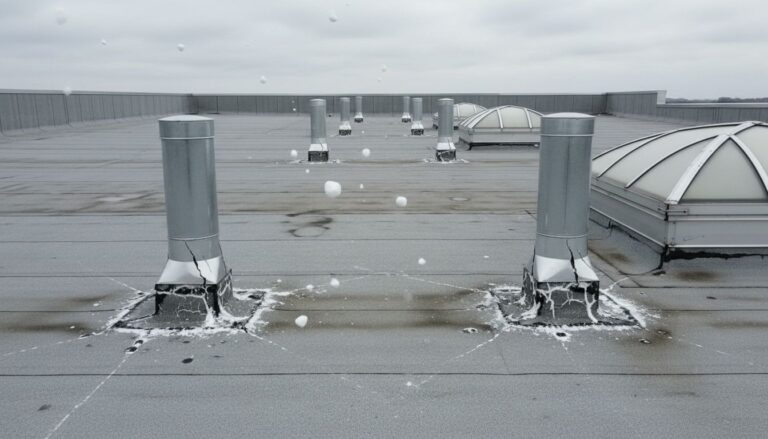
If your commercial roof needs repair but the system is TPO, EPDM, PVC, or metal, you won’t judge it by ridge caps. Wind damage on those roofs usually shows up at seams, edges, flashing, or fasteners.
Flat and low-slope exceptions
For those systems, the next step is often commercial roof leak detection. And if the damage spread beyond a few cap shingles into large roof sections or wet decking, the discussion can move from a small fix to commercial flat roof repair or even commercial roof replacement.
Step-by-Step
Check from the ground first
- Stand far enough back to see the full ridge line. Look for a broken silhouette, raised cap edges, or dark gaps where material is missing.
- Scan the ground, gutters, and downspouts after a wind event. Loose granules and torn cap pieces often show up there before you spot the roof damage.
- Use binoculars to compare both roof slopes. If one side looks uneven, or the ridge vent peeks through, the caps likely took a direct hit.
Confirm severity and move fast
- Photograph every damaged area from safe positions. Take wide shots and close-ups, because crooked cap lines and exposed nails help show what changed after the storm.
- Check the ceiling and upper wall lines inside the building. If you see stains, damp insulation, or a musty smell, water may already be moving below the ridge.
- Decide whether the problem is limited to the ridge or spread into field shingles, flashing, or decking. If damage extends past the peak, the commercial roof needs repair beyond the ridge caps alone.
- Bring in a contractor quickly if the storm was recent. Timely commercial storm damage repairs can stop leaks, limit interior loss, and preserve clear documentation before wind lifts more material.
Conclusion
The main takeaway
Wind-damaged ridge caps rarely fail in a neat way. The strongest clues are lifted edges, creases, missing caps, exposed nails, and a ridge line that no longer looks straight.
When you catch those signs early, repairs stay smaller. When you miss them, water and wind keep working at the highest point of the roof.
FAQs
Can wind damage ridge caps without hurting the rest of the shingles?
Yes. Ridge caps sit at the peak, so they take stronger pressure than many field shingles. A roof can lose or crease cap shingles first, even when the lower courses still look intact.
Will a small ridge cap problem leak right away?
Sometimes it won’t. A cap can stay in place after it cracks, and water may not show indoors until the next driven rain. That delay is why storm photos matter.
Should my staff go on the roof to check it?
No, not unless they have training and fall protection. Wet shingles, loose caps, and hidden cracks make post-storm roofs risky. Ground photos and binoculars are the safer first step.
Can ridge caps be repaired, or do they need full replacement?
Repair is often enough
If the damage is limited to a few cap shingles and the surrounding roof is sound, a roofer can usually replace the damaged caps and reseal the area.
Replacement is the better call
If wind also broke field shingles, loosened flashing, or exposed rotten decking, spot repairs may not last. That’s when broader replacement planning starts.
What should I document for an insurance claim?
Save dated photos of the ridge line, ground debris, interior stains, and the storm date. It also helps to record which roof slopes faced the wind and when the damage or leak was first noticed.
Need a roof inspection in Saint Paul or the Twin Cities? Call Sellers Roofing Company at +1-651-703-2336 or schedule a free estimate. We are a black-owned, NMSDC-certified MBE roofing contractor with 9+ years experience.