Last updated: 2026-08-01 by Ted Sellers, Owner
A skylight flashing leak usually shows up as a roof leak in the form of staining that starts at the skylight’s edges (often the uphill side) and worsens during wind-driven rain or thaw cycles. A skylight unit leak or condensation issue tends to leave moisture on the glass, frame, or inside corners first. The fastest way to tell is to match stain patterns with weather timing, then confirm with attic traces and targeted exterior photos.
When This Applies
Who this Saint Paul checklist fits best
This applies to Saint Paul commercial building owners who see new water stains, drips, or ceiling-tile damage near a skylight. It’s especially useful in February, when freeze-thaw and ice backup can cause water intrusion into small gaps.
It’s also a good fit if your building has curb-mounted skylights (common on many commercial roofs), or skylights set into sloped roof shingle sections over offices, stairwells, or retail spaces. If you already manage facilities, this is a simple way to collect clean evidence before calling a roofer, ensuring proper seals that support energy efficiency. If you need a broader baseline, start with Saint Paul commercial roofing services and document every penetration, not just the skylight.
When it’s not a skylight or flashing problem
Not every “leaking skylight” is a skylight problem. These cases can fool you:
Water shows up far from the skylight
On low-slope commercial roofs, water can travel sideways before it drops. A stain near the skylight might start at a drain, seam, or HVAC curb.
The skylight is sweating, not leaking
High indoor humidity can create condensation that mimics a leak. This is common in kitchens, pools, gyms, and buildings with under-ventilated rooftop units.
Fast clues you can spot without tools
Use this quick comparison to guide your photos and next steps:
| What you see | More likely the skylight unit | More likely flashing | More likely “other roof” issue |
|---|---|---|---|
| Fogging, droplets on inside glass or frame | Yes | No | Sometimes |
| Stains start at uphill (top) edge of skylight opening | No | Yes | Sometimes |
| Drip only during wind-driven rain | Rare | Common | Common |
| Leak worse during thaw after snow | Sometimes | Very common | Very common |
| Multiple stains in a line away from skylight | No | Sometimes | Yes |
If the stain “moves” after each storm, suspect water traveling under the roof covering, not a single pinhole.
Step-by-Step
Start with interior stain patterns (your first photos)
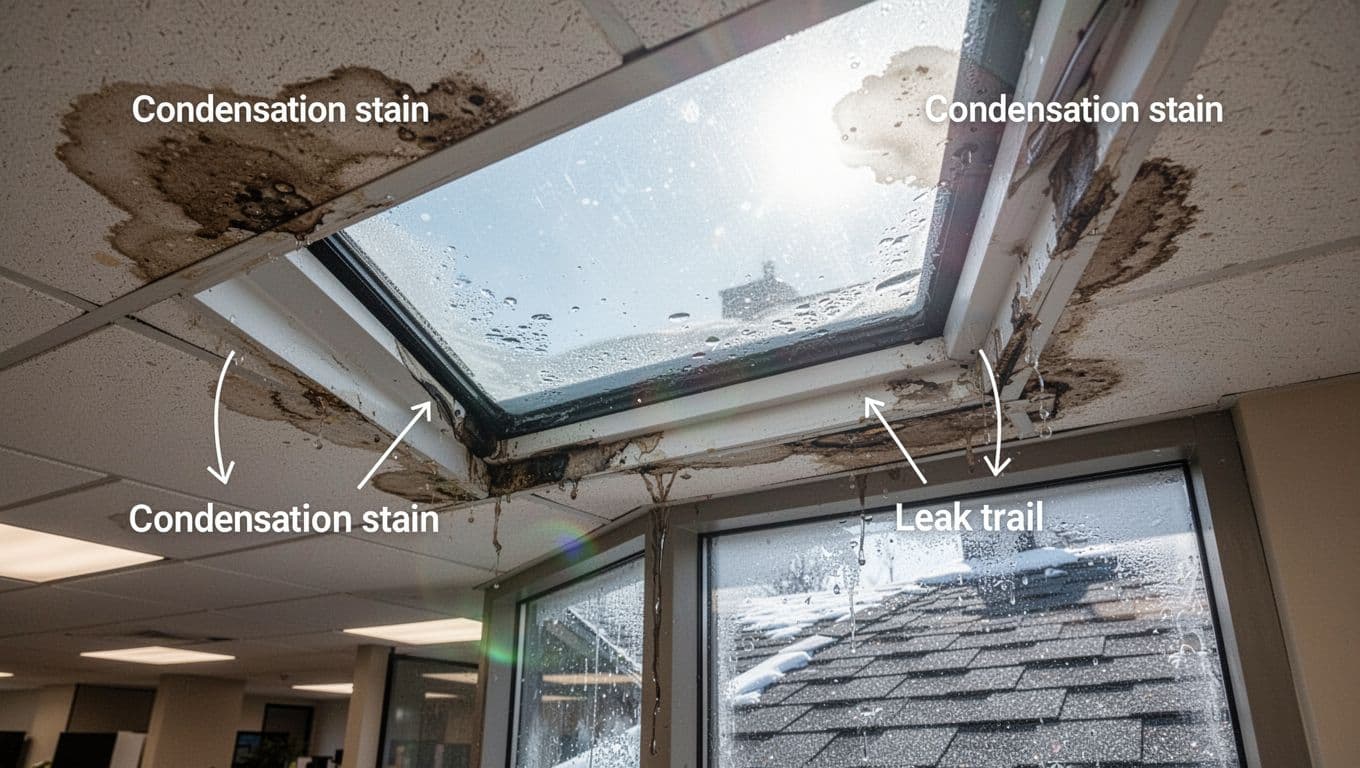
- Take one wide photo showing the skylight and the surrounding ceiling (include interior trim and a wall corner for orientation).
- Take close-ups of each corner of the skylight opening, because corner stains tell a story.
- Note the moisture patterns where staining starts: top corners often point to condensation, while bottom corners or “run trails” often point to active water entry.
- Wipe the skylight frame (if reachable). If it’s wet but the ceiling is dry, you may be seeing sweating, not a roof leak.
- Write down timing: “only during heavy rain,” “only during thaw,” or “every time it’s windy.” Timing helps separate a unit issue from flashing.
Trace the water path above the ceiling (attic, plenum, or deck underside)
- Perform an attic inspection directly above the skylight opening if you have safe access (attic hatch, mechanical space, or above a drop ceiling).
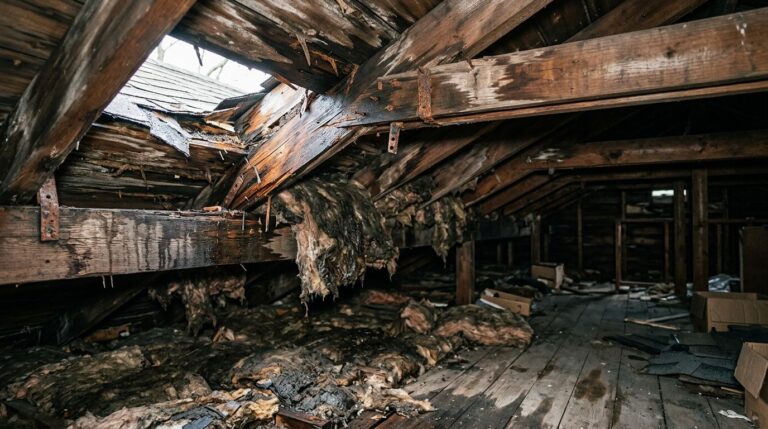
- Photograph any dark trails on roof rafters, rust on fasteners, or wet insulation. Water often leaves a “breadcrumb line” along the roof structure.
- Follow stains uphill (toward the higher roof side). Flashing failures often show staining that begins higher than the skylight opening.
- Check for dripping from a nail tip or screw. That can mean water is riding along metal or decking, then dropping at the first cold point.
- If you see widespread damp insulation, stop. At that point, your commercial roof needs repair urgently, because wet insulation spreads damage, promotes mold growth, and raises heating costs.
For a solid process mindset, use these roof leak cause determination steps as a reference when you’re matching symptoms to a source.
Photograph exterior skylight curb and step flashing (without guessing)
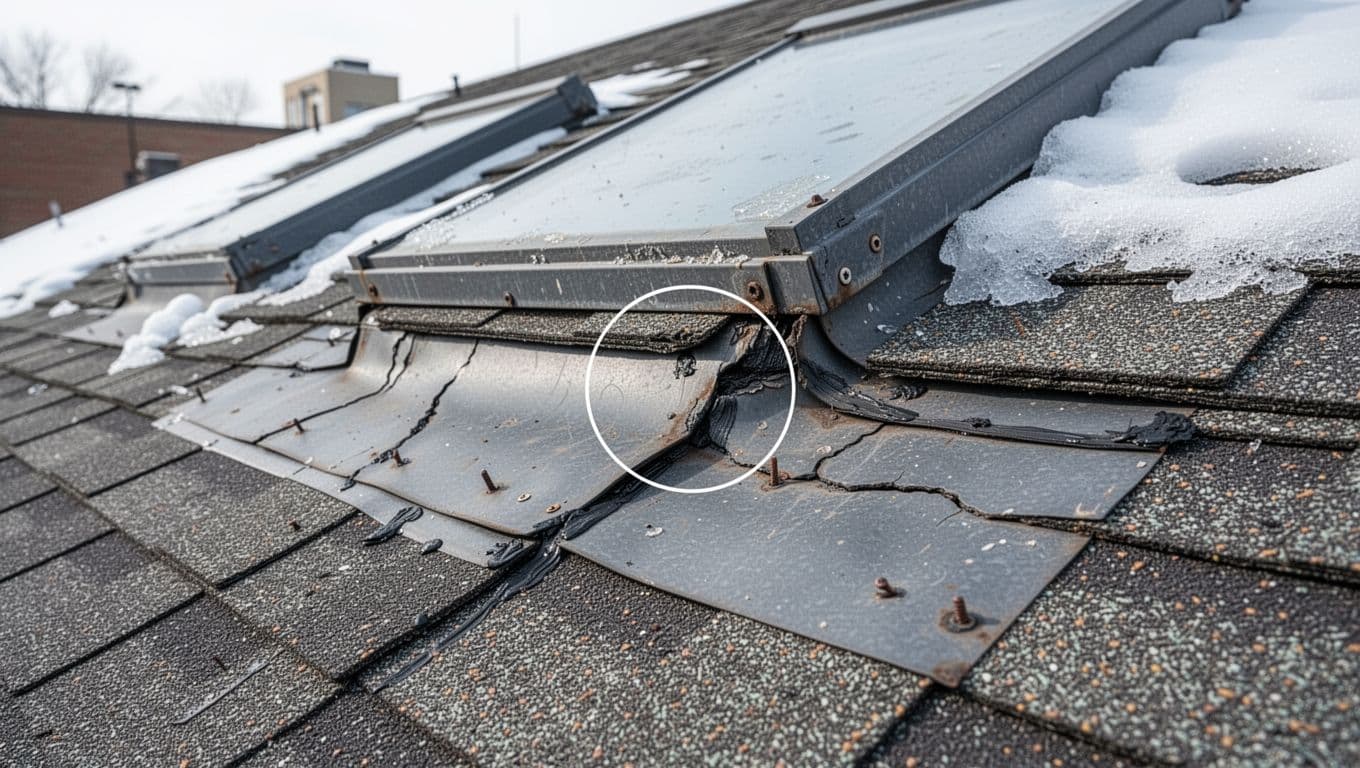
- Don’t climb an icy roof. If conditions aren’t safe, use a zoom lens from the ground, or get a professional roofer to take these shots.
- Photograph each side of the skylight curb (downhill, left, right, uphill). Missing one side is how leaks hide.
- Zoom in on joints where curb flashing, step flashing, or counter flashing meets shingles or membrane. Look for lifted edges, popped nails, or a visible gap.
- If you see cracked sealant or failed polyurethane caulk, treat it as a clue, not a fix. Caulk often fails because the flashing below is wrong or moving.
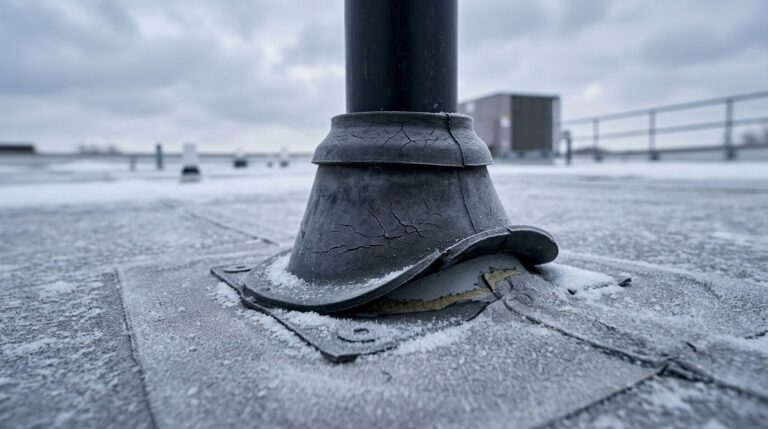
- On low-slope commercial roofs, photograph the curb base where membrane meets the vertical curb. Splits at corners are common, and they often require commercial flat roof repair, not a quick patch with flashing cement.
Check the uphill head flashing (Saint Paul ice and debris zone)
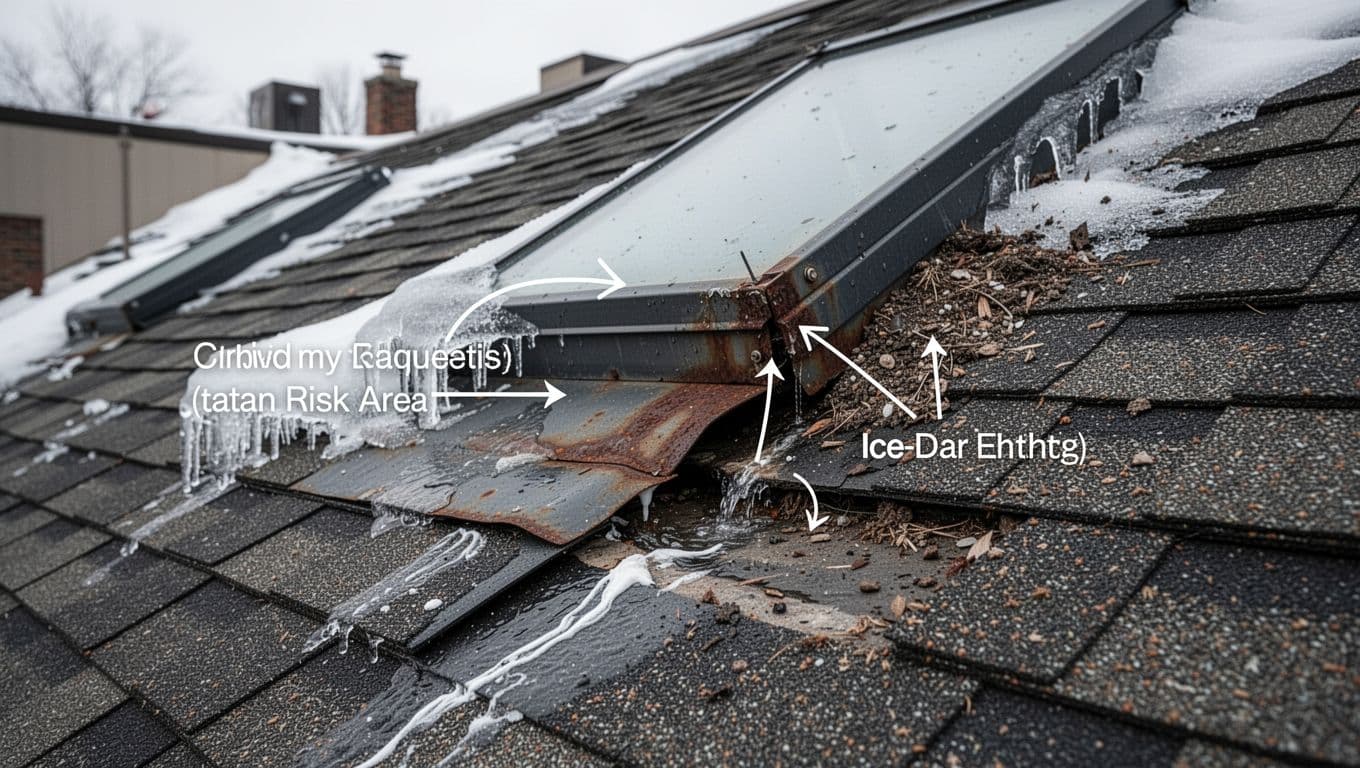
- Photograph the area immediately uphill from the skylight (12 to 24 inches above it if possible).
- Look for debris dams (leaves, granules, ice), issues near a roof valley, or improper cricket installation. In Saint Paul winters, meltwater can pool, then back up under shingles or membrane edges.
- Check for bent metal, open seams, or shingles that don’t lie flat near the head flashing.
- If the leak worsens during thaw days but slows during steady cold, suspect ice backup pushing water into flashing details.
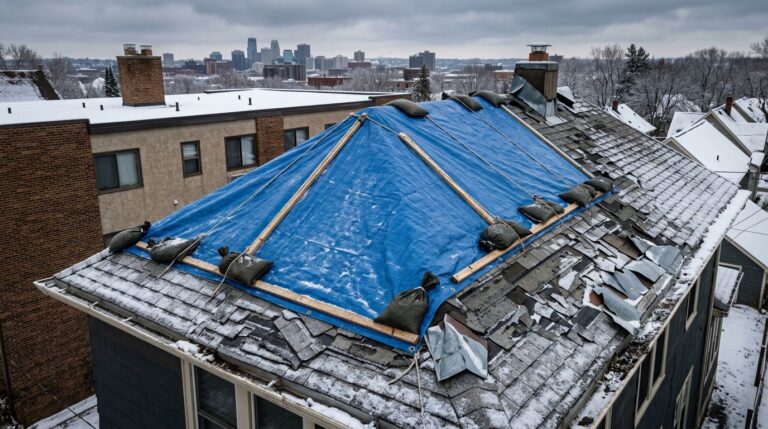
- If you see repeated staining plus soft decking around the skylight, plan for a permanent repair. Temporary patches often fail again after the next freeze-thaw cycle.
Decide what the photos point to (repair vs bigger scope)
- If the glass shows cracked glass and the frame sweat but flashing looks intact, reduce indoor humidity first and confirm weep paths aren’t blocked.
- If staining begins uphill and you see gaps at metal transitions, treat it as a leaking skylight from skylight flashing until proven otherwise, and consider skylight repair.
- If multiple penetrations show similar failures, your issue may be system-wide aging, not one bad skylight detail, potentially requiring skylight replacement.
- When wet insulation or deteriorated decking shows up, don’t delay. That’s when small work turns into a larger commercial roof replacement conversation.
- If you want confirmation without “trial repairs,” schedule professional roof leak detection in Saint Paul so the fix matches the true source.
FAQ
Will a skylight leak always show stains right below it?
No. Water can run along decking, framing, or a vapor barrier and appear several feet away. This is common on commercial assemblies with long spans and multiple layers. Thermal imaging is a useful tool for finding hidden moisture there. If the stain location shifts between storms, treat the skylight as a suspect, but keep looking uphill for the actual entry point. A garden hose test or other water testing can help confirm the leak source.
Can condensation really damage ceiling tiles like a roof leak?
Yes, especially in winter. Warm, moist indoor air hits a cold skylight frame and condenses, then drips onto tiles.
Quick reality check
If the glass is wet on the inside in the morning, but there’s no rain, condensation is likely. For deeper guidance on what to inspect, see DOE’s skylight water damage overview.
What if my skylight is on a flat commercial roof, not shingles?
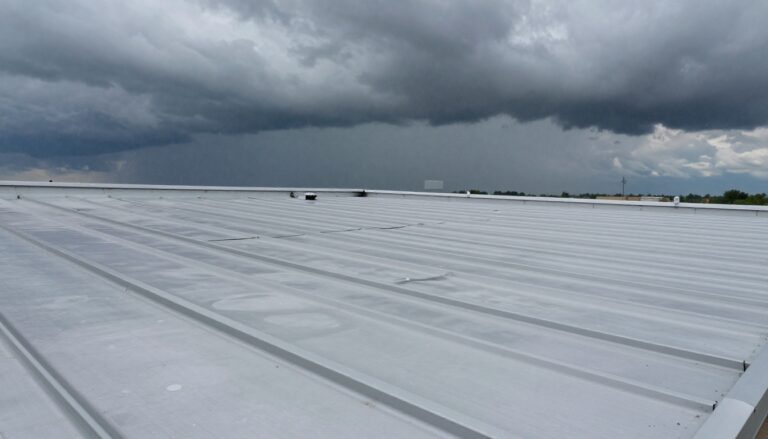
The logic is the same, but the failure points change. You’re usually dealing with membrane-to-curb transitions, corner folds, and termination bars. Those details can fail after thermal movement, rooftop traffic, or ponding water, so photos should focus on curb corners and seam lines.
Is it okay to “just seal it” around the skylight curb?
Sealant can buy time, but it rarely solves the root cause. Movement, UV exposure, and ice can reopen the path. If your photos show lifted metal, missing pieces, or repeated staining, plan on proper skylight repair like re-flashing or rebuilding the curb detail, not just adding caulk.
What documentation should I keep for a repair decision or claim?
Keep dated photos, weather notes, and interior damage locations. Also record when tenants noticed it and what rooms were affected. If you want a structured format for routine documentation, adapt a standardized list like a commercial roof inspection checklist PDF and add a “skylight” section for each penetration.
Conclusion
A leaking skylight isn’t a guessing game if your photos capture patterns, timing, and the uphill flashing details. When your evidence points to a skylight flashing leak, fixing the skylight flashing correctly beats chasing stains inside. If your checklist shows wet insulation, soft decking, or repeat leaks, act fast with skylight repair before issues grow into bigger downtime and cost, or opt for skylight replacement if damage is severe.
Need a roof inspection in Saint Paul or the Twin Cities? Call Sellers Roofing Company at +1-651-703-2336 or schedule a free estimate. We are a black-owned, NMSDC-certified MBE roofing contractor with 9+ years experience.