Last updated: 2026-08-01 by Ted Sellers, Owner
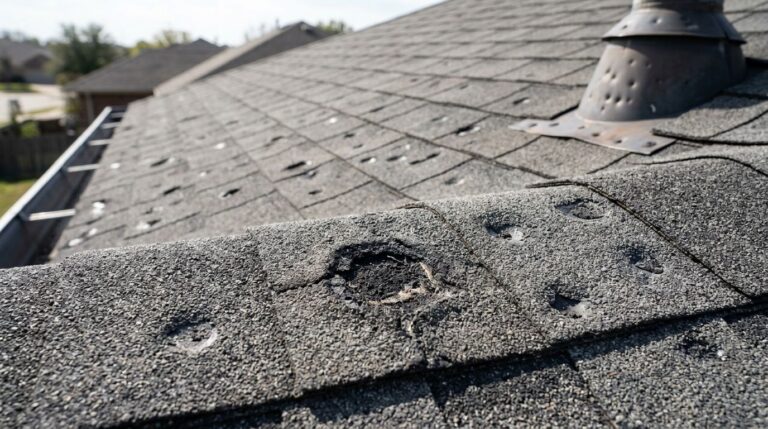
Yes. Hail damage built-up roofing can happen even when the top surface shows no split, hole, or clean puncture. A built-up roof can absorb impact, hide bruising in the plies, trap moisture below the cap sheet, and weaken insulation, which means problems may appear later as leaks, soft spots, or premature aging.
When This Applies
When hidden hail damage is most likely
This applies to business owners with low-slope or flat commercial roofs, especially older built-up roofing (BUR) systems. If your roof has asphalt layers, felt plies, and gravel or a smooth cap sheet, hail can damage parts you can’t see from the ground.
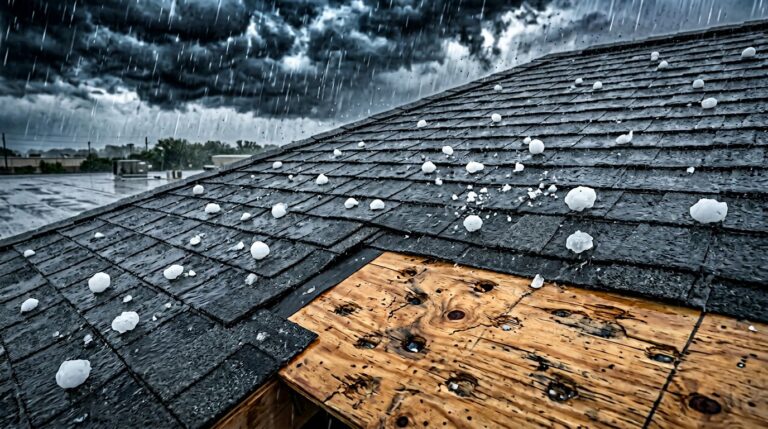
Think of hail like a hammer hitting layered cardboard. The top may look fine at first, but the layers underneath can compress, separate, or bruise. That matters because BUR depends on those layers working together to keep water out.
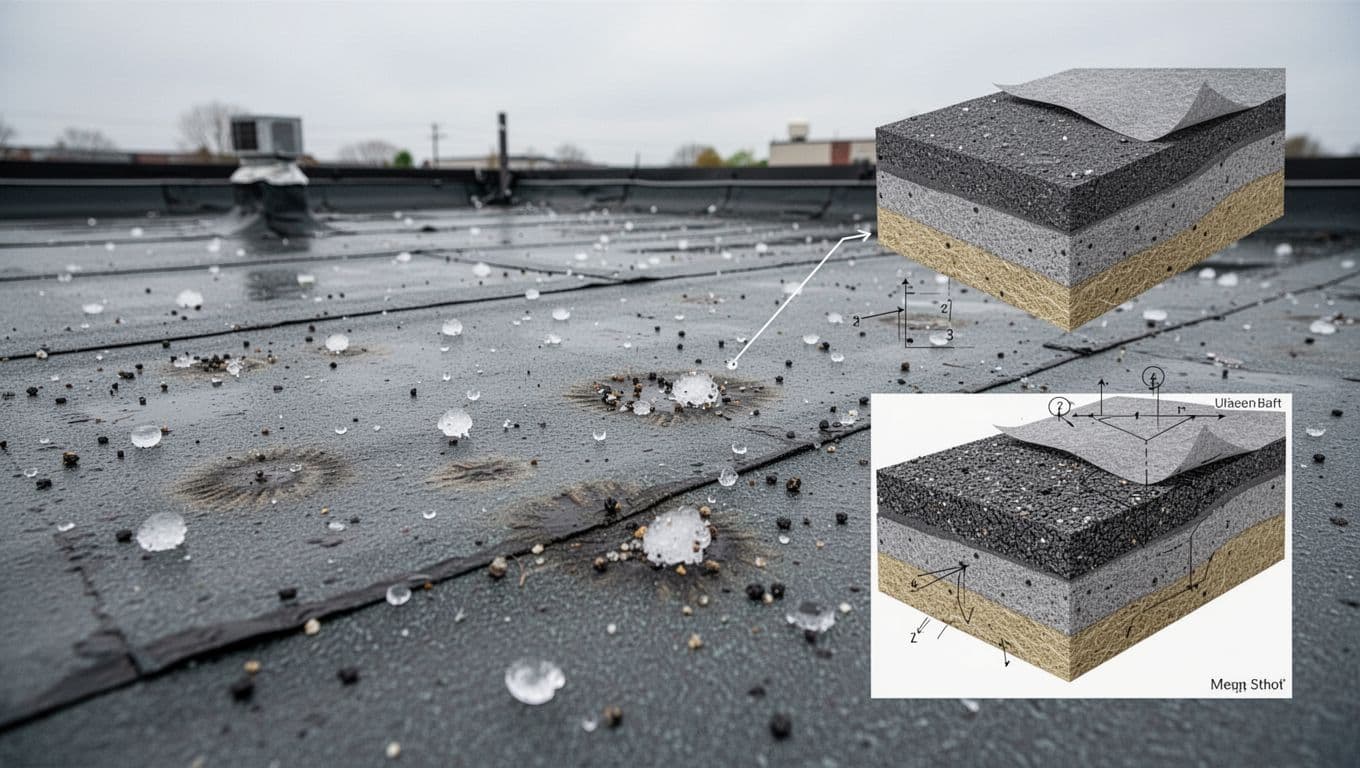
Hidden damage is more likely after larger hail, repeated storms, or impact near drains, flashing, curbs, and rooftop equipment. It’s also common on roofs that already have age-related wear. In those cases, a local team of commercial roofing experts in St. Paul can tell whether the system needs repair, monitoring, or a broader plan.
When it usually doesn’t apply, and key exceptions
If the hail was small, the roof is newer, and a trained inspection finds no displaced gravel, no bruising, and no moisture intrusion, hidden damage may be unlikely. Some BUR roofs handle minor hail well.
Still, exceptions matter. A roof can look sound and still have wet insulation below the membrane. Also, smooth-surfaced BUR often reveals impact faster than gravel-surfaced BUR, because gravel can mask the hit. That’s why “no visible breaks” doesn’t always mean “no problem.”
Step-by-Step
1. Record the storm, roof age, and any indoor changes
Start with facts. Note the storm date, hail size if known, roof age, and any recent repairs. Then check inside the building for new stains, damp ceiling tiles, odors, or rising humidity.
This first step helps connect cause and timing. If leaks show up days later, your notes can support a repair plan and help with claim documentation.
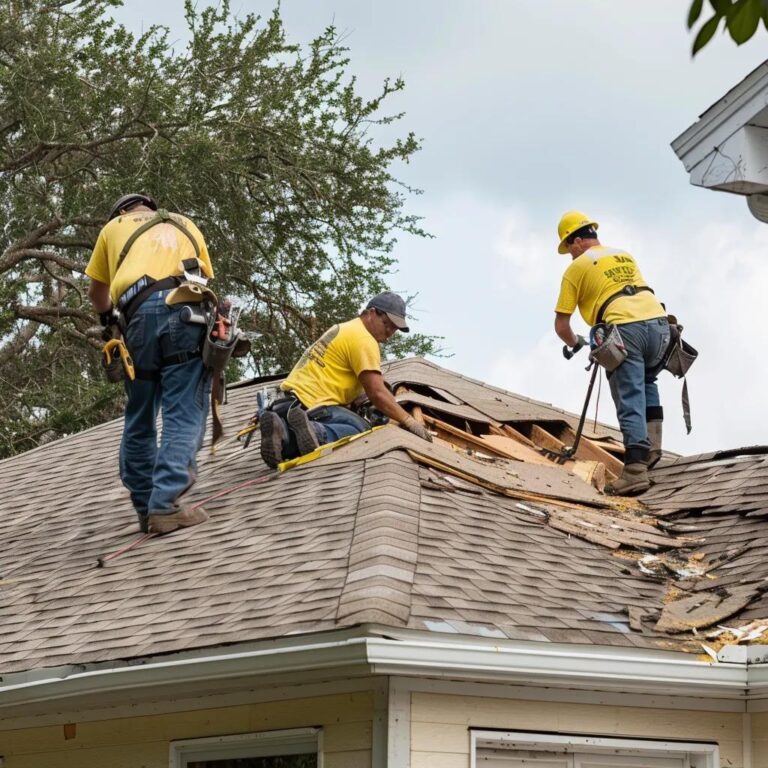
2. Get a close roof inspection, not a ground-level glance
A ground check won’t tell you much on a BUR roof. The inspection should look for displaced gravel, asphalt bruising, scuffing, crushed surfacing, soft spots, and impact around metal details.
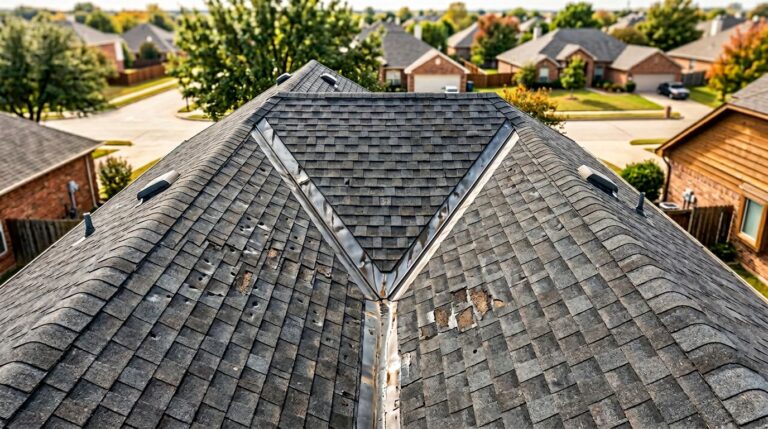
On commercial roofs, the edge and the field can tell different stories. A roofer should inspect both, because hail often hits exposed corners and rooftop units harder than sheltered areas.
3. Use moisture testing if the surface looks normal
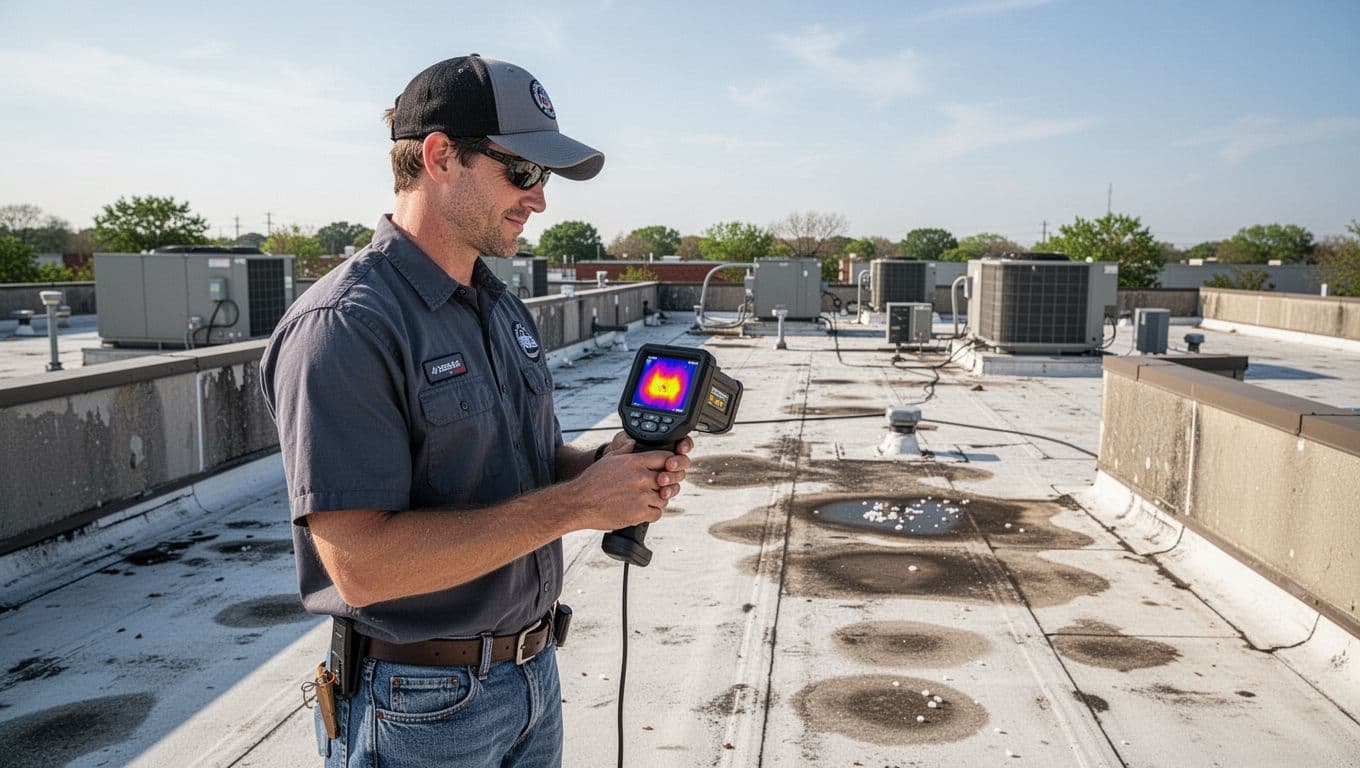
If the roof looks intact but the storm was strong, move past visual review. Infrared scans, electronic testing, and core cuts can reveal wet insulation or damaged plies that your eyes can’t catch.
Because water often travels before it drips inside, commercial roof leak detection Saint Paul can save time and keep you from repairing the wrong area first.
If the roof has gravel surfacing
Gravel makes inspections harder. A roofer may need to check for embedded stone loss, exposed asphalt, and subtle depressions where hail struck. On these roofs, hidden damage is easier to miss.
4. Match the fix to the damage, not to the first leak
If testing finds isolated damage, targeted commercial flat roof repair may be enough. That can include removing wet sections, replacing damaged plies, and restoring surfacing around the impact zone.
However, if hail exposed a larger pattern of wet insulation, split flashings, or widespread membrane fatigue, the roof may be past patching. In that case, commercial roof replacement may cost less over time than repeated service calls. A good contractor should tell you plainly when a commercial roof needs repair now, and when replacement makes more sense.
5. Schedule follow-up checks before the next freeze-thaw cycle
A BUR roof rarely fails all at once. Problems often grow after water enters, temperatures swing, and trapped moisture expands. That’s why a second inspection matters, even if the first interior check looked clean.
For Minnesota properties, this step is smart after any strong hail event. Catching hidden damage early can stop mold, deck decay, and winter leaks that shut down part of your building.
FAQ
Can a built-up roof have hail damage without leaking right away?
Yes. A BUR roof can hold water out for a while even after impact bruises the plies or compresses insulation. Leaks often show up later, after more rain, foot traffic, or temperature swings.
Will insurance cover hail damage if there are no punctures?
Sometimes, yes, but proof matters. Carriers often want evidence that the storm changed roof function, not only appearance.
What helps support the claim?
Photos, storm dates, moisture testing, core samples, and a written roof report usually carry more weight than a simple visual note.
Is hidden hail damage worse on older commercial roofs?
Often, yes. Older BUR systems have less flexibility and may already have dry asphalt, worn surfacing, or patched areas. Hail can push a tired roof past the point where spot repairs hold.
Should I wait to see if leaks appear before calling a roofer?
That’s risky. Waiting can turn a small repair into wet insulation, interior damage, or tenant complaints. For a business owner, lost use of space can cost more than the roof work itself.
Can one damaged area lead to a full replacement recommendation?
Yes, if testing shows the visible hit was only part of the problem. One leak can point to a wider moisture pattern, and a patch won’t fix saturated insulation across a larger section.
The Bottom Line
Act before hidden damage turns into downtime
A built-up roof can take hail hits without obvious surface breaks, but that doesn’t mean it’s unharmed. The strongest takeaway is simple: hidden damage is still damage, and it often gets more expensive with time.
If a recent storm hit your property, don’t wait for a brown ceiling tile to settle the question. Get the roof checked while repair options are still smaller, faster, and easier to budget.
Need a roof inspection in Saint Paul or the Twin Cities? Call Sellers Roofing Company at +1-651-703-2336 or schedule a free estimate. We are a black-owned, NMSDC-certified MBE roofing contractor with 9+ years experience.