Last updated: 2026-08-01 by Ted Sellers, Owner
The first roof leak signs in ceiling drywall are usually water stains, peeling paint, and drywall that feels soft or spongy. In commercial buildings, you might also notice musty odors, new hairline cracks, or a slight sag in a ceiling area. These early clues often appear before any active dripping starts.
When This Applies
This is most common in commercial buildings with finished ceilings
Ceiling drywall is a “tell” for water damage because it stains fast and loses strength when wet. This applies to many offices, retail spaces, clinics, and mixed-use buildings where a low-slope roof sits above a finished interior.
Still, commercial leaks don’t always show up right under the roof problem. Water can travel along roof decking, insulation seams, or framing. It behaves a bit like smoke in a building, it follows the easiest path, then exits where it can.
If you want a quick reference for interior symptoms that often come before visible dripping, see these common ceiling water damage signs.
When it’s not a roof leak (and what to check first)
Some “roof leak” stains come from inside the building. Rule these out early because they change what you do next.
Common non-roof sources that mimic a leak
Condensation and mechanical systems often fool people, especially in spring and fall.
- HVAC condensate drain issues near rooftop units can wet ceilings without a roof breach.
- Plumbing lines, fire sprinkler piping, or floor drains from the level above can drip and spread.
- High indoor humidity can cause condensation on cold surfaces, then stain drywall; moisture detection helps differentiate this from actual leaks.
A simple clue helps: roof leaks often worsen after rain or snowmelt, while plumbing leaks show up on dry days too.
The earliest ceiling drywall clues (before it looks “bad”)
Drywall usually warns you in small ways first. Watch for changes that look cosmetic but feel new.
Subtle signs that water is already in the ceiling
A stain is the headline, but not the only story:
- Water stains that grow over a week
- Paint that blisters in a tight cluster, like tiny bubbles
- Bubbling wallpaper
- Tape seams that start to lift, or corners that ripple
- A damp, earthy smell that returns after storms
If a spot looks slightly swollen, treat it like it’s holding water. Drywall can fail suddenly once it’s saturated.
Step-by-Step
Immediate steps to confirm and limit damage
- Document the area right away. Take photos, note the date, and measure the stain’s size.
- Check for active moisture safely. Lightly press the drywall with a gloved hand. If it feels soft, stop pushing. Also, watch for electrical hazards if water is near lights.
- Protect people and property below. Move inventory, cover equipment, and place a drip bucket if needed.
- Reduce the ceiling load. If sagging ceiling tiles appear, keep staff away from the area and notify facilities or building management.
- Look for a weather pattern. Compare the timing to rain, thaw cycles, or rooftop snowmelt. Pattern matters in commercial leak work.
Narrow down the likely source in a commercial roof system
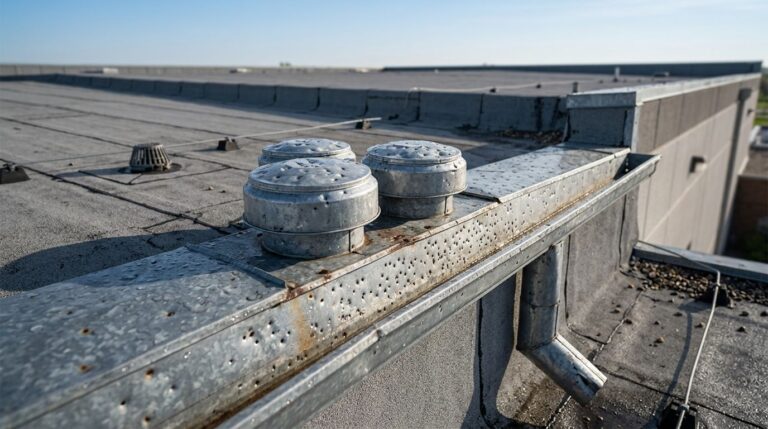
- Trace what’s above the stain. Identify rooftop units, vents, skylights, parapet walls, or drains in the general zone.
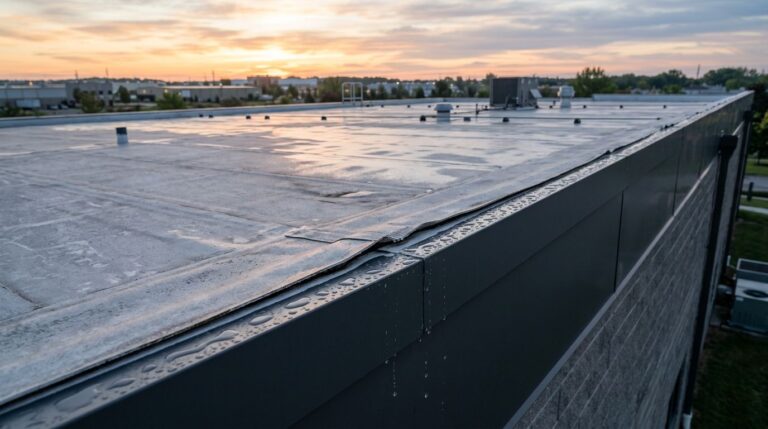
- Check drainage next. After rain, ponding water and clogged drains can push water into seams and flashing.
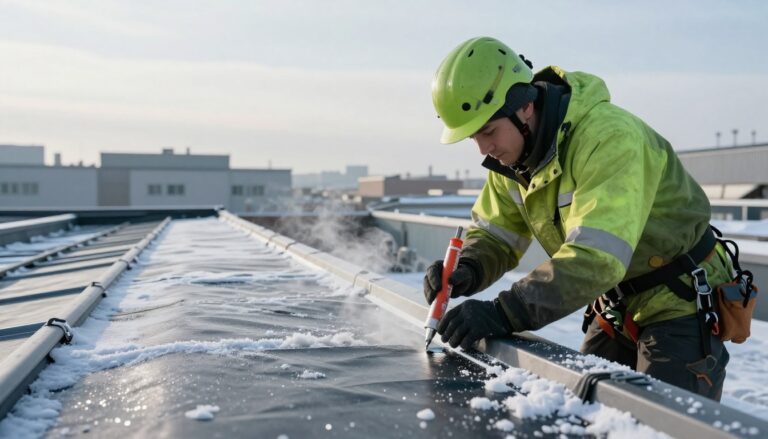
- Inspect common failure points. On many low-slope systems, leaks start at penetrations, roof flashing, edge details, and membrane seams.
- Don’t assume the leak is directly overhead. On flat decks, the entry point can be many feet away from the stain.
When the ceiling clue means the roof problem is already bigger
If the stain returns after you “dry it out,” the roof assembly may be wet. Wet insulation spreads damage, leads to structural damage, and causes higher utility bills. At that point, commercial roof needs repair becomes more than a cosmetic issue.
Decide what to do next: repair, targeted restoration, or replacement planning
- Hire a professional roofing company for leak tracing. A trained crew can confirm the source without guesswork. For Saint Paul properties, start with commercial roof leak detection Saint Paul.
- Match the fix to the scope. One puncture might call for emergency roof repair, while widespread seam issues point to commercial flat roof repair across a section.
- Plan for lifecycle realities. If the roof is near the end of its service life, repeated leaks often make commercial roof replacement the more predictable business decision.
- Ask for documentation for budgets and insurance claims. A written report with photos and moisture findings helps with claims and capital planning.
- Set a follow-up date. After the repair, re-check the exact ceiling area after the next heavy rain. Regular roof maintenance can prevent these drywall issues.
For ongoing service options and system-level guidance, see the Saint Paul commercial roofing team.
FAQ
Should we poke a hole in the drywall to drain a bulge?
Only do this if a qualified maintenance lead deems it safe and the area is controlled. First, check for a sagging roofline above the area. A bulge can release a lot of water fast, and it can also collapse. Clear the area, protect electrical devices, and consider shutting off power to that zone.
When draining makes things worse
If the leak is active, draining the ceiling doesn’t stop water from soaking insulation and spreading. You still need the roof source identified.
If the stain is small, can we wait until it gets worse?
Waiting is how minor leaks become major repairs, driving up roof leak repair cost. A small stain can mean wet insulation, and that water can migrate. The cost jump often comes from hidden saturation, not the visible spot. Treat a first-time stain as an early warning, not proof it’s minor.
Why do roof leaks show up far from where the roof is damaged?
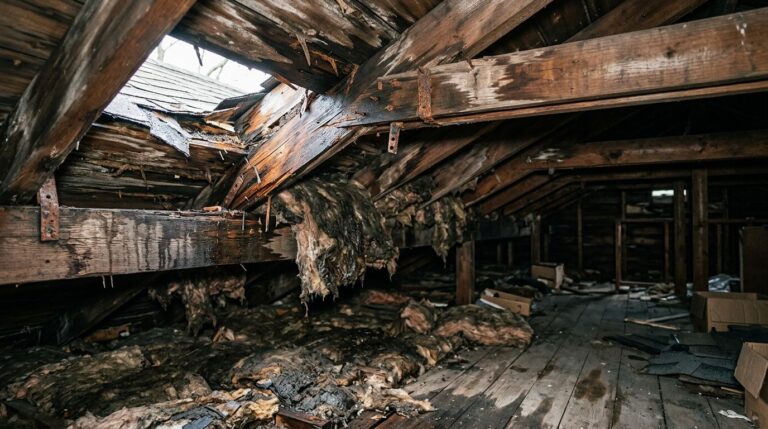
Water can travel along the path of least resistance. On commercial roofs, it may move along decking ribs, vapor barriers, or around penetrations before it drops onto drywall. To trace the path, consider an attic inspection and check the exterior for damaged shingles, missing shingles, curled shingles, buckling shingles, or granules in gutters. That’s why “repairing above the stain” sometimes misses the real entry point.
Can a roof leak cause mold behind drywall in a commercial space?
Yes. Mold growth risk rises when moisture stays trapped in warm, dark cavities. While timelines vary by conditions, the safer approach is to dry the assembly quickly and fix the entry point. If odors persist, consider indoor air quality steps along with roof repairs.
What if the ceiling stain disappears after it dries out?
Disappearing color doesn’t mean the problem is gone. Some stains fade as surface moisture evaporates, while the roof assembly stays damp. Mark the edge of the stain with a pencil and date it. If it grows after the next storm, you’ve confirmed an active pattern.
A ceiling stain is your building’s early alarm bell. Catching roof leak signs of water damage in drywall early gives you more options, lower risk, and fewer disruptions.
If your ceiling is changing color, softening, or starting to sag, act fast and get the source confirmed before the next storm does it for you.
Need a roof inspection in Saint Paul or the Twin Cities? Call Sellers Roofing Company at +1-651-703-2336 or schedule a free estimate. We are a black-owned, NMSDC-certified MBE roofing contractor with 9+ years experience.