Last updated: 2026-09-28 by Ted Sellers, Owner
Summer heat can stress low-slope roofing materials, especially where seams, flashing, drainage, or past repairs are already vulnerable. This article explains what to look for and why a surface issue should not be judged by appearance alone.
Can Minnesota Summer Heat Cause TPO and EPDM Roof Damage?
Minnesota summer heat can contribute to TPO or EPDM roof problems by stressing seams, flashings, adhesives, and areas with ponding water or prior damage. Inspect the roof system for functional issues and confirm the actual source before choosing a repair or replacement.
Yes. TPO EPDM roof damage can develop during a Minnesota summer, but heat is usually an accelerant, not a standalone diagnosis. High surface temperatures expand membranes and stress seams, flashings, and edge details. A sound, correctly installed roof tolerates that movement without functional impairment, meaning a loss of watertightness, attachment, or drainage performance. A reflective membrane may support energy efficiency by reducing cooling demand, but it doesn’t eliminate damage risk.
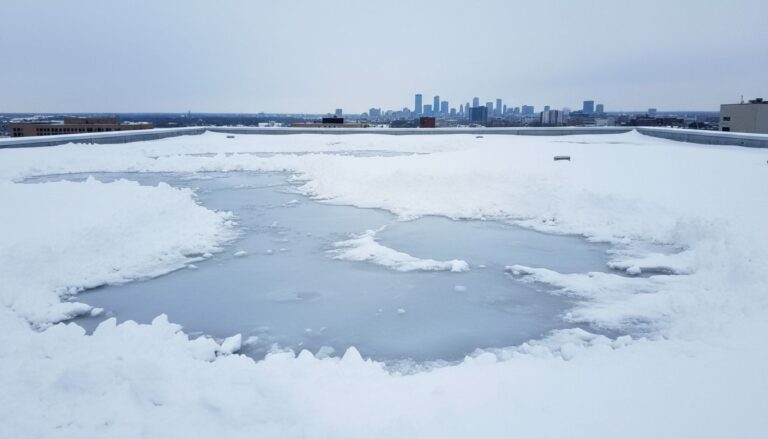
Summer heat also follows a hard winter. A membrane weakened by snow, freeze-thaw movement, hail damage, or spring storms can show its weak points under July sun.
When This Applies
Low-slope membranes are most exposed
This applies to low-slope commercial roof systems using commercial roofing materials such as TPO roofing, EPDM roofing, modified bitumen, or BUR. TPO is thermoplastic polyolefin, while EPDM is ethylene propylene diene monomer, a synthetic rubber. Both are examples of single-ply roofing that move as temperatures rise and fall. Aged EPDM may show membrane shrinkage or perimeter pullback when movement is poorly restrained.
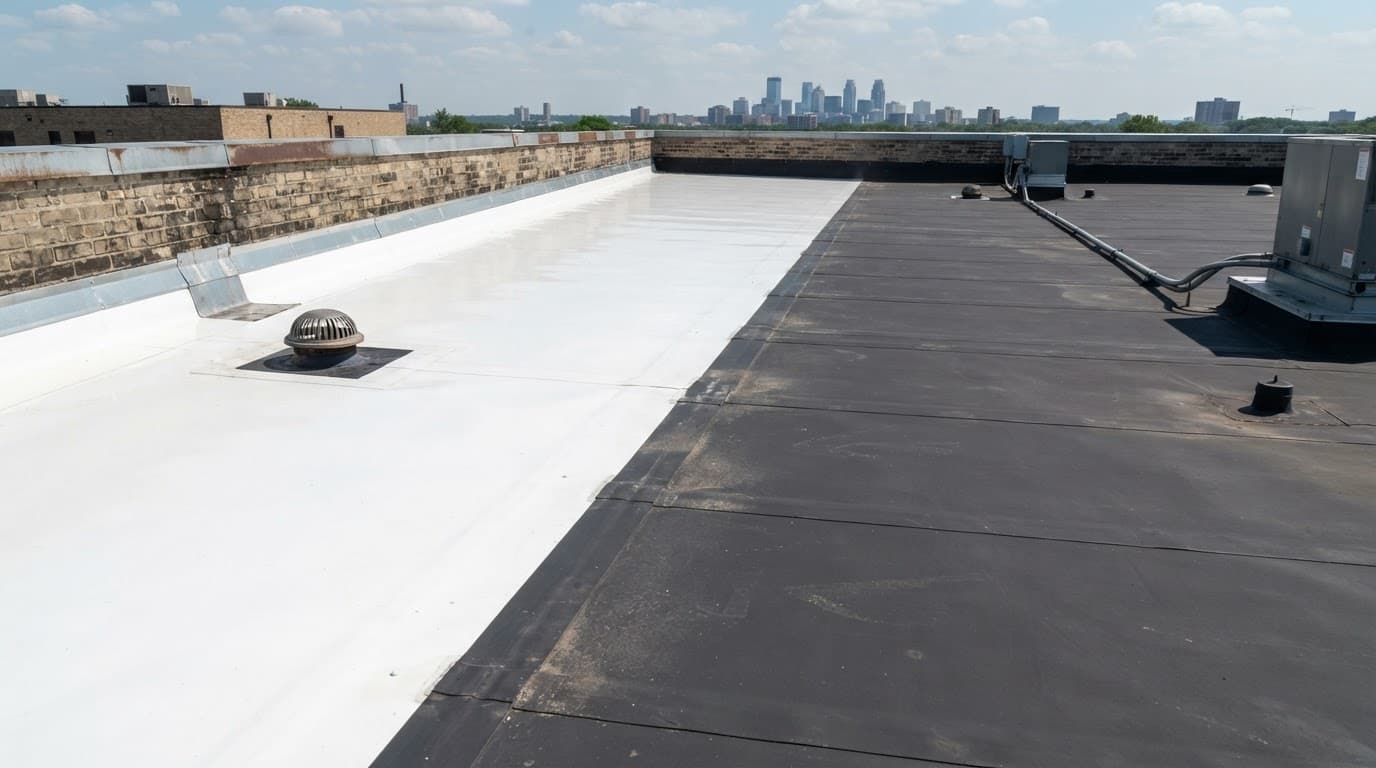
White TPO generally has greater thermal reflectivity, which may reduce solar heat gain and cooling demand, supporting energy efficiency. Black EPDM absorbs more solar heat but remains a legitimate option among commercial roofing materials.
TPO’s heat-welded seams are a major advantage, as outlined in GAF’s TPO membrane resources. The roof still depends on properly attached seams, drains, flashing, and perimeter metal. Actual performance, including tensile strength and puncture resistance, depends on the product, attachment, detailing, and installation.
Heat is not always the cause
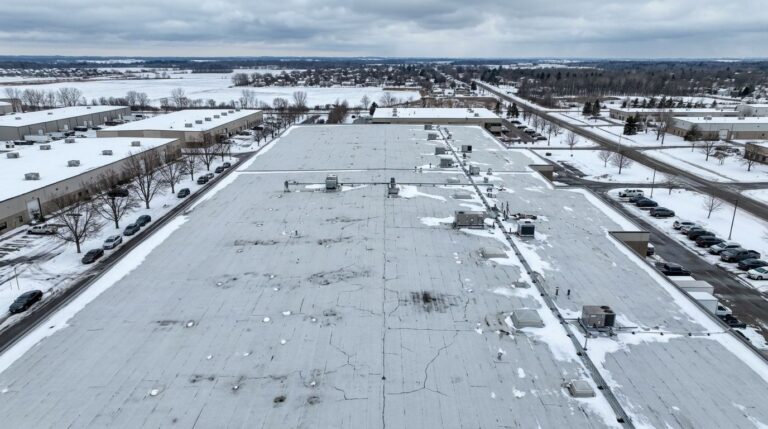
Heat isn’t a diagnosis; functional impairment affects roof performance, while wrinkles, discoloration, or surface changes may be aesthetic damage alone. Ponding water, loose edge metal, punctures, deteriorated adhesive, and old seam work can create the failure first. Ice dam removal and spring drain clearing also address different problems than summer membrane movement.
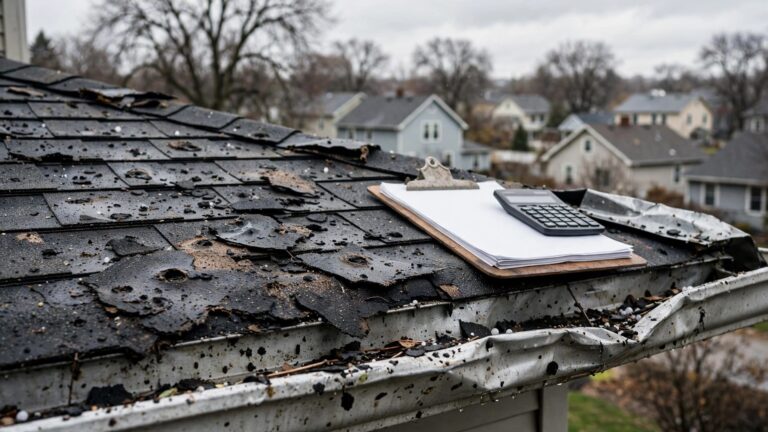
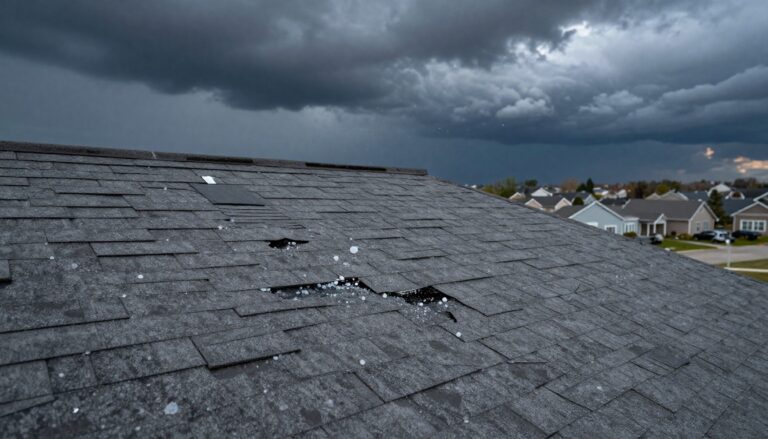
Hail damage or storm damage needs a cause-based evaluation. Modified bitumen and BUR systems with a weathering ply require a different evaluation than TPO or EPDM. Don’t apply flat-roof rules to asphalt shingles or metal roofing. Those materials can suffer heat aging too, but the right scope may be residential roof repair or residential roof replacement.
How TPO EPDM Roof Damage Starts
Thermal movement targets details, not only the field
TPO and EPDM roofing are forms of single-ply roofing commonly used as commercial roofing materials. Both expand in direct sun, then contract after sunset or a cool rain. Repeated movement becomes a concern when it causes functional impairment, affecting watertightness, attachment, or detail performance.
That repeated movement pulls hardest at seams, pipe boots, rooftop-unit curbs, parapet walls, termination bars, and drains. Weak seams or transitions may develop seam failure. Aged or poorly restrained membranes can experience membrane shrinkage, especially when reduced tensile strength limits movement tolerance.
A hot membrane can expose a weak detail, but it does not prove heat caused the failure.
A roof with sound attachment can handle normal movement. An older roof with weak flashing or prior repairs may not.
Moisture below the membrane changes the scope
A ceiling stain often marks where water exited, not where it entered. Water infiltration can travel below insulation boards, a cover board, and deck flutes before it reaches a tenant space.
Soft areas, bubbling, separated seams, or recurring interior stains require more than a surface patch. A qualified roof inspection, including a commercial roof leak detection inspection, can use moisture scanning, tactile inspection, and targeted core sampling. These methods help identify insulation indentations and distinguish a localized opening from wet insulation beneath the membrane.
Step-by-Step
1. Inspect the perimeter and penetrations
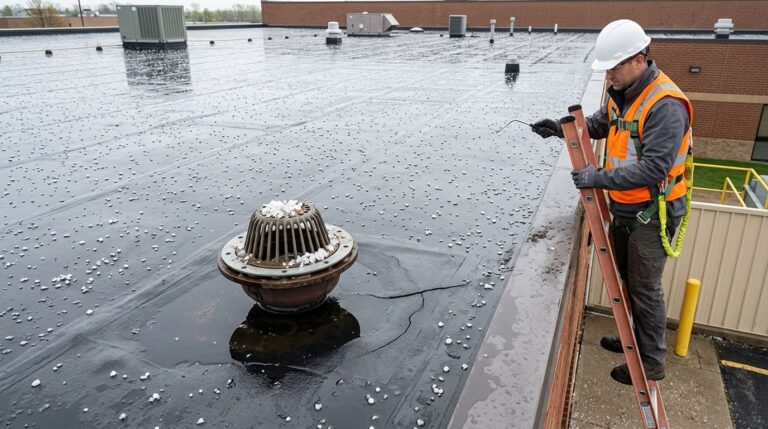
Start with a commercial roof inspection after prolonged heat, hail damage, or high wind. Check seams, perimeter metal, drain bowls, flashing, and penetrations for seam failure, membrane shrinkage, lifting, gaps, wrinkles, or cracked sealant. An open seam, lifted edge, active leak, or impaired drainage indicates functional impairment.
Don’t send maintenance staff onto a hot, slick, or storm-damaged membrane. If water is actively entering the building, Call 651-703-2336 for 24/7 Emergency Roofing after dangerous weather has passed.
2. Trace the water path before authorizing repairs
Use moisture scanning, seam testing, and tactile inspection when the leak source is unclear. Add core sampling to assess moisture, insulation, and cover board condition below the membrane. Look for insulation indentations, which may reveal traffic, compression, or concealed damage.
Trace water infiltration before authorizing repairs. Patching directly above a ceiling stain can miss an opening several feet uphill.
Photograph roof conditions, interior damage, and temporary dry-in work before permanent repairs begin. This record matters if a roof insurance claim later depends on whether the damage came from heat aging, wind, hail, or long-term wear.
3. Match the work to the roof condition
An isolated split or open seam may need commercial roof repair in a single-ply roofing system. Commercial roof restoration and commercial roof coatings can support energy efficiency and roof longevity when the assembly is dry, well-adhered, and has sound insulation.
Widespread functional impairment, wet insulation, repeated seam separation, broad attachment failure, or deck damage can move the project toward commercial roof replacement. Material color alone should not drive that decision. Evaluate commercial roofing materials for compatibility, condition, and puncture resistance. Modified-bitumen or BUR assemblies may require a different scope because their weathering ply changes the repair approach. NRCA’s TPO weatherability review shows why membrane selection requires more than a reflectivity comparison.
4. Use a qualified local roofing team
Saint Paul roofing and Minneapolis roofing properties face the same cycle of summer heat, hail, snow, and freeze-thaw movement. Twin Cities roofing work should begin with membrane condition, not assumptions about the season. Before altering the membrane, have the contractor check manufacturer warranty requirements and document the proposed scope.
Sellers Roofing Company provides union-built roofing with IUPAT Local 96 roofers. The company is GAF certified and holds MN License 803862. For a documented low-slope review, Get a Free Commercial Roof Inspection.
The Practical Takeaway
Inspect the assembly, not the temperature
Sound low-slope commercial roofing materials can tolerate summer heat when seams, flashing, attachment, and drainage remain intact. Reflective design may support energy efficiency, but repair decisions should reflect functional impairment, not temperature alone. Wrinkles or discoloration may be aesthetic damage rather than a leak-producing defect.
The decision should rest on moisture findings and the full roof condition, since a small breach may be repairable. Wet insulation changes the project completely, while a targeted repair may preserve roof longevity in a sound assembly. Documentation for an insurance claim should support damage from hail or wind, rather than ordinary heat aging.
Frequently Asked Questions
Can TPO roofing still fail in hot weather?
Yes. A reflective surface lowers solar heat gain, but seams, flashing, and perimeter details still expand and contract. White membrane doesn’t correct poor drainage or failed attachment.
Does EPDM roofing crack from summer heat?
EPDM remains flexible, but aging rubber, stressed taped seams, and deteriorated flashing can lead to seam failure after repeated heat cycles. Inspect details, not only the field membrane.
Can roof coatings fix heat-related leaks?
Only when the existing assembly is dry, well adhered, and free of significant functional impairment. Commercial roof coatings don’t stop water infiltration through saturated insulation, open seams, loose edge metal, or a damaged deck.
Will insurance pay for a heat-related leak?
Usually not for ordinary heat aging, which insurers commonly treat as wear. An insurance claim is stronger when documented hail damage or wind created a new opening.
When should a Twin Cities roof be inspected?
Schedule an inspection after winter, major hail or wind, or when interior staining appears. For steep-slope homes, Get a Free Residential Roof Estimate instead of applying low-slope membrane repair methods.
For the larger documentation and claim process, read our Minnesota roof storm damage and insurance claims guide.
Need a roof inspection in Saint Paul or the Twin Cities? Call Sellers Roofing Company at +1-651-703-2336 or schedule a free estimate. We are a black-owned, NMSDC-certified MBE roofing contractor with 9+ years experience.