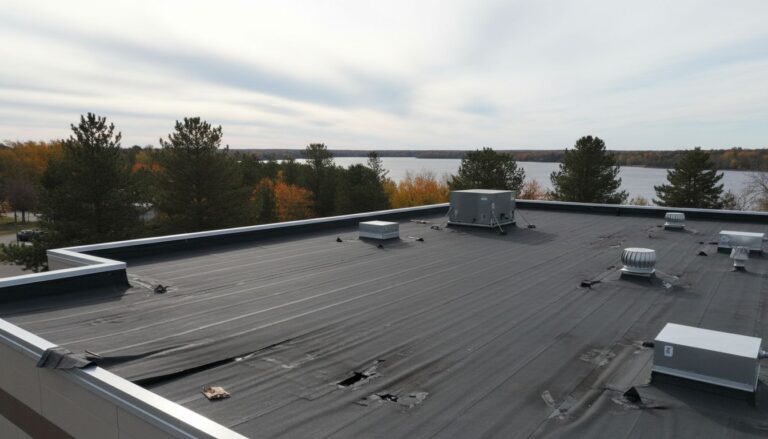
Last updated: 2026-08-01 by Ted Sellers, Owner
If you own a commercial building in the Twin Cities, you’ve probably heard contractors mention EPDM roofing as an option for flat or low-slope roofs. But what exactly is it, and why has it become one of the most popular choices for Minnesota commercial properties? At Sellers Roofing Company, we’ve installed and maintained EPDM systems across Saint Paul and Minneapolis for over 18 years, long enough to see how they hold up through brutal winters, summer storms, and everything in between.
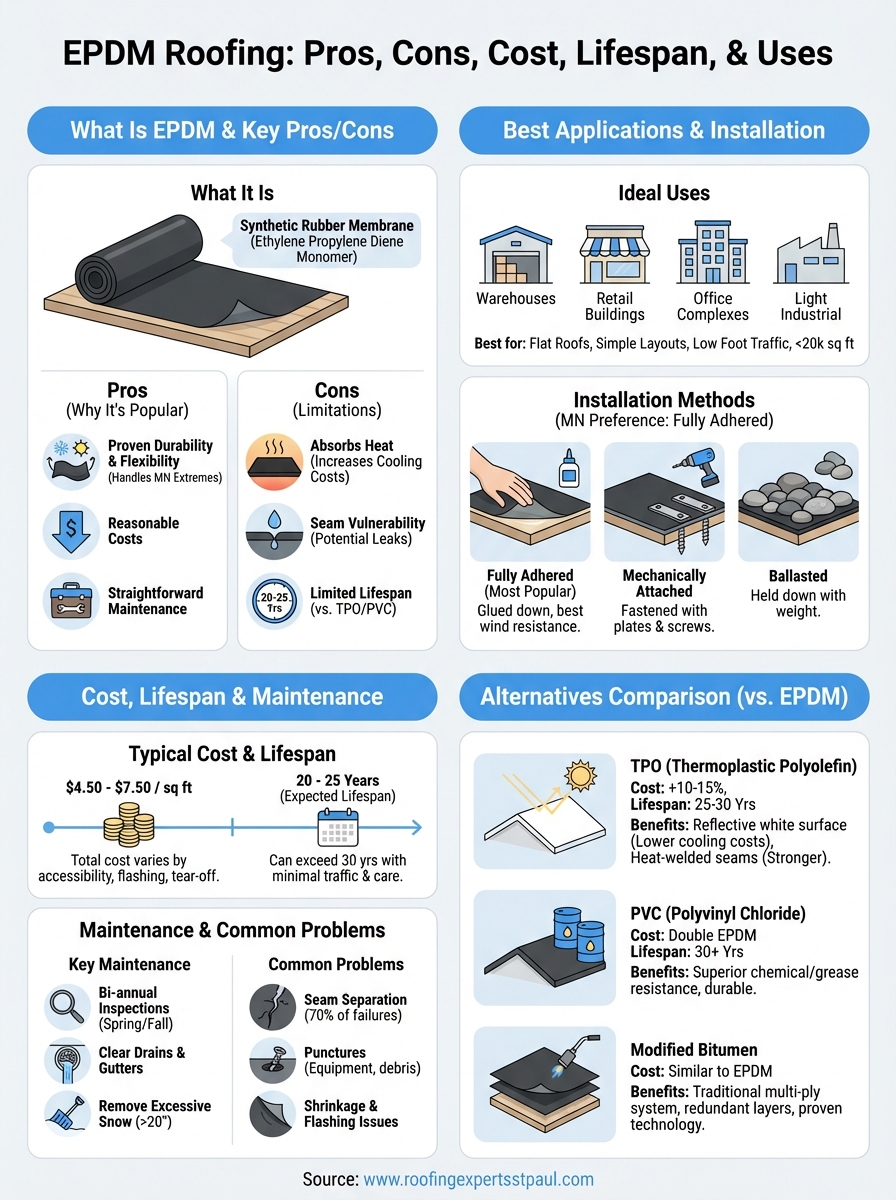
EPDM stands for ethylene propylene diene monomer, a synthetic rubber membrane that covers millions of square feet of commercial rooftops nationwide. Property owners choose it for good reasons: proven durability, reasonable costs, and straightforward maintenance. But it’s not the right fit for every building or budget.
This guide breaks down everything you need to know about EPDM roofing, from how it’s installed to what it costs, how long it lasts, and how it stacks up against alternatives like TPO and modified bitumen. By the end, you’ll have a clear picture of whether EPDM makes sense for your property.
What EPDM roofing is and where it works best
When people ask “what is EPDM roofing,” they’re really asking about one of the most reliable flat roofing materials available today. EPDM is a synthetic rubber membrane typically sold in large rolls, either 10 feet or 20 feet wide, that gets installed over commercial flat or low-slope roofs. Think of it as a giant, durable rubber blanket that covers your building and keeps water out. The material itself is black (though white versions exist), and it comes in two thicknesses: 45 mil and 60 mil, with 60 mil being the standard for most commercial installations.
How EPDM roofing material works
The rubber membrane creates a waterproof barrier between your building and Minnesota weather. Contractors install EPDM using one of three methods: fully adhered (glued down to the roof deck), mechanically attached (fastened with plates and screws), or ballasted (held down with river rock or pavers). Most commercial properties in Saint Paul use the fully adhered method because it performs better in high winds and doesn’t add excessive weight to the roof structure. Seams between membrane sheets get joined together using either liquid adhesive or specially formulated tape, creating watertight connections that hold up for decades.
EPDM’s flexibility allows it to expand and contract with temperature changes without cracking or splitting, which makes it ideal for Minnesota’s extreme temperature swings.
Best applications for EPDM systems
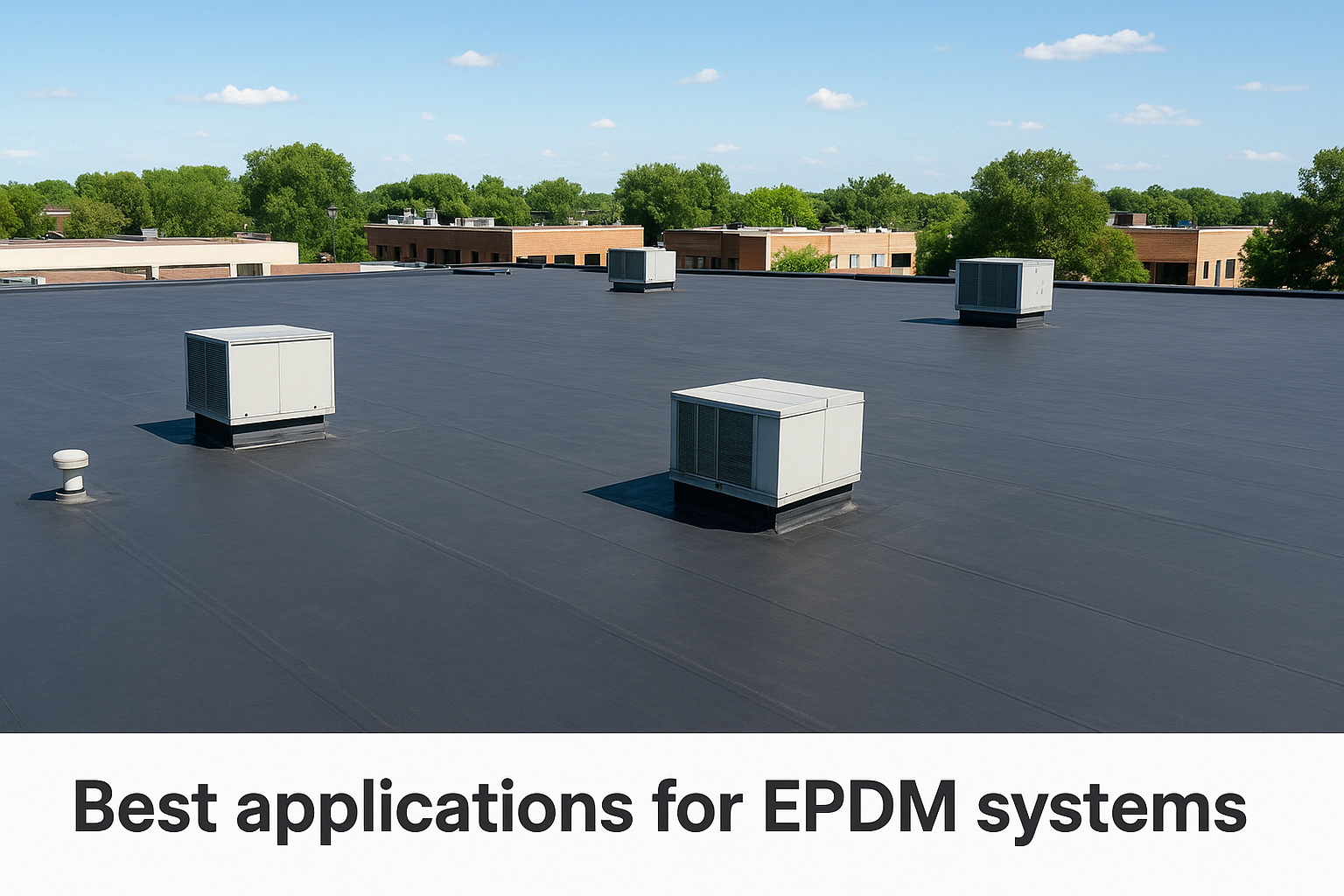
You’ll find EPDM working best on flat commercial roofs, warehouses, retail buildings, office complexes, and light industrial structures throughout the Twin Cities. It excels on buildings with minimal foot traffic, simple rectangular layouts, and few roof penetrations like vents or skylights. Properties with 20,000 square feet or less of roof space often benefit most from EPDM because installation moves quickly and costs stay reasonable. The system also works well for building owners who prioritize straightforward maintenance over high-tech features. Schools, churches, and small manufacturing facilities represent typical EPDM candidates in our service area, especially when budget constraints rule out premium options like PVC or modified bitumen systems.
EPDM pros and cons in Minnesota weather
Minnesota tests roofing materials harder than most climates, and EPDM performs remarkably well under these conditions. After installing EPDM systems across hundreds of Twin Cities properties, we’ve seen exactly how this rubber membrane handles subzero winters, spring storms, and summer heat. Understanding both the strengths and limitations helps you make an informed decision about what is EPDM roofing truly capable of in your specific situation.
Why EPDM handles Minnesota’s extremes
EPDM’s rubber composition gives it natural flexibility that proves critical when temperatures drop to negative double digits. The membrane expands and contracts without cracking, unlike rigid materials that can fail during freeze-thaw cycles. You’ll find EPDM maintains its waterproof seal through brutal weather because it doesn’t become brittle in cold conditions. Snow accumulation rarely causes problems since the material resists punctures from ice dams and supports reasonable snow loads without tearing. Installation costs stay lower than premium alternatives, and repairs require minimal specialized equipment, which means faster response times when problems occur.
EPDM’s proven track record in northern climates makes it a reliable choice for budget-conscious property owners who need dependable protection.
Where EPDM shows its weaknesses
The black surface absorbs significant heat during Minnesota summers, which can increase cooling costs for your building and accelerate membrane aging in areas with constant sun exposure. Seam integrity becomes your biggest vulnerability because water penetration at poorly sealed joints causes most EPDM failures we repair. You face limited lifespan compared to newer materials, typically 20-25 years versus 30+ for TPO or PVC systems. Ponding water on flat sections degrades EPDM faster than proper drainage would allow, and the material offers less resistance to punctures from rooftop equipment or maintenance activities.
EPDM roofing cost and what drives pricing
Understanding what is EPDM roofing worth financially helps you budget accurately and compare options. Most Saint Paul commercial property owners pay between $4.50 and $7.50 per square foot for complete EPDM installation, making it one of the more affordable flat roofing systems available. Your total project cost depends on several factors beyond just the membrane itself, from labor requirements to building-specific challenges that affect installation complexity.
Typical EPDM installation costs in the Twin Cities
A standard 10,000 square foot commercial roof typically costs between $45,000 and $75,000 for complete EPDM replacement. You’ll find 60 mil fully adhered systems at the higher end of that range, while 45 mil mechanically attached installations cost less. Smaller buildings under 5,000 square feet often see higher per-square-foot pricing because setup costs get distributed across less area, and material suppliers charge more for smaller quantities.
Labor represents roughly 40-50% of your total EPDM installation cost, which explains why complex projects with multiple penetrations cost significantly more than simple rectangular roofs.
Factors that affect your final price
Your roof’s accessibility significantly impacts pricing because difficult-to-reach buildings require additional equipment and safety measures. Buildings with numerous HVAC units, skylights, or drains need extensive flashing work that increases labor hours and material usage. Tear-off requirements for existing roof systems add $1.50 to $3.00 per square foot to your project cost, while insulation upgrades can push prices higher. Warranty length also affects pricing since extended manufacturer warranties require certified installers and premium materials.
Lifespan, maintenance, and common EPDM problems
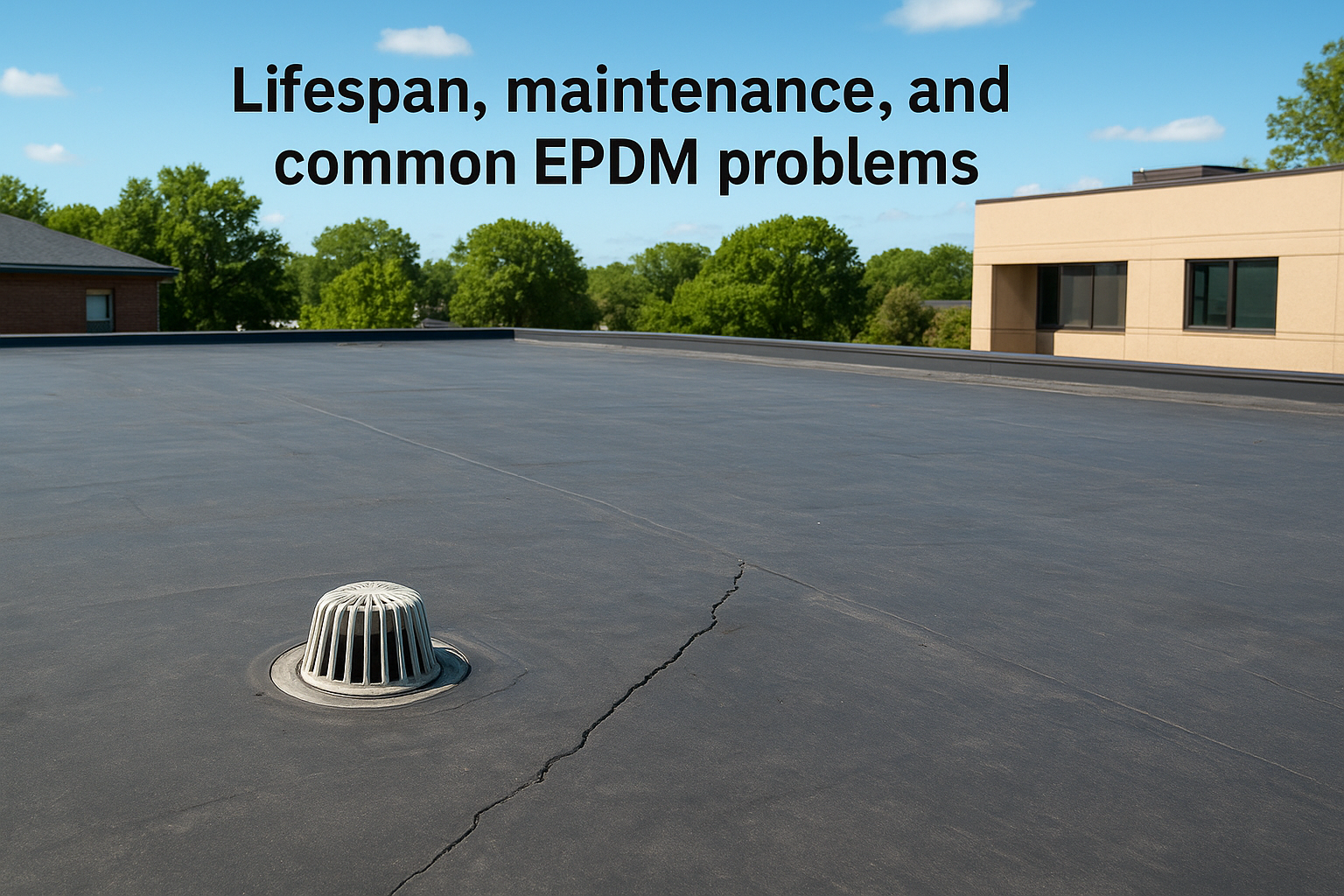
Property owners asking what is EPDM roofing capable of in terms of longevity typically see 20 to 25 years of reliable performance from properly installed systems in the Twin Cities. Your actual lifespan depends heavily on installation quality, regular maintenance, and how well drainage works across your roof surface. Buildings with minimal foot traffic and professional twice-yearly inspections often push EPDM systems past 30 years, while neglected roofs fail prematurely from preventable issues.
Expected lifespan factors
Installation method significantly affects your EPDM system’s durability, with fully adhered membranes outlasting mechanically attached versions by several years. You’ll get maximum life from 60 mil thickness compared to 45 mil options, and proper insulation underneath protects the membrane from temperature extremes that accelerate aging. Seam quality makes or breaks longevity since poorly bonded connections represent the weakest points where failures start.
Maintenance that extends roof life
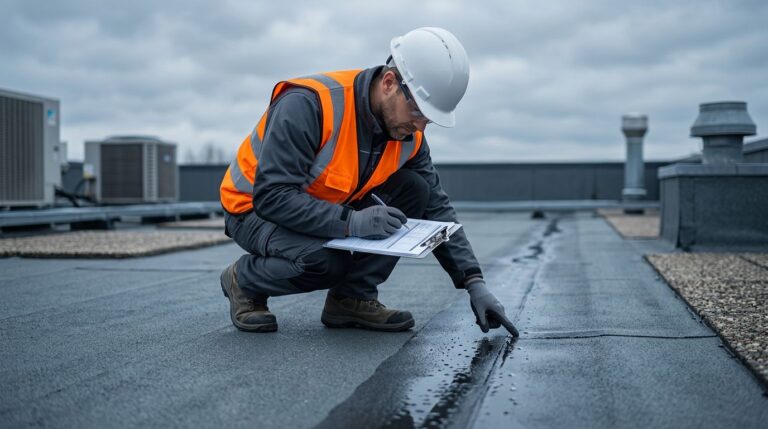
Schedule professional inspections twice annually, ideally in spring and fall, to catch small problems before they become expensive repairs. Keep drains and gutters clear of debris because standing water degrades EPDM faster than any other factor. Remove snow accumulation exceeding 20 inches to prevent excessive weight and ice dam formation.
Regular maintenance costs between $500 and $1,200 annually but prevents repairs that typically run $3,000 to $8,000 when neglected.
Problems you’ll most likely encounter
Seam separation causes 70% of EPDM failures we repair, especially where age and thermal cycling weaken adhesive bonds. Punctures from rooftop equipment, HVAC maintenance, or storm debris create immediate leak risks. Shrinkage over time pulls the membrane away from flashing details around penetrations and edges.
EPDM vs TPO, PVC, and other flat roof options
Comparing what is EPDM roofing to other flat roof materials helps you understand the tradeoffs between cost, performance, and longevity. Each system has distinct advantages depending on your building’s needs, budget constraints, and maintenance capacity. The right choice depends less on which material ranks “best” overall and more on which characteristics matter most for your specific property in Minnesota’s climate.
TPO: The middle-ground alternative
TPO (thermoplastic polyolefin) costs 10-15% more than EPDM but delivers a white reflective surface that reduces cooling costs during summer months. You get heat-welded seams instead of adhesive bonds, which creates stronger connections less prone to failure over time. Lifespan typically reaches 25-30 years with proper installation. Buildings with high cooling demands or owners prioritizing energy efficiency often choose TPO over EPDM.
TPO’s white surface can reduce summer roof temperatures by 30-50 degrees compared to black EPDM, lowering your air conditioning expenses significantly.
PVC and modified bitumen comparisons
PVC systems cost double what EPDM installations run but provide superior chemical resistance and often last 30+ years in commercial applications. You’ll find PVC worth the premium on restaurants, manufacturing facilities, or any building where grease or chemical exposure occurs regularly. Modified bitumen offers traditional built-up roofing performance at similar pricing to EPDM, with multiple plies creating redundant waterproofing layers. Property owners wanting proven technology without synthetic membranes typically choose modified bitumen over rubber options.
Making the right call for your roof
Understanding what is EPDM roofing really means for your building comes down to matching material characteristics with your specific needs and budget. You get proven performance at reasonable costs, but you also accept limitations around energy efficiency and potential seam issues that require professional attention. Buildings with straightforward layouts, minimal foot traffic, and owners prioritizing value over premium features typically benefit most from EPDM systems.
Your decision should factor in long-term costs beyond installation pricing, including maintenance requirements, expected lifespan, and energy implications from that black surface absorbing summer heat. Properties where durability matters more than aesthetics often find EPDM delivers exactly what they need without paying for features they’ll never use.
At Sellers Roofing Company, we’ve helped hundreds of Twin Cities property owners evaluate their flat roof options and choose systems that actually make sense for their buildings. If you’re ready to discuss whether EPDM fits your commercial property, our commercial roofing team can provide a detailed assessment and honest recommendations based on 18 years of Minnesota installations.
Need a roof inspection in Saint Paul or the Twin Cities? Call Sellers Roofing Company at +1-651-703-2336 or schedule a free estimate. We are a black-owned, NMSDC-certified MBE roofing contractor with 9+ years experience.