Last updated: 2026-08-01 by Ted Sellers, Owner
You can spot hail damage roof vents from the ground after storm damage by looking for fresh dents in metal vent hoods, cracked or chipped vent caps, bent flashing lines, and vents that look tilted or “squashed.” Use binoculars, check multiple angles, and compare vents to each other. If you see dents plus interior moisture, plan a professional roof inspection soon.
When This Applies
Buildings where a ground check actually works
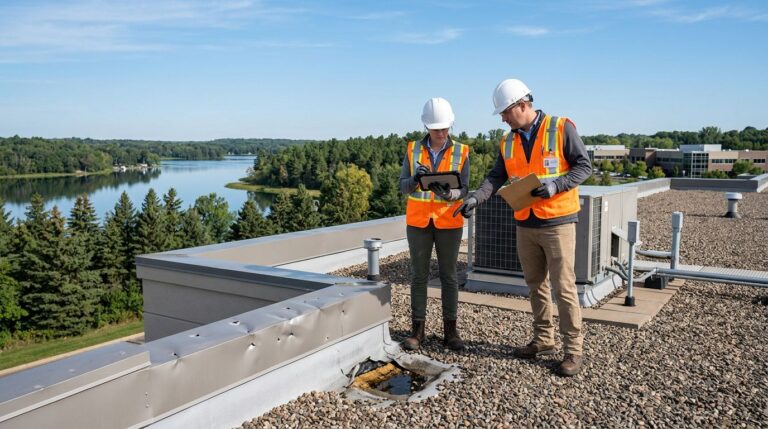
This approach fits most commercial owners who want a fast, safe first look after a storm. It works best when attic vents or parts of the roof ventilation system sit near the roof edge or the roof has a low parapet. You’ll get the clearest view on one-story buildings, warehouses, retail strips, and offices with open sightlines from a parking lot.
A ground check is also useful when you’re deciding whether to call someone now or monitor. Hail often leaves a “story” across the roof, including dented gutters and downspouts at eye level. If the vents show hits, other roof details may also be affected.
To separate storm hits from aging, focus on surfaces that don’t “wear out” in a neat pattern. Random dents on metal usually point to hail, while slow issues look more even. For a helpful baseline on what can look like hail but isn’t, see this guide on hail damage vs normal wear.
If you can’t see the vent cap clearly from the ground, you can’t judge its condition accurately. In that case, treat your view as a screening, not a diagnosis.
Times to skip the ground-only approach
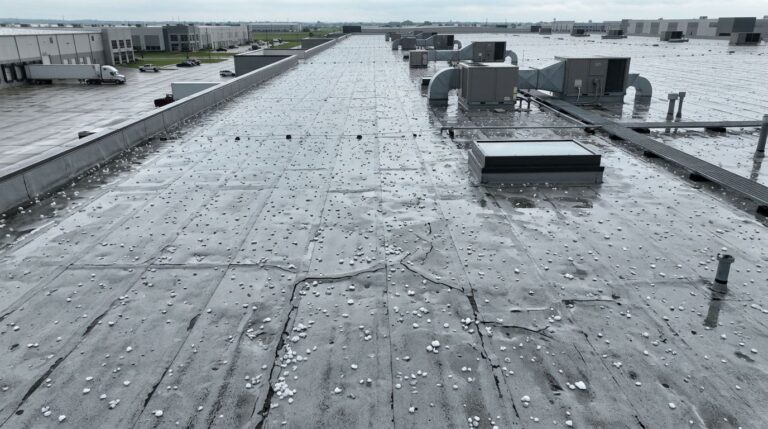
Ground-only checks fall short when the parapet hides the roofline, the building is multi-story, or the vents sit far from the edge. Snow cover, wet roofs, and low sun also hide small cracks and dents.
Also, if your building already has active water leaks or ceiling stains, don’t wait on a visual guess. Water can travel inside roof assemblies, especially on low-slope systems. When moisture is the concern, a targeted assessment like commercial roof leak detection in Saint Paul gets to the source faster than trial-and-error repairs.
Step-by-Step
Set yourself up for a clear, safe view
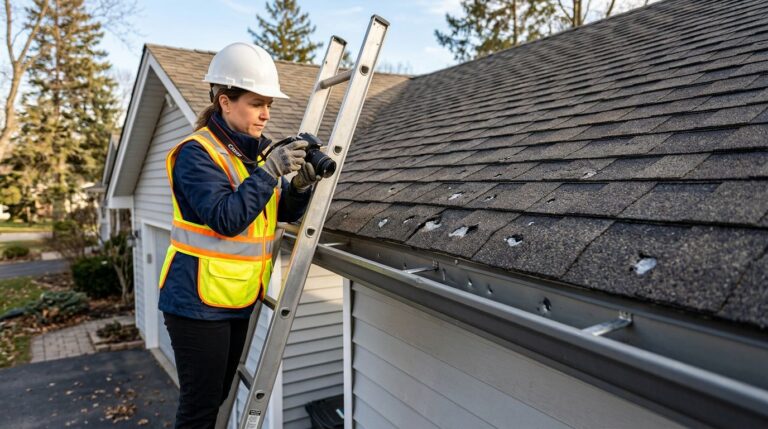
- Stand where you can see the roof edge and any storm debris without looking straight into the sun, then stay on the ground and off ladders.
- Use binoculars or a phone camera zoom, then take wide shots and close-ups for later review.
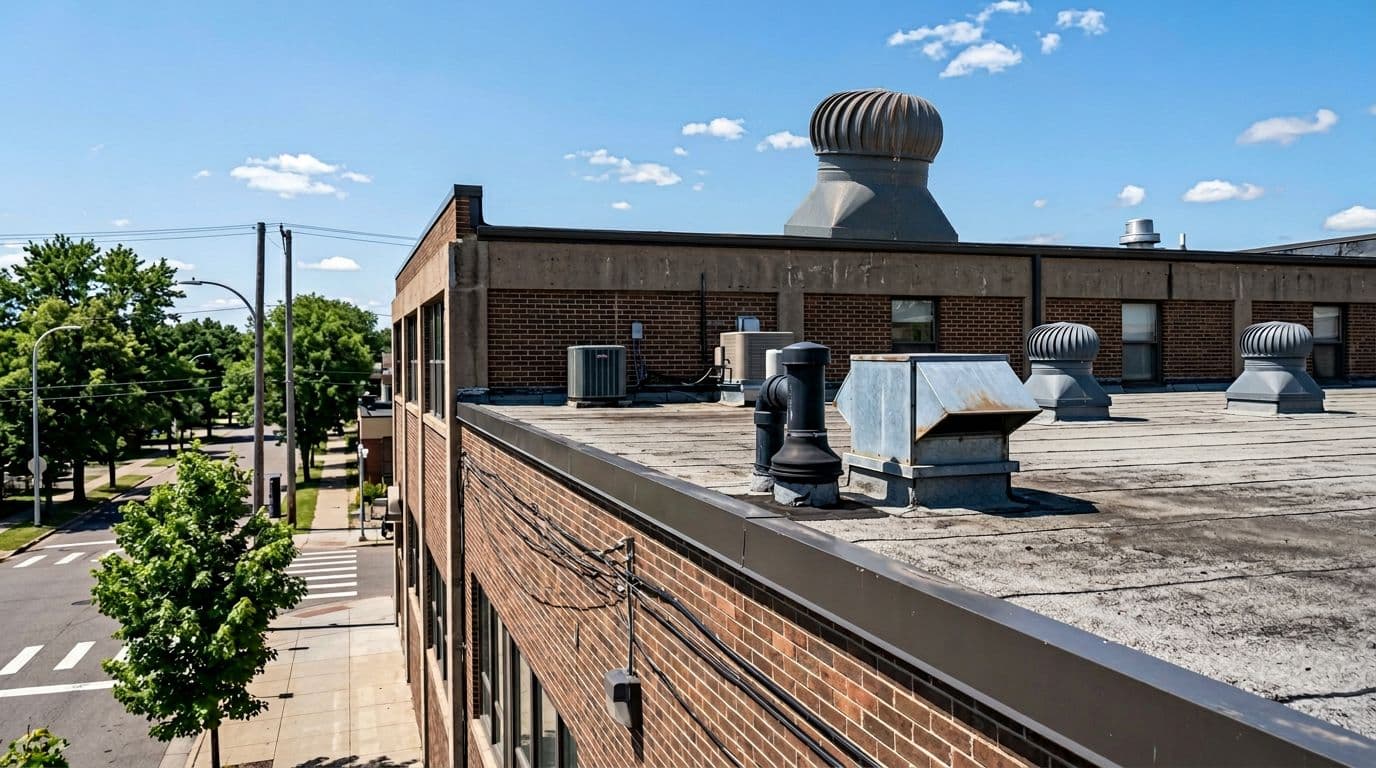
Street-level view of common commercial roof vents. - Walk two more angles around the building, because dents and cracks often show on one side only.
Read the metal vent clues that hail leaves behind
Metal box vents, goosenecks, exhaust vent stacks, and exhaust hoods
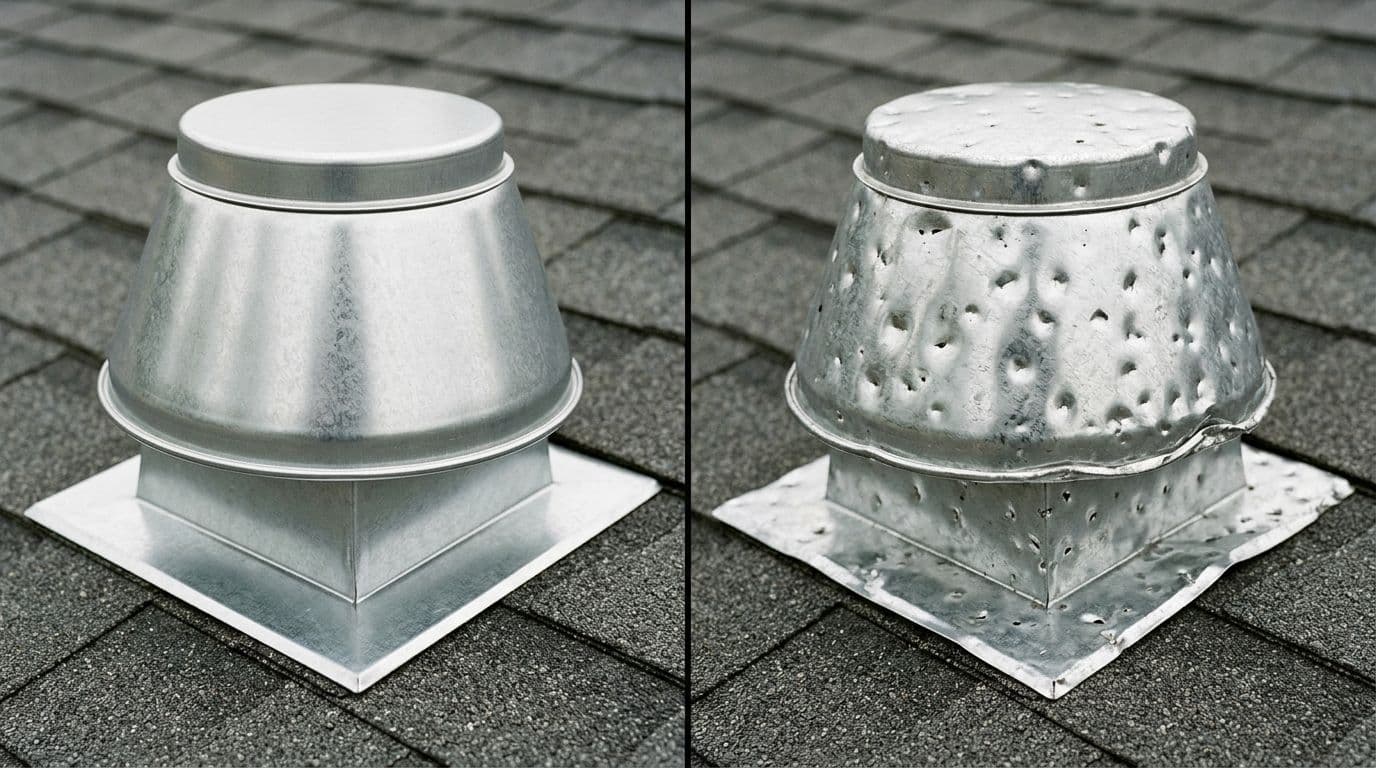
- Look for shallow dimples on metal hoods and collars, especially near edges and corners where the soft metal components “oil can” from impacts.

Undamaged versus dented metal vent hood surface.. - Compare identical vents to each other, because one battered hood among “clean” ones can confirm impact direction.
- Check for bent drip edges on the vent hood, shifted metal flashing or skirts, or a cap that no longer looks symmetrical.
What metal damage can mean for your roof system
- Treat dented vents as a red flag, not just a cosmetic issue, because damaged flashing lines can open a path for water during wind-driven rain; plus, crushed combustion vents can lead to a dangerous buildup of carbon monoxide.
Spot plastic and rubber vent damage you can see from the ground
Plastic caps, vent covers, exhaust caps, and turbine-style vents
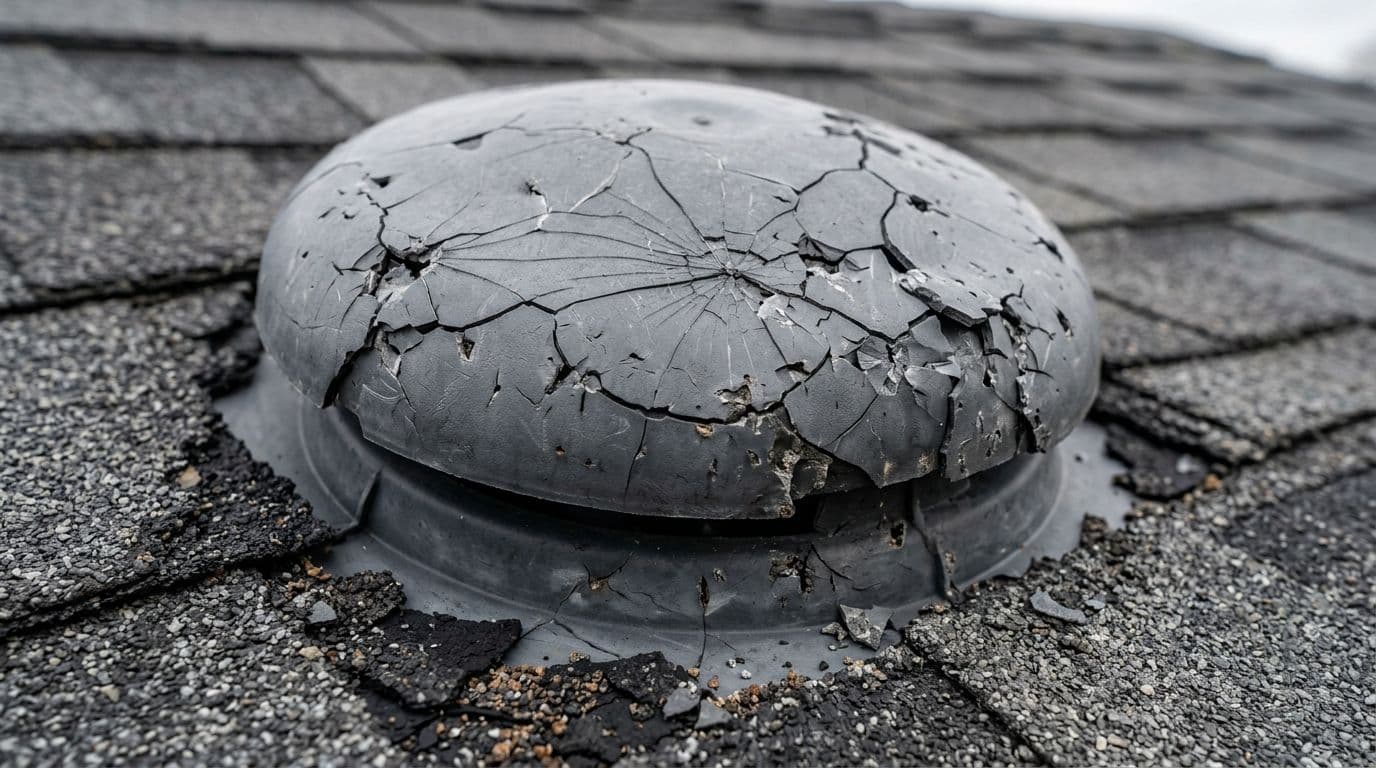
- Watch for spiderweb cracking, chipped rims, or a cap that looks chalky with fresh fractures, since hail can turn plastic brittle in one storm.
Cracked plastic vent cap with impact marks. - Look for wobble or tilt on turbine vents and mechanical vents, because a bent stem or broken bearing housing can show up as a “leaning” profile.
Plumbing vent pipes and rubber boots (where leaks love to start)
- Scan the plumbing-stack vent boot area for splits, lifted edges, or a pipe boot that looks peeled back, even if the pipe itself looks fine.
- Note any dark streaks that start at a penetration and run downslope, since that pattern often matches water flow after a water seal breaks and lets in sewer gas.
Document what you found and decide what to do next
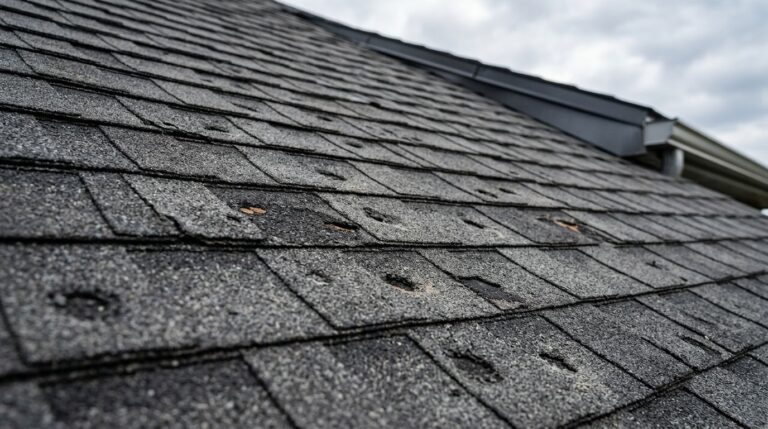
- Photograph each suspect vent with a reference point (corner, sign band, or rooftop unit), plus check nearby asphalt shingles for shingle granules loss or shingle damage as related indicators for an insurance claim, then write down the date and storm time.
- If you see dented metal plus interior staining, assume your commercial roof needs repair and schedule an inspection quickly.
- If vents are visibly cracked or displaced, ask for a plan that covers penetrations and field seams, because “patch the vent only” can miss related damage.
- When damage is widespread, budget conversations may shift from commercial flat roof repair to partial restoration or even commercial roof replacement based on roof age and system type, so get a written scope from a professional roofer.
For added context on what inspectors often prioritize after a storm, this overview on spotting hail damage on your roof is a useful cross-check.
If you’re in the Twin Cities and need a second set of eyes, contact the Saint Paul commercial roofing experts who handle storm response and business-friendly scheduling.
FAQ
Should I call insurance if I only see vent dents?
If dents are isolated and there’s no water showing inside, start with documentation and a professional inspection. Vent dents can be cosmetic, but they can also signal impact across flashings and seams. An inspection report helps you avoid opening a claim without enough support, and it can also protect you if leaks show up later.
What if my parapet wall blocks the vents from view?
Then a ground check can’t confirm much. Focus on collateral signs you can see at eye level, like dented metal coping at the edge, damaged rooftop unit shrouds near the perimeter, or struck downspouts. Next, book a roof inspection, because hidden penetrations are common leak sources on commercial buildings and a qualified review can validate any storm damage found.
How soon after a hailstorm should I inspect vents?
Do it as soon as it’s safe and daylight is good, ideally within a few days. Early photos capture fresh cracks before dirt and oxidation mask them. Fast documentation also helps if you later need to explain when the damage likely happened.
Can hail-damaged roof vents cause leaks months later?
Yes. A vent can look “mostly fine” yet have a hairline crack or shifted flashing that only leaks under wind-driven rain, potentially causing moisture in attic spaces. Freeze-thaw cycles can widen small breaks over time. That’s why photos and a follow-up inspection matter, even if the interior looks dry today.
If there’s no leak, is it still worth fixing?
It often is, especially for plastic caps and boot seals. Small repairs can prevent larger wet insulation problems later, which is where costs and disruption climb.
Do I need to shut down operations if a vent is damaged?
Not always. Many vent-related repairs can be scheduled around business hours. However, if you see active dripping, saturated ceiling tiles, or wet electrical areas, treat it as urgent and isolate the area until a roofer evaluates it.
A hailstorm can turn “looks fine” into hidden risk. With a careful ground check, you can spot hail damage roof vents, document it well, and make a smart call on timing. When your photos suggest displacement, cracking, or denting across multiple penetrations, bring in a pro before small openings become expensive moisture damage. Your next best step is a qualified inspection and a clear repair scope, while the evidence is still fresh.
Need a roof inspection in Saint Paul or the Twin Cities? Call Sellers Roofing Company at +1-651-703-2336 or schedule a free estimate. We are a black-owned, NMSDC-certified MBE roofing contractor with 9+ years experience.