Last updated: 2026-11-23 by Ted Sellers, Owner
Yes. Attic air leaks can cause ice dams after an insulation upgrade because insulation doesn’t seal gaps in the top-floor air barrier. Heated air can still reach the roof deck, melt snow, and send water toward colder eaves, where it refreezes and blocks drainage. Sealing the warm air path is part of the remedy.
Start with the heat path before deciding whether the roof needs repair or replacement.
What Actually Causes Ice Dams on Shingle Roofs in Harsh Winter Climates
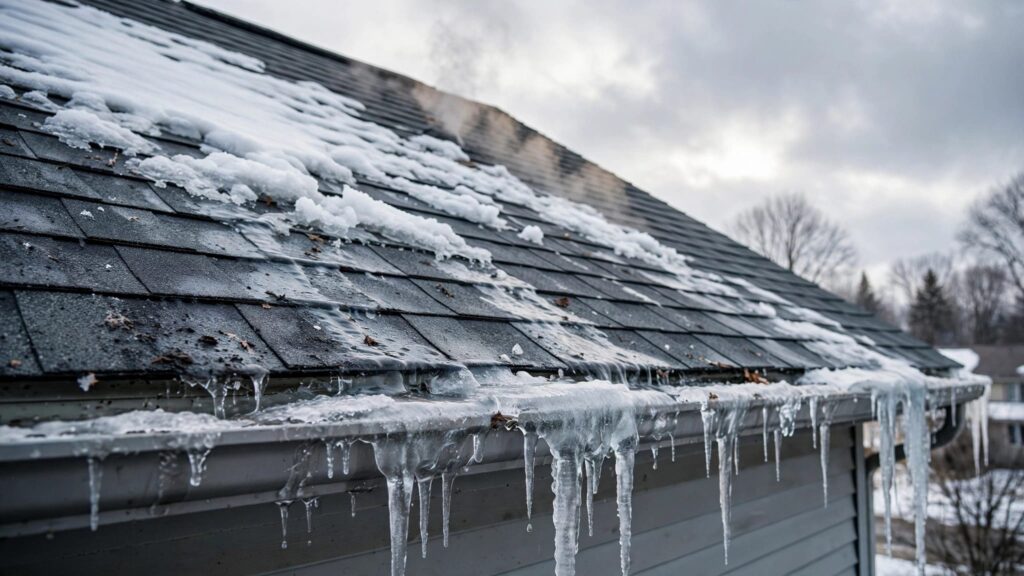
An ice dam starts with uneven roof temperatures. Escaping household heat warms the decking above occupied rooms. Meanwhile, the overhang stays colder because it extends beyond the exterior wall.
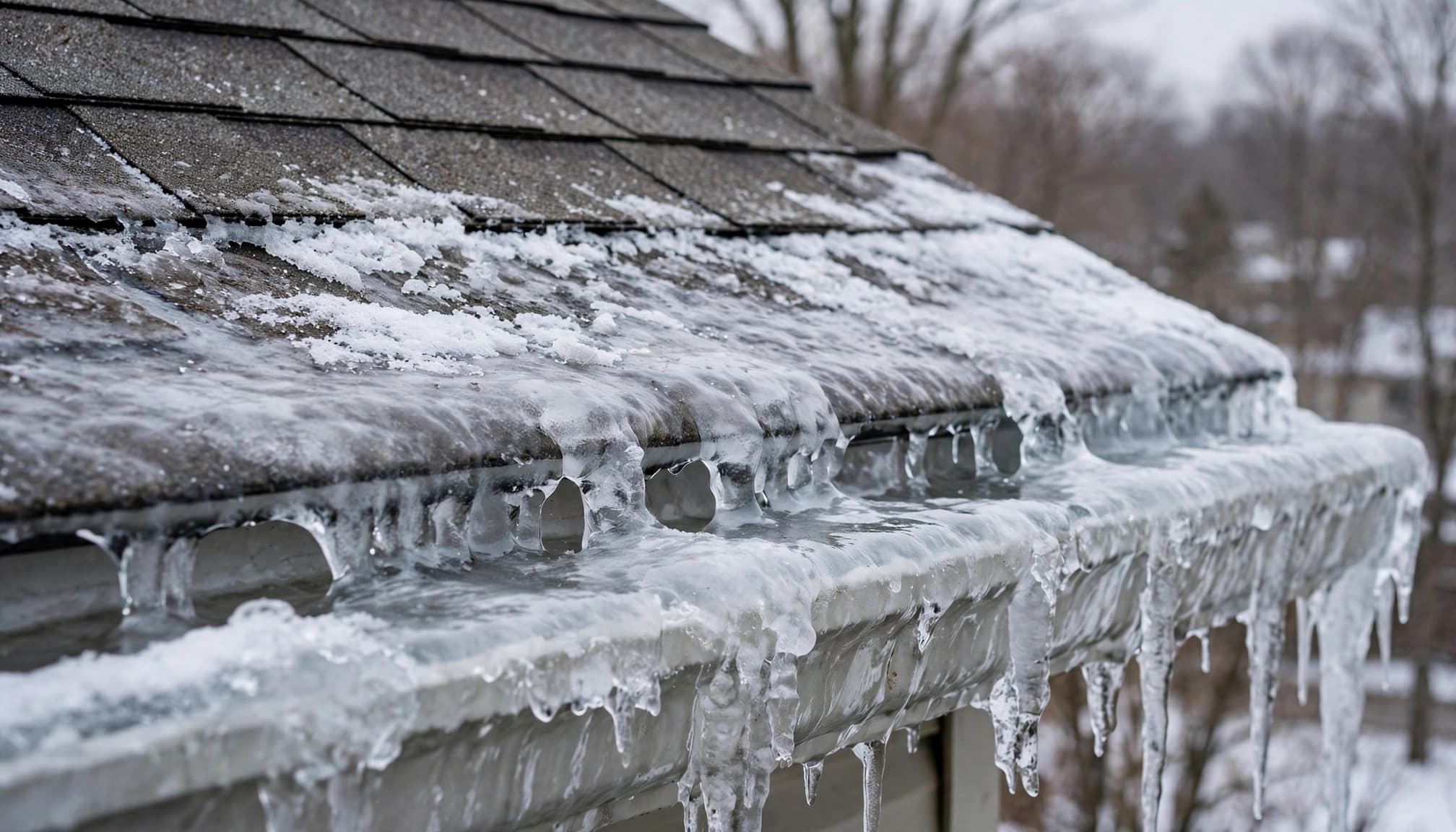
Snow melts over the warmer section and refreezes near the eave. Additional meltwater backs up behind that ridge and can travel beneath asphalt shingles. Effective ice dam solutions address heat leakage and vulnerable drainage details. University of Minnesota Extension’s ice dam guidance identifies ceiling air leakage as a major heat-transfer path.
When This Applies
This diagnosis fits houses with an unheated, vented attic and recurring ice above occupied rooms. Older Minneapolis and Saint Paul homes often have concealed wall openings or remodeled ceilings.
However, cathedral ceilings, low-slope sections, and roof valleys need separate evaluation. Deep snow and solar heating can produce melting even above a well-sealed assembly. A conditioned attic also requires a different inspection because its air barrier belongs at the roofline.
Why New Insulation Can Leave the Problem Unchanged
Fiberglass and cellulose slow heat conduction, but they don’t stop airflow through open wall cavities or ceiling penetrations. Adding depth can hide those openings without closing them.
During an upgrade, crews can also displace existing baffles or leave thin spots near eaves. Recurring ice doesn’t prove the insulation failed. It means the air barrier, insulation coverage, and roof details need evaluation together.
The attic air-sealing guide explains that distinction.
How to Inspect and Document the Damage
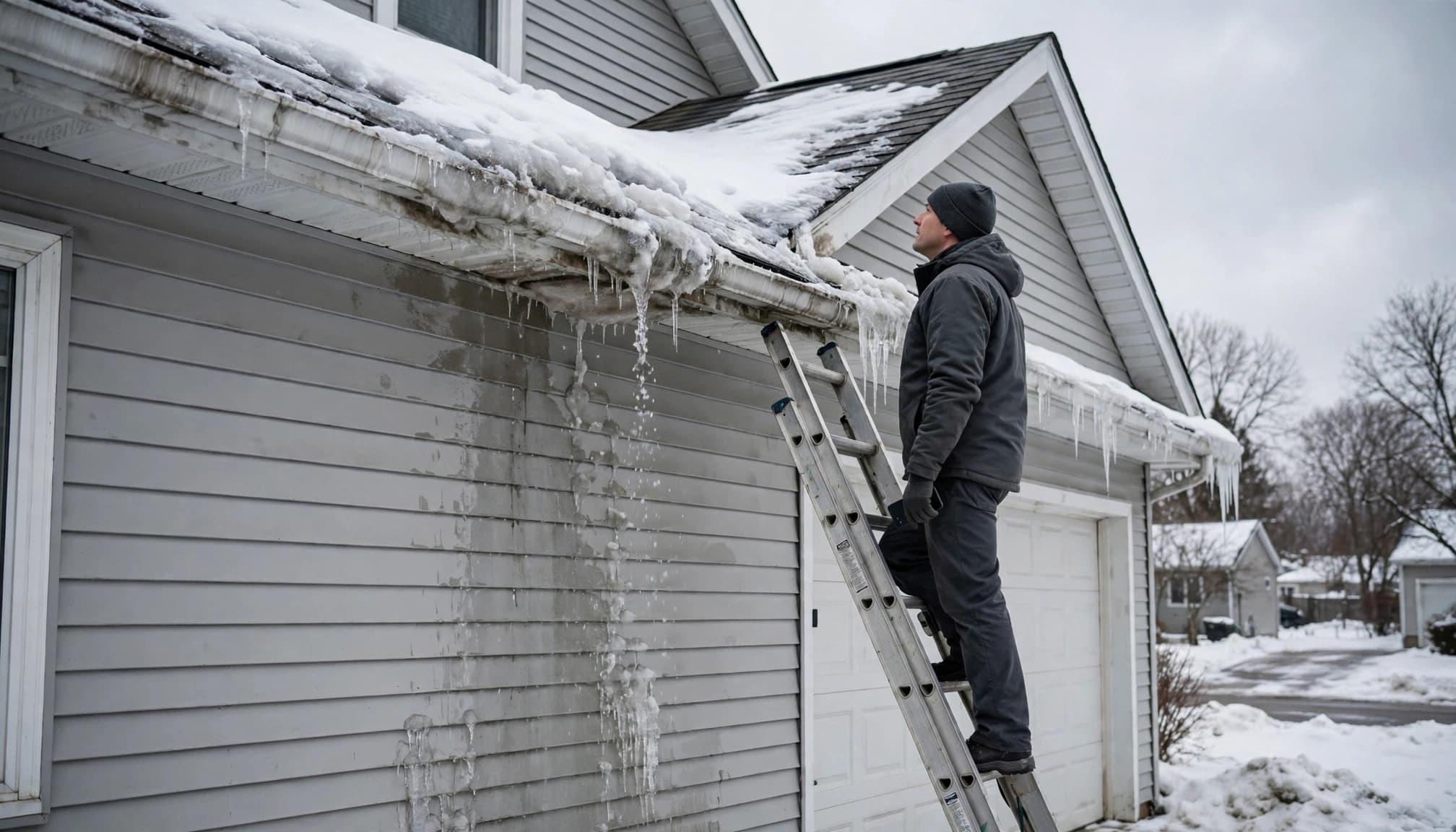
Inspection starts indoors and at ground level. Nobody needs to walk an icy roof to establish the initial pattern. Record the snowfall date, thaw conditions, and locations of ceiling stains before disturbing anything.
What Should the Exterior Checklist Cover?
Once conditions allow safe access, a contractor follows the roof’s drainage paths and examines:
- Photograph bare or thin snow patches a day after snowfall, especially above heated rooms.
- Record heavy icicles over one room, displaced gutters, and separated eave or roof-to-wall flashing.
- Inspect shingle fields for granule-loss patterns, exposed asphalt, lifted tabs, and possible hail damage.
- Look for deck deflection, sagging rooflines, and distorted fascia.
- Follow valleys for concentrated snow, debris, damaged flashing, and backed-up water.
- Examine pipe boots for cracking, separated collars, and failed seals.
Snow patterns are clues, not proof. Sun exposure and drifting also change snow depth. The uneven roof snow melt guide separates those conditions.
What Does the Attic Reveal?
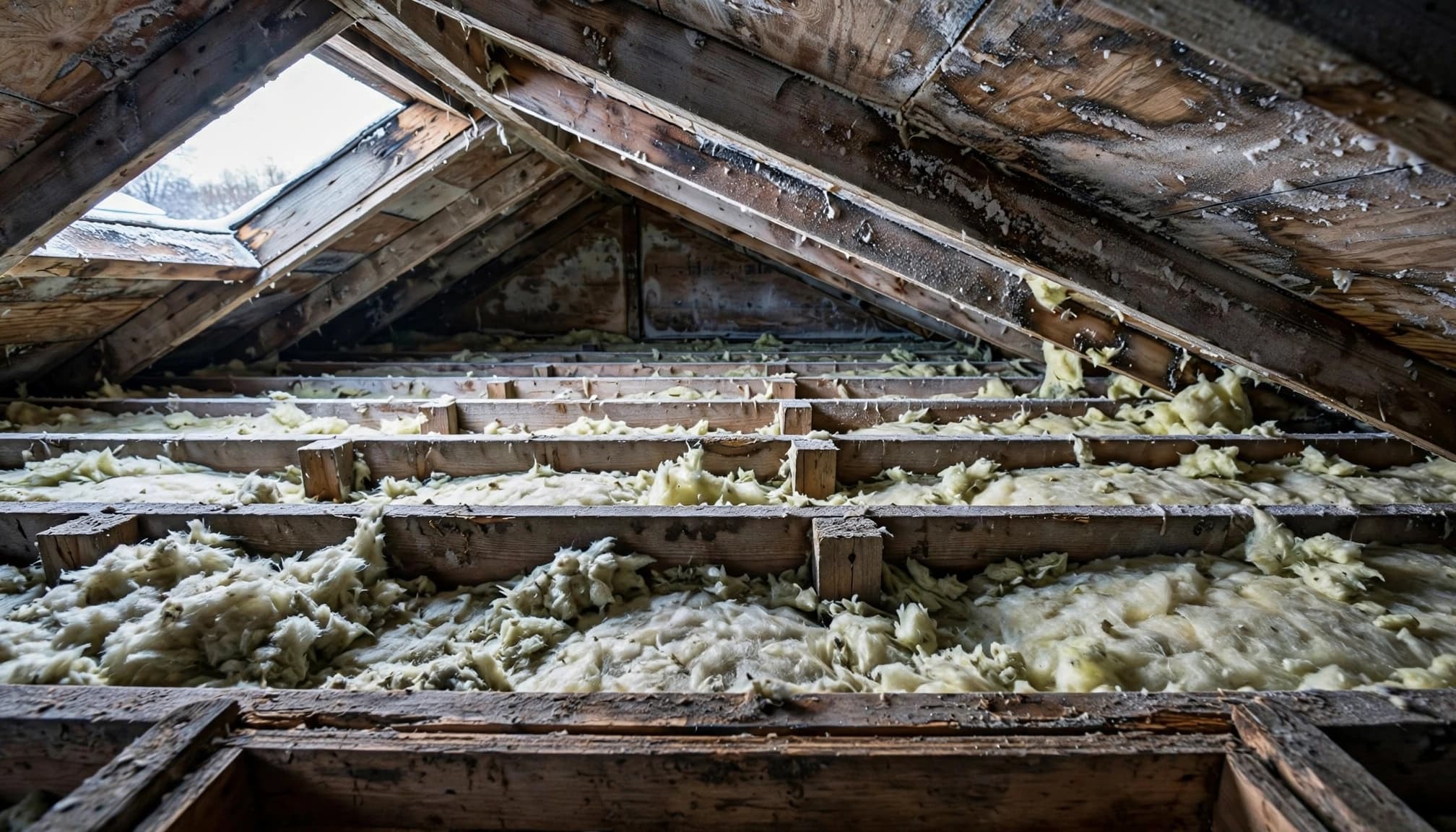
From safe footing, look for frosted nail tips, damp sheathing, wet insulation, and gray or dirty insulation around openings. Moving air can deposit dust as insulation filters it.
Exposed ceiling-joist tops often indicate shallow coverage. Less than about 8 inches also warrants an insulation assessment in a cold climate, although depth alone doesn’t establish R-value.
A blower door test depressurizes the house to expose leakage paths. An infrared scan, under suitable temperature conditions, helps locate associated heat loss. Repeat testing can show whether sealing reduced leakage.
Repair vs. Replace: The Decision Framework
Ice dams don’t automatically justify residential roof replacement. First, separate heat leakage from damage to the roof covering. A sound roof can experience water backup without needing complete replacement.
When Does a Focused Repair Make Sense?
Residential roof repair fits isolated flashing failures, cracked pipe boots, or a small damaged shingle area when surrounding materials remain serviceable. However, attic corrections still belong in the scope if heat leakage caused the dam.
Use these factors to compare the options.
| Factor | Focused repair | Full replacement |
|---|---|---|
| Cost exposure | Limited roof area and localized deck work | Entire roof area, tear-off, disposal, and deck repairs |
| Remaining service life | Surrounding roofing remains serviceable | Widespread aging or repeated failures limit useful life |
| Insurance implications | Documents localized covered damage | Requires evidence supporting the broader replacement scope |
| Material compatibility | Repair must integrate with existing roofing | Allows a coordinated roofing and flashing system |
The deciding issue is the condition of the surrounding assembly, not the size of the icicles.
When Does Replacement Become Reasonable?
Replacement deserves consideration when shingles are broadly brittle, flashing failures are widespread, or deterioration extends beyond a repairable area. Repeated leaks can decay structural framing, corrode fasteners, and support mold growth.
During evaluation, distinguish ice-dam damage from a separate storm-damaged roof. Wind-lifted shingles or impact damage may require a different scope.
Metal roofing doesn’t eliminate the need to control attic heat. Water can still back up at vulnerable transitions, penetrations, and roof edges.
Material Specs That Matter for This Repair or Replacement
The repair has two material systems: the ceiling’s thermal and air-control layers, and the roof’s water-shedding layers. Each must function independently.
What Insulation and Sealing Materials Belong in the Attic?
R-49 to R-60 is a common cold-climate upgrade range, but it isn’t a universal requirement. DOE’s guidance distinguishes climate zones and existing insulation conditions. Its recommendations include R-60 for an uninsulated attic in Climate Zone 5.
Use DOE’s attic insulation guidance to understand that assembly-based approach.
Fiberglass batts, blown-in fiberglass, cellulose, and spray foam have different installed R-values. Product ratings determine depth; a single inches-to-R-value conversion doesn’t fit every material.
Use compatible caulk for suitable small joints and rigid blocking for larger openings. Hot flues and chimneys require noncombustible details and prescribed clearances. Recessed lights need an approved airtight solution that preserves their insulation-clearance requirements.
What Roofing Details Actually Resist Water Backup?
GAF Timberline HDZ, CertainTeed Landmark, and Malarkey Legacy are architectural-shingle options. Malarkey Legacy carries a Class 4 impact-resistance rating, but that rating doesn’t prevent ice dams.
Synthetic underlayment and felt aren’t substitutes for correctly integrated ice-and-water shield. In applicable cold-climate assemblies, eave protection extends at least 24 inches inside the exterior wall line. Valley coverage follows the roof system’s requirements.
For commercial flat roofs, TPO 60-mil membrane and EPDM 45-mil or 60-mil require system-specific detailing. Modified bitumen and BUR need different repair methods. Commercial roof coatings won’t correct trapped moisture or blocked drainage.
Insurance Documentation and the Claim Process
A roof insurance claim needs a documented cause, damage location, and repair scope. An ice ridge alone doesn’t establish what the policy covers or whether replacement is necessary.
What Evidence Should You Preserve?
Photograph the whole roof plane, then the affected eave or valley. Indoors, record ceiling stains, wall damage, damaged contents, and the timing of active dripping.
For suspected hail strikes, contractors document individual impact locations and surrounding conditions. For wind damage, they record lifted tabs, displaced materials, and affected roof planes. Don’t lift frozen shingles to create a photograph.
Also save emergency-service invoices and photographs taken before temporary work. A dated record helps distinguish an ice-dam event from an older stain or unrelated flashing leak. University of Minnesota Extension’s insurance guidance explains the difference between replacement-cost and current-value reimbursement.
What Do Adjusters and Contractors Evaluate Differently?
The adjuster evaluates coverage under the policy. The contractor documents physical conditions, repairability, quantities, and the work needed to restore the assembly.
Neither job substitutes for tracing the leak. Water can follow framing before appearing several feet from its entry point.
Attic moisture also needs its own record. See ice-damaged attic insulation for details on concealed wetting that ceiling photographs may miss. Keep maintenance corrections, resulting water damage, and unrelated storm repairs distinct in the written scope.
What a Professional Roof Contractor Does Differently
Professional work follows a sequence: locate the heat path, seal it, restore thermal coverage, then assess ventilation and roofing damage. DOE’s attic air-sealing guidance supports sealing at the top-floor air barrier rather than covering openings with insulation.
Step-by-Step: Close the Major Bypasses First
- Map stains on overhead drywall and snow-melt patterns against plumbing stacks, wiring, telecom penetrations, fan housings, and attic access openings.
- Expose accessible bypasses before adding insulation. Inspect balloon-framed walls, split-level transitions, kneewalls, and open stairway or partition-wall tops.
- Seal dropped ceilings above tubs, closets, and kitchen soffits with suitable blocking and sealants. Detail electrical boxes, light fixtures, and plumbing penetrations according to their requirements.
- Weatherstrip and insulate the attic hatch. Evaluate rim-joist leakage elsewhere in the building boundary, and use fire-safe details at chimneys and heating flues.
- Repeat leakage diagnostics, restore continuous insulation, and keep eave baffles open.
Minnesota residential energy rules require accessible attic bypasses to be sealed before attic insulation installation.
What Roof and Ventilation Work Follows?
Each bath fan must discharge outdoors, not into the attic. Next, calculate net free ventilation area using rated vent capacity. Verify roof vents are unobstructed and paired with open intake paths.
Ventilation supports a cold roof after heat leakage is controlled. More vents alone won’t overcome unsealed bypasses. Minnesota Extension’s prevention guidance explains the cold-roof objective.
If tear-off exposes rotten sheathing, crews remove unsound material back to supported boundaries. They also inspect adjacent framing, replace failed pipe boots, and integrate flashing before installing new roofing.
Costs for Ice Dam Repairs in Minnesota
The estimate should separate emergency relief, permanent roof repairs, and attic corrections. Combining them into one vague “ice dam repair” line makes it difficult to understand what the work will accomplish.
Which Scopes Need Separate Pricing?
Emergency ice removal addresses backed-up water. Flashing or shingle repairs restore damaged roof details. Air sealing and insulation work address the conditions that can cause recurrence.
A complete written scope identifies affected locations, repair quantities, concealed-damage allowances, and disposal. It also distinguishes drying or interior restoration from exterior roofing work.
For commercial roof repair, the scope should identify the membrane and detail being repaired. Commercial roof restoration requires a separate assessment of moisture, adhesion, drainage, and the existing assembly. A coating estimate alone doesn’t answer those questions.
What Increases the Total?
Difficult access, steep slopes, multiple valleys, brittle shingles, and concealed rot increase labor or material requirements. Permit requirements, staging, disposal fees, and protection for occupied spaces also affect the project.
Commercial roof replacement adds broader considerations, including wet insulation, deck condition, equipment curbs, and drainage layout.
The assessment should start with roof condition, not an assumption of replacement. The proposed scope and price should be explained in writing before work begins. If winter leakage has damaged your home’s roofing, Get a Free Residential Roof Estimate for the repair assessment.
Frequently Asked Questions
Should my unheated attic be freezing in winter?
Yes. A conventional vented attic should stay close to outdoor temperature during cold weather. Protect plumbing and mechanical equipment according to the building’s design. Opening the attic hatch sends more household heat and moisture toward the roof.
Can attic condensation look like an ice-dam leak?
Yes. Indoor moisture can freeze on cold nails and sheathing, then drip during a thaw. Frost across broad areas often points to moisture moving into the attic, while localized water tracks may indicate roof entry. Both conditions need investigation because repeated wetting can damage insulation and wood.
Do I have to remove all the old insulation before air sealing?
Usually, crews can move dry, uncontaminated insulation aside, seal accessible openings, and redistribute it. Wet, moldy, or contaminated material needs separate treatment. Don’t disturb suspected vermiculite insulation until a qualified professional checks for asbestos.
How soon should I act if an ice dam is leaking inside?
Take prompt, safe steps. Move belongings, contain dripping where safe, and stay clear of wet electrical fixtures or sagging ceilings. Use a roof rake only from safe ground and away from power lines and falling ice. Don’t chip bonded ice. Arrange professional ice dam removal and leak diagnosis.
How much does a commercial flat-roof ice dam repair cost?
The cost depends on the roof membrane, blocked drains or scuppers, wet insulation, site access, and repair scope. A commercial roof inspection should assess drainage, membrane seams, penetrations, and wet insulation. An office or warehouse without a conventional attic needs an assembly-specific diagnosis.
Stop the Heat Path Before Adding More Insulation
An insulation upgrade doesn’t close ceiling openings. If attic air leaks remain, warm indoor air can still reach the roof and sustain an ice dam.
The lasting sequence is air sealing first, followed by continuous insulation and functioning ventilation. Repair roof damage based on documented conditions, not icicle size.
For Twin Cities properties, the useful next step is a coordinated attic and roof assessment. That separates immediate water-control work from the corrections needed before the next snowfall.
Need a roof inspection in Saint Paul or the Twin Cities? Call Sellers Roofing Company at +1-651-703-2336 or schedule a free estimate. We are a black-owned, NMSDC-certified MBE roofing contractor with 9+ years experience.
