Last updated: 2026-08-01 by Ted Sellers, Owner
A brittle test on an asphalt shingle roof is a hands-on field check. A roofer gently lifts or flexes installed shingles to see whether they crack, crease, or break during normal handling. The goal is to judge whether a damaged area can be repaired without causing more damage, not to deliver a final pass-or-fail verdict on the whole roof.
When This Applies
Where a brittle test for asphalt shingles makes sense
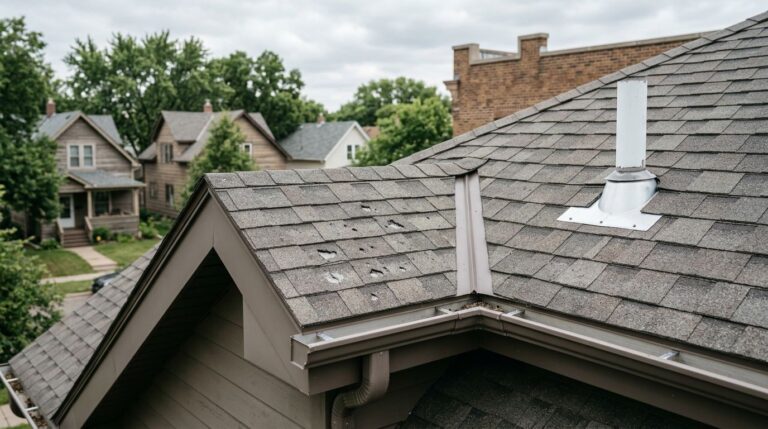
This applies to commercial owners with buildings that have steep-slope asphalt shingle sections, such as offices, churches, apartment buildings, retail sites, or mixed-use properties. It matters most after wind or hail damage, when a contractor must decide whether a few shingles can be replaced cleanly.
The check is most useful on older roofs. Sun exposure, age, and weather swings can make shingles stiff enough to snap when lifted. If a repair crew can’t unseal nearby shingles without breaking them, a small repair may turn into a bigger scope.
A brittle test also comes up during claim disputes. One side may say a few shingles need replacement. The other may argue the roof can’t be repaired without harming sound shingles around the damaged area.
When it does not apply
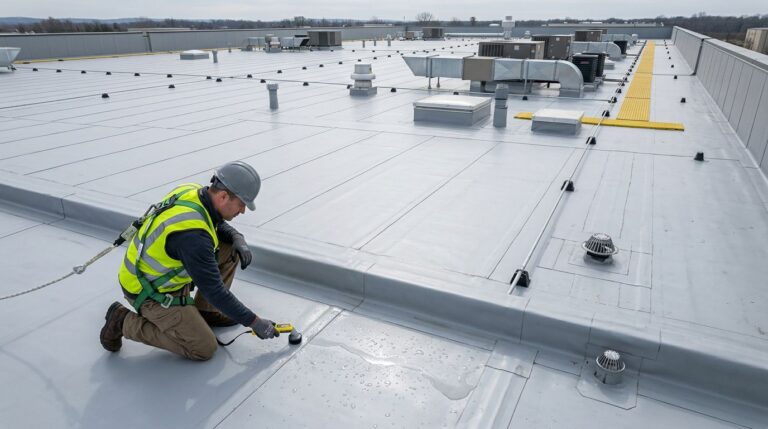
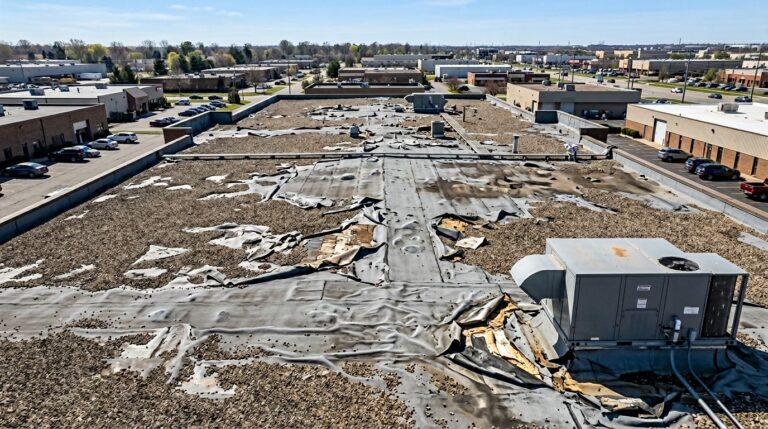
This does not apply to low-slope membrane systems like TPO, EPDM, or modified bitumen. If your building has a flat or low-slope section, the question shifts to commercial roof leak detection and moisture spread, not shingle brittleness.
It also doesn’t fit metal roofing. Those systems fail in different ways, such as open seams, fastener issues, or panel damage.
Weather matters too. A test done on a cold morning can make almost any shingle look worse than it is. If your commercial roof needs repair because of an active leak, stop the water first with temporary protection. Then test and inspect under safe, dry conditions.
What a brittle test actually tells you
It is a field judgment, not a lab standard
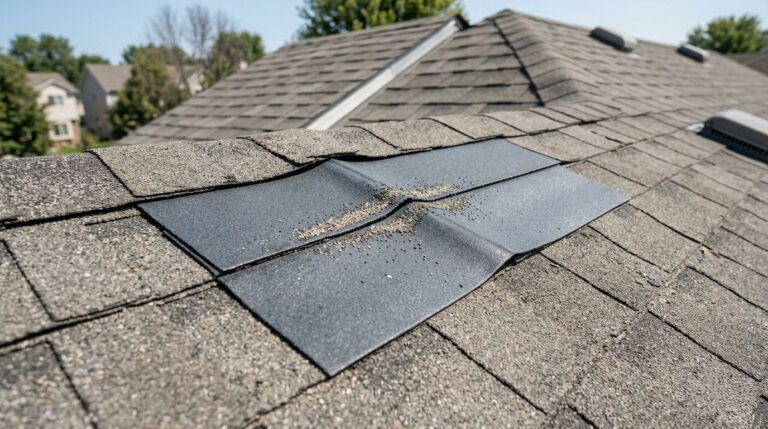
A brittle test is best viewed as a practical field check, not a scientific standard. The roofer lifts a shingle tab or edge in a way that mimics normal repair work. If the shingle cracks before it can be separated and reset, repair gets harder and riskier.
That sounds simple, but the method has limits. As IIBEC’s discussion of brittle test misuse points out, the roofing industry often treats this informal check as more exact than it really is. Force, angle, temperature, and shingle condition all affect the outcome.
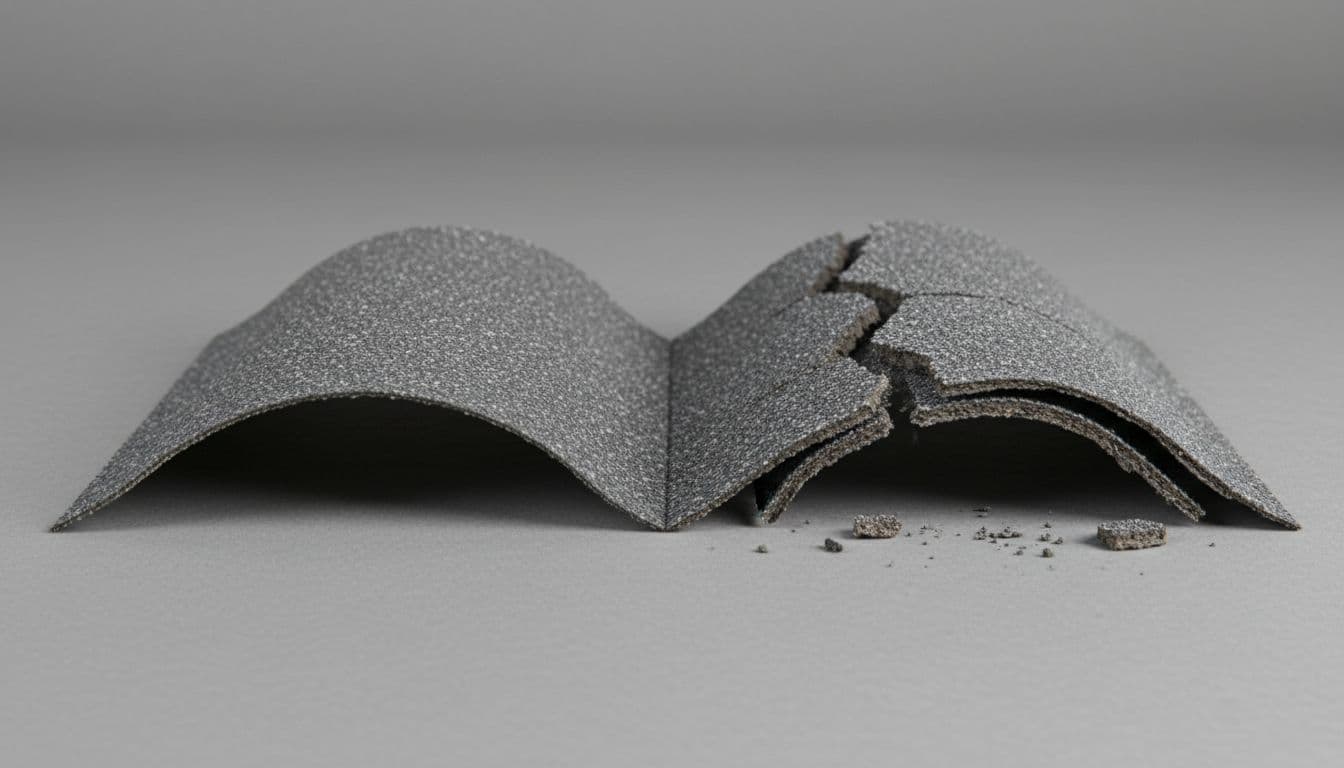
Temperature has a big role. Asphalt gets less flexible as it cools. InterNACHI’s asphalt shingle inspection guide explains that shingles fracture more easily below their transition temperature. Because of that, a winter test can overstate brittleness.
Why the result often gets challenged
Two people can test the same roof and reach different conclusions. One may lift slowly and get a clean release. Another may use more force and crack the tab. That is why VERTEX’s review of brittle testing calls out the method’s subjectivity.
A brittle test can support a repair decision, but it should not be the only proof behind a full roof scope.
For a business owner, the takeaway is simple. Treat the test as one piece of evidence. Pair it with photos, roof age, slope exposure, seal strip condition, and the actual damaged area.
Step-by-Step
How a roofer performs a field brittleness check
A proper field check follows a consistent process. That keeps the result more useful and easier to defend later.
- Confirm the roof type and repair goal. The test fits asphalt shingles, not membrane or metal roofs. The roofer should know whether the goal is a spot repair, a slope repair, or a broader replacement decision.
- Choose representative areas near the damage. Testing should happen on shingles that reflect the roof’s real condition, not only the worst-looking spot. Most crews check more than one slope because sun and wind exposure can age shingles unevenly.
- Check weather and roof temperature first. Dry, moderate conditions matter. If the roof is cold, wet, or icy, postpone the test. Otherwise the result may say more about the weather than the roof.
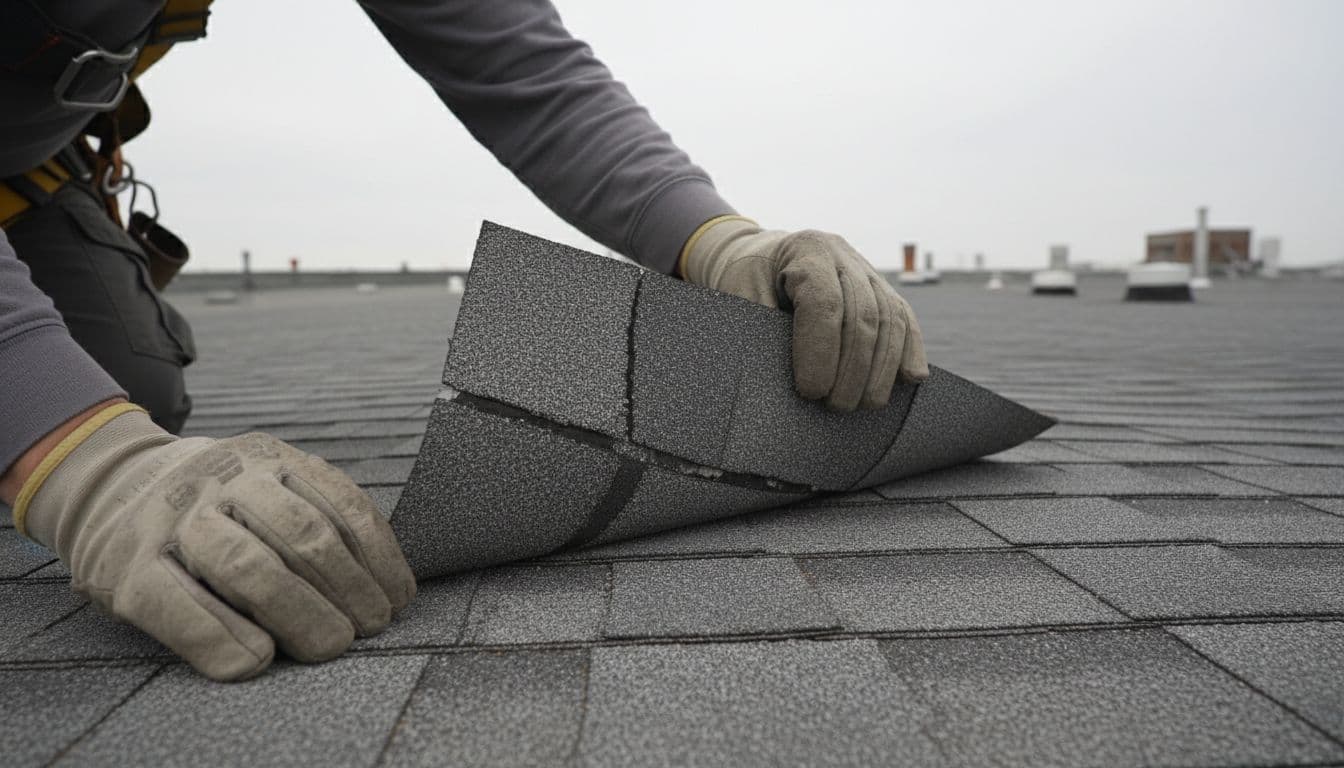
- Lift the shingle slowly and in a repair-like motion. The roofer gently breaks the seal and lifts the shingle edge as they would during a normal replacement. They watch for cracking, tearing, surface fracture, or permanent creasing.
- Repeat the check in several locations. One broken shingle does not settle the issue. Multiple checks help show whether brittleness is isolated or widespread across the slope.
- Document what happened. Good notes include photos, roof areas tested, temperature, and what failed. If a claim is involved, the report should separate old wear from fresh storm damage. That distinction matters more than age alone.
A solid report is better than a casual opinion. If the roof condition is disputed, a more formal repairability assessment method for asphalt shingles gives structure to the discussion.
How to use the result without making the wrong call
What the test should influence, and what it should not
A failed brittle test does not automatically mean the whole roof must go. It means repair work may damage surrounding shingles. That can support a larger repair area or, on some buildings, a full slope replacement.
Context matters. A roof with one damaged section and otherwise flexible shingles may still be repairable. On the other hand, if several areas crack during gentle lifting, the roof may no longer tolerate normal service work.
For owners handling a claim, don’t rely on the brittle test alone. Match it with storm dates, photos, and a clear scope. If part of the roof shows old wear and another part has fresh damage, keep those findings separate. Partial approval is often more realistic than arguing everything under one label.
How this fits broader commercial roofing decisions
Some business properties have mixed roof systems. The front office may have shingles while the warehouse has a low-slope membrane. In that case, one building can involve shingle repair decisions and, elsewhere, Saint Paul commercial roofing experts weighing membrane failure, drainage, or wet insulation.
That is where terms like commercial flat roof repair and commercial roof replacement come into play. A brittle shingle test has no value on those roof types. If water has spread under a membrane, the better question is how far moisture traveled and whether localized repair is still sound.
If leaks are active, temporary dry-in work and interior protection are usually the right first move. Those steps show you acted reasonably to limit damage. They do not weaken a valid claim.
Conclusion
The practical takeaway
A brittle test on an asphalt shingle roof is a field check for one core question: can the shingles be lifted and repaired without breaking? That makes it useful, but limited.
For a commercial owner, the best use of the test is as supporting evidence. Pair it with temperature notes, photos, damage mapping, and a clear scope. When shingles crack under normal handling, a small repair can become a bad repair fast.
FAQ
Can a brittle test prove my entire roof needs replacement?
No. It can support the argument that a repair will damage nearby shingles, but it does not prove a full replacement by itself. Roof age, slope condition, storm damage, and matching materials still matter. A broad scope needs broader evidence.
Does cold weather make shingles fail a brittle test more often?
Yes. Cold shingles are less flexible, so they fracture more easily. That is why testing in poor weather can skew the result. A fair evaluation should note roof temperature and avoid wet or freezing conditions.
Who should perform a brittle test on a commercial building?
Use an experienced roofer or roof consultant, not maintenance staff. The person testing should know how to lift shingles in a repair-like way, document the result, and separate storm damage from old wear. Safe access matters too.
What if the insurer says the roof is simply too old?
Age alone does not decide coverage. The real issue is cause of loss. If fresh wind or hail damage exists, ask for the written reason for denial or reduction, then answer it with photos, dates, and a report that separates older wear from new damage.
Should repairs start before an insurance decision is made?
Temporary protection usually should. Tarping, dry-in work, and interior protection help limit more loss. Full permanent work should usually wait until the scope is clear, unless safety or building operations leave no reasonable choice.
Need a roof inspection in Saint Paul or the Twin Cities? Call Sellers Roofing Company at +1-651-703-2336 or schedule a free estimate. We are a black-owned, NMSDC-certified MBE roofing contractor with 9+ years experience.