Last updated: 2026-08-01 by Ted Sellers, Owner
Yes, sometimes, but only when the ventilation work is tied to covered hail damage or required by building codes. Whether you are dealing with a commercial property or standard home insurance coverage, the primary goal of the insurer is to restore the building to its pre-loss condition. An insurance company typically evaluates claims based on the extent of storm damage rather than general age-related deterioration, meaning they will pay to repair or replace damaged roof components like vents, caps, or flashing. However, they rarely provide compensation for optional efficiency improvements. The final decision often depends on the cause of loss, your specific policy language, and whether improving attic ventilation is considered a necessary part of the restoration process.
Claims involving roofs can become complicated when existing wear, hidden moisture, and requests for upgrades are combined. If your roof requires repair, the safest path is to clearly separate the documented damage from any elective improvements before the claim process hardens into a partial payment or a denial.
Key Takeaways
- Coverage Focuses on Restoration: Insurance policies are designed to restore a property to its pre-loss condition rather than fund elective energy efficiency or ventilation improvements.
- Storm Damage vs. Wear: Coverage is typically limited to damage directly caused by hail, such as broken vents or compromised flashing, and does not apply to pre-existing age-related deterioration.
- Documenting the Scope: Successfully claiming for ventilation requires clearly separating functional storm damage from requested upgrades and providing detailed photographic or technical proof before permanent repairs begin.
- Code-Driven Upgrades: If local building codes mandate specific ventilation changes during a covered repair, these costs may be reimbursable under ordinance or law provisions, provided they are properly documented by your contractor.
When This Applies
Hail hit the venting components, not just the roof surface
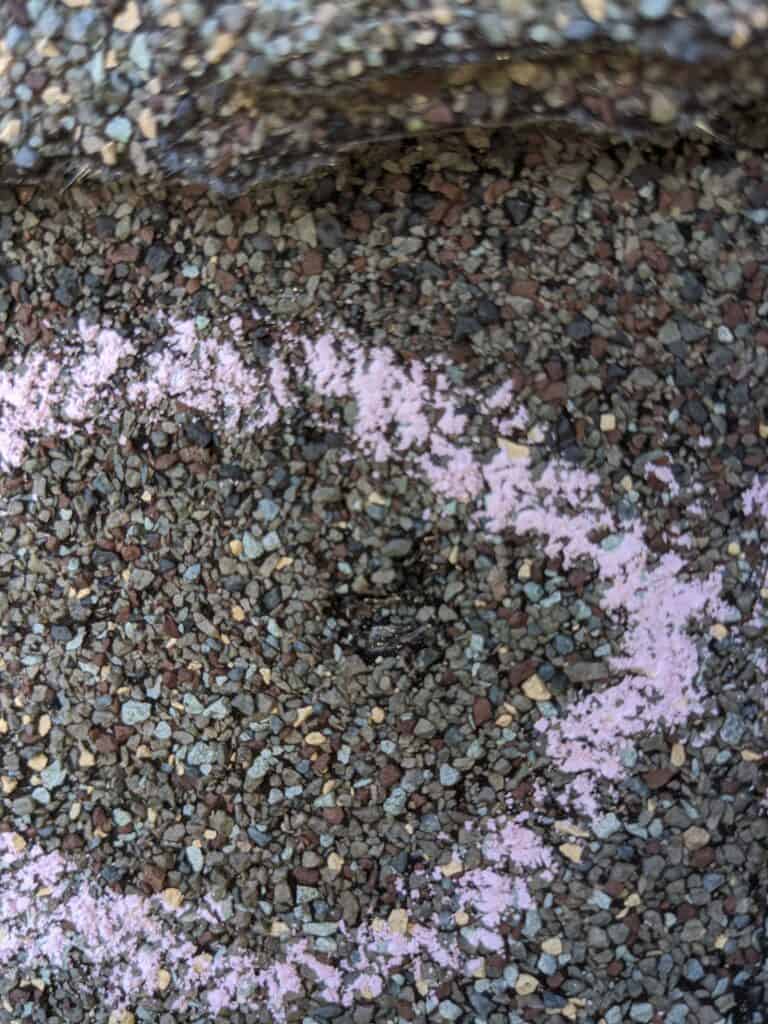
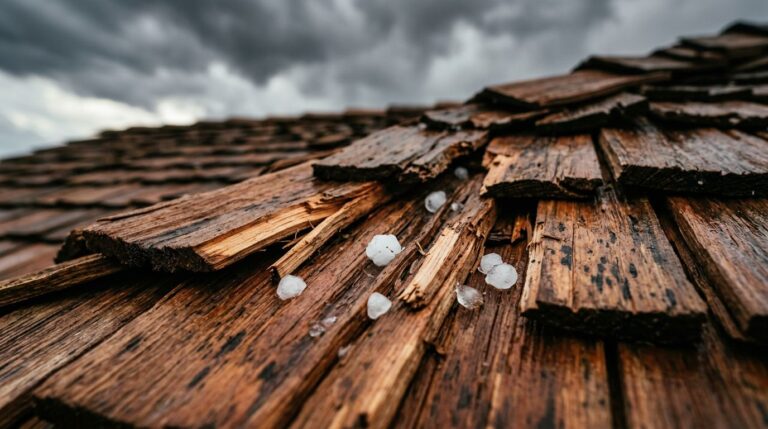
Insurance is most likely to help when hail damaged the actual ventilation assembly. That can include soffit vents, ridge vents, box vents, wind turbines, vent boots, flashings, curb details, or fasteners around rooftop penetrations. If the storm also opened seams, loosened edges, or let water into the structure, the impaired attic ventilation becomes part of a broader covered loss. Without proper airflow, property owners often face significant secondary damage, including moisture buildup, mold and mildew, winter ice dams, and excessive heat buildup in the upper levels of the building.
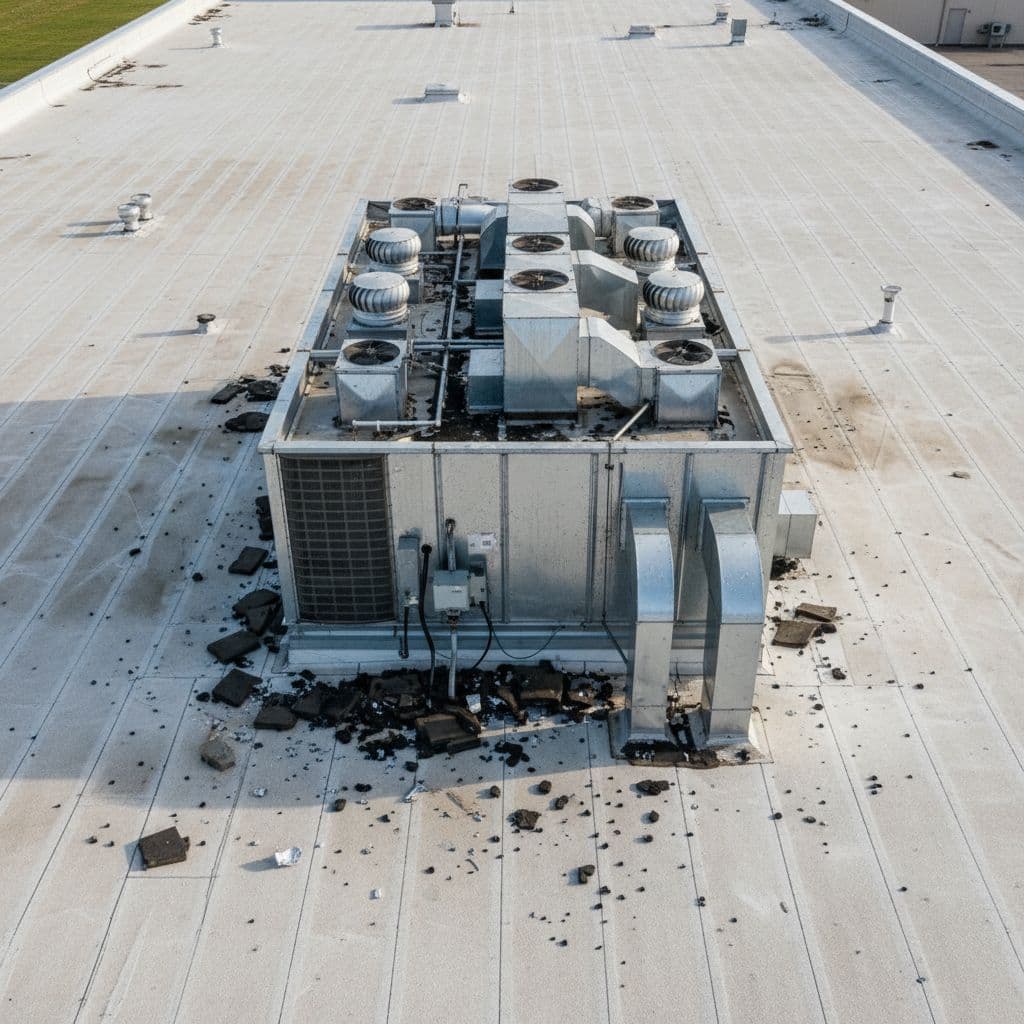
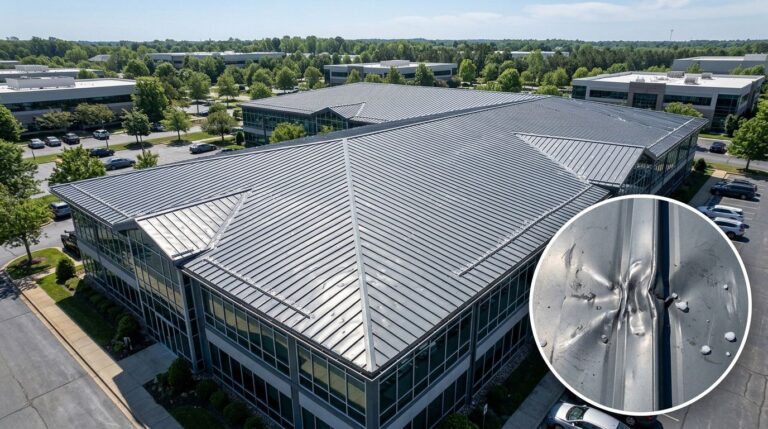
A claim is stronger when the damage is functional rather than merely cosmetic. A dented cap that still sheds water may be treated differently from a split vent or a failed seal. That difference matters on TPO, EPDM, modified bitumen, and metal roofs, because water can travel a long way before it appears inside.
If you need a closer look at where the leak starts, a commercial roof leak detection report can help show whether the problem came from hail or from older moisture intrusion.
When it does not apply
Ventilation upgrades usually fall outside coverage when they are elective. If you want a higher-performance vent layout, more airflow, or a better energy result, the carrier will often treat that as an improvement. The same is true when the roof was already failing from age, poor maintenance, or past leaks.
Insurance is most likely to pay for restoration, not a betterment.
That line matters. If the claim is really about an older roof system, the insurer may approve a commercial flat roof repair instead of a broader change. When wet insulation, failed seams, or damaged decking spread across the field, the job may shift toward commercial roof replacement. In that case, the ventilation decision sits inside a larger scope, not on its own.
Code-driven upgrades are a separate question
Sometimes the roof work triggers a mandate. If building code requirements state that a damaged vent must be replaced a certain way, or if the whole assembly needs an update during covered repairs, ordinance or law coverage may matter. That is a policy question, not a wish list item.
Step-by-Step
1. Get the insurance adjuster’s scope in writing
Ask for the line-by-line estimate, not just the payment total. You need to see what the carrier approved, what it reduced, and what it said was unrelated. Compare the scope to the real roof conditions, including vent housings, flashings, insulation, edge metal, and any moisture findings.
If the carrier thinks the damage is small, but your professional roofing contractors see broader problems, that difference should be documented now. A professional team can define whether you are dealing with isolated repair work or a wider insurance claim that points to more than a simple patch.
2. Separate damage from upgrade ideas
Make a clean list with three groups. First, write down the hail-damaged items. Next, list code-required items. Then set aside anything that is only an improvement. That split keeps the claim cleaner and makes it easier for the adjuster to review.
This matters because owners often ask for better ventilation after a storm, then assume the whole change belongs in the claim. It usually does not. If the roof only needs a localized repair, the policy may pay for the damaged pieces and nothing more. If the roof system is near the end of its life, the discussion may move toward a full roof replacement instead.
3. Build proof before anything gets covered up
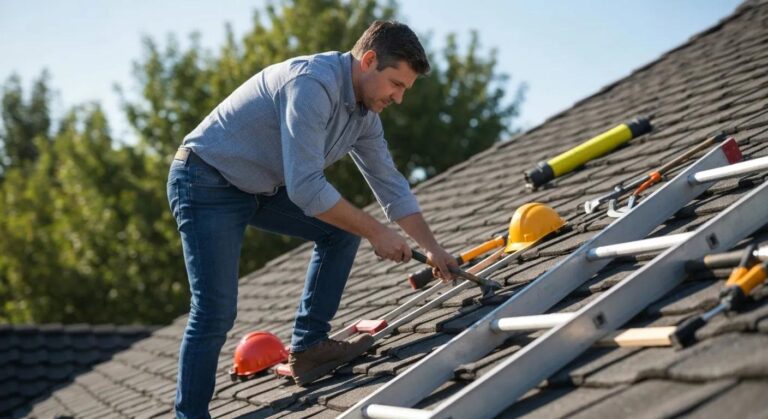
Take photos before repairs start. Capture the roof surface, the vent details, the interior stains, and any wet insulation or deck damage. Add dates and weather notes. Then collect moisture readings, test cuts, and inspection notes. Those details matter because water can move far from the entry point.
When documenting the repair, roofing contractors should verify the manufacturer’s installation instructions to ensure the work meets warranty standards. This attention to detail is vital for maintaining long-term roof longevity. If the roof deck or insulation is wet, the claim may need more than a vent swap. Temporary dry-in work, interior protection, and leak tracing do not weaken the claim. They show you acted reasonably and kept the loss from spreading.
4. Ask for a supplement or reinspection
If the first estimate missed damaged vent parts, code items, or hidden moisture, submit a supplement. Keep it short and factual. Point to photos, measurements, and the policy language that supports the request. Do not mix in unrelated upgrades.
If the adjuster still disagrees, request a reinspection. Many partial denials happen because the first visit missed the full scope. When the dollars are large, appraisal may be the next step if the policy allows it. For major losses, coverage counsel can also help sort out cause, scope, and policy wording.
5. Hold permanent work until the claim path is clear
Temporary stabilization is fine. Broad permanent work is where claims get messy. If you replace vents, remove roof sections, or redesign the vent layout before the carrier inspects the damage, you can lose proof that matters later.
That does not mean you should wait with an active leak. It means you should stop the water, protect the building, and keep the permanent scope tied to evidence. If the final answer is repair, document that. If the final answer is replacement, make sure the scope reflects the damage and not just a better design.
How insurers treat ventilation upgrades
The carrier usually draws a hard line between restoring the roof and improving it. That line affects both payment and timing. Here is the simplest way to read it.
| Situation | Likely treatment | What helps your claim |
|---|---|---|
| Hail broke a vent cap or flashing | Often covered repair or replacement | Photos, storm date, adjuster scope |
| Hail opened seams and wet insulation spread | May support broader roof work | Moisture readings, test cuts, marked roof plan |
| Code requires vent changes during covered repair | May be covered if the policy includes building code coverage | Code notes, permit rules, policy endorsements |
| You want a more efficient balanced ventilation system | Usually not covered | Separate proposal as an upgrade |
The takeaway is simple. Insurance follows the loss, not the wish list. If you are updating your attic ventilation because a code mandate like IRC Section 806 requires it during a covered repair, your claim is significantly stronger. If the upgrade is only meant to improve your intake and exhaust vents for better design, expect to pay for it yourself.
When there is room for debate, focus on whether the roof still sheds water and whether the damage is isolated. A small failure may justify a targeted repair. Widespread wet insulation, membrane shrinkage, or failed seams across the field often support a larger commercial roof replacement.
Conclusion
Hail damage can open the door to roof ventilation coverage, but only within narrow limits. Standard home insurance coverage focuses on restoring your property to its pre-loss condition, meaning the insurance company is typically only obligated to pay for damaged components, code-driven work, and repairs directly tied to the covered event.
If your goal is to pursue an upgrade for better energy efficiency, those costs usually remain an out-of-pocket expense. However, it is worth noting that in certain regions, ventilation upgrades are sometimes required to mitigate wildfire risk, which may change how your claim is handled. The strongest files are those that clearly separate old wear from fresh hail damage, document the scope of work thoroughly, and ensure every added dollar is supported by clear proof.
FAQ
Can hail damage roof vents be covered by roof ventilation insurance?
Yes, if hail damaged the vent itself or nearby roof parts, your roof ventilation insurance policy may provide coverage. The claim is strongest when the damage affects function rather than just appearance. If the vent still operates correctly and the issue is purely cosmetic, coverage is typically limited.
Does insurance pay for better attic ventilation?
Usually not. Improvements that enhance airflow, energy savings, or comfort are typically treated as optional upgrades. While the carrier may pay to replace damaged components, the cost of installing advanced attic ventilation to boost performance is generally the responsibility of the property owner.
What if the roof needs repair and the vents are old?
Old age does not automatically block coverage for new hail damage. If the storm caused fresh damage, the insurer may owe for those specific components. However, older wear, rust, or pre-existing leaks are often excluded, so the scope of work should clearly separate these issues. Keep in mind that maintaining proper attic ventilation is often a mandatory requirement to preserve your manufacturer shingle warranty.
Will a supplement cover code-related vent changes?
It can, provided the added work is truly required by local building codes and your policy includes the appropriate ordinance or law coverage. The code requirement must be directly tied to the covered loss. A contractor’s detailed code notes and permit documentation are essential for supporting these claims.
Are there insurance premium discounts for upgrading roof ventilation?
Some providers offer insurance premium discounts if you install high-quality ventilation systems that significantly increase the overall life expectancy of your roof. Because these upgrades reduce the risk of heat buildup and moisture damage, insurers may view them as a proactive measure to protect the asset.
Should I replace the whole roof if ventilation is poor?
Not always. If the roof still has useful service life and the damage is localized, a simple repair may be sufficient. If the roof has widespread saturation, persistent leaks, or failing seams, the project might justify a full roof replacement rather than another temporary patch.
Conclusion
The question is usually not whether ventilation matters, but whether the policy pays for the change. Once you sort out hail damage, code requirements, and elective upgrades, the answer becomes much clearer. Experienced roofing contractors can help navigate these technical details throughout the claim process, ensuring your project meets all necessary standards.
For a commercial property owner, that clarity protects the claim and keeps the roof decision grounded in evidence rather than guesswork. Ultimately, investing in a balanced airflow system is essential for the long term health and longevity of your building.
Need a roof inspection in Saint Paul or the Twin Cities? Call Sellers Roofing Company at +1-651-703-2336 or schedule a free estimate. We are a black-owned, NMSDC-certified MBE roofing contractor with 9+ years experience.