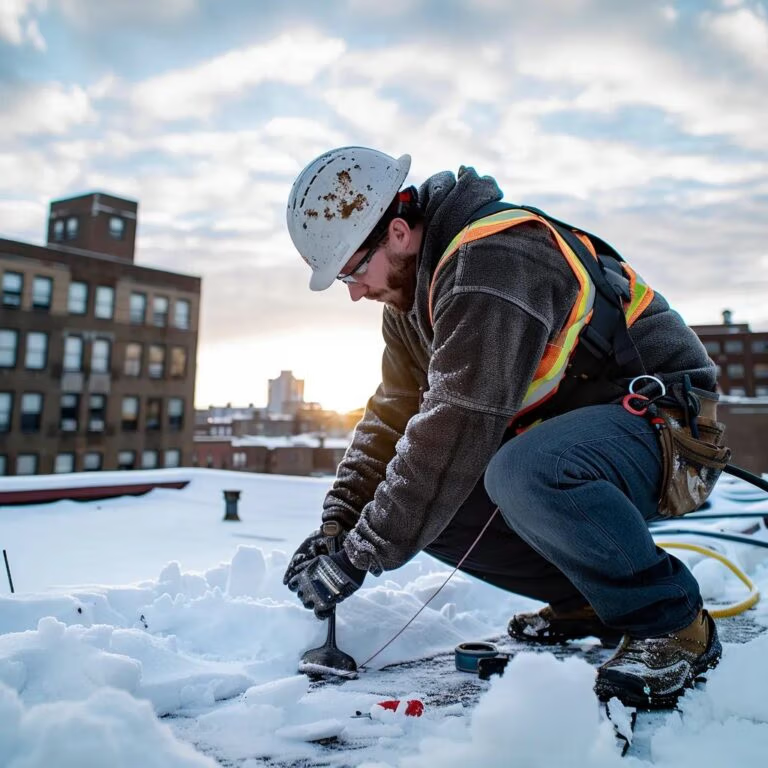
Last updated: 2026-08-01 by Ted Sellers, Owner
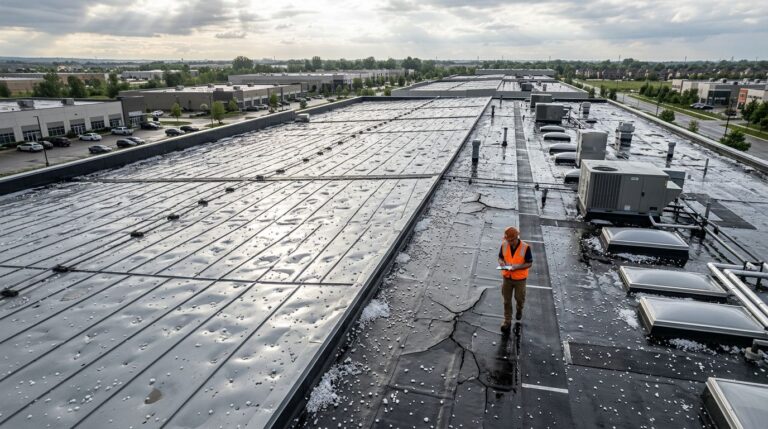
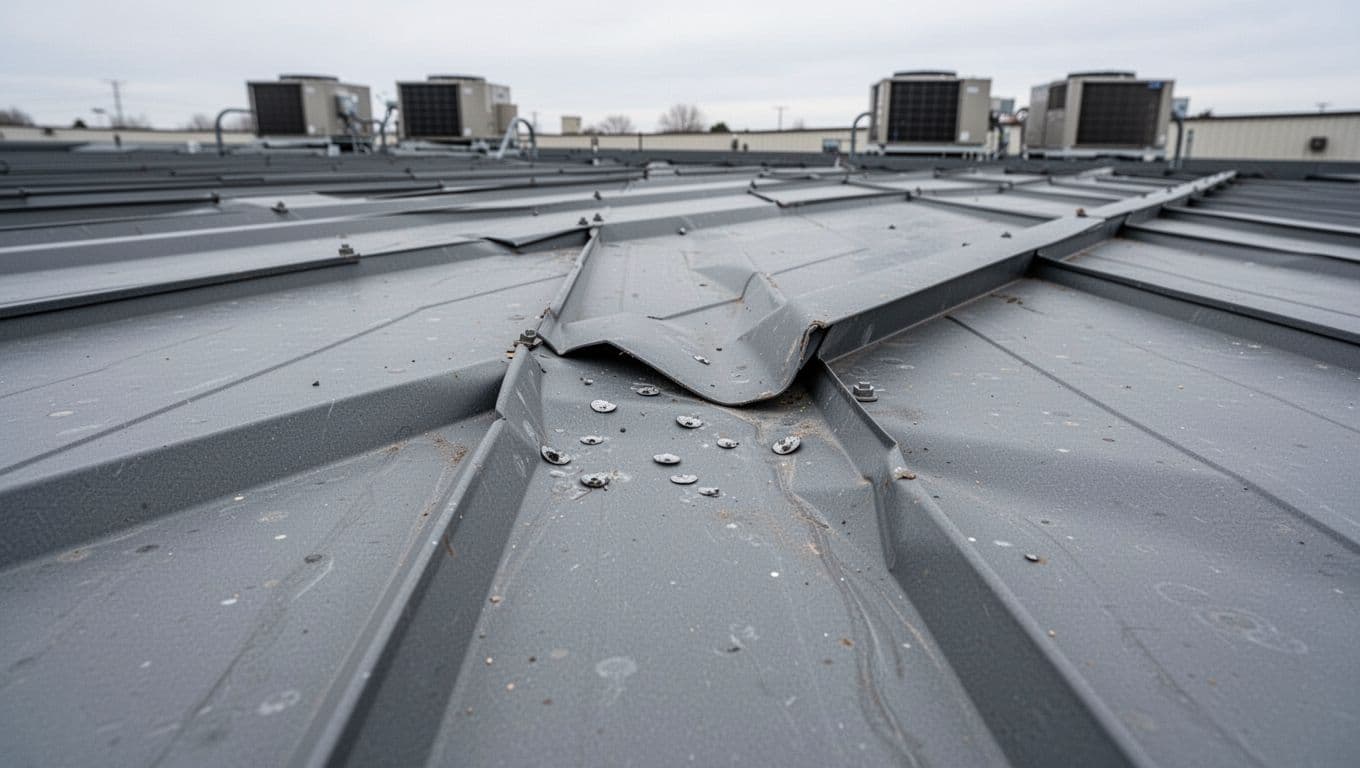
On standing seam metal roofs, wind damage usually shows up as lifted panel edges, popped seams, loose clips, bent flashing, sudden waviness, and leaks near edges or penetrations. Severe damage can shift panels out of line or partly detach them. Even small seam movement matters because wind and water keep working the same weak spot.
When This Applies
This applies most to large commercial roofs after high-wind storms
If you own a warehouse, office, retail center, or plant with a standing seam roof, this applies after strong straight-line winds, storms, or repeated gusts. Wide roof spans and exposed corners take the hardest hit. Buildings near open ground often see more uplift pressure.
Wind doesn’t always rip panels off. Often, it starts by loosening clips, lifting panel ends, or bending edge metal. Think of wind catching a roof edge like it catches the corner of a sheet of paper. Once that edge starts to move, the force spreads.
When the damage may be something else
Not every dent or wave pattern points to wind. Hail usually leaves more random impact marks. Foot traffic often dents panels near walk paths or service zones. Thermal movement can also create long, smooth waviness that was there before the storm.
Cosmetic dents are not the same as functional standing seam wind damage
Cosmetic damage changes how the roof looks. Functional damage changes how it performs. If seams separate, flashing buckles, trim pulls loose, or water gets in, the roof has a real problem.
If a seam opens, treat it as roof failure in progress, not a harmless blemish.
Inside signs matter too. Ceiling stains, damp insulation, or rust at the deck can mean wind opened a path that water later followed. In that case, commercial roof leak detection Saint Paul can help pinpoint the source before the repair area grows.
Step-by-Step
How to inspect a standing seam roof after a wind event
- Start from the ground and inside the building. Look for crooked panel lines, lifted trim, displaced gutters, fallen metal, or fresh leaks. If the roof is steep, wet, or hard to reach, don’t climb it.
- Check the roof perimeter first. Corners, edges, and transitions take the highest wind load. Bent eave metal, loose rake trim, and pulled closure pieces often show up there before damage appears in the field of the roof.
- Follow the standing seams with your eyes. They should stay straight, tight, and even. If one seam looks wider, sits higher, or has a gap near the panel end, that’s a common sign of standing seam wind damage.
- Look for movement, not only missing pieces. A panel can stay in place but still fail at the clips below. If a seam has opened or a panel edge lifts, the commercial roof needs repair now, not at the next budget review.
- Track moisture fast. Water on a metal roof can travel before it drips inside. Stains near walls, skylights, HVAC curbs, or ridge areas may point back to a wind-lifted seam several feet away.
- Document what you find with dated photos. That helps separate new storm damage from older wear. It also helps when deciding between section work and a commercial roof replacement if many panels, clips, or edge details have failed.
- Get a roofing contractor who knows metal systems, not only membrane roofs. This isn’t like commercial flat roof repair, where crews can often patch a seam and move on. With standing seam systems, panel profile, clip type, spacing, and thermal movement all matter. If you see active seam separation or bent edge metal, call Saint Paul commercial roofing experts to document the damage and outline repair options.
FAQ About Standing Seam Wind Damage
Can wind damage happen even if no panels blew off?
Yes. In many cases, wind damage starts under the panel. Clips can loosen, seams can spread, and flashing can bend long before a panel detaches. That early movement is easier to miss, and it’s often when the best repair window exists.
Is oil-canning always a wind problem?
No. Oil-canning can come from panel thickness, installation methods, or normal expansion and contraction.
When waviness is more likely storm-related
If the waviness suddenly got worse after a wind event, and it appears with lifted seams or bent trim, wind is the better suspect. A contractor should compare storm damage with older photos if you have them.
Can one damaged section be repaired, or do you need a full replacement?
Sometimes one section can be repaired, especially when the damage is local and matching panels are still available.
When repair usually works
Repair makes more sense when clips, trim, or a limited run of panels failed in one area. If seam movement shows up across broad sections, replacement may be the cleaner long-term fix.
What happens if you wait too long to fix it?
Small seam gaps often become leak paths. Then insulation gets wet, rust starts, and interior damage follows. Waiting also makes storm documentation harder, which can create problems with budgeting, operations, and insurance review.
Does insurance cover standing seam wind damage?
Coverage depends on the policy, the roof’s age, and how the carrier reads the damage. Clear photos, storm dates, and a written roof report help a lot.
What documentation helps most
Photos of lifted seams, bent flashing, and interior moisture matter most. So does a prompt inspection. The longer you wait, the easier it is for new wear to blur the storm damage.
What Should You Do Next?
Act before small movement becomes a leak
On metal roofs, the biggest warning sign is often subtle. A seam that looks slightly open today can become a wet insulation problem after the next storm. That’s why small seam movement shouldn’t sit on a punch list for months.
If your building shows lifted edges, popped seams, bent trim, or fresh leaks, schedule an inspection while the damage is still contained. What looks minor on a standing seam roof rarely stays minor for long.
Need a roof inspection in Saint Paul or the Twin Cities? Call Sellers Roofing Company at +1-651-703-2336 or schedule a free estimate. We are a black-owned, NMSDC-certified MBE roofing contractor with 9+ years experience.