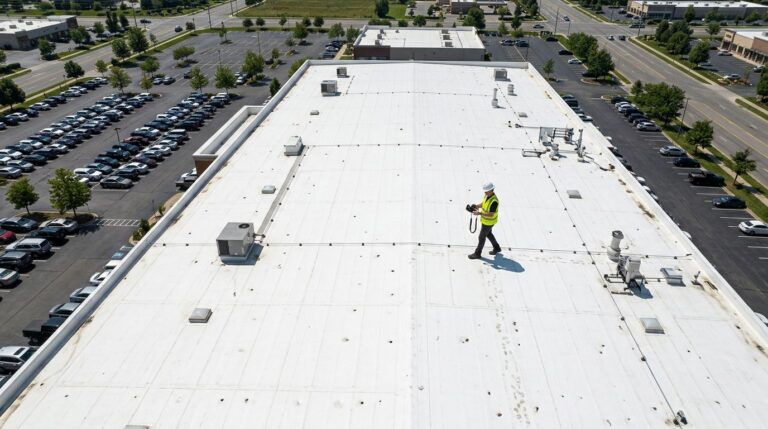
Last updated: 2026-08-01 by Ted Sellers, Owner
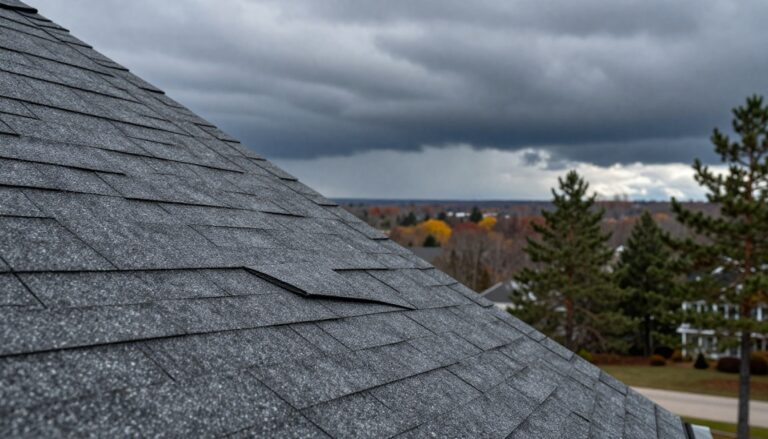
You know your roof has hail damage when a recent storm is followed by random impact marks, dents on soft metals, bruising or punctures in the roofing surface, damaged flashing, or new interior leaks. On commercial buildings, the clearest signs often show up around seams, drains, rooftop units, and metal edges, not in one obvious spot.
When This Applies
Who should use this guidance
This applies to commercial business owners, facility managers, and property teams after a hailstorm, especially if the building has TPO, EPDM, PVC, metal, modified bitumen, or another low-slope system.
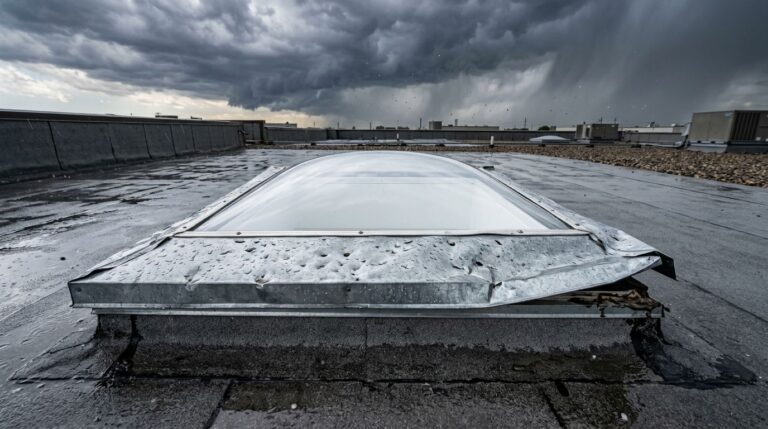
It matters even more if your roof has lots of penetrations, such as HVAC curbs, skylights, vents, and drains. Hail often hits these weak points first. A commercial roof can look fine from the parking lot and still be hurt, like a car with hidden frame damage under clean paint.
If you manage a Twin Cities property, local Saint Paul commercial roofing services can help separate storm impact from normal wear. For broader photo examples, this hail inspection and claim guide can help you compare what you see.
When a quick visual check is not enough
This does not apply if the roof is unsafe to access, snow-covered, or already has major age-related failure that hides fresh hits. In those cases, a surface scan alone can miss the real problem.
Not every dent means the roof failed. Soft metals, like vents, gutters, and edge trim, dent easily. That collateral damage supports a hail case, but it doesn’t always prove the membrane was breached.
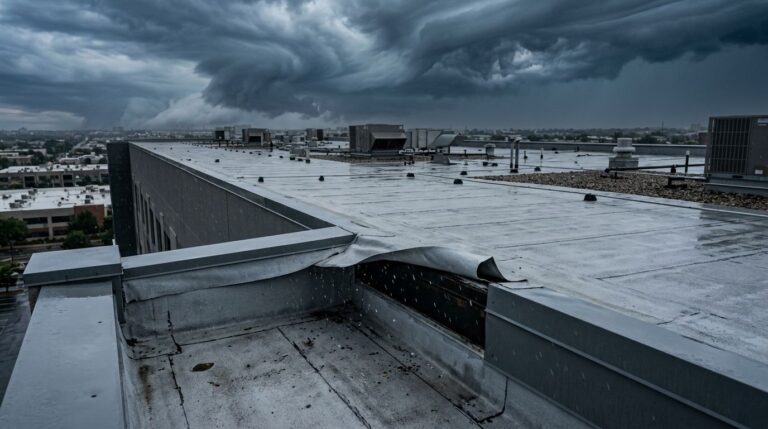
On the other hand, don’t dismiss small marks too fast. Roof hail damage on a flat system may show up as split seams, displaced flashing, or hidden wet insulation days later.
Step-by-Step
Start with safe evidence gathering
- Confirm the storm date and hail size. Match the timing of the storm with any new roof issues, tenant complaints, or ceiling stains. If the damage appeared right after hail, that timing matters.
- Check the building exterior first. Look at downspouts, metal copings, window screens, siding, and AC fins. If those areas show fresh dings, the roof likely took hits too.
- Take wide and close photos. Capture the whole building, then the damaged areas. Good photos help you compare later and support an insurance claim.
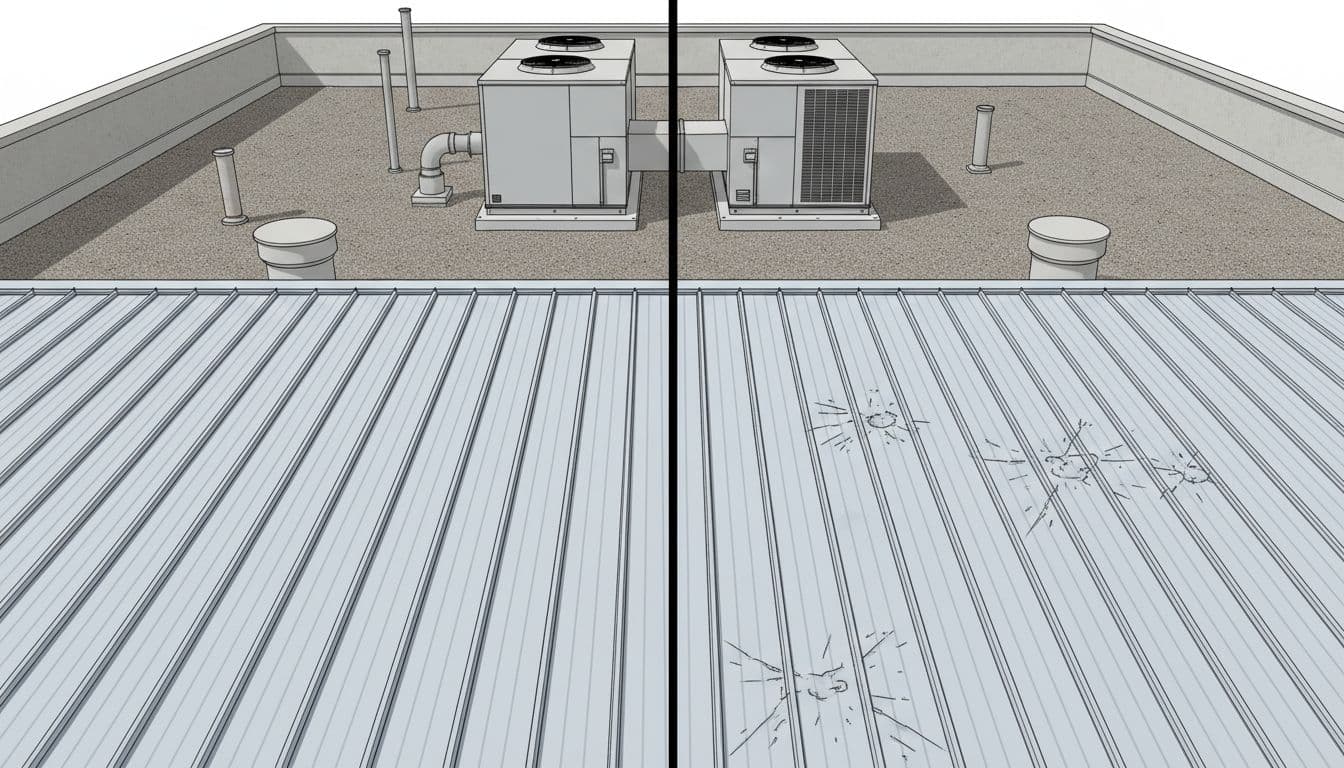
Random impact patterns usually point to hail. Uniform wear usually points to age.
Inspect the roof areas that fail first
- Look at soft metal and rooftop accessories. Hail leaves dents on vents, flashing, metal panels, skylight frames, and HVAC housings. Those marks are often easier to see than membrane damage.
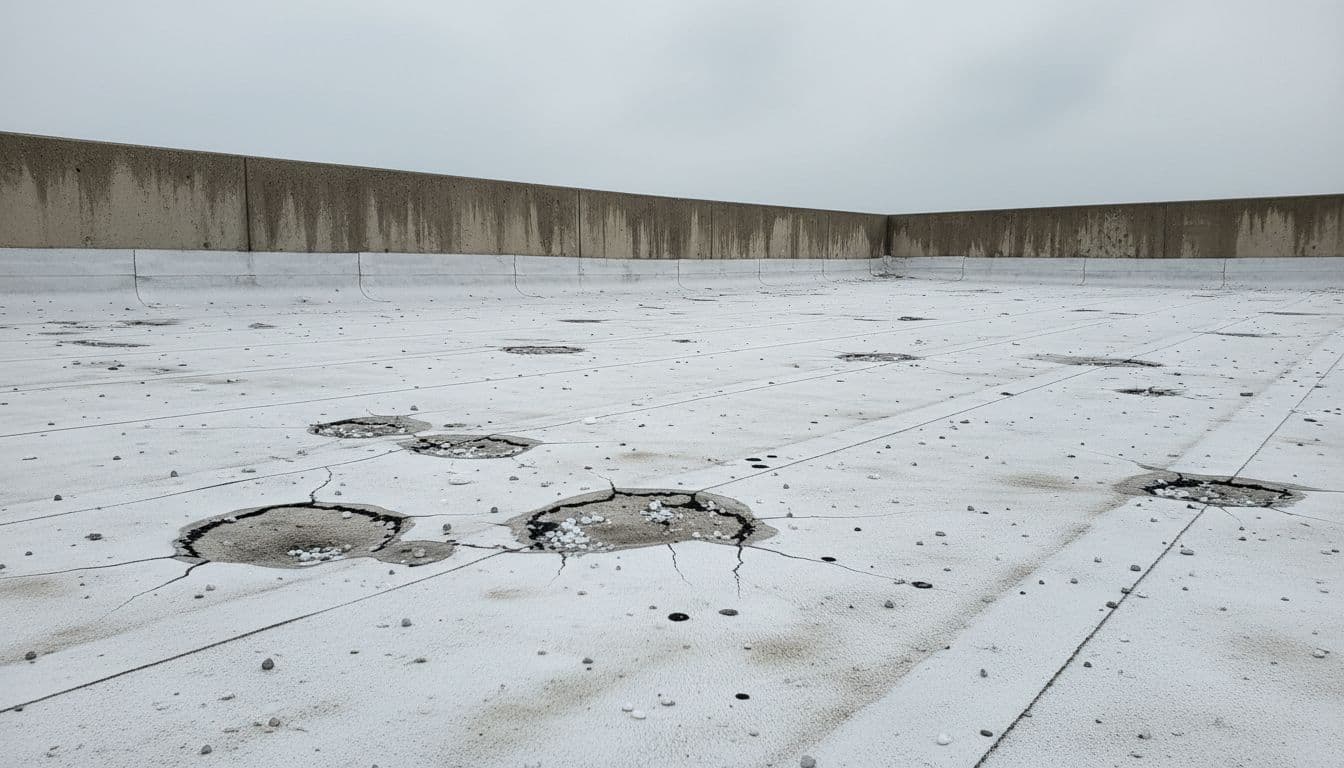
- Check the roofing surface for loss of waterproofing. On single-ply roofs, watch for punctures, cuts, split seams, and scuffed spots where the surface layer was knocked loose. On metal roofs, watch for fractured coatings, exposed fasteners, or seams that no longer sit tight.
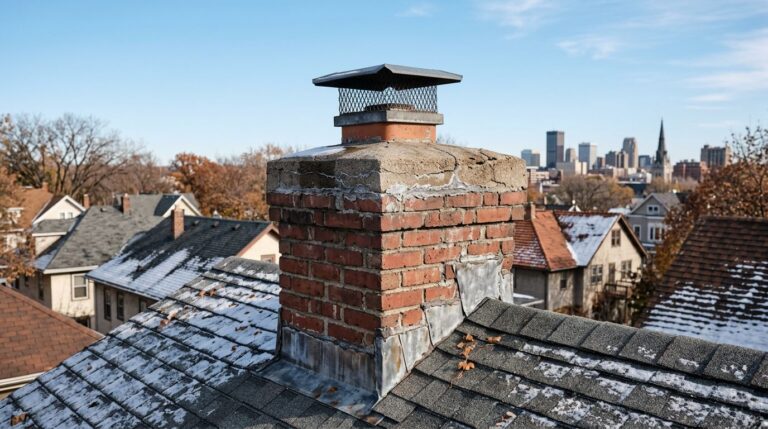
- Pay close attention to drains, curbs, and edges. Hail can loosen details around these points, and water follows the path of least resistance. If you spot ponding, displaced flashing, or open laps, your commercial roof needs repair, even if the ceiling is still dry.
Decide whether it is repairable or larger than that
- Check inside the building next. Look for water stains, wet insulation, musty smells, peeling paint, or drips near rooftop units and exterior walls. If water may be traveling under the membrane, schedule commercial roof leak detection before the damage spreads.
- Use the findings to choose repair or replacement. Isolated punctures or flashing damage may only need commercial flat roof repair. Widespread membrane breaks, saturated insulation, or repeated leaks may point to commercial roof replacement instead.
A good rule is simple: cosmetic dents can wait, but anything that weakens waterproofing, seams, or drainage needs fast action. For extra comparison photos, these pro signs of hail damage show how impact marks differ from normal wear.
FAQs after a hailstorm
Can a commercial roof have hail damage without leaking right away?
Yes. Many flat roofs hold hidden moisture before water reaches the ceiling. That’s why roof hail damage often shows up first at seams, flashings, or insulation, not in the room below.
Does dented metal always mean the roof needs repair?
No. Dented caps, gutters, or panels can be cosmetic. But if hail also cracked coatings, opened seams, or bent flashing out of place, the roof likely needs work.
How soon should I document possible hail damage?
Do it as soon as the roof is safe to inspect. Fresh photos, storm dates, and tenant reports are easier to trust than memories two months later.
What if the building starts leaking weeks after the storm?
That happens often. Hail may weaken a seam or curb, then the next rain exposes it. Delayed leaks still deserve a professional inspection.
When does hail damage lead to full replacement instead of repair?
Replacement makes more sense when damage is widespread, moisture is trapped under large sections, or the roof was already near the end of its service life. In that case, repair money may only delay a larger failure.
If you suspect hail damage, don’t wait for a bucket on the floor to confirm it. The fastest answer comes from matching storm timing, visible impact marks, and any change in waterproofing. Early action protects your building, your tenants, and your budget.
Need a roof inspection in Saint Paul or the Twin Cities? Call Sellers Roofing Company at +1-651-703-2336 or schedule a free estimate. We are a black-owned, NMSDC-certified MBE roofing contractor with 9+ years experience.