Last updated: 2026-08-01 by Ted Sellers, Owner
To detect a modified bitumen roof leak, inspect seams, flashings, blisters, splits, drains, and ponding areas, then confirm hidden moisture with infrared scanning, electronic testing, or small test cuts. Don’t trust the interior drip alone, because water often travels under the membrane before it shows inside.
A ceiling stain is like smoke, not the fire. On a commercial roof, the visible leak is often several feet away from the actual opening.
That matters for business owners because the wrong patch wastes money, and the leak keeps moving. A fast, accurate diagnosis protects insulation, decking, inventory, and tenant space.
When This Applies
Best fit for low-slope commercial roofs
This applies to owners and managers with modified bitumen on offices, retail buildings, warehouses, and multi-tenant properties. It fits low-slope roofs with granulated cap sheets, rolled seams, base flashings, and roof penetrations.
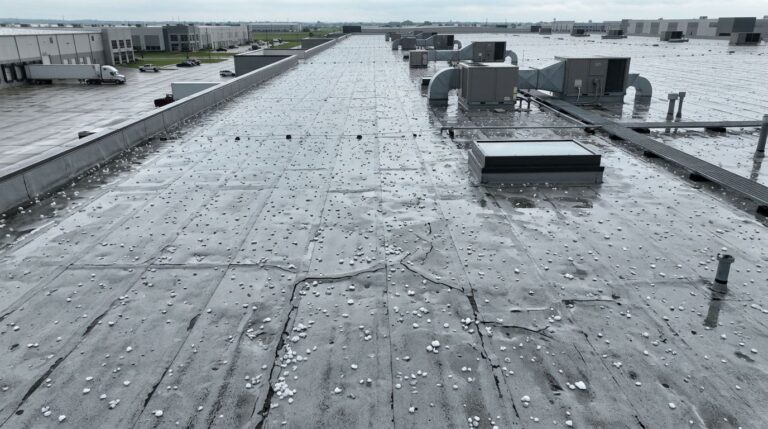
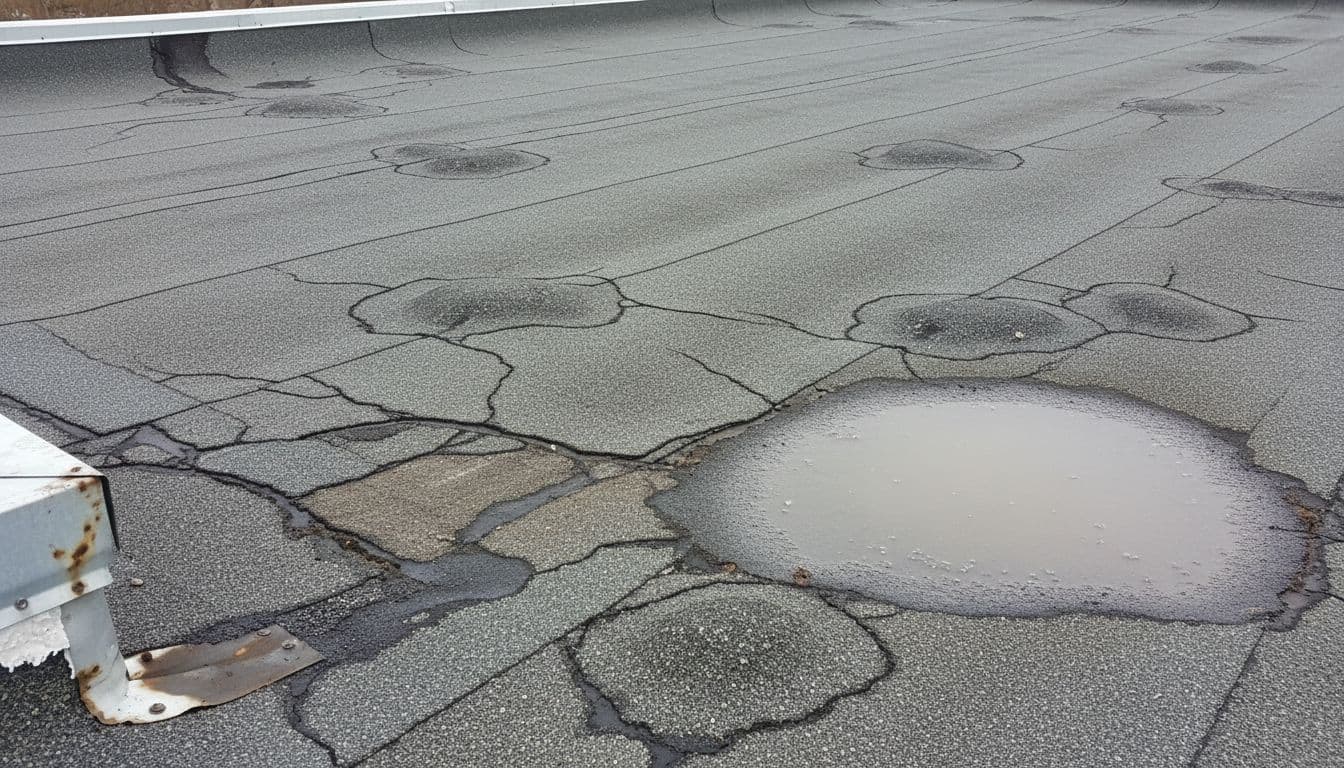
Modified bitumen leaks often start at laps, terminations, drains, and stress points around curbs. Aging surfaces may also crack, lose granules, or blister.
When this does not apply
This process doesn’t fully fit steep-slope shingle roofs, standing-seam metal roofs, or buildings where condensation, plumbing, or HVAC runoff is the real cause. It also gets harder when the membrane sits under pavers, ballast, or heavy overburden.
Cases that need a different approach
If a storm tore open the roof, start with emergency dry-in, not slow leak tracing. If the system is covered or hard to access, formal testing may be better than guesswork. The WBDG guide to membrane integrity testing explains why hidden assemblies often need more than a visual check.
Step-by-Step
Start with clues above and below
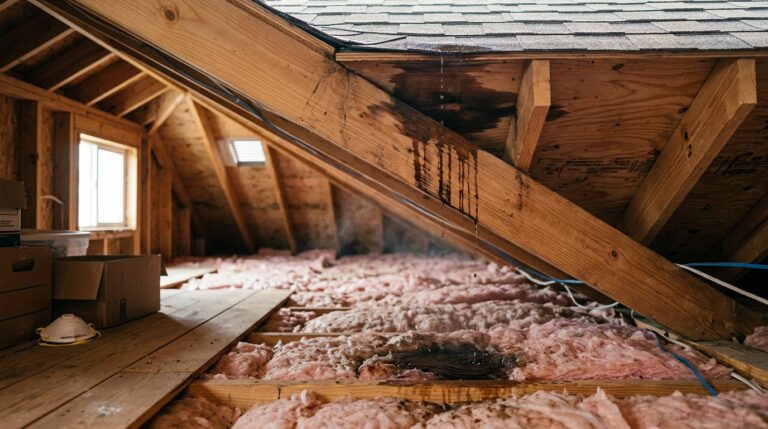
The stain inside marks where water arrived, not where it got in.
- Map the interior signs first. Mark ceiling stains, wet insulation, odor, bubbled paint, and drip points. Then note the weather, because wind-driven rain and snow melt can change the path.
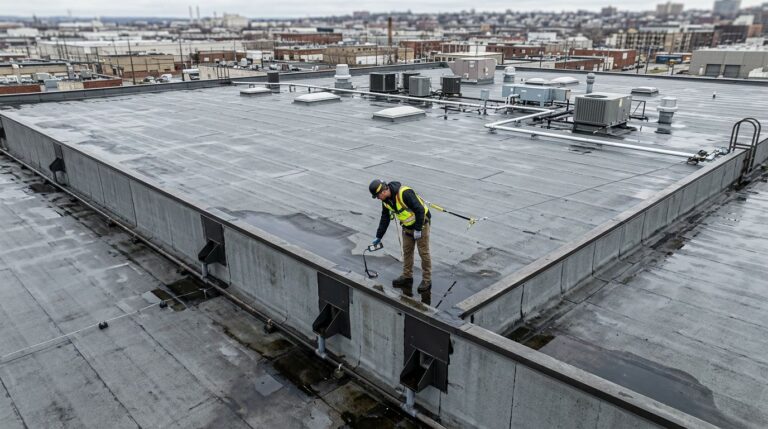
- Inspect a wide roof area above the leak. On modified bitumen, water can move along laps or under the cap sheet. Check a broad radius, not just the spot directly overhead.
- Look closely at common failure points. Probe open seams, split flashings, cracked mastic, exposed fasteners at edge metal, drain bowls, and ponding zones. Also check for blisters, punctures, and bare asphalt where granules wore off.
When the stain lies to you
If the leak appears near a wall or beam, water may have traveled along the deck before dropping. That’s why experienced teams often combine visual work with IKO’s explanation of thermal imaging, which helps narrow wet areas without tearing into the roof too soon.
Confirm the source before you repair
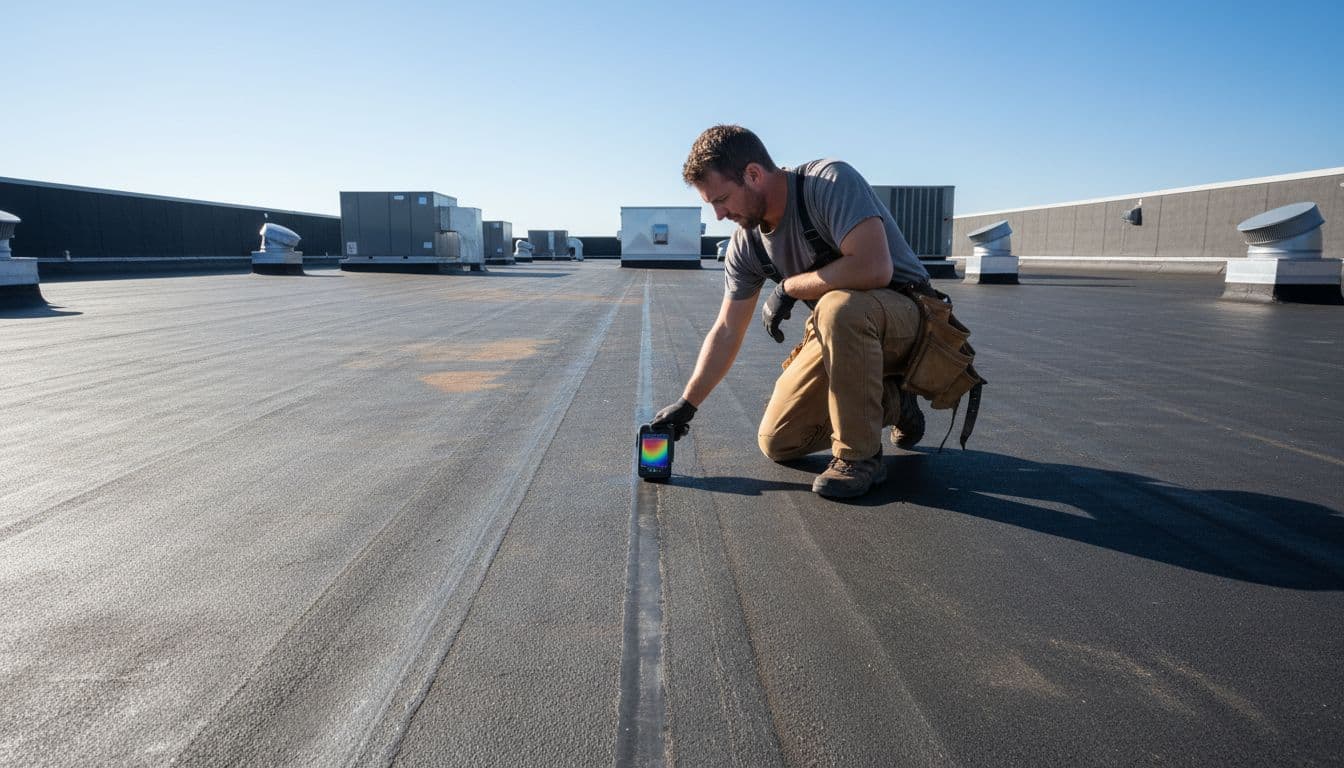
- Use infrared when moisture is hidden. Wet insulation holds heat differently than dry insulation. An evening scan often shows the pattern, which helps you target the right area instead of chasing symptoms.
- Use electronic testing when the roof has many seams or hard-to-read surfaces. This method pinpoints membrane breaches with much better accuracy than a visual walk alone. Carlisle’s overview of electronic leak detection systems gives a solid summary of how it works.
- Open small test cuts only after you narrow the suspect zone. Test cuts confirm whether insulation is dry, damp, or saturated. That tells you if a local patch will work or if wet materials spread farther than expected.
When repair no longer makes sense
If the wet area is isolated, commercial flat roof repair is often the smart move. If moisture is widespread, seams keep failing, or the membrane is brittle, commercial roof replacement may cost less over time. Many owners ask whether the commercial roof needs repair or full replacement; the answer depends on how far water has traveled below the visible leak. When that call isn’t clear, professional leak detection for commercial roofs can prevent a costly wrong turn.
Common follow-up questions
Can a modified bitumen roof leak without visible cracks?
Yes. Tiny seam gaps, failed flashing corners, or pinholes around drains can let in water long before the surface looks badly damaged. That’s why hidden-moisture testing matters on older roofs.
What if the leak only happens in winter?
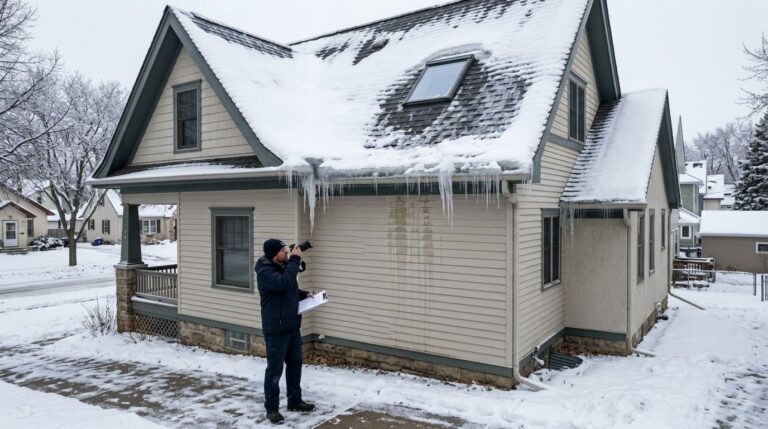
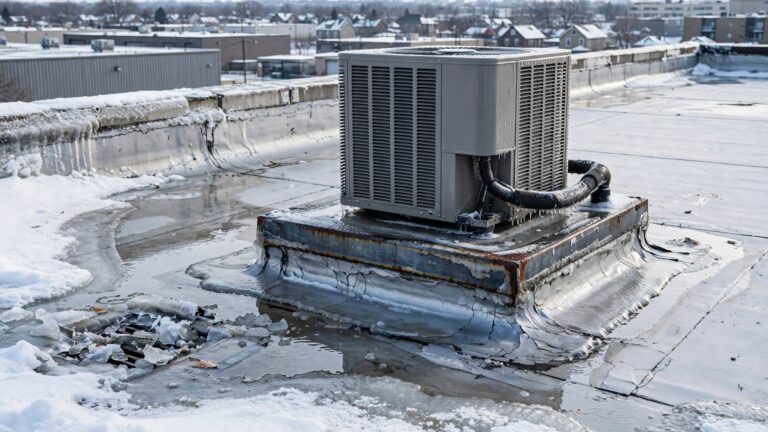
Snow and ice often expose drainage flaws, blocked scuppers, or edge flashing issues. Freeze-thaw cycles can also open seams that stay closed in warm weather.
Winter-only leaks need a wider inspection
Look at roof drains, parapet details, and areas where snow sits longest. A winter leak doesn’t always mean the membrane failed in the exact place you see water.
Should you patch every blister you find?
No. Some blisters are stable and not yet leaking. If you cut or patch the wrong one, you can create a new weak spot. The real goal is to find active water entry, not just surface defects.
How do I know if repair is enough?
Repair makes sense when damage is limited and the surrounding membrane is still sound. If test cuts show soaked insulation across broad sections, repeated patching becomes a cycle, not a fix.
What happens if I wait a few months?
Leaks rarely stay small. Water spreads, insulation loses R-value, decking can rot, and interior damage grows fast. If you own or manage a property in the Twin Cities, it helps to have a contractor who handles Saint Paul commercial roofing services and understands low-slope systems in harsh weather.
A modified bitumen leak is found in layers, symptom, path, source, and hidden damage. Accuracy matters more than speed, because the wrong repair keeps the roof leaking. If water has shown up once, now is the time to trace it fully and fix the real opening.
Need a roof inspection in Saint Paul or the Twin Cities? Call Sellers Roofing Company at +1-651-703-2336 or schedule a free estimate. We are a black-owned, NMSDC-certified MBE roofing contractor with 9+ years experience.