Last updated: 2026-08-01 by Ted Sellers, Owner
Roof leak detection on asphalt shingle roofs starts by tracing water backward from the interior stain to the roof area above it. Roofers then inspect shingles, flashing, valleys, vents, and nail lines for breaks or trapped moisture. They confirm the source with visual checks, moisture tools, and controlled water testing, because the drip point inside rarely matches the hole outside.
Which buildings and leak patterns fit this process
This process fits commercial buildings with sloped asphalt shingle sections, such as offices, retail shops, churches, and mixed-use properties. It helps most when you see ceiling stains, damp insulation, musty smells, or drips after wind-driven rain.
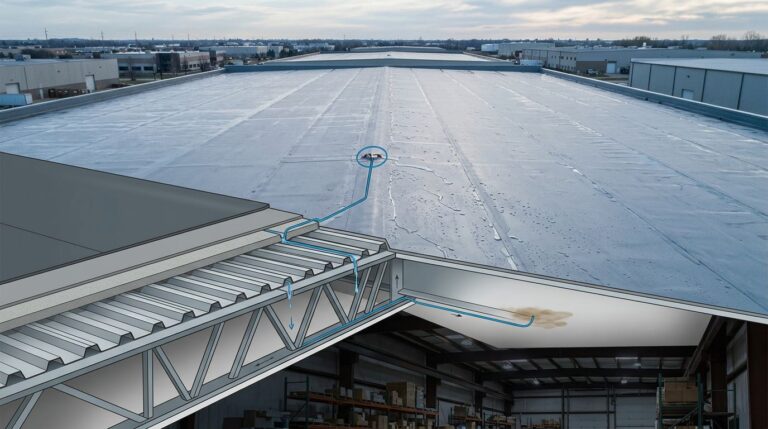
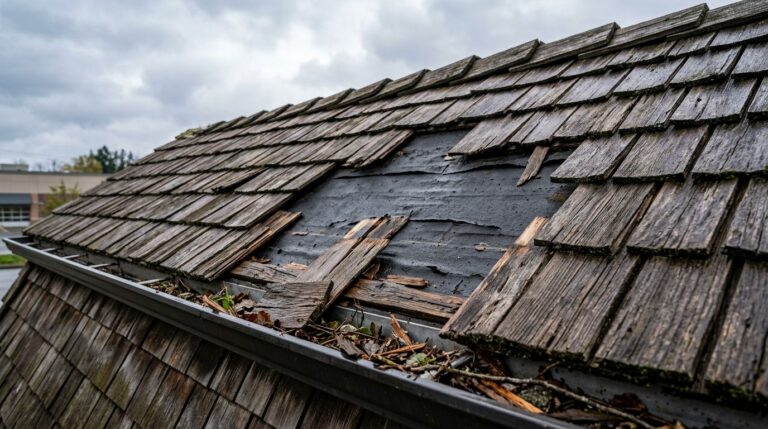
Many asphalt shingle roof leaks begin at flashing, pipe boots, valleys, skylights, or exposed nails. Water then travels along the roof deck or framing. Because of that, the leak can show up several feet away from the true entry point.
The stain inside is a clue, not the source.
When this method does not apply
It doesn’t fit membrane, metal, or TPO systems. If your building has a low-slope section above the leak, the repair path changes. In that case, the issue may call for a different process, closer to commercial flat roof repair than shingle leak tracing.
Mixed-roof buildings need a split diagnosis
Many commercial properties have more than one roof type. A front mansard may use shingles, while the rear section uses a membrane. That matters, because the ceiling stain may sit below one area while the water actually enters through another.
Weather can create false clues
Snow melt can mimic a shingle leak. So can attic condensation, ice dams, clogged gutters, and wall leaks around windows or masonry joints. Before anyone jumps to commercial roof replacement, the inspector needs to rule out those paths. If shingles are brittle from age, crews may inspect from ladders, attic spaces, or a drone before walking the roof.
How roofers trace the source on shingle roofs
- Start inside the building. Roofers map the stain, note when the leak appears, and ask about wind direction or snow melt. A leak during blowing rain points to a different weak spot than a leak after thawing.
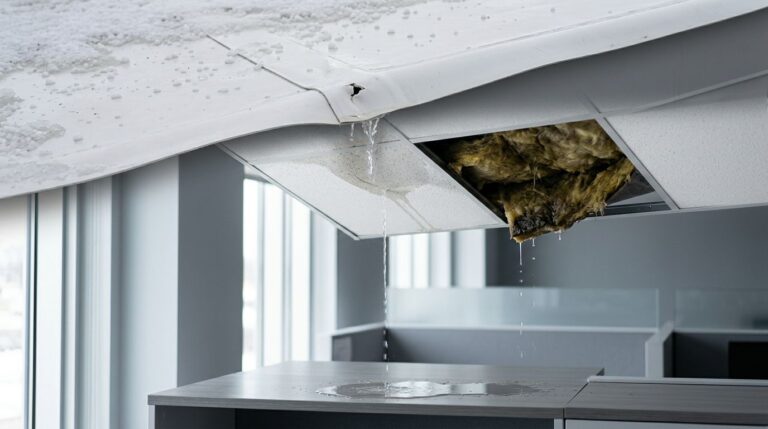
- Check the attic or deck underside. If the underside is accessible, they look for dark wood, rusty nails, wet insulation, mold trails, and daylight at penetrations. Water often follows framing before it finally drops onto ceiling tile.
- Mark the likely uphill search area. Since water moves downhill after entry, the inspection starts above and uphill from the stain. This keeps the search focused and avoids wasting time on dry areas that only sit near the damage.
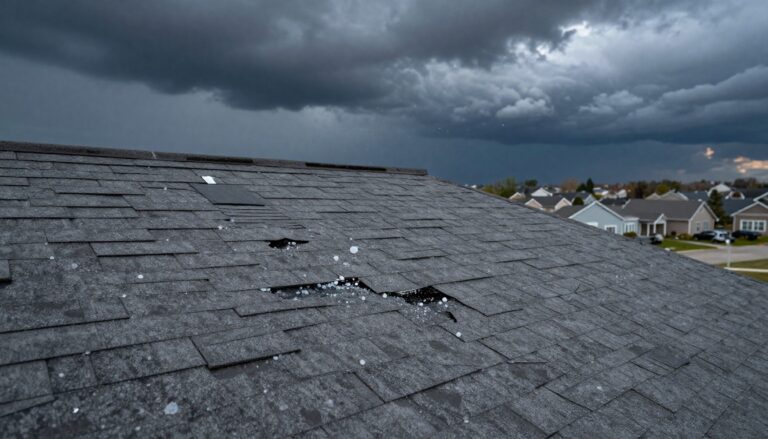
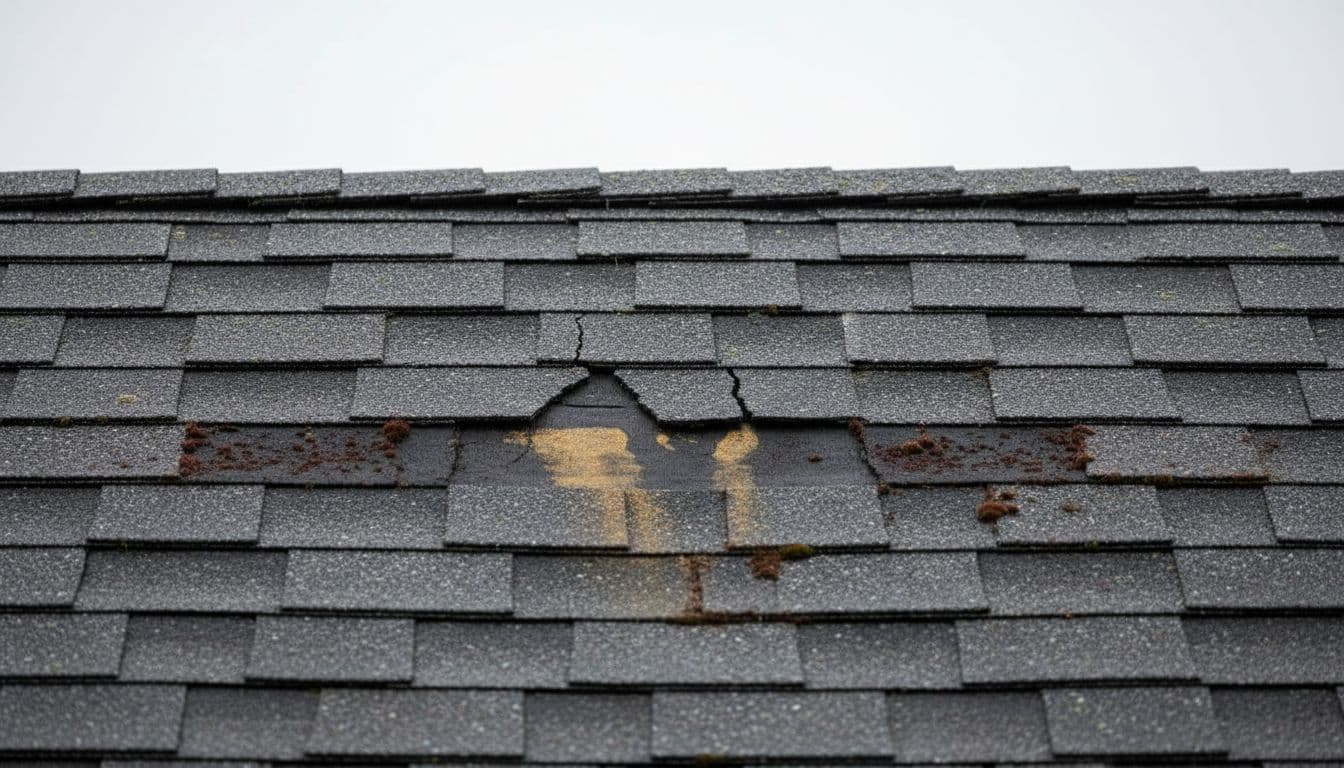
- Inspect shingles for visible failure. Roofers look for missing tabs, lifted edges, cracked shingles, granule loss, and popped nails. Even a small break can act like a loose seam in a raincoat, letting wind-driven water slip underneath.
- Check the roof details before blaming the field shingles. Flashing at walls, chimneys, vents, skylights, and valleys fails more often than the open shingle field. Old sealant, loose metal, and bad overlap joints are common leak triggers.
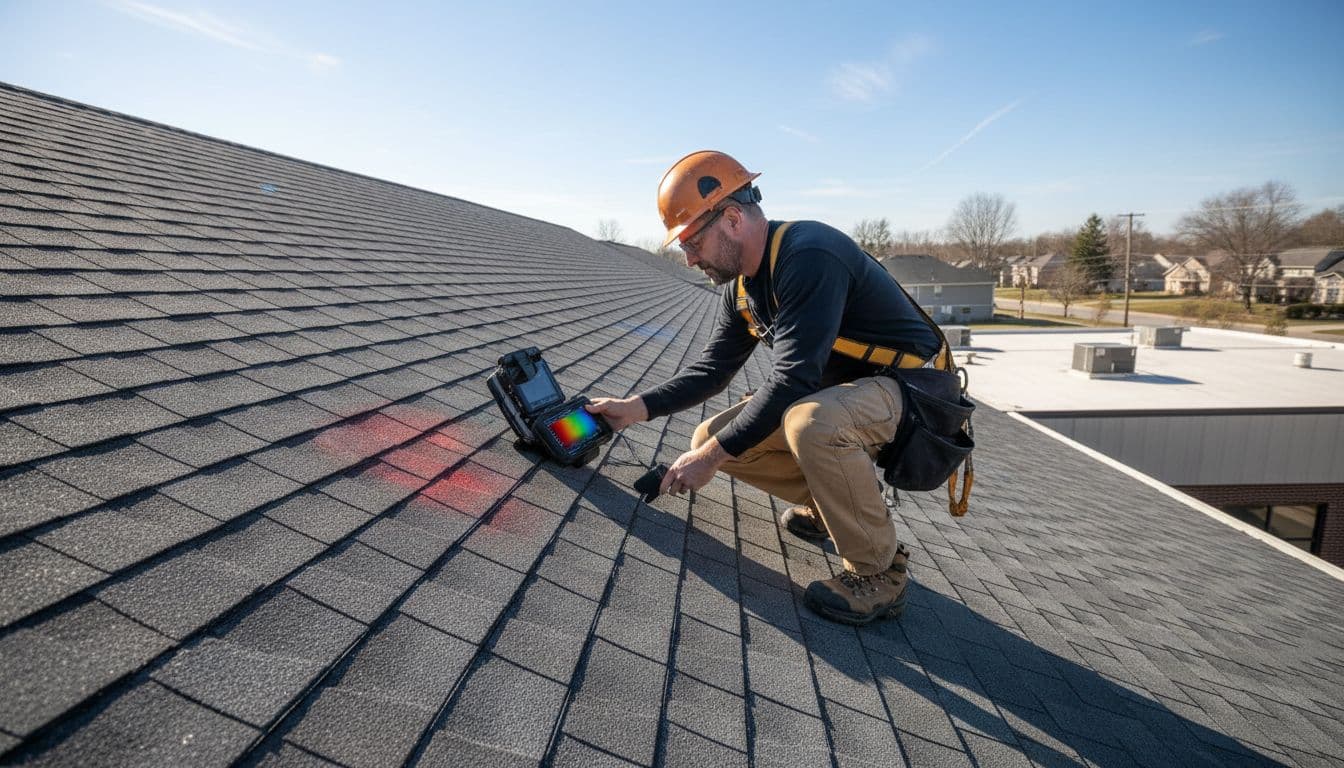
- Use moisture tools to find hidden spread. A moisture meter can confirm damp decking from below or at accessible edges. An infrared camera can help too, because wet areas often hold temperature differently than dry ones. Still, thermal images support the diagnosis, they don’t replace inspection.
- Run a controlled water test if needed. When the source stays unclear, one technician wets small roof sections in sequence while another watches inside. This takes patience. If you soak the whole roof at once, you create noise instead of proof.
- Define the real repair scope. Once the source is confirmed, the roofer checks how far the damage extends. If the wet area is small and the deck is sound, a targeted repair usually works. If multiple slopes leak or the sheathing is soft, the case for commercial roof replacement gets stronger.
- Document the findings and retest after repair. Good leak detection ends with photos, notes, and a repair plan tied to evidence. That record helps owners decide whether the commercial roof needs repair right away or whether it can be folded into a scheduled capital project.
Common questions business owners ask
Can the leak show up far from the damaged shingle?
Yes. Water can travel along underlayment, decking, or rafters before it drops inside. That’s why the wet ceiling tile over one office may have nothing to do with the exact roof spot above that room.
Will thermal imaging always find the leak?
No. Thermal imaging helps reveal moisture patterns, but weather and timing affect results. A roofer still needs visual inspection and, in some cases, a water test to confirm the actual entry point.
When is a repair enough, and when is replacement smarter?
A repair makes sense when damage is isolated and the surrounding roof is still sound. If shingles are brittle, flashing fails in several places, or moisture has spread widely, commercial roof replacement may cost less over time.
What if part of the building has shingles and part has a flat roof?
Then the first job is matching the leak to the correct roof system. A stain near a parapet, drain line, or rooftop unit may point to the low-slope area, not the shingle section.
Why this matters for budgeting
If the wrong roof type gets blamed, the wrong repair gets priced. That can waste time and leave the leak active through the next storm.
What happens if the leak stops during dry weather?
It still needs attention. Intermittent leaks often return with the next hard rain or thaw cycle. Meanwhile, hidden moisture keeps damaging insulation, decking, paint, and interior finishes even when the room looks dry.
What smart owners do next
A roof leak is more like a path than a hole. On shingle systems, the job is to trace that path uphill, prove the source, and fix the weak point that let water in. Speed matters, because small leaks quietly rot decking and disrupt tenants long before they look serious. If you suspect asphalt shingle roof leaks, schedule an inspection while the evidence is still easy to track.
Need a roof inspection in Saint Paul or the Twin Cities? Call Sellers Roofing Company at +1-651-703-2336 or schedule a free estimate. We are a black-owned, NMSDC-certified MBE roofing contractor with 9+ years experience.