Last updated: 2026-08-01 by Ted Sellers, Owner
Storm damage to a roof refers to sudden, weather-related impacts that affect how the roof performs or protects the building. On commercial roofing systems, this can include hail damage (bruising or punctures), lifted seams, torn flashing, wind uplift, debris impact, and new leaks after rainfall. Damage caused by age, lack of maintenance, or normal wear and tear is typically not considered storm damage on its own, especially in insurance evaluations.
When This Applies
This applies to owners and managers of warehouses, offices, retail centers, schools, and multi-tenant buildings. It’s most useful after hail, high wind, heavy rain, ice, or falling branches.
Low-slope systems, such as TPO, EPDM, PVC, modified bitumen, and metal, often hide damage well. From the ground, the roof may look fine while moisture spreads below the surface. Timing matters. If damage appears right after a storm, it is far easier to connect cause and effect. In Minnesota, one thunderstorm can dent edge metal, loosen seams, block drains, and soak insulation in a single afternoon.
When it usually does not apply
Storms don’t get blamed for every roof problem. Long-term ponding, rust, shrinkage, old patch failure, poor installation, and neglected maintenance are usually treated as wear. A storm can still worsen those weak spots, but you need proof that weather caused a new opening or sudden failure.
Edge cases adjusters look at closely
An older roof can still have valid roof storm damage. Fresh hail fractures, torn membrane, or displaced flashing may count. Old staining, widespread aging, and chronic leaks usually do not.
This quick comparison helps sort it out:
| Usually storm damage | Usually not storm damage |
|---|---|
| New punctures, dents, or bruising after a storm | Surface aging or chalking |
| Lifted membrane, loose flashing, blown-off cap | Long-term seam shrinkage |
| Fresh interior leaks tied to one event | Chronic leaks with old stains |
In short, timing and sudden change matter as much as appearance.
What Counts as Roof Storm Damage
The simplest test is cause and timing. If hail, wind, rain, ice, or debris created a new opening, loosened roof parts, or let water into the assembly, that’s storm damage. On commercial roofs, the damage may sit on the membrane, inside the insulation, or around the metal details that keep the system watertight.
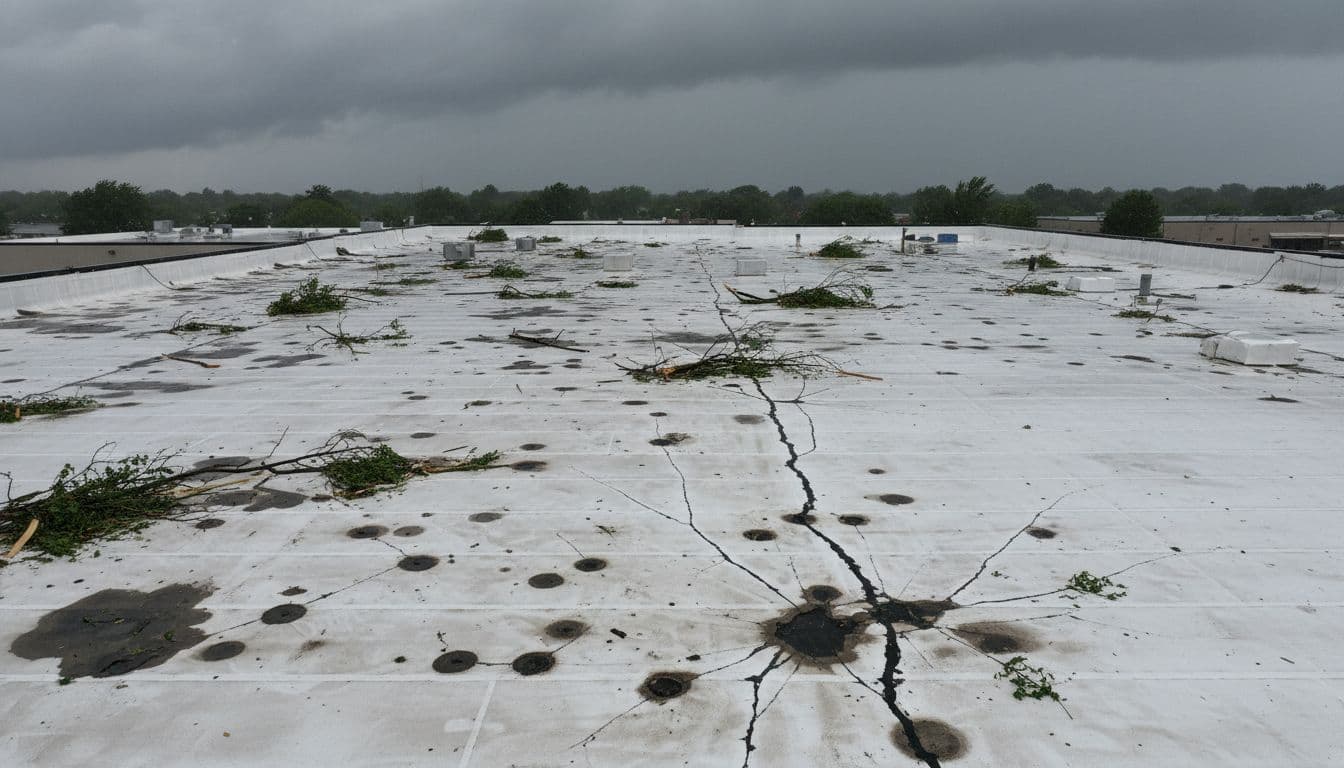
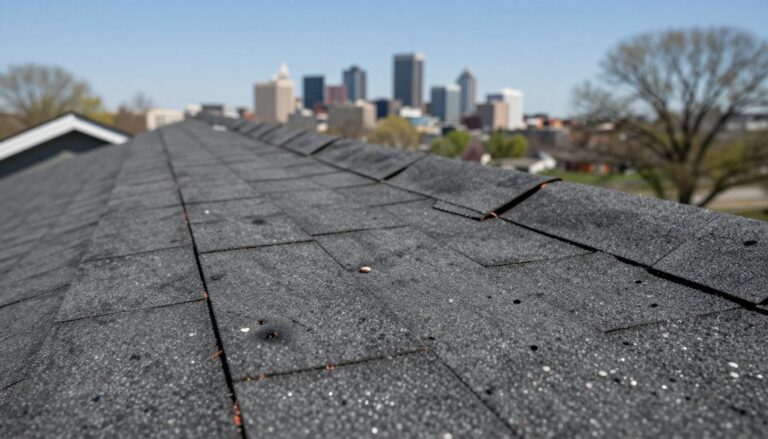
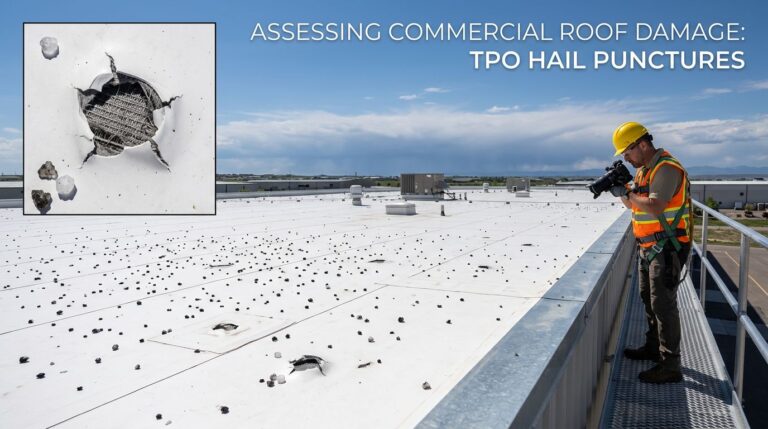
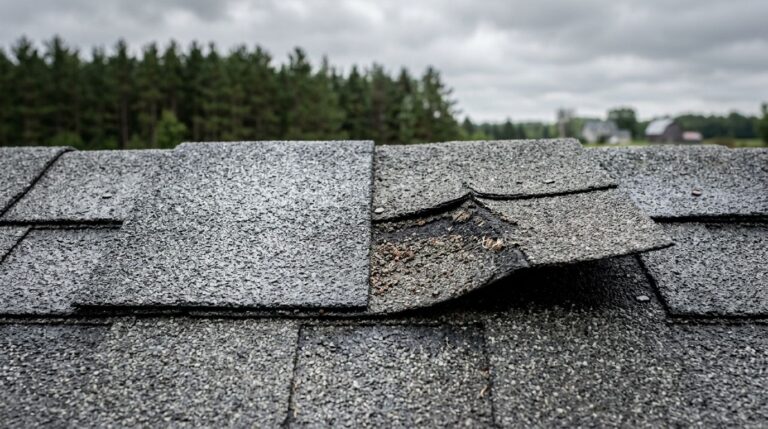
Hail can bruise single-ply membranes, crack coatings, dent metal panels, and crush insulation. Wind can peel back edge metal, pull at seams, dislodge fasteners, and bend coping. Heavy rain then turns those weak spots into leaks. Debris strikes can puncture the roof, crack skylights, or damage rooftop units and their flashing.
Because roof storm damage often hides below the surface, visible leaks tell only part of the story. Water can travel far on low-slope systems, so it’s wise to find hidden roof leaks post-storm before anyone starts patching the wrong spot. For broader weather patterns and warning signs, this storm damage roofing guide offers useful context.
Some issues call for targeted commercial flat roof repair, such as a puncture, split seam, or bent flashing. Still, soaked insulation across large areas, a damaged deck, or repeated failures may point to commercial roof replacement. If fresh impact marks line up with new moisture, the commercial roof needs repair, even when the surface still looks mostly usable.
Signs That Look Minor but Aren’t
Damage that often gets missed
A small scuff is not always cosmetic. On single-ply roofs, hail can fracture the top surface without leaving a clean hole. On metal roofs, a dent near a seam or fastener can open a path for water later. Watch roof curbs, pitch pans, drains, and terminations, because storms often stress those details first. Also check for wet insulation, displaced ballast, and bent edge metal. These are easy to miss during a quick walk-through, yet they often decide whether the fix is simple or much larger.
Step-by-Step
1. Match the damage to the storm event
Save weather alerts, photos, maintenance logs, and staff notes from the day of the storm. That record helps show the damage was sudden, not old. If water is entering the building, move stock and protect equipment right away. Then contact a Saint Paul commercial roofing crew for emergency help.
If water is entering now
Keep people off a wet roof unless they are trained and tied off. Interior containment is safer than a rushed rooftop check.
2. Inspect safe, high-risk areas first
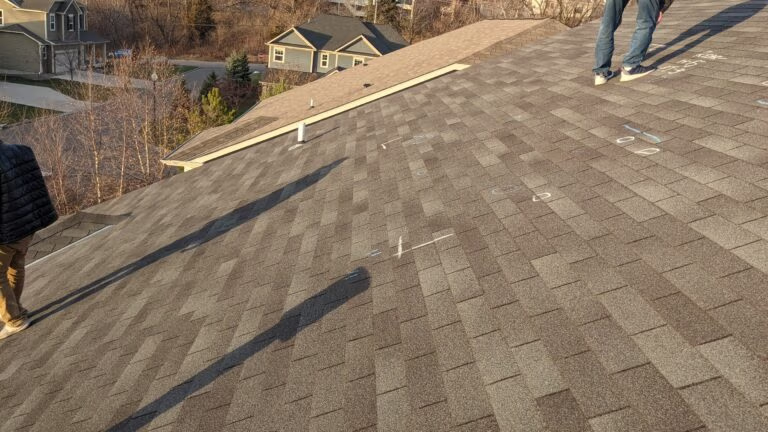
Start from the ground or from secure access points. Check parapet walls, drains, edge metal, rooftop units, skylights, and downspouts. Inside the building, look for ceiling stains, wet insulation, drips, and musty smells. On metal roofs, fresh dents matter. On membrane roofs, watch for punctures, split seams, lifted corners, and displaced flashing.
3. Document what changed
Take wide photos first, then close-ups. Note the date, roof area, and a nearby landmark, such as an HVAC curb or drain. Good records help separate storm damage from old wear. If you want a second reference, this practical roof storm damage guide shows common impact patterns.
4. Get a professional moisture inspection
Commercial roofs hide water better than most owners expect. A proper inspection checks the membrane, flashings, rooftop equipment, insulation, and drainage. In some cases, infrared scanning or test cuts may be needed to measure the full spread of moisture.
5. Choose repair, restoration, or replacement
Pick the smallest fix that truly solves the problem. An isolated puncture may need only repair. A sound roof with minor weathering may work with restoration. However, broad wet insulation, multiple failed sections, or structural damage usually push the project toward replacement.
Roof Storm Damage FAQ
Can a commercial roof have storm damage without an active leak?
Yes. Hail bruises, lifted seams, and bent flashing may not leak on day one. They often fail later, after the next rain or freeze-thaw cycle.
Does an old roof still qualify for storm damage?
It can. Age doesn’t erase storm damage, but it does make proof more important. New tears, fresh dents, and sudden moisture readings matter most.
Does ponding water after a storm count?
Sometimes. If debris from the storm blocked drains or damaged slope components, it may count. If the roof has ponded for years, that points to maintenance or design issues instead.
How soon should I schedule an inspection?
As soon as the roof is safe to access, ideally within 24 to 48 hours. Fast inspections catch hidden moisture before it spreads through insulation and decking.
When is replacement better than repair?
Replacement makes more sense when damage is wide, the deck is affected, or repairs would only buy a short delay. Repeated patching often costs more over time.
The Bottom Line
A roof is storm-damaged when weather causes new physical harm or hidden moisture intrusion, not just old age. For commercial buildings, the biggest clues are sudden change after a storm, impact marks, lifted seams, damaged flashing, and fresh leaks. Act quickly, document everything, and get the roof tested before a small problem becomes a major expense.
Need a roof inspection in Saint Paul or the Twin Cities? Call Sellers Roofing Company at +1-651-703-2336 or schedule a free estimate. We are a black-owned, NMSDC-certified MBE roofing contractor with 9+ years experience.