Last updated: 2026-10-23 by Ted Sellers, Owner
A roof leak can threaten commercial inventory before the visible ceiling stain tells the full story. This guide helps Minnesota property managers protect stock, record the loss, and trace the roof issue without making the damage worse. For assessment and repair planning, review our commercial roof repair service.
What Should Businesses Do After a Minnesota Roof Leak?
Protect commercial inventory after a Minnesota roof leak by moving exposed items, documenting the roof and interior conditions, limiting active water safely, and arranging a roof-specific inspection. Keep receipts and a written timeline so the building damage, inventory loss, and repair scope can be evaluated clearly.
Protect stock first: close access below the drip, move goods to a dry zone, lift remaining pallets, and isolate electrical hazards. A commercial roof leak Minnesota businesses face can quickly spoil inventory.
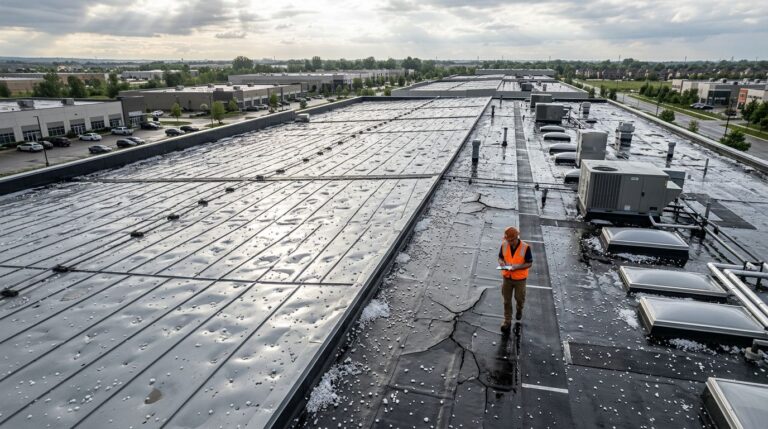
Photograph losses, authorize temporary dry-in work, and have a roofer trace the entry point before permanent repairs. That limits spoilage, supports a roof insurance claim, and avoids an operational shutdown.
When This Applies
Active water entry above stored goods
Use this response for warehouses, offices, retail spaces, apartments, schools, and mixed-use buildings with inventory below a leaking roof. It applies after wind-driven rain, snowmelt, hail, plumbing overflow near the roof deck, or a storm-damaged roof opening.
Minnesota freeze-thaw cycles can turn a small seam split into a major interior loss. Water may move beneath insulation or along deck flutes before it reaches a ceiling tile. If the water stops moving because it froze solid, see what a St. Paul business should do when a roof leak freezes overnight.
When the leak is not a roof problem
A roof response does not replace plumbing, fire-suppression, or HVAC repair. If water comes from a pipe or sprinkler line, call the proper trade while protecting inventory the same way.
Do not send maintenance staff onto a snowy, icy, or electrically unsafe roof. Keep people out of any area where ceiling tiles sag, deck materials look unstable, or water is near energized equipment.
Step-by-Step: Commercial Roof Leak Minnesota Emergency Response
1. Stop exposure and make the area safe
Block off the leak zone. Shut down equipment beneath the drip and isolate electrical circuits only if a qualified person can do it safely. Place containers under active drips, but don’t stand beneath a bulging ceiling.
If water is entering quickly, Call 651-703-2336 for 24/7 Emergency Roofing. An emergency crew can stabilize the roof after conditions are safe without exposing employees to a slick membrane or high winds.
2. Move and elevate inventory
Relocate dry inventory first. Move pallets to a separate dry bay, at least away from the suspected water path. Elevate remaining goods on clean pallets, racks, or dunnage.
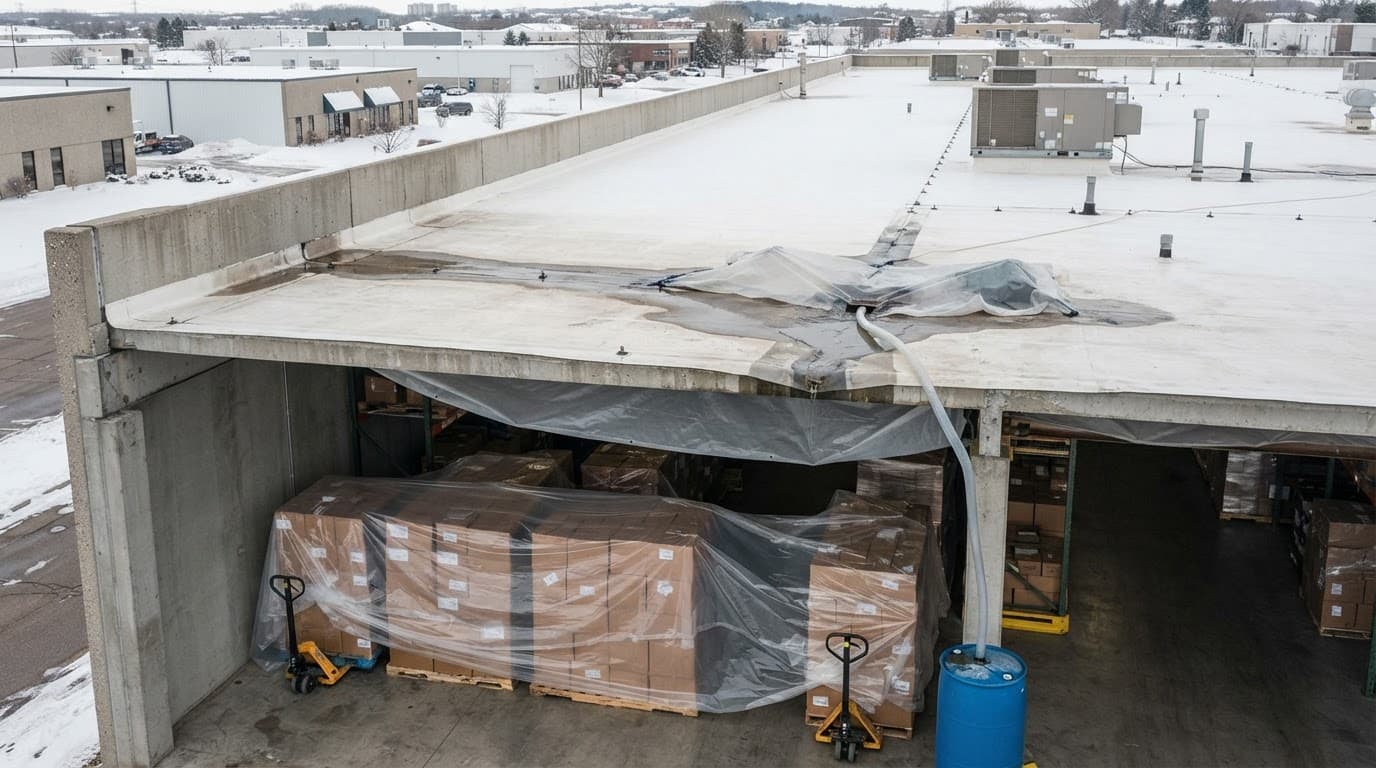
Cover only stock that cannot move. Use loose plastic sheeting above the goods so air can still circulate. Plastic pressed against wet cardboard traps moisture and makes the damage worse.
3. Remove water and control humidity
Use wet vacuums, air movers, and dehumidifiers where appropriate. Separate wet packaging from dry stock, then record product counts, lot numbers, and condition before disposal.
Keep HVAC returns from spreading damp air or odors into unaffected storage areas. If food, medicine, electronics, paper products, or regulated goods got wet, follow the product manufacturer’s handling rules before releasing them back into inventory.
Protect the Inventory Before It Becomes a Total Loss
Sort inventory by exposure and value
Start with items that are both water-sensitive and high-value. Electronics, paper records, pharmaceuticals, food packaging, textiles, and boxed parts can fail even when exterior packaging looks mostly dry.
Create three zones: dry and cleared, questionable, and wet. That keeps workers from moving contaminated or damaged goods through clean storage. Take wide photos of the room, then close photos of each affected pallet, label, rack, and ceiling area.
Dry the building, not only the merchandise
Wet inventory is only part of the loss. Ceiling tile, insulation, wallboard, wood blocking, and carpet can retain water after the visible drip stops. EPA flood cleanup advice recommends drying wet areas within 48 hours to reduce mold risk.
Don’t discard damaged inventory or removed roof pieces before they are photographed. A clean evidence trail matters if the loss later becomes an insurance dispute.
A stopped drip does not prove the roof assembly is dry. Water can remain above the ceiling and below the membrane.
Find the Real Entry Point, Not the Ceiling Stain
Water often travels far from the opening
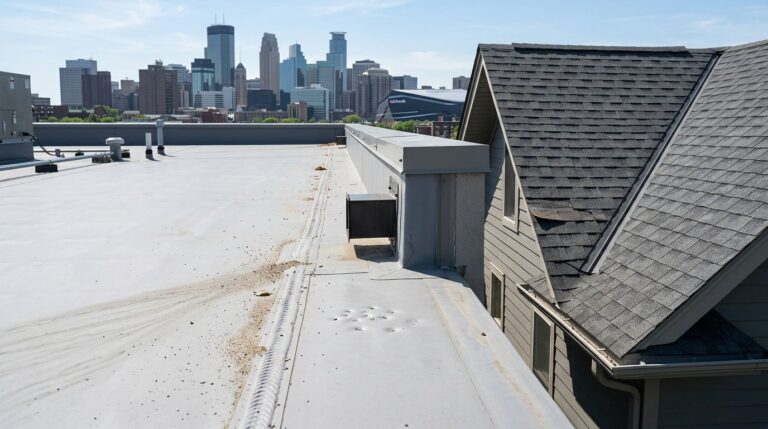
For a commercial roof leak Minnesota property owners document, the ceiling stain is usually the exit point, not the source. Water can run along membrane laps, insulation boards, steel deck flutes, framing, and utility penetrations.
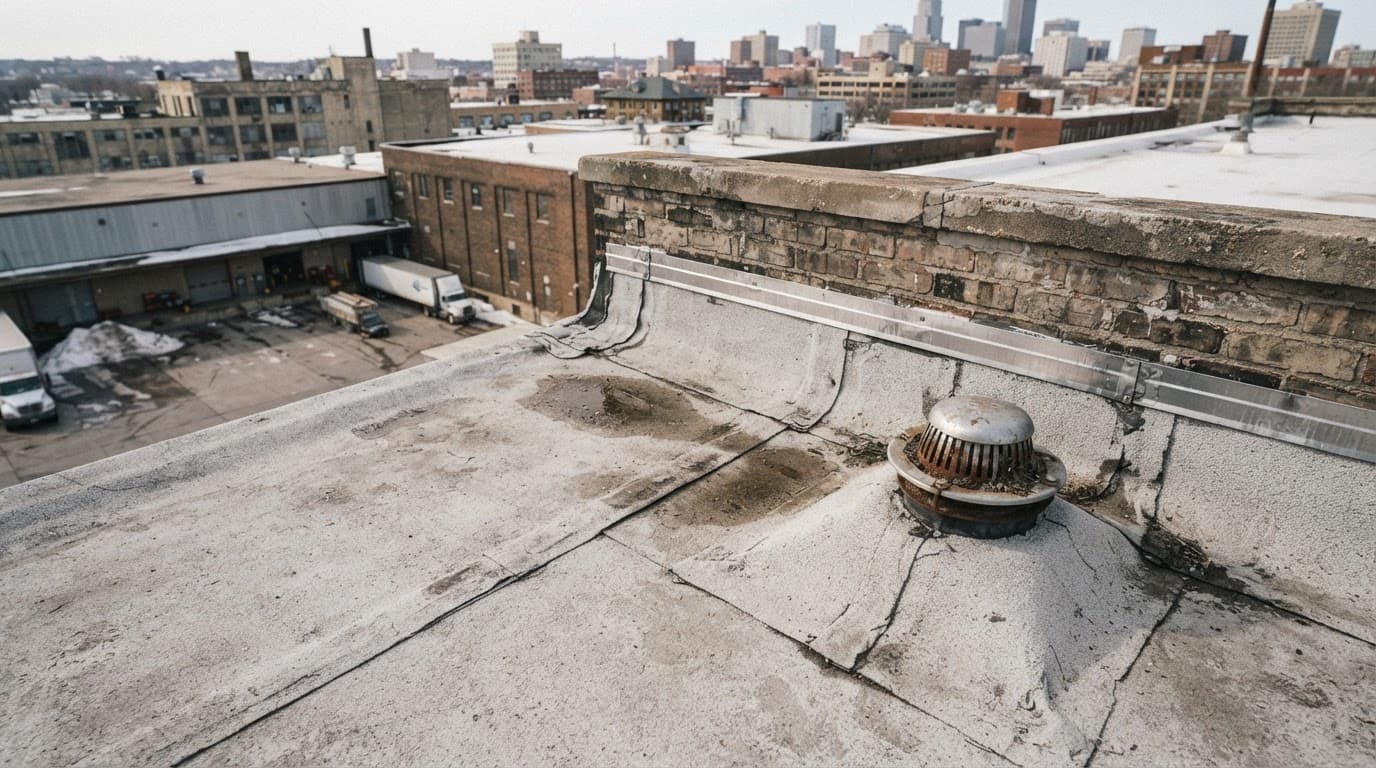
A drip in a Saint Paul office may begin uphill at a roof drain, parapet wall, rooftop unit, skylight curb, or open seam. Patching directly above the stain can leave the actual breach open.
Match the inspection to the roof system
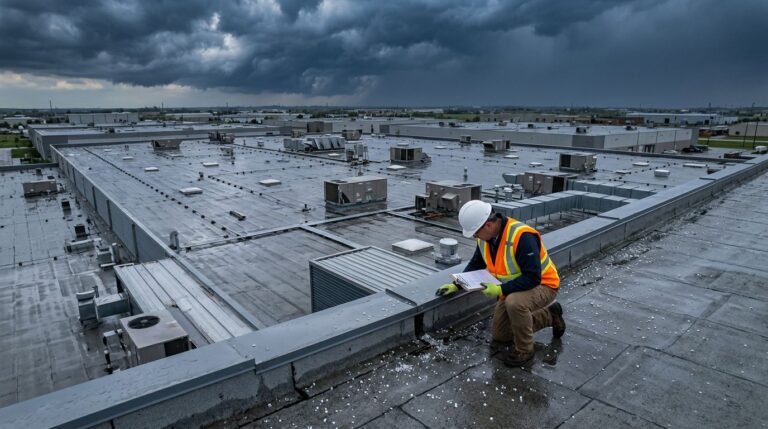
A commercial roof inspection should identify the roof type, opening location, moisture spread, flashing condition, and likely cause. On TPO roofing and EPDM, crews look for open seams, punctures, perimeter lift, and failed terminations.
Modified bitumen and BUR systems need checks for torn plies, failed laps, blisters, exposed asphalt, and hidden wet insulation. Commercial roof leak detection may include infrared review, moisture mapping, electronic testing, or limited test cuts.
If the roof can be accessed safely, Get a Free Commercial Roof Inspection before approving a broad permanent patch or tear-off.
Build a File That Supports the Insurance Claim
Record what happened in order
Open the claim promptly if a covered event may have created the roof opening. State the known facts without guessing at the full cause. “Water entered after wind lifted the north parapet flashing” is stronger than a broad damage statement.
Save dated photos, weather details, contractor reports, moisture readings, invoices, labor tickets, inventory records, and temporary mitigation receipts. The inventory and records protection fact sheet is also useful for building a disaster file and protecting key business documents.
Keep emergency work narrow and documented
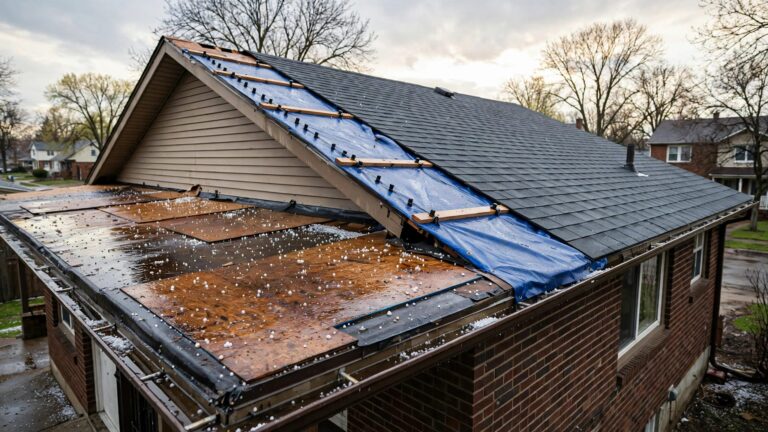
Temporary tarps, drain clearing, wet-vac work, and emergency seam sealing can limit damage. They also show that the owner acted to prevent the loss from growing.
Avoid large permanent repairs before the cause and extent are recorded. Early tear-off can remove proof that distinguishes fresh hail damage on a roof from old wear, ponding, or a maintenance issue. Keep damaged membrane samples, ceiling materials, and flashing until they are photographed.
Decide Whether Repair, Restoration, or Replacement Fits
Repair works when the damage is contained
Commercial roof repair may be enough when the opening is limited, adjacent insulation is dry, and the surrounding membrane is still well-bonded. A targeted repair can replace damaged flashing, restore a seam, or patch a puncture with limited disruption.
Commercial roof restoration and commercial roof coatings can extend the life of a dry, sound roof system. Coatings do not fix saturated insulation, active seam failure, a damaged deck, or widespread attachment problems.
Replacement addresses widespread hidden moisture
Commercial roof replacement becomes the honest scope when moisture mapping shows broad saturation, seams fail across connected areas, or repeated patches have not stopped leaks. A commercial flat roof with wet insulation cannot be made sound by coating over the problem.
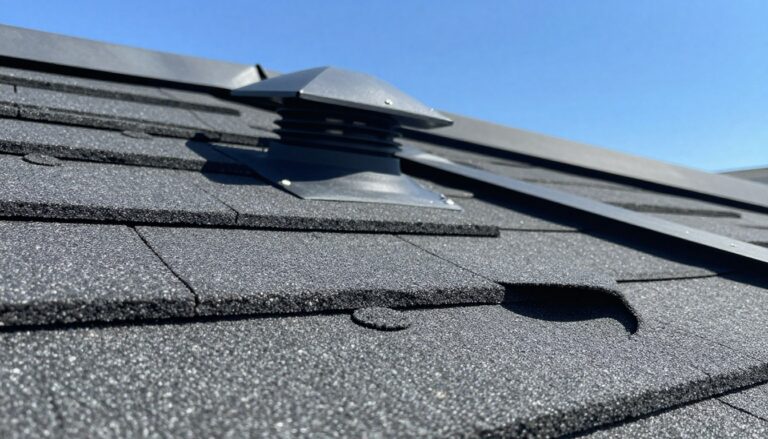
Steep-slope sections need a different review. Asphalt shingles can crease or lose seal strips after wind. Metal roofing may have disturbed seams, clips, flashing, or protective coatings. On a related home loss, isolated damage may need residential roof repair, while broad failure can support residential roof replacement. Get a Free Residential Roof Estimate for a written scope.
Reduce the Chance of the Next Inventory Loss
Treat winter drainage as inventory protection
Clear drains, scuppers, and downspouts before heavy snowmelt. Plan ice dam removal before meltwater backs up at a low edge, parapet, or roof-to-wall transition. Do not chop at membranes or flashings with sharp tools.
Track roof leaks by date, weather, location, and repair history. A simple log shows whether a problem is isolated or repeating. FEMA’s emergency planning resources can help property teams build a contact list, response plan, and off-site records process.
Use a documented local roofing team
Saint Paul roofing, Minneapolis roofing, and wider Twin Cities roofing projects need crews that understand snow loads, wind uplift, drainage, and insurer documentation. Ask whether the contractor is GAF certified, carries the right license, and can document moisture findings in writing.
Sellers Roofing Company has completed 1,100+ roofs since 2017, including 300 commercial roofs. Its union-built roofing workforce includes IUPAT Local 96 roofers, along with Carpenters Local 322 and Laborers Local 563. The company holds MN Builder Contractor License 803862 and operates from 801 Transfer Road in Saint Paul.
Protect the Goods, Then Prove the Roof Scope
Keep the response controlled
The first priority is dry, safe inventory. The second is finding the actual roof opening before water spreads through insulation, ceiling systems, or stored materials.
Temporary dry-in work buys time. A written roof finding determines whether the building needs a focused repair, a larger replacement scope, or a recovery plan for a sound roof system.
Frequently Asked Questions
Can we keep operating while water is entering?
Only if the affected area can be isolated and operations can continue safely. Keep staff away from electrical hazards, sagging ceilings, wet floors, and damaged inventory. Move essential work to a dry section of the building.
Can a ceiling stain identify the roof opening?
No. Water can travel several feet across a commercial roof assembly before it reaches the ceiling. The roof needs leak tracing, not a patch placed directly over the stain.
Will a temporary tarp hurt our insurance claim?
No, reasonable temporary protection usually helps because it limits further loss. Keep the tarp temporary, photograph the damage first when safe, and save receipts for materials and emergency labor.
Does insurance cover damaged commercial inventory?
Coverage depends on the policy, cause of loss, exclusions, deductibles, and whether the inventory belongs to the tenant or building owner. Building damage and business personal property often fall under separate coverage.
Can roof coatings stop an active commercial leak?
Not by themselves. Commercial roof coatings work on a dry, stable roof assembly. Active leaks, wet insulation, open seams, and damaged flashing need repair before a coating system is considered.
For the larger documentation and claim process, read our Minnesota roof storm damage and insurance claims guide.
Need a roof inspection in Saint Paul or the Twin Cities? Call Sellers Roofing Company at +1-651-703-2336 or schedule a free estimate. We are a black-owned, NMSDC-certified MBE roofing contractor with 9+ years experience.