Last updated: 2026-08-01 by Ted Sellers, Owner
Yes. Wind can loosen, bend, lift, or tear off coping caps on commercial flat roofs, especially at parapet edges and corners. Once the metal edge opens, water can move behind the roof system, soak insulation, stain walls, and raise blow-off risk in the next storm. Treat wind-damaged coping caps as a functional roof problem, not a cosmetic one.
When This Applies
Which buildings and roof conditions are most at risk
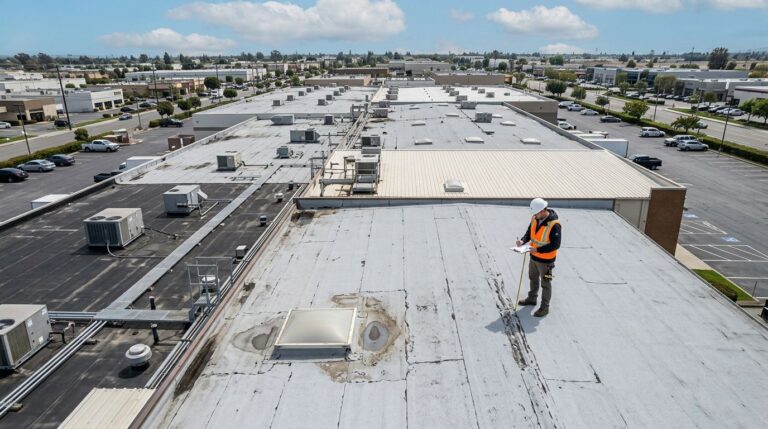
This applies to commercial buildings with flat or low-slope roofs that end at a parapet wall. Warehouses, retail centers, offices, schools, and multi-tenant buildings often have metal coping at the roof edge. That metal covers the top of the parapet and helps keep water out of the wall assembly.
Wind damage is more likely after strong gusts, storms, or repeated freeze-thaw cycles. Long, exposed roof edges take the hardest hits. Corners also fail first because wind pressure is higher there. Older caps, loose joints, rusted fasteners, and poor attachment make the problem worse.
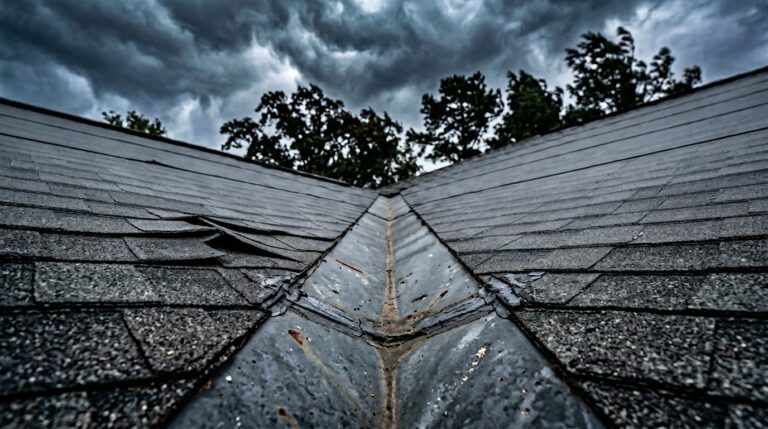
A damaged coping cap may look minor from the ground. Up close, the signs are different. You might see lifted metal, open joints, missing splice plates, bent corners, exposed cleats, or gaps where water can slip behind the membrane edge.
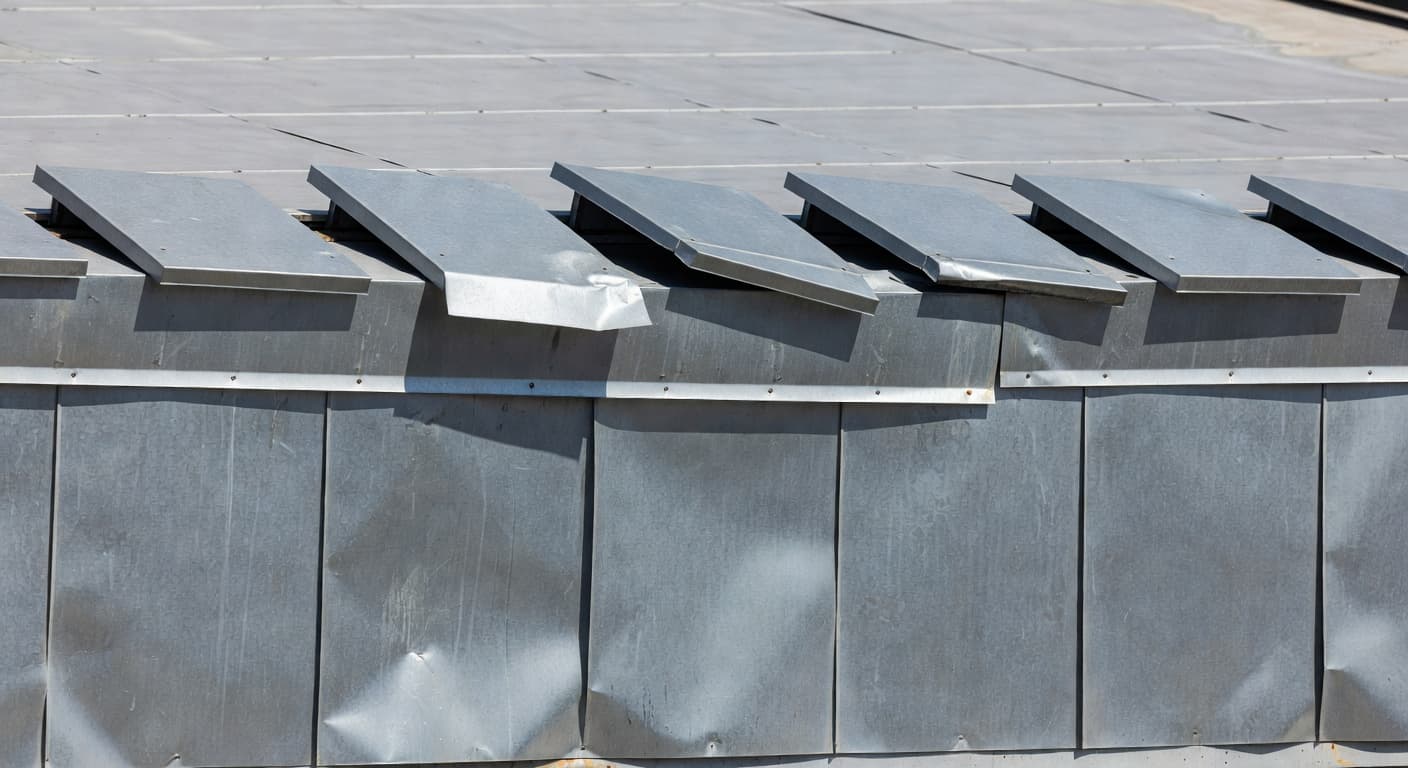
Loose coping metal can turn one windy day into a roof leak, a wall leak, or a full edge failure.
If water stains appear far from the parapet, the path may not be obvious. On low-slope systems, water often travels before it shows inside. In that case, commercial roof leak detection services can help trace the source before repairs begin.
When it doesn’t, and where the gray area starts
Not every bad coping cap was damaged by wind. Sometimes the metal was already failing from age, bad fastening, thermal movement, corrosion, or earlier patch work. A loose joint after a storm does not always prove the storm caused it. Still, weak older work does not erase the chance of new wind damage. The real issue is cause.
That gray area matters most in insurance claims. A carrier may call the condition maintenance-related if the edge metal was loose before the storm. Yet prior repairs alone do not settle the question. If wind opened a sound section in a different area, that part may still qualify as fresh damage. Good photos, dates, and an independent inspection help separate old wear from new failure.
The scope also changes fast. A single lifted corner may need only commercial flat roof repair. If the edge metal failed across long runs, the termination came loose, and moisture spread into the insulation, the job may grow well past a simple patch. In some cases, widespread wet insulation and repeated edge failures support commercial roof replacement instead.
If the edge has opened and rain is getting in, the commercial roof needs repair right away. What should wait is broad permanent work until the condition is documented.
Step-by-Step
How to respond after wind loosens coping caps
- Secure the area first.
Start at ground level. If metal is flapping, hanging loose, or missing, keep people away from the drop zone. Loose coping can become airborne in the next gust. Then restrict roof access if the surface is wet, slippery, or near damaged edge metal. Maintenance staff should not improvise around unstable parapets or live electrical equipment. - Document the damage before anyone changes it.
Take wide photos of each roof edge, then close shots of lifted caps, open joints, bent corners, missing fasteners, and exposed flashing. Add interior photos if water has reached ceiling tile, walls, stock, or equipment. Save the date, recent weather records, and any detached metal pieces. This first record often matters more than later opinions because it shows the roof before temporary work hides the condition. - Stop additional damage, but keep the work temporary.
Call the insurer promptly and ask for written confirmation that emergency mitigation is allowed while inspection is pending. That usually means temporary dry-in work, not full restoration. A roofer may secure loose sections, add short-term sealant, protect interiors, or place a temporary cover where needed. Those steps usually support a claim because they show you acted to limit loss. Large tear-off work before inspection can weaken the file. - Get a qualified roof inspection of the full edge assembly.
Ask for more than a quick look at the cap itself. The inspection should check the coping, cleats, fasteners, splice joints, membrane termination, wall flashing, edge wood or metal, and nearby insulation. Water entering at the parapet can travel into areas that look dry at first. A team that handles professional commercial roofing services in St. Paul can usually tie the edge failure to the larger roof condition, which helps when scope decisions get disputed. - Separate a repairable edge problem from a larger roof failure.
A small, recent failure may stay at the perimeter. In that case, the fix might be re-securing the cleat, replacing damaged coping sections, restoring membrane attachment, and drying a limited wet area. That is a repair job. The answer changes if the roof team finds wet insulation along long wall lines, repeated edge movement, failed seams near the perimeter, or damage at multiple elevations. Then patching one metal section may solve nothing. - Review the claim scope line by line if insurance is involved.
Don’t compare only the bottom number. Match lengths of coping, gauge and profile of metal, fasteners, membrane tie-in, insulation replacement, flashing work, tear-off, permits, and disposal. If the first scope allows only a surface fix but the roof crew later finds wet materials or code-driven edge upgrades, ask for a supplement with photos, measurements, and revised notes. Partial approval is better than accepting a full denial when only part of the edge was old damage. - Approve permanent work only after cause and scope are clear.
Once the evidence is in place, decide whether the roof needs localized repair, section replacement, or a full reroof. That order matters. If you sign a large contract before the inspection and tear into broad areas, it gets harder to prove what the storm did. A clean sequence, notice, mitigation, inspection, scope review, then permanent work, protects both the building and the budget.
Conclusion
What matters most
Wind can damage coping caps on commercial flat roofs, and the harm often goes deeper than the metal you can see. Once the edge opens, water can move into walls, insulation, and deck areas that stay hidden for days.
The strongest response is fast documentation and temporary protection. Then get a real inspection before the roof edge is rebuilt.
For most owners, the key decision is simple: determine whether the problem is a small edge repair or evidence of a larger roof failure. That distinction drives cost, claim scope, and the right long-term fix.
FAQ
Can coping caps be wind-damaged even if they still look attached?
Yes. A coping cap can stay in place and still fail. Fasteners may loosen, joints may open, and cleats may shift without the metal fully blowing off.
What hidden signs matter most?
Look for slight lift at corners, split sealant lines, rattling metal in wind, and fresh water marks below the parapet. Those clues often show up before a full detachment.
Will insurance pay for wind-damaged coping caps?
Sometimes. Coverage usually depends on whether the damage came from a covered wind event and whether the photos and inspection support that cause. Age or prior repairs do not create an automatic denial, but old wear can reduce or limit payment if it caused the failure.
Can you repair loose coping caps before the adjuster arrives?
You can usually do temporary damage-control work. Securing loose sections, stopping active leaks, and protecting the interior are often reasonable. Full restoration should usually wait until the carrier inspects, unless delay would create more damage or a safety hazard.
What if the adjuster says the problem is maintenance, not wind?
Ask for the reason in writing. Then compare that explanation to your roofer’s photos, measurements, moisture findings, and storm timing. If old defects exist in one area but fresh wind damage appears elsewhere, ask for partial approval rather than accepting a full denial.
When does coping cap damage point to a bigger roof problem?
It points to a larger issue when moisture has spread beyond the parapet, membrane edges have pulled loose, or repeated leaks show up after each storm. The same is true when the edge metal fails across long sections or at several elevations. In those cases, the coping cap is often the first visible sign, not the whole problem.
Need a roof inspection in Saint Paul or the Twin Cities? Call Sellers Roofing Company at +1-651-703-2336 or schedule a free estimate. We are a black-owned, NMSDC-certified MBE roofing contractor with 9+ years experience.