Last updated: 2026-08-01 by Ted Sellers, Owner
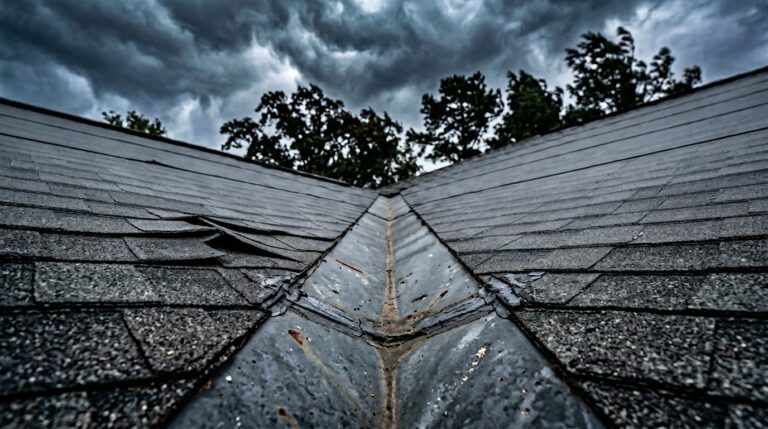
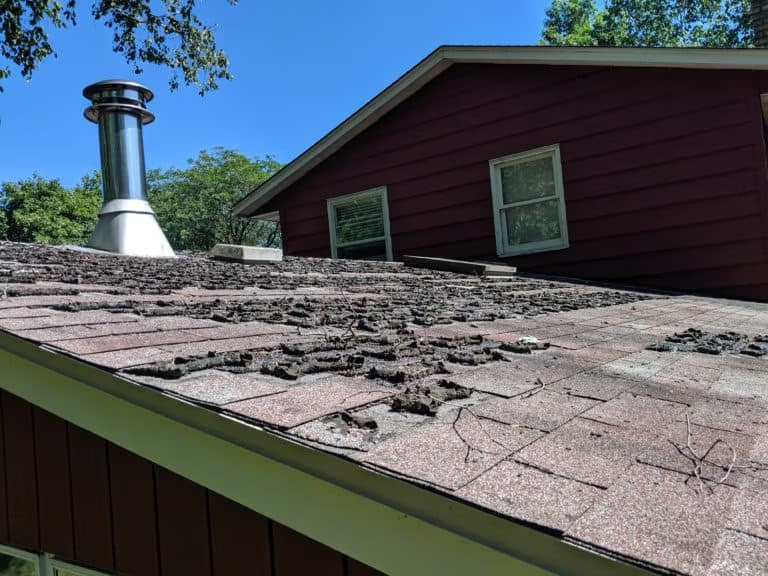
Strong gusts can create wind roof leaks on commercial buildings by lifting membrane edges, opening seams, loosening flashing, and pushing rain into gaps that stay dry in calm weather. In many cases, wind doesn’t create a brand-new defect, it turns a small weak spot into an active leak that spreads fast. On a commercial roof, the leak you see inside may be far from the entry point. That’s why a drip near a wall or ceiling tile often traces back to a roof edge, curb, seam, or metal flashing disturbed by wind.
When This Applies
Wind turns small roof flaws into open leak paths
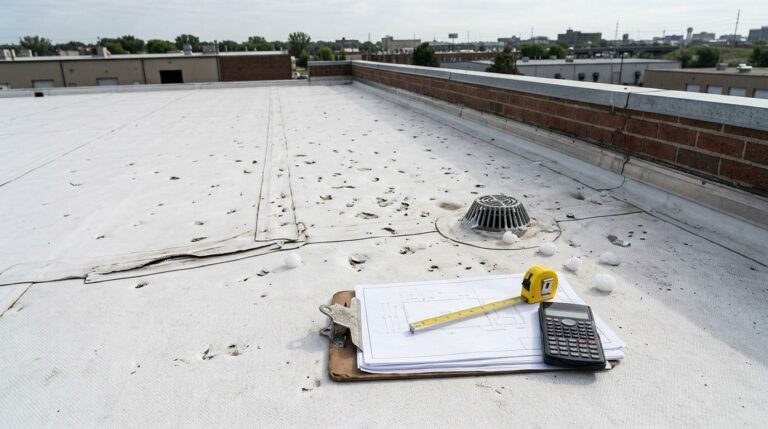
This applies to most commercial properties with flat or low-slope roofs, especially TPO, EPDM, PVC, modified bitumen, and older metal systems. Gusts create uplift pressure. In simple terms, the wind tries to peel the roof back, starting at corners, edges, and places where parts meet.
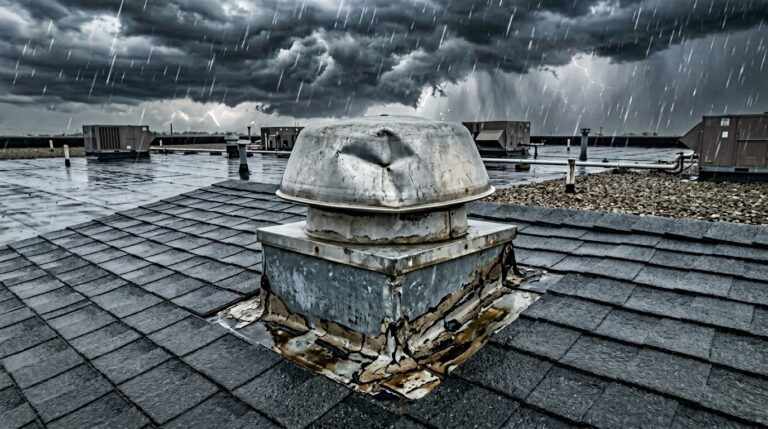
If the membrane has a weak seam, the edge metal is loose, or the flashing has aged, wind can widen that opening. Then rain gets driven sideways into it. That’s why leaks sometimes appear only during storms with a strong crosswind. Articles on wind-driven rain leaks and high-wind roof failure describe the same pattern.
Roof types most likely to leak in gusts
Flat roofs are common trouble spots because water can travel before it shows inside. Metal roofs can leak too, usually at fasteners, laps, or flashing. Older roofs face higher risk because sealants dry out, attachment points weaken, and past repairs may fail under pressure.
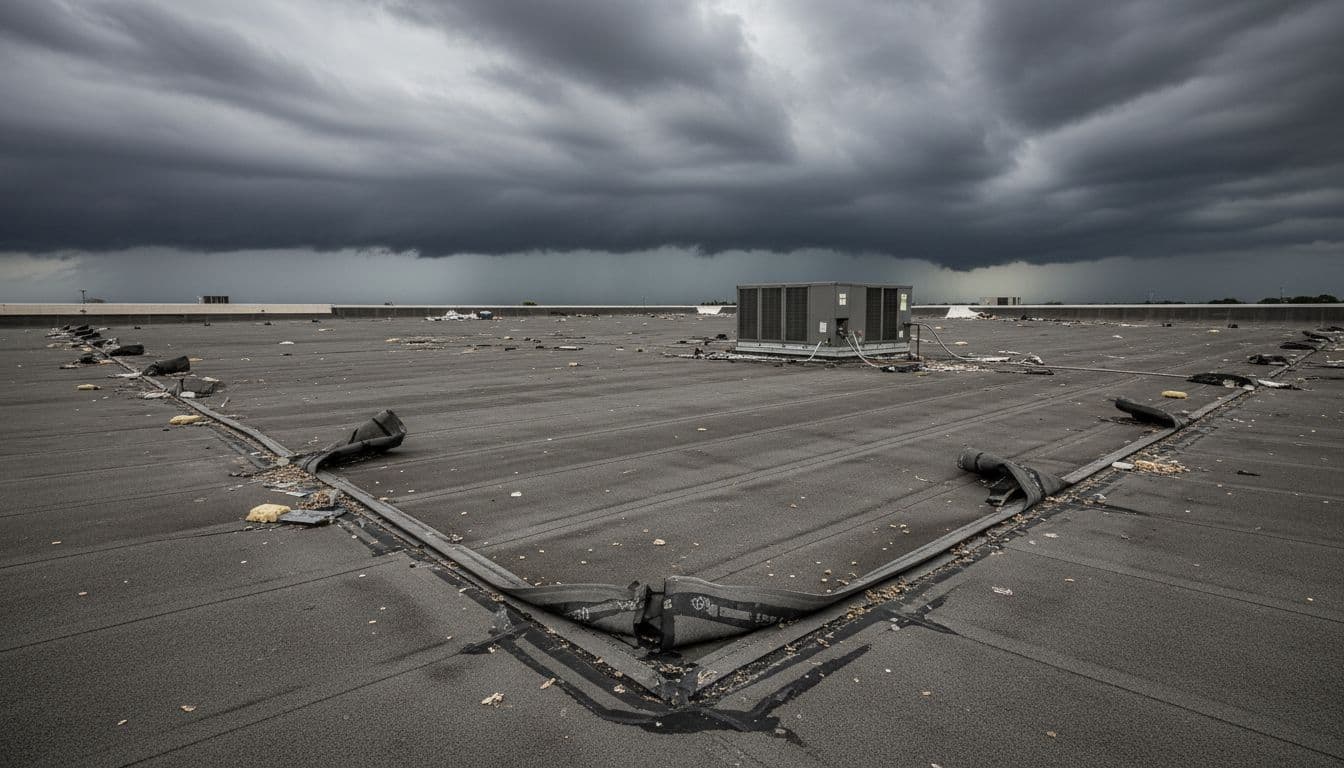
If water shows up only when rain blows sideways, the opening is often at an edge, seam, wall tie-in, or penetration.
Cases where the gusts are only part of the story
Wind isn’t always the root cause. Sometimes the roof already had ponding water, failed drains, shrinkage, foot-traffic damage, or a hidden puncture. Then the gusts simply exposed it. Condensation from HVAC equipment can also mimic a leak.
That matters because the fix changes with the cause. A single lifted seam may need targeted repair. Widespread wet insulation may point to larger failure. If you’re unsure where the water starts, professional commercial roof leak detection in Saint Paul can save time and prevent patching the wrong area.
Step-by-Step
Match the leak to the weather
Check when the leak appears. If it happens only during high gusts or wind-driven rain, wind is likely involved. Compare the leak timing with storm direction, not just rainfall amount. A roof that stays dry in straight rain but leaks in angled rain usually has an exposed opening.
Inspect the roof’s weak points first
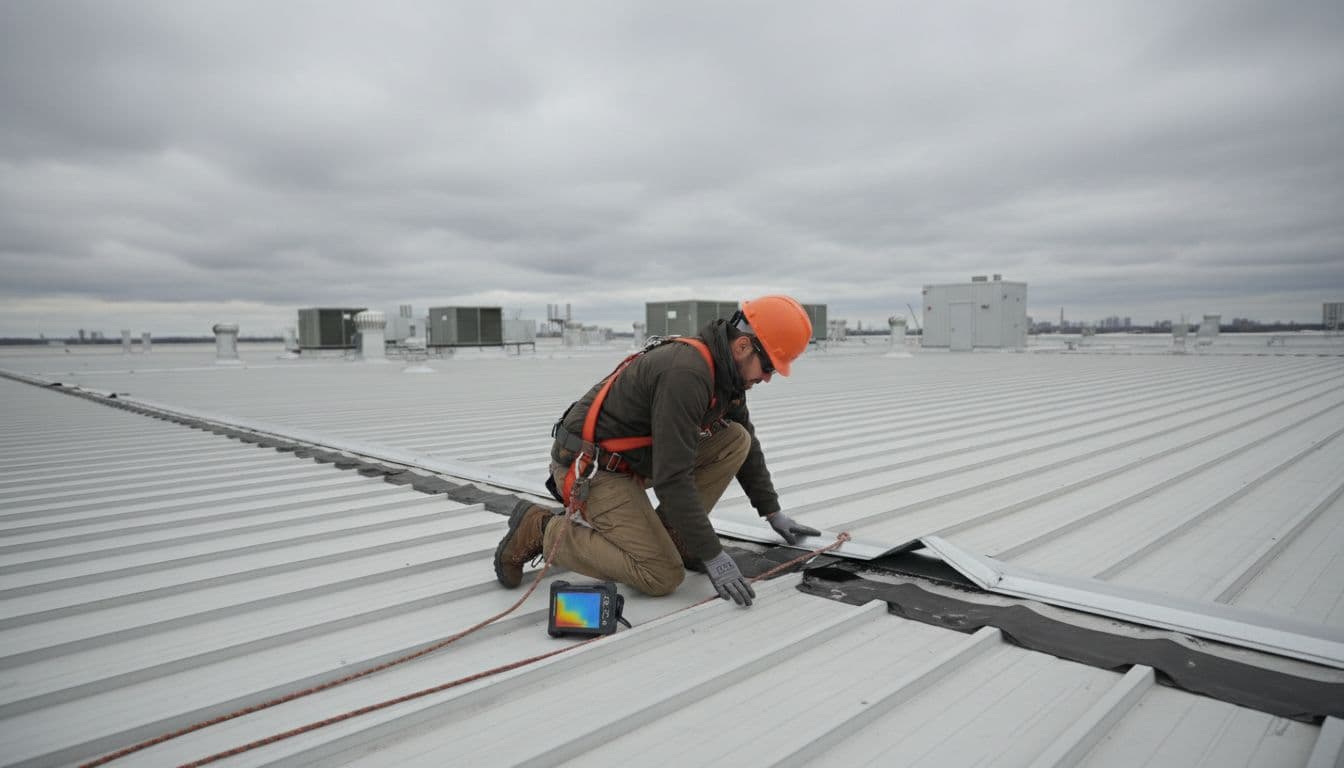
Start with corners, perimeter edges, parapet walls, roof-to-wall transitions, expansion joints, drains, and rooftop units. On membrane roofs, look for curled edges, open seams, and loose termination bars. On metal roofs, check flashing, laps, and backed-out fasteners. These are the spots strong gusts attack first.
3. Protect the building and document everything
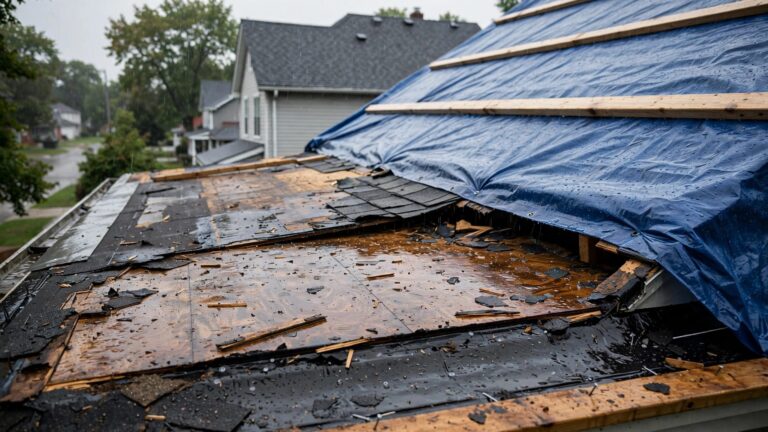
Move inventory if water is near stock, electronics, or tenant space. Take photos of stains, drips, wet insulation, and any lifted roof materials. Good records help with repair planning and can support an insurance claim if wind damage is covered.
4. Decide whether repair is enough
If damage is isolated, commercial flat roof repair may be the right move. Examples include one failed seam, one puncture, or a loose flashing detail. However, if moisture has spread under large sections, the membrane keeps lifting, or the roof is near the end of its service life, a patch may only buy a little time.
5.When replacement makes more sense
If testing finds broad saturation, repeated leaks, or major attachment failure, commercial roof replacement often costs less over time than repeated service calls. In other words, if a leak keeps returning after storms, the commercial roof needs repair, and it may need more than a surface patch.
6.Bring in an experienced commercial roofer quickly
Don’t wait for the next storm. Wind damage gets worse with every gust and every freeze-thaw cycle. A trained team can test seams, inspect flashing, and find hidden wet areas before they spread. If you need help with next steps, these Saint Paul commercial roofing experts handle repairs, leak response, and replacement planning for business properties.
FAQ About Wind Roof Leaks
Can wind cause a leak even if the roof looks fine from the ground?
Yes. Many wind-related failures are small at first. A lifted seam, loose edge detail, or tiny flashing gap may not show from below. Yet that small opening can still let in a surprising amount of water during a storm.
Why does my ceiling leak only during storms with sideways rain?
Sideways rain reaches places normal rain doesn’t. It can blow under metal caps, behind wall flashing, or into a seam opened by uplift. That’s why the building may stay dry during a long calm rain and leak during a shorter windy storm.
How strong do gusts need to be to damage a commercial roof?
There’s no single number. Roof age, attachment method, edge condition, and past repairs matter more than a headline wind speed. This overview of how strong winds impact commercial roofs explains why even moderate gusts can trigger leaks on an already weak system.
Can a metal commercial roof leak from gusts too?
Absolutely. Wind can loosen flashing, stress panel laps, and back out fasteners over time. Once that happens, rain can follow the metal and enter around penetrations or joints.
Should I wait to see if the leak comes back?
No. A one-time leak during gusts still points to a vulnerable roof assembly. Water may already be in the insulation or deck. Fast inspection is cheaper than waiting for mold, rust, ceiling damage, or tenant complaints.
Bottom Line
Treat a gust-related leak as active roof damage
Strong gusts can absolutely cause roof leaks, especially on commercial roofs with weak seams, aging flashing, or loose edge details. The leak may seem small, but the hidden damage rarely is. Early action protects inventory, tenants, and the roof budget before the next storm turns a minor opening into a major failure.
Need a roof inspection in Saint Paul or the Twin Cities? Call Sellers Roofing Company at +1-651-703-2336 or schedule a free estimate. We are a black-owned, NMSDC-certified MBE roofing contractor with 9+ years experience.