Last updated: 2026-08-01 by Ted Sellers, Owner
There’s no single number, but missing shingles roof replacement usually makes sense when the loss is spread across several areas, exposes underlayment or wood, keeps happening after storms, or affects an older roof. If only a few shingles are gone in one small spot on a newer roof, repair often works.
When This Applies
Use this rule for shingle-clad commercial roof sections
This advice fits business owners whose buildings have asphalt-shingle areas, such as office fronts, steep-slope entries, mansards, canopies, or mixed-roof sections. Retail buildings, churches, small apartment properties, and older offices often fall into this group.
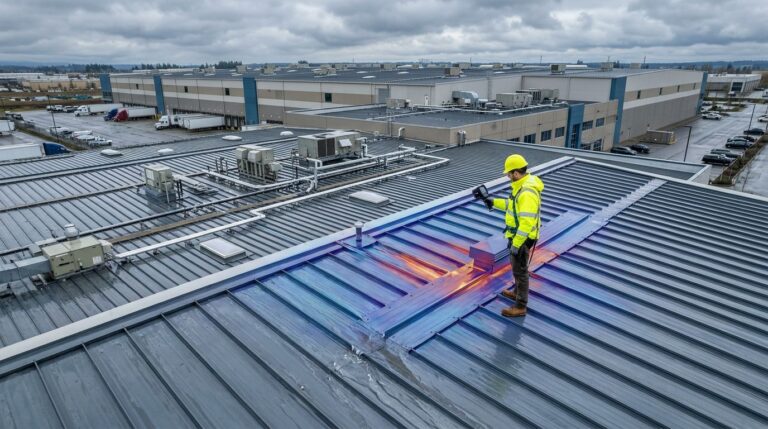
It does not apply to TPO, EPDM, PVC, or built-up systems. In those cases, the issue is usually seam failure, punctures, or ponding water, so the right path is closer to commercial flat roof repair than shingle counting. If your building has both shingle and low-slope sections, a full roof review matters more than a quick headcount. In that case, Sellers Roofing Company’s commercial roofing team can help compare repair limits across the whole system.
When the count alone doesn’t decide it
A roof fails by pattern, not just by number. One missing shingle after a wind event on a 7-year-old roof is usually fixable. Ten missing shingles scattered across three sides of a 20-year-old roof tell a very different story.
Age changes the answer fast. So does exposure. Once felt, ice-and-water shield, or wood decking sits open to weather, the risk jumps. Then the roof stops being a cosmetic problem and becomes a water problem.
If shingles keep blowing off after each storm, the roof system is already warning you.
Cases that can still be repaired
A targeted fix still makes sense when the damage is confined to one small area, matching shingles are available, and the surrounding shingles still bend instead of cracking. No interior leak should be present, and the roof deck should remain dry and solid.
Cases that usually skip straight to replacement
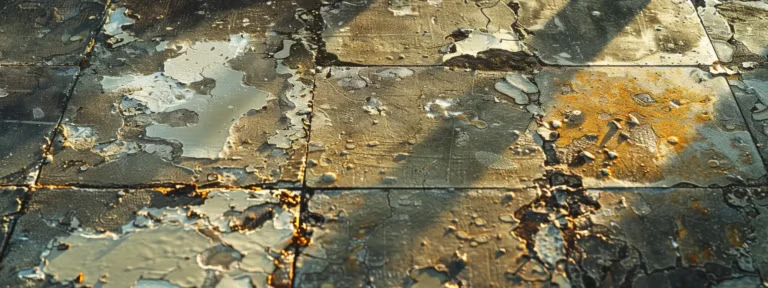
Replacement moves to the front when shingles are missing on more than one slope, seal strips have failed across wide areas, or nearby shingles are curling, brittle, or thinning. Repeated patch jobs also matter. So do water stains, soft decking, and missing ridge pieces along a windward edge.
Step-by-Step
Use this on-site check before you call a roofer
Count thresholds that usually mean replacement
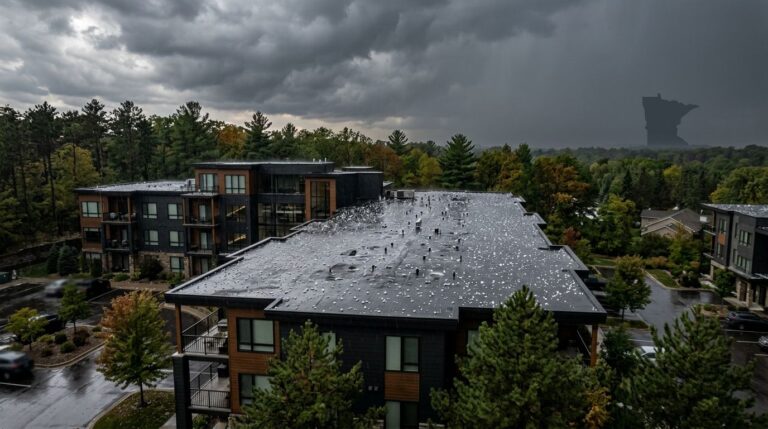
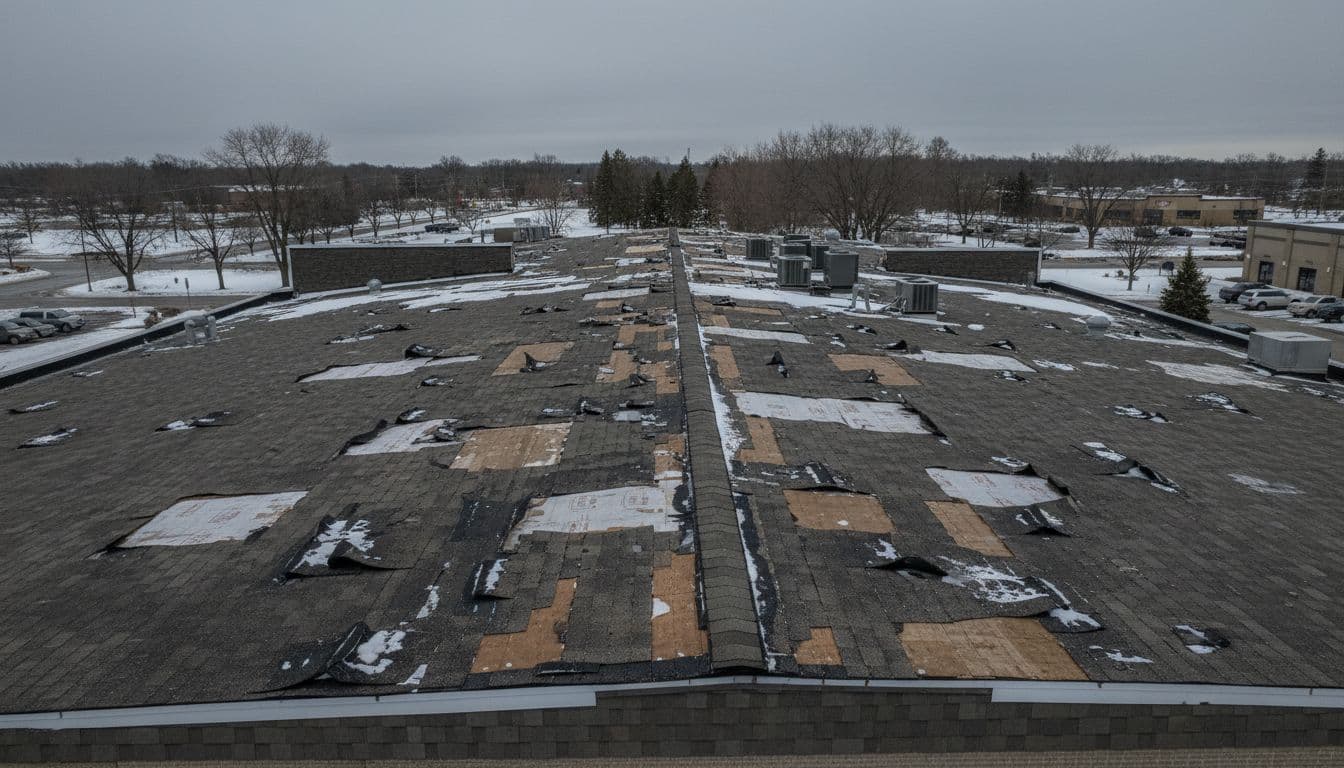
- Map every missing area first. Use binoculars, drone photos, or a safe ground view. A cluster in one corner points toward repair, while losses spread across multiple sections suggest broader failure.
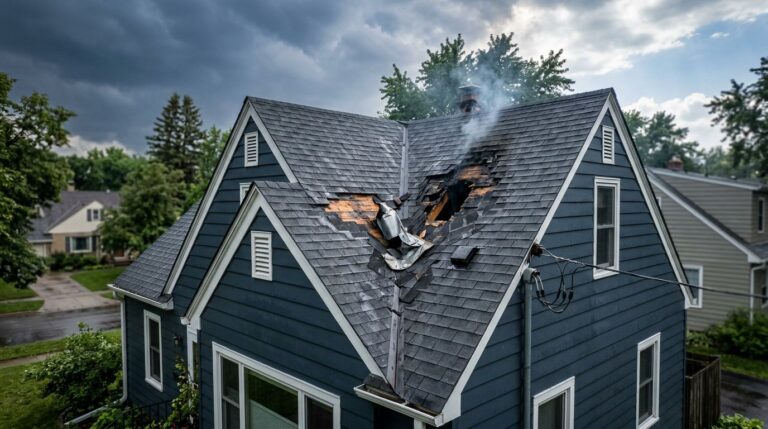
- Check what the missing shingles exposed. If only the top layer is gone and the underlayment is intact, you may have time for a repair. If bare wood or soaked decking shows, move quickly because water damage can spread under surrounding shingles.
- Compare the damage to the roof’s age. On a roof under about 10 years old, isolated shingle loss often means a local fix. On a roof pushing 15 to 20 years, the same damage can be the tipping point in a missing shingles roof replacement decision.
- Use a practical count, not a magic number. One to five missing shingles in one small zone usually means repair. Around a dozen missing shingles across several zones, a stripped ridge, or one full windward slope with patchy loss often points to commercial roof replacement.
- Look for damage beyond the missing pieces. Creased tabs, lifted nails, loose flashing, and granule loss tell you the field shingles are wearing out too. If water is already inside, book a leak-source inspection right away, because hidden moisture may be worse than the surface damage.
- Decide based on repeat cost, not today’s patch price. If the same shingled section sheds material after every major storm, short repairs become expensive noise. At that stage, your commercial roof needs repair at minimum, and full replacement may be the cheaper business choice over the next few years.
FAQ
Can one missing shingle mean the whole roof should be replaced?
Usually, no. One missing shingle on a newer roof is often a simple repair. Still, if the surrounding shingles are brittle, faded, or loose, that one gap may be the first clear sign of wider failure.
If matching shingles are discontinued
Even small damage can push a larger repair or slope replacement when new shingles won’t match or seal properly with the old ones.
Can I replace only one roof slope instead of the whole roof?
Sometimes, yes. If the damage is limited to one slope and the rest of the roof is still sound, partial replacement can work. Code rules, shingle availability, and visual mismatch will shape that choice.
Does insurance care about how many shingles are missing?
Not by count alone. Insurance usually looks at storm cause, repairability, age, and whether matching materials exist. Good photos, dates, and inspection notes matter more than guessing from the ground.
What if leaks show up far from the missing shingles?
That happens often. Water can travel before it shows indoors, especially where valleys, flashing, or low-slope tie-ins are involved. So the visible gap is not always the real entry point.
How is this different from flat commercial roofing?
A lot changes. Flat and low-slope roofs fail at seams, drains, penetrations, and flashing details. That’s why shingle-loss rules don’t translate well to membrane systems, where moisture mapping matters more than piece counting.
Bottom line
Make the call before the next storm does
There’s no perfect number, but the pattern is clear. If missing shingles appear in several areas, expose the deck, or keep returning on an older roof, replacement is usually the safer move. Fix isolated loss on a younger roof, but don’t keep paying for patches when the system has already started to fail.
Need a roof inspection in Saint Paul or the Twin Cities? Call Sellers Roofing Company at +1-651-703-2336 or schedule a free estimate. We are a black-owned, NMSDC-certified MBE roofing contractor with 9+ years experience.