Last updated: 2026-10-23 by Ted Sellers, Owner
Yes. Hail can damage EPDM seams even when the EPDM membrane sheet itself looks intact. The membrane may not split, but the splice edge, seam tape, adhesive, or termination details can lose their seal. That can create a leak path later, so EPDM hail damage is often a seam problem first in rubber roofing, not a visible tear. Learn about assessment and repair through our EPDM roofing service.
Key Takeaways
- Hail can damage EPDM hail damage seams—splice edges, seam tape, adhesive—without tearing the membrane, creating hidden leak paths that fail later.
- Inspect seams first for lifted edges, cracked adhesive, stress marks, or loose flashing; professional checks separate hail impact from old wear.
- Trace leaks beyond visible stains, using moisture detection or thermal scans, as water travels on low-slope roofs before showing inside.
- Opt for repair on localized seam issues with dry, flexible membrane; choose replacement for multiple failures, wet insulation, or end-of-life roofs.
When This Applies
Hail can hurt the seam while the sheet still looks fine
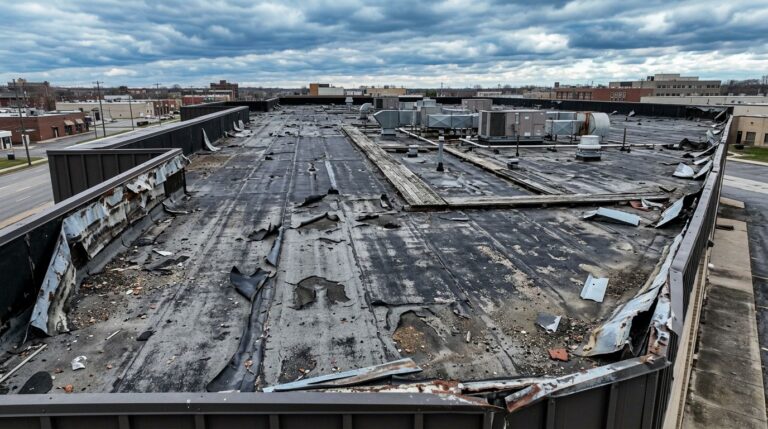
This question applies most often on commercial flat roofs with bonded seams in non-reinforced EPDM, older patches, or areas that already saw movement from heat and wind. In commercial roofing, the EPDM membrane offers good flexibility and impact resistance, so hailstones do not need to cause punctures to create problems. They can bruise the surface, lift a seam edge, crack old adhesive, or weaken a splice that was already close to failure.
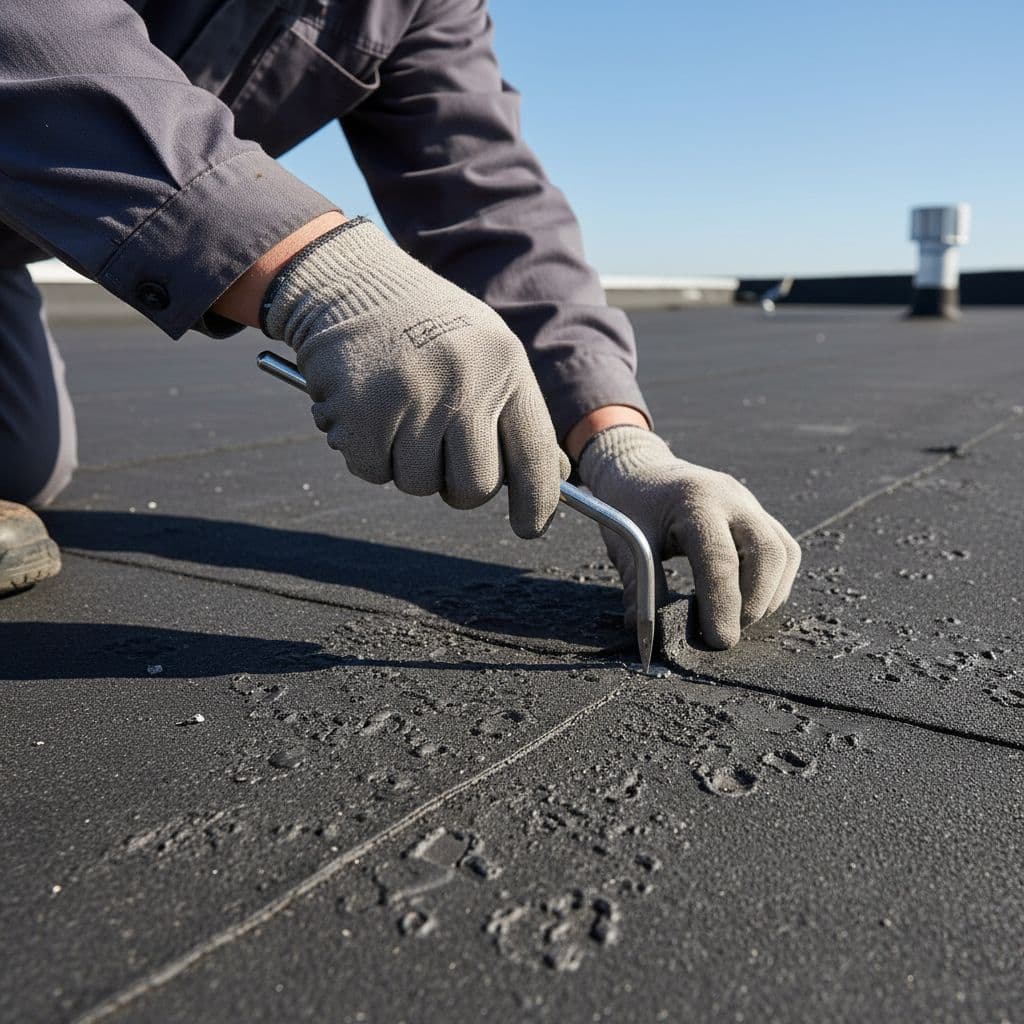
On a roof like that, the damage may stay hidden until the next rain, which is why a roof inspection is essential. Water follows the seam like a weak line in a folded piece of paper. The single-ply membrane can look unbroken from above, yet the seam no longer holds the system together.
When hail is probably not the main cause
Sometimes the better answer is old wear, not storm impact. If the seam was already lifting, the adhesive was brittle, or a past patch failed at the edges, hail may only expose a problem that was already there. That matters because a claim or repair plan should follow the real cause, not the nearest storm.
A roof with tiny hail marks and no seam movement may only need monitoring. A roof with lifted edges, separated laps, or fresh staining calls for a closer look. That is the line between a cosmetic issue and a roof that needs action.
Step-by-Step
Inspect the seam before anyone patches it
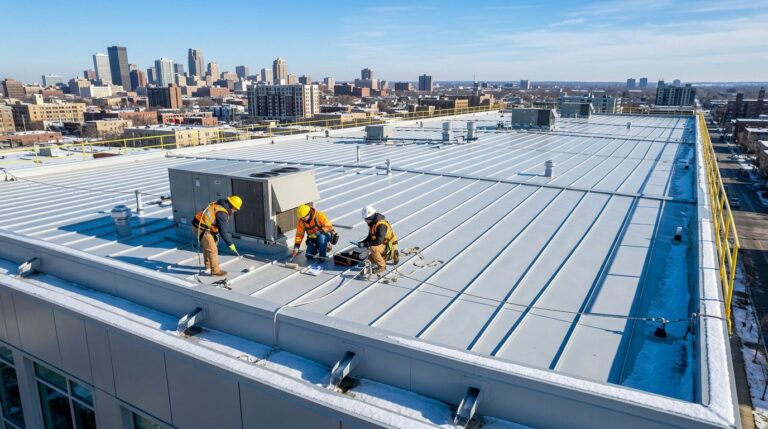
Start with a careful visual check. Look for lifted lap edges, open splice lines, loose flashing, cracked sealant, and white stress marks near the seam. If the roof is slick or unsafe, stay off it and document from safe access points first.
A commercial roof inspection by a qualified roofing contractor provides professional inspection to separate a hail event from normal aging. That matters because EPDM seams can fail for more than one reason, and the first look often decides the rest of the claim or repair scope.
Use date-stamped photos, note the roof area, and record any interior signs of leakage. A seam that looks flat from ten feet away can still have a small lift that lets water in during wind-driven rain.
Trace the leak path, not just the drip
A ceiling stain does not always sit under the seam that failed. On low-slope roofs, water can travel before it shows inside. That is why leak tracing matters more than guessing at the wet spot below.
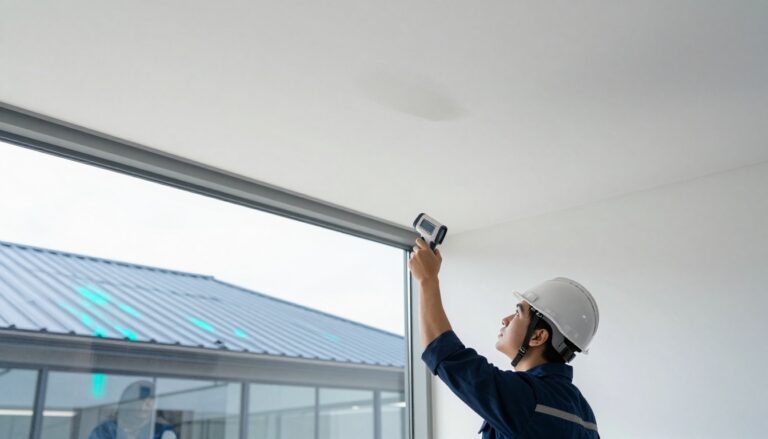
If the building is dry inside but the seam still looks stressed, professional commercial roof leak detection can help pinpoint the entry point. Thermal scans, moisture checks, and membrane testing are useful when hail damage is subtle and water infiltration hides subsurface damage under the membrane.
A clean membrane surface does not prove the seam is sound.
That point matters on EPDM because the damage often lives at the joint, not the field of the sheet. The roof may hold water for a while, then fail after the next temperature swing or heavy storm.
Separate hail damage from old seam failure
This is where many disputes start, especially with insurance claims. Hail can strike a roof that already had weak seams, but the cause still needs to be sorted out. Compare the storm date, the repair history, and any prior leak reports. If the seam was patched three times already, the hail may not be the whole story.
Look at the pattern too. Hail damage usually appears across a wider area with rubber roofing tears, punctures, or reduced impact resistance that fails hail impact testing under standards like UL 2218 Class 4, ASTM D6797, or ball burst testing. It may affect nearby flashings or metal details. Old failure often shows up in one tired section, usually where movement or ponding has stressed the roof for years, as noted by the ERA for single-ply membrane performance.
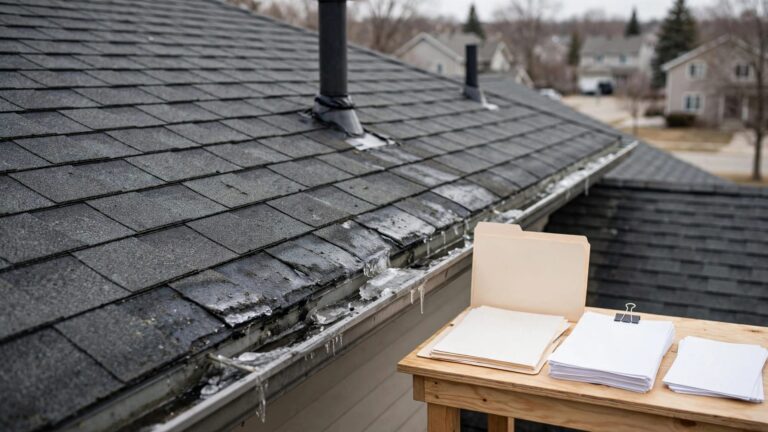
A useful file should show more than a guess. It should include photos, notes on seam condition, and if needed, moisture readings or test cuts. That kind of record helps explain why a small patch may not be enough. It also helps prove when commercial roof needs repair is the right conclusion, rather than a vague maintenance note.
Decide whether repair or replacement fits the roof
Not every damaged seam means the roof is finished. If the issue stays local, a commercial flat roof repair may be enough. That is common when one seam section has lifted but the rest of the field is dry and stable, with proper identification of the 60-mil membrane over polyiso insulation and substrate.
Replacement starts making more sense when you find several failed seams, wet insulation, broad shrinkage, or repeated leaks around the same area. At that point, the roof is no longer asking for a spot fix. It is telling you the system has moved past simple repair, and advanced repair techniques may not suffice.
For larger losses, a broader look at commercial roofing services in Minnesota helps when you need to compare repair, section replacement, and commercial roof replacement. The right choice comes down to function, service life, and how far the damage has spread.
When a patch is enough
A patch works when the seam failure is small, the membrane is still flexible, and the surrounding roof is dry. That kind of fix should restore the seam without disturbing healthy sections.
When replacement is the better call
Replacement is the better move when the damage repeats across the field, the insulation is wet, or the roof has already reached the end of its useful life. Patching a roof like that only delays the next problem.
FAQ about EPDM hail damage
Can hail damage a seam if the membrane is not torn?
Yes. Hailstones can damage seams without causing tears or punctures in the EPDM membrane. The sheet can stay intact while the seam loses bond, lifts at the edge, or cracks at the splice. That is why seam inspection matters more than a quick look at the middle of the membrane.
What does seam damage look like before it leaks?
It can look like a small lift, a curled edge, brittle adhesive, or a line that no longer lies flat. Sometimes the only clue is a faint stain nearby, moisture found during testing, or early signs of water infiltration.
Should temporary repairs wait for the adjuster?
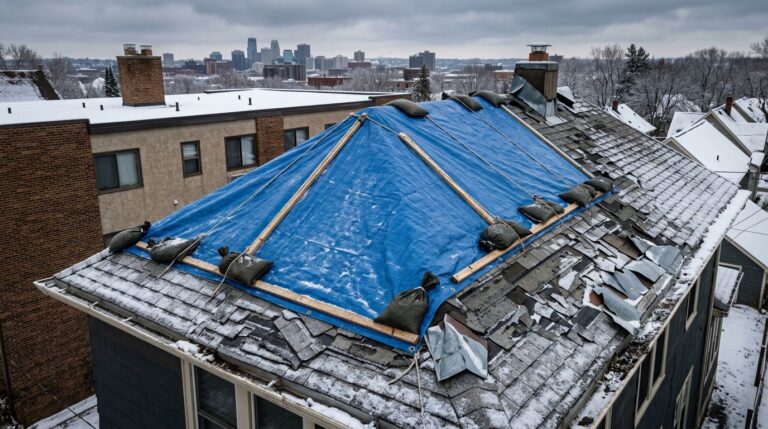
No, if water is entering now. Temporary dry-in work is reasonable when it stops more damage. Keep it limited, document it, and avoid permanent work until the roof is inspected.
Do you need leak detection if the ceiling is still dry?
Often, yes. EPDM seams can fail without showing an interior stain right away. Professional inspection can catch a hidden breach before insulation or deck materials get soaked.
When does seam damage point to replacement?
When the seam failure is part of a larger pattern. Multiple lifted laps, repeated leaks, widespread shrinkage, or wet insulation usually mean the roof has moved beyond one repair area.
How can protective coatings help prevent EPDM hail damage?
Protective coatings add a resilient layer over seams during preventative maintenance, helping to shield against hail impact and maintain bond strength in vulnerable areas.
Conclusion
Hail can damage EPDM seams without tearing the EPDM membrane, and that is what makes the problem easy to miss. The sheet may look fine while the joint has already lost its seal.
For owners in commercial roofing, the key is to check function, not just appearance. If the seam is open, stressed, or leaking, the roof needs action now. Sometimes that means a focused repair. Other times it points to a larger scope and a planned commercial roof replacement.
The clearest answer comes from a careful inspection, solid photos, and a repair decision based on how the seams perform versus the field of the roof.
Need a roof inspection in Saint Paul or the Twin Cities? Call Sellers Roofing Company at +1-651-703-2336 or schedule a free estimate. We are a black-owned, NMSDC-certified MBE roofing contractor with 9+ years experience.