Last updated: 2026-08-01 by Ted Sellers, Owner
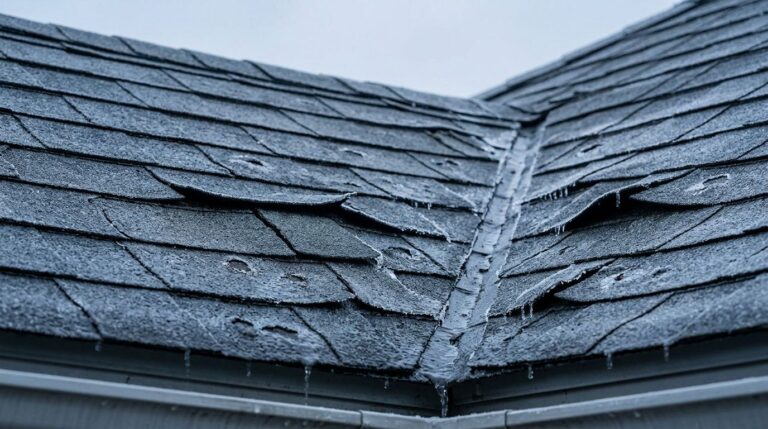
Hail damage on EPDM roofs in Minnesota often looks subtle at first: small dimples, scuffs, or “bruised” spots in the rubber membrane. The bigger red flags usually show up at seams, flashings, and rooftop penetrations, where hail impact and temperature swings can open tiny pathways for water. If drains back up or metal edges get dented, the risk of leaks rises fast. Storm damage like this can lead to water intrusion if not addressed immediately in Minnesota’s climate.
When This Applies
Who this is for (and what roofs it fits)
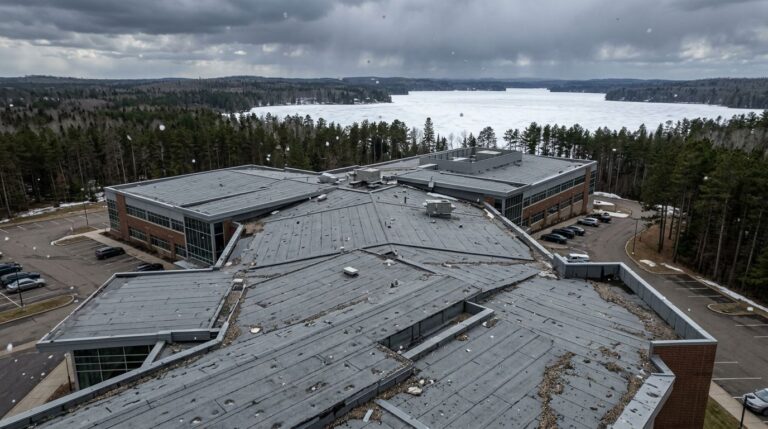
This applies to commercial building owners with EPDM (rubber) single-ply membranes on flat or low-slope roofs across Minnesota, including the Twin Cities, especially on older roofs or buildings with lots of rooftop equipment. Warehouses, retail strips, churches, schools, and office buildings often have wide open roof areas that take hail impacts directly.
It also applies if you manage multiple properties and need a repeatable way to screen roofs after storms through roof inspections. Even when the interior is dry, hail can shorten service life by stressing seams and accessories. That matters when you’re budgeting repairs versus a longer-term plan.
When it does not apply (exceptions and edge cases)
If your building has TPO, PVC, metal, or asphalt shingles, the visible signs of impact damage from Minnesota weather differ. Also, a new EPDM roof with proper cover board can shrug off many hail events with little functional damage.
One more exception: some roofs show “hail marks” that are really foot traffic or tool scuffs from prior work. If you did HVAC service recently, don’t assume every mark came from the storm. When in doubt, compare mark patterns to equipment paths and service routes.
What EPDM hail damage looks like on Minnesota flat roofs
Surface dents, scuffs, and “bruising” on the membrane
Hail rarely shatters EPDM like brittle materials. Instead, it tends to leave shallow dimples, surface bruising, and scuffed areas, like a rubber gym floor after someone dragged a chair. Some impacts look like tiny thumbprints. Others leave a lighter spot where the surface got abraded.
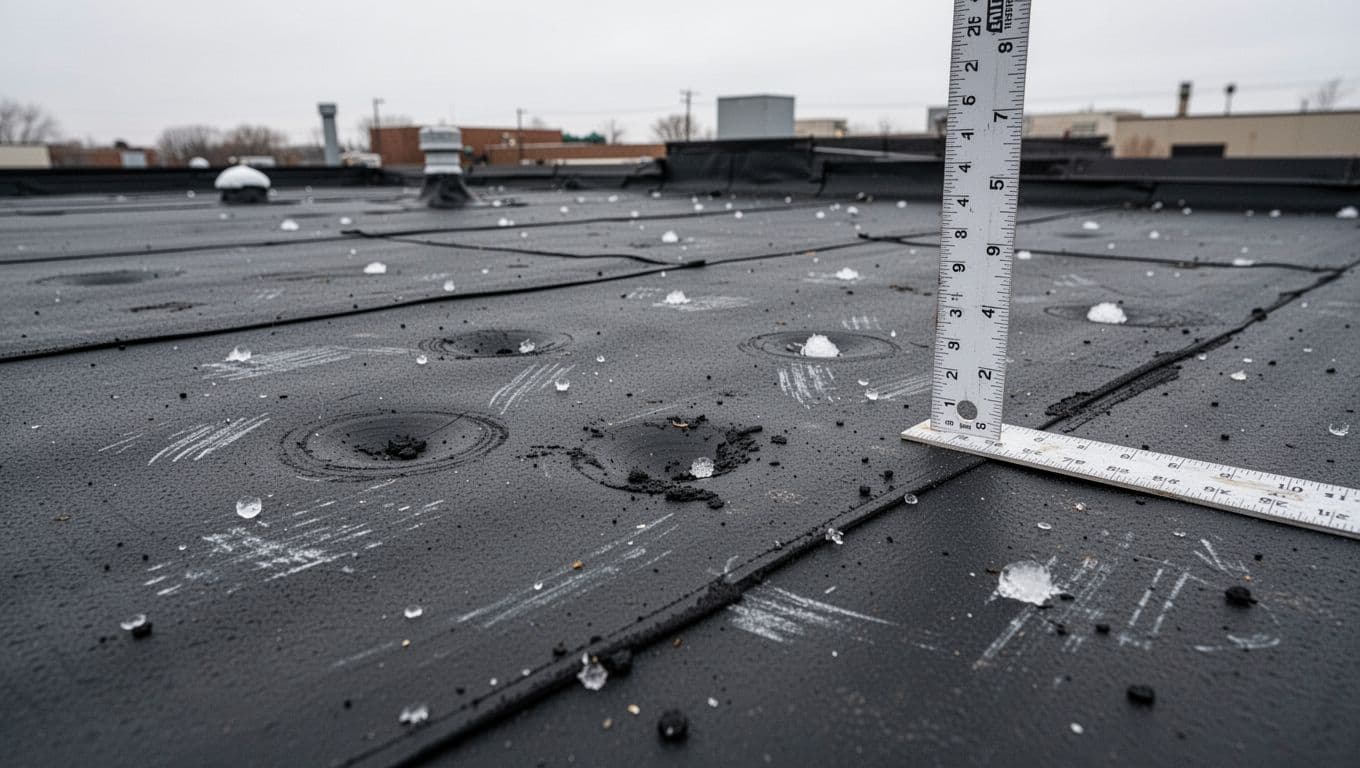
Still, the key question is not “Do I see marks?” It’s “Did hail reduce waterproofing?” Cosmetic dings may not leak today, yet they can become weak points after Minnesota’s freeze-thaw cycles, UV radiation, and rooftop foot traffic, as the rubber membrane ages and loses some puncture resistance.
Seam and flashing trouble spots after a hailstorm
Seams and terminations are the places to slow down. Hail can stress seam tape, loosen edges, or create tiny splits and punctures that you won’t notice from ten feet away. Watch for seam “bridging,” where the membrane looks slightly tented, and for hairline openings at laps.
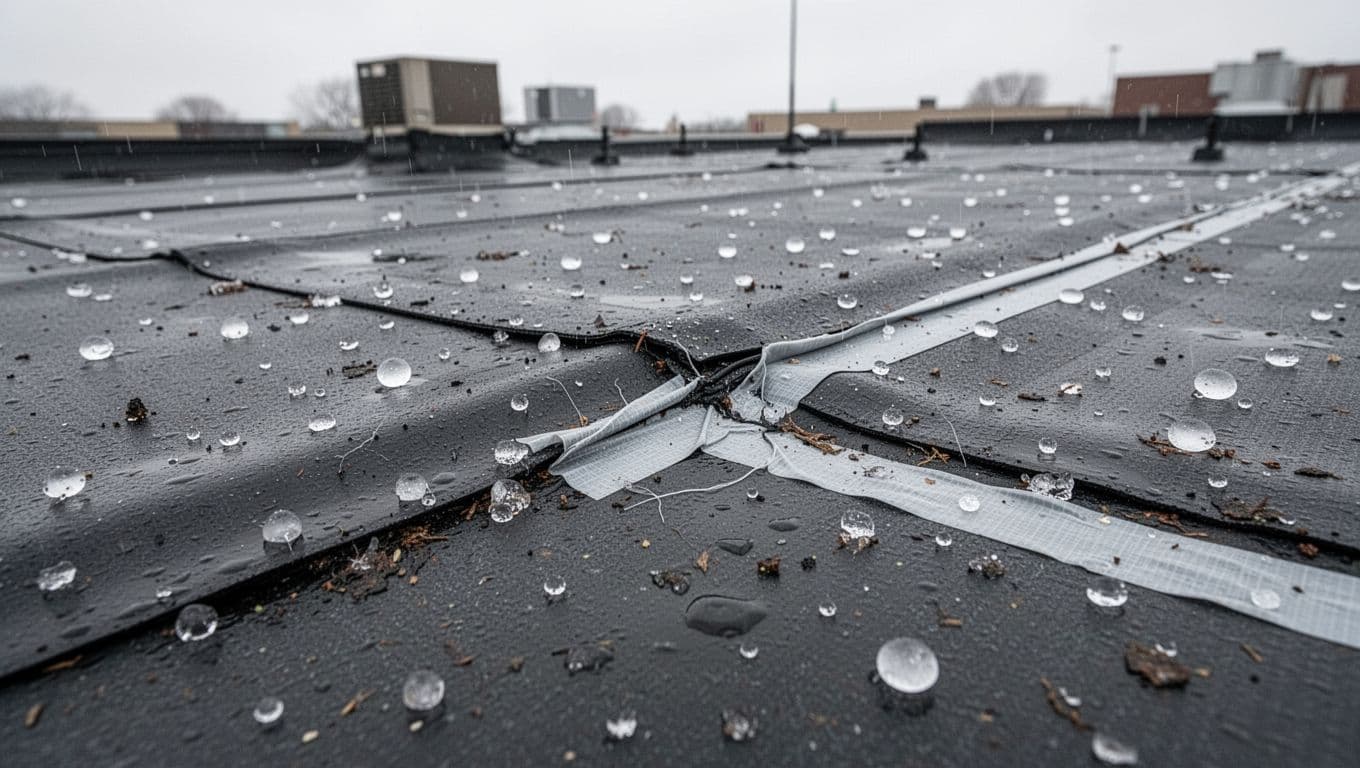
Also check perimeter metal and wall flashings. Dented coping and edge metal can change how water sheds, and loosened termination bars can let wind-driven rain sneak behind the membrane. Those aren’t “minor” problems on a flat roof because water can travel sideways before it shows inside.
Damage you’ll often see first on metal and rooftop equipment
On many EPDM flat roofs, the membrane looks fine but the accessories tell the real story of storm damage. Hail dents metal drip edges, counterflashing, pipe boots, HVAC curbs, and skylight frames. When those components deform, sealant lines crack or pull away.
Drainage areas matter too. If hail dumps debris and the roof already has low spots, ponding water can sit longer. That extra time increases the chance that small impacts turn into leaks.
Here’s a quick way to separate “ugly” from “urgent” when you’re walking a roof:
| What you see | What it may mean | What to do next |
|---|---|---|
| Light scuffs and shallow dimples | Often cosmetic impact damage | Document, then re-check after heavy rain |
| Dents at edge metal or coping | Water flow changes, fasteners may loosen | Inspect terminations and sealant lines |
| Seam lifting, bridging, or fishmouths | Higher leak risk at laps | Get a professional seam evaluation |
| Cracked boots, damaged curbs, puncture-like marks | Functional damage likely | Schedule repairs quickly |
Step-by-Step
Document the storm and protect the building
- Photograph roof sections, seams, edges, and penetrations during a thorough roof inspection for hail damage, then include a ruler or coin for scale.
- Pull the storm date and hail reports for your location, then save them with your photos.
- Check ceilings, mechanical rooms, and exterior walls for fresh stains, odors, or damp insulation.
Inspect the EPDM system in a way that finds hidden leak paths
- Walk the roof in a grid pattern, then mark damaged areas on a simple sketch.
- Focus on seams, wall flashings, drains, and penetrations because those fail first.
- Look for dents in metal edges and curbs, since that damage often points to impact severity.
- If you suspect trapped or subsurface moisture, schedule professional testing, such as thermal imaging, moisture meters, or electronic methods, through commercial leak detection services.
Choose the right fix (repair, restoration, or replacement)
- Approve commercial flat roof repair or EPDM repair when damage is isolated and the membrane is still well-bonded.
- Consider restoration or targeted section replacement for your commercial roofing when hail hits many details but the roof still has useful life.
- Move toward commercial roof replacement when seams fail widely, insulation is saturated, or repeated roof leaks show the assembly is breaking down. If your commercial roof needs repair but you’re unsure how far to go, a local roofing contractor can lay out options and timelines, including post-storm documentation standards like the EPDM Roofing Association’s hail assessment guidance.
FAQ
Can EPDM survive hail without leaking?
Yes. EPDM is flexible, so many hail impacts stay cosmetic. However, leaks often start at seams, flashings, and penetrations, not in the field membrane. Because water can travel on flat roofs, you can have real damage even when the interior looks fine.
What size hail damages EPDM?
Hailstone size matters, but it’s not the only factor. Dense hail, high winds, and cold membrane temperatures can increase impact stress on this synthetic rubber roofing material. Roof age also plays a role because older EPDM can shrink and put details under tension.
Hailstone size isn’t the whole story
A roof with brittle sealants, loose edge metal, or weak seams can fail in a storm that a newer system survives.
Should I patch dimples or leave them alone?
Leave dimples alone if the membrane isn’t torn and seams remain tight. Patching every mark can create more seams and more failure points. Instead, prioritize roof maintenance by documenting the areas and monitoring after heavy rain, especially around drains and penetrations.
How do I know if I need commercial roof replacement after hail?
You’re closer to replacement when roof leaks let moisture into insulation, seams open across multiple areas, or repairs keep moving from one spot to the next. A commercial roofing contractor can confirm scope and help plan around operations. For local help, start with a full inspection from a Saint Paul commercial roofing team.
Will insurance cover EPDM hail damage in Minnesota?
Coverage depends on your policy and whether damage is cosmetic or functional. That’s why documenting storm damage with photos, measurements, and a clear damage map matters for your insurance claim, especially with Minnesota adjusters. If you need a deeper overview of common EPDM hail issues and repairs, see this EPDM hail damage identification guide.
Bottom line for Minnesota EPDM roofs
Most EPDM roofs won’t look “destroyed” after hail, yet the weak points still show signs if you know where to look. Treat seams, edges, and rooftop details as the first places to confirm functional damage on your EPDM roof, which helps prevent long-term roof leaks. When you document early and verify moisture, you avoid guesswork and protect your budget for the right repair or commercial roof replacement; proactive roof maintenance and timely hail damage assessments are essential for commercial roofing longevity in the Twin Cities.
Need a roof inspection in Saint Paul or the Twin Cities? Call Sellers Roofing Company at +1-651-703-2336 or schedule a free estimate. We are a black-owned, NMSDC-certified MBE roofing contractor with 9+ years experience.