Last updated: 2026-08-01 by Ted Sellers, Owner
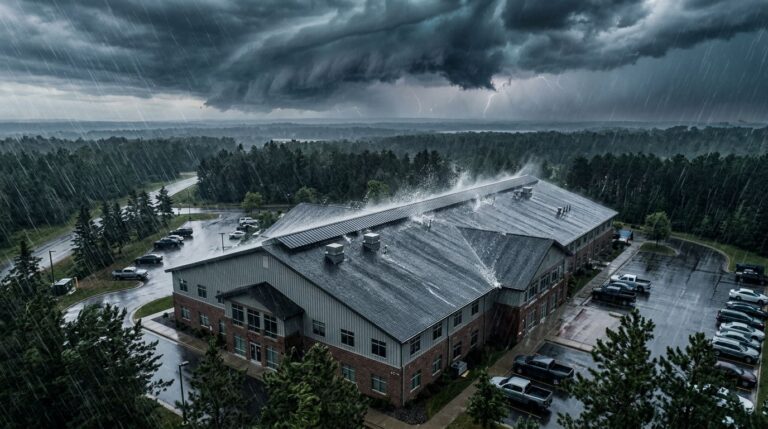
Full replacement usually makes sense when hail causes functional damage across large roof areas, not just cosmetic marks. On commercial roofs, that means punctures or splits in the membrane, broken seams or flashing, wet insulation, repeated leaks, or damage so scattered that patching won’t restore service life or make financial sense.
When This Applies
For commercial buildings with real waterproofing damage
This applies to business owners, facility managers, and property teams after a hailstorm. It matters most on TPO, EPDM, PVC, modified bitumen, metal, and asphalt shingle sections. Hail size matters, but it isn’t the whole story. Roof age, membrane thickness, wind speed, and prior repairs all change the outcome. If you need context on impact size, these Minnesota hail size thresholds help explain why two roofs can react differently to the same storm.
When repair is still enough
A few isolated dents or a small puncture don’t always mean hail damage roof replacement. If the insulation stays dry, seams hold tight, and damage is limited to a small area, commercial flat roof repair is usually the better buy. On metal, dents may look bad but still be cosmetic if panels, seams, and fasteners remain sound.
Edge cases that push repair into replacement
Older roofs change the math. So do discontinued materials, heavy patch history, and damage across drains, corners, curb flashings, and rooftop units. If you’re unsure whether the hits are fresh or pre-existing, compare them with common signs of new vs old hail damage. When impacts show up across many roof details, repair often turns into chasing leaks.
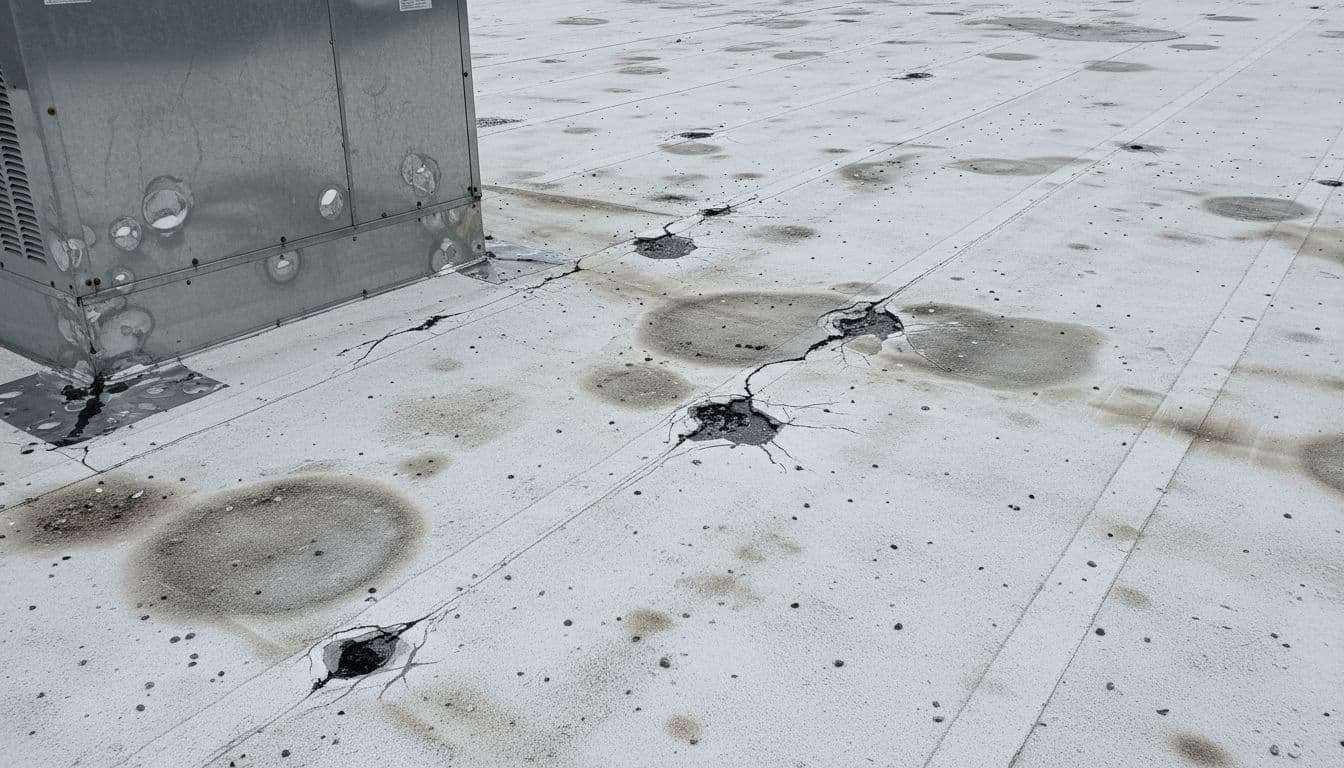
Cosmetic marks can wait. Functional damage can’t, because once hail opens the waterproofing system, water keeps spreading long after the storm.
For commercial owners, the call isn’t about how rough the roof looks. It’s about whether the system can still keep water out for the rest of its intended life.
Step-by-Step
1. Secure the building and document the storm
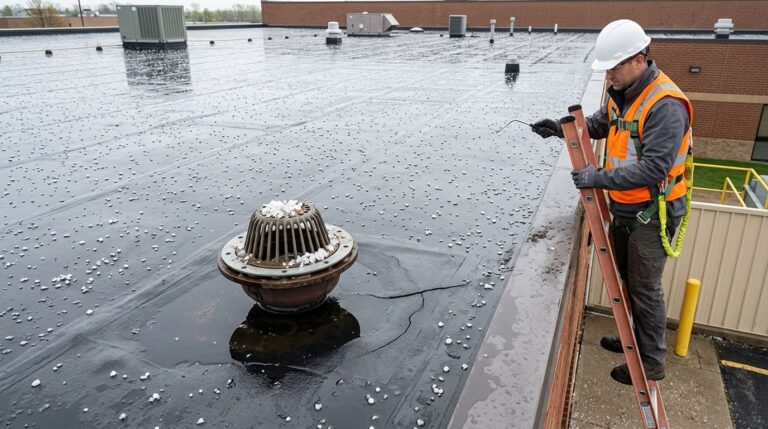
First, stop active leaks and protect stock, equipment, and ceiling areas. Then record the storm date, hail reports, interior leaks, rooftop dents, and damaged flashings. Good photos save time later, especially when different contractors give different opinions.
What to capture
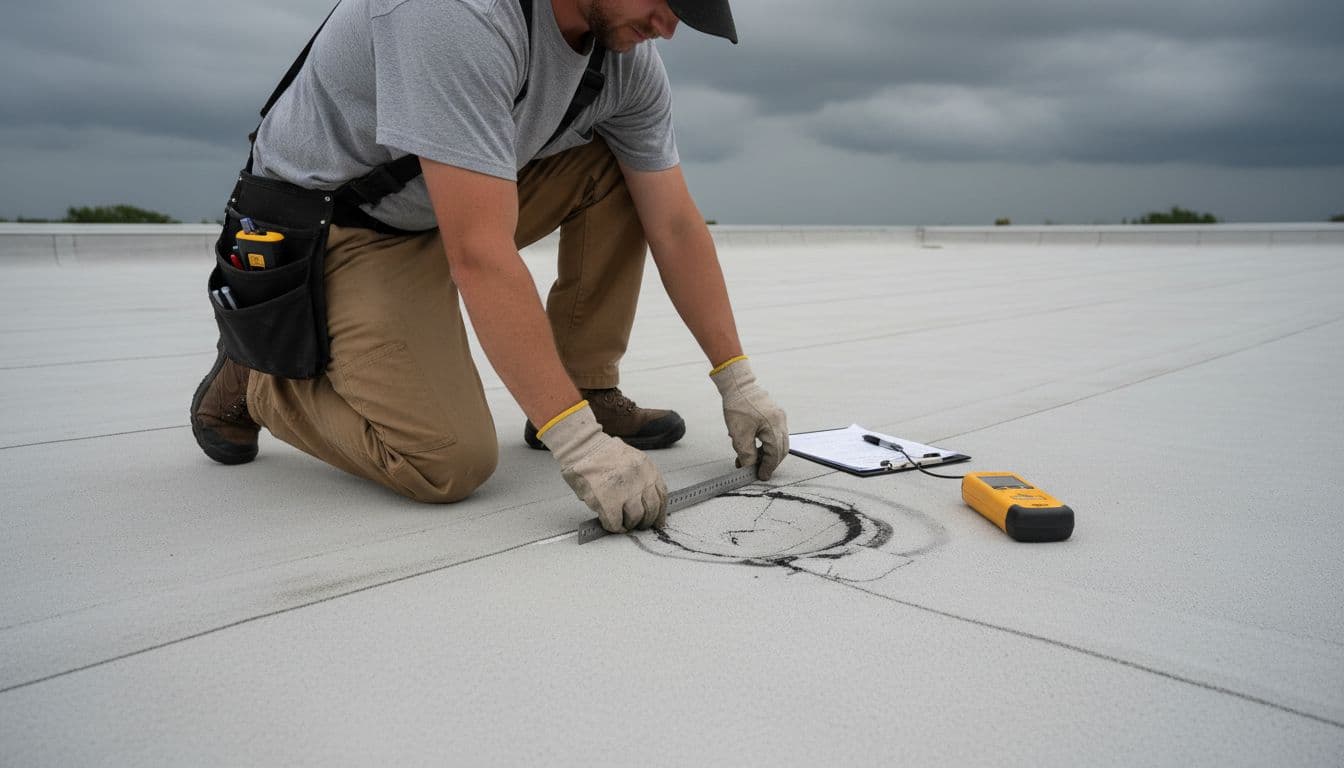
Photograph wide roof views, close-ups with scale, drains, seams, metal edges, rooftop units, and wet ceiling spots inside.
2. Separate cosmetic hits from functional damage
Next, look for punctures, membrane splits, cracked seams, displaced flashing, fractured coating, and bruised areas that feel soft. Those signs matter more than surface dents. A detailed commercial roof hail damage inspection can help you compare what counts as appearance damage versus real system failure.
3. Map how widespread the damage is
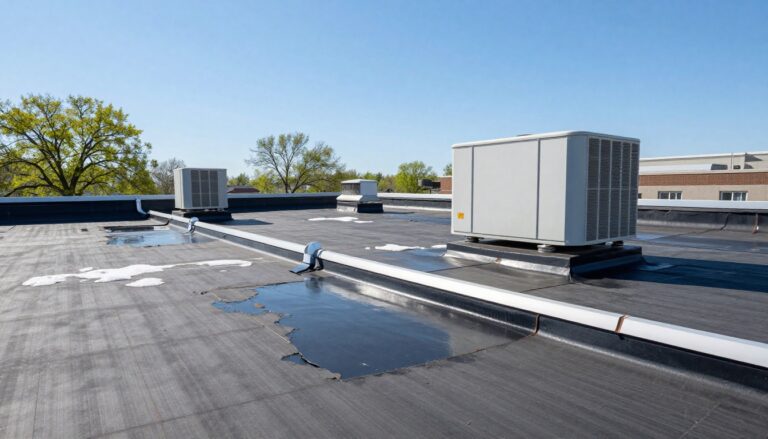
One bad corner is often a repair job. Multiple damaged sections are different. If hits appear across field membrane, perimeter metal, drains, penetrations, and HVAC curbs, the roof may no longer perform as one system. At that point, commercial roof replacement often makes more sense than a patchwork fix.
4. Check for wet insulation and hidden leaks
After hail, water can travel before it shows inside. So a roof may look manageable from the surface yet still fail below. If moisture testing finds soaked insulation or hidden entry points, schedule commercial roof leak detection after hail. Wet insulation adds weight, cuts R-value, and keeps damage spreading.
5. Compare repair cost with remaining roof life
Now ask the hard question: is the roof worth saving? If your commercial roof needs repair in many places, and it’s already near the end of its service life, repeated patching rarely pays off. A full commercial roof replacement costs more up front, but it often lowers leak risk, service calls, and business disruption over the next few years.
6. Get a written scope before you approve work
Finally, ask for a scope that lists damaged areas, moisture findings, repair limits, and replacement triggers. That helps you compare bids fairly. If the roof has broad membrane failure or saturated insulation, talk with Saint Paul commercial roof replacement experts who can plan phased work and keep operations moving.
FAQ
Can a roof need replacement even if it isn’t leaking yet?
Yes. Hail can break seams, puncture membranes, or crush insulation before water shows inside. By the time leaks appear, damage has often spread beyond the first impact point.
What if only the metal flashing is dented?
Dents alone don’t always justify replacement. However, if flashing splits, pulls loose, or exposes fasteners, the roof can fail even when the main field membrane still looks decent.
Does hail damage on an older roof count more?
Older roofs usually take impacts worse. Brittle membranes, worn coatings, and prior repairs make smaller hits more likely to turn into system-wide trouble.
How fast should a business owner act after a hailstorm?
Act within days, not weeks. Early photos, moisture testing, and surface checks are easier to trust before cleanup, extra weather, and foot traffic change the evidence.
Can patching now create bigger costs later?
It can. Too many scattered repairs create weak points and leave old wet insulation in place. Short-term savings can lead to another leak event next season.
If hail left only a few isolated marks, repair may be enough. But once damage spreads across the waterproofing system, replacement is usually the safer business decision.
Don’t wait for the next rain to settle the question. Get the roof documented, tested, and priced for both repair and replacement while the evidence is still clear.
Need a roof inspection in Saint Paul or the Twin Cities? Call Sellers Roofing Company at +1-651-703-2336 or schedule a free estimate. We are a black-owned, NMSDC-certified MBE roofing contractor with 9+ years experience.