Last updated: 2026-10-28 by Ted Sellers, Owner
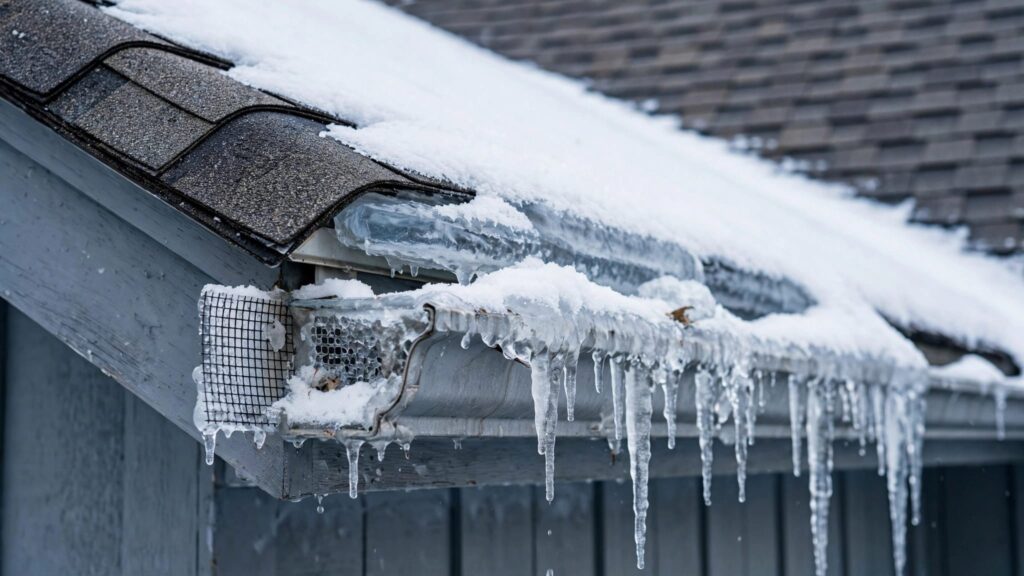
Gutter guards don’t cause ice dams by themselves, but some designs can worsen ice buildup on Minnesota shingle roofs during winter weather. Ice dams form when snow melts over roof areas above 32°F and refreezes at eaves below 32°F. Guards that trap snow, restrict drainage, or create a flat shelf can enlarge that blockage.
What Actually Causes Ice Dams on Shingle Roofs in Harsh Winter Climates?
Why does water freeze at the eave?
Household heat escapes through ceiling gaps and poorly insulated areas. The upper roof deck warms, snow melts, and water runs toward the overhang. Beyond the heated exterior wall, the roof stays colder.
That temperature difference builds the ice ridge. An ice dam requires snow on the roof; frozen rainwater in a gutter is a different condition.
The Department of Energy’s insulation guidance describes this warm-deck, cold-edge mechanism. Ventilation supports temperature control, but it can’t overcome major attic air leaks.
When does this apply?
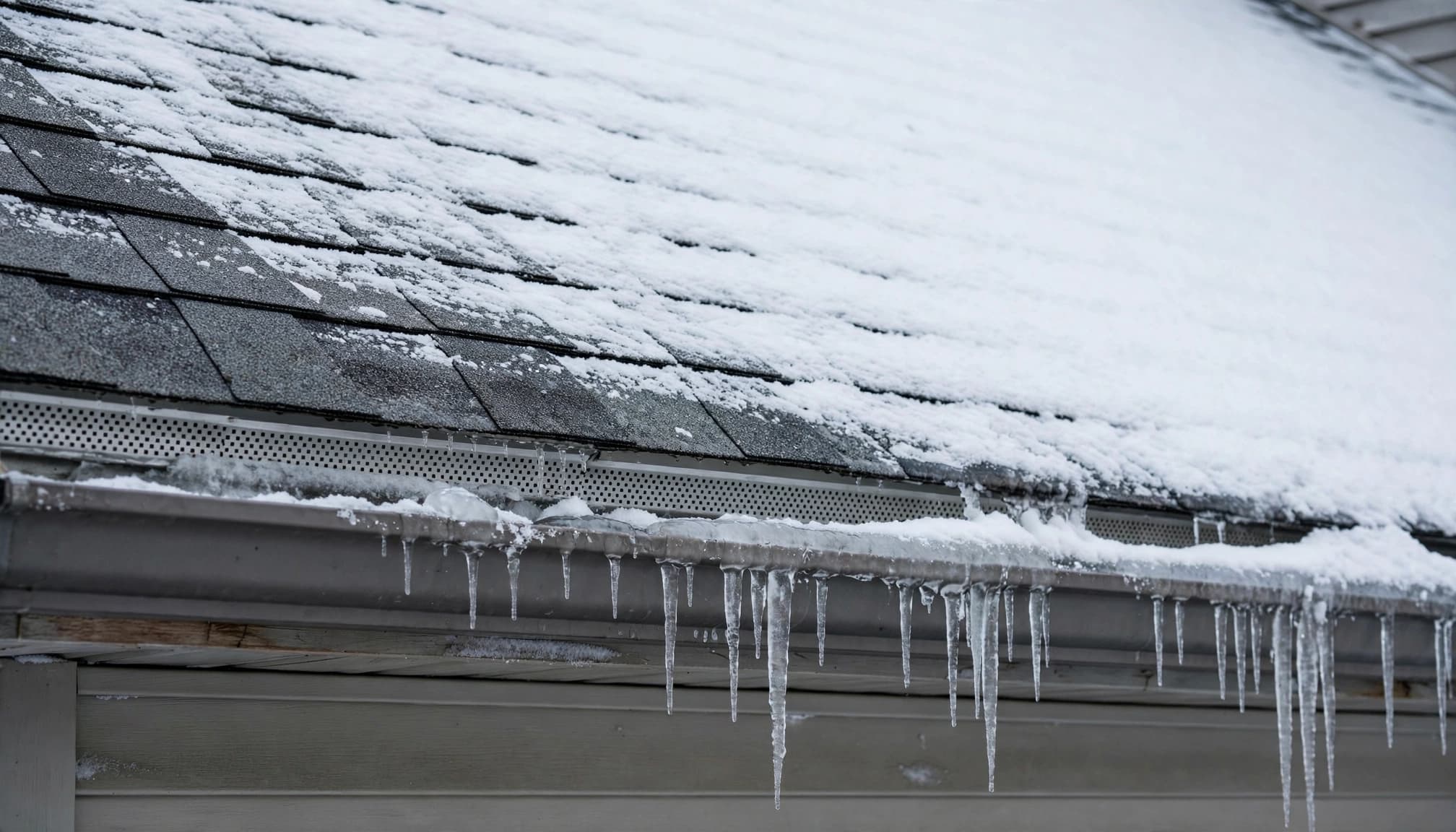
This applies to snow-covered, pitched roofs with cold overhangs, especially around low-slope additions, dormers, and shaded valleys. Minneapolis and Saint Paul homes experience repeated freeze-thaw cycles that sustain these conditions.
A commercial flat roof needs a different drainage assessment. Ice at drains, scuppers, or parapets can trap water without the same attic-to-eave mechanism.
Key takeaway: Removing guards may improve drainage, but it won’t stop heat escaping through the ceiling.
How to Inspect and Document the Damage
What can you inspect from the ground?
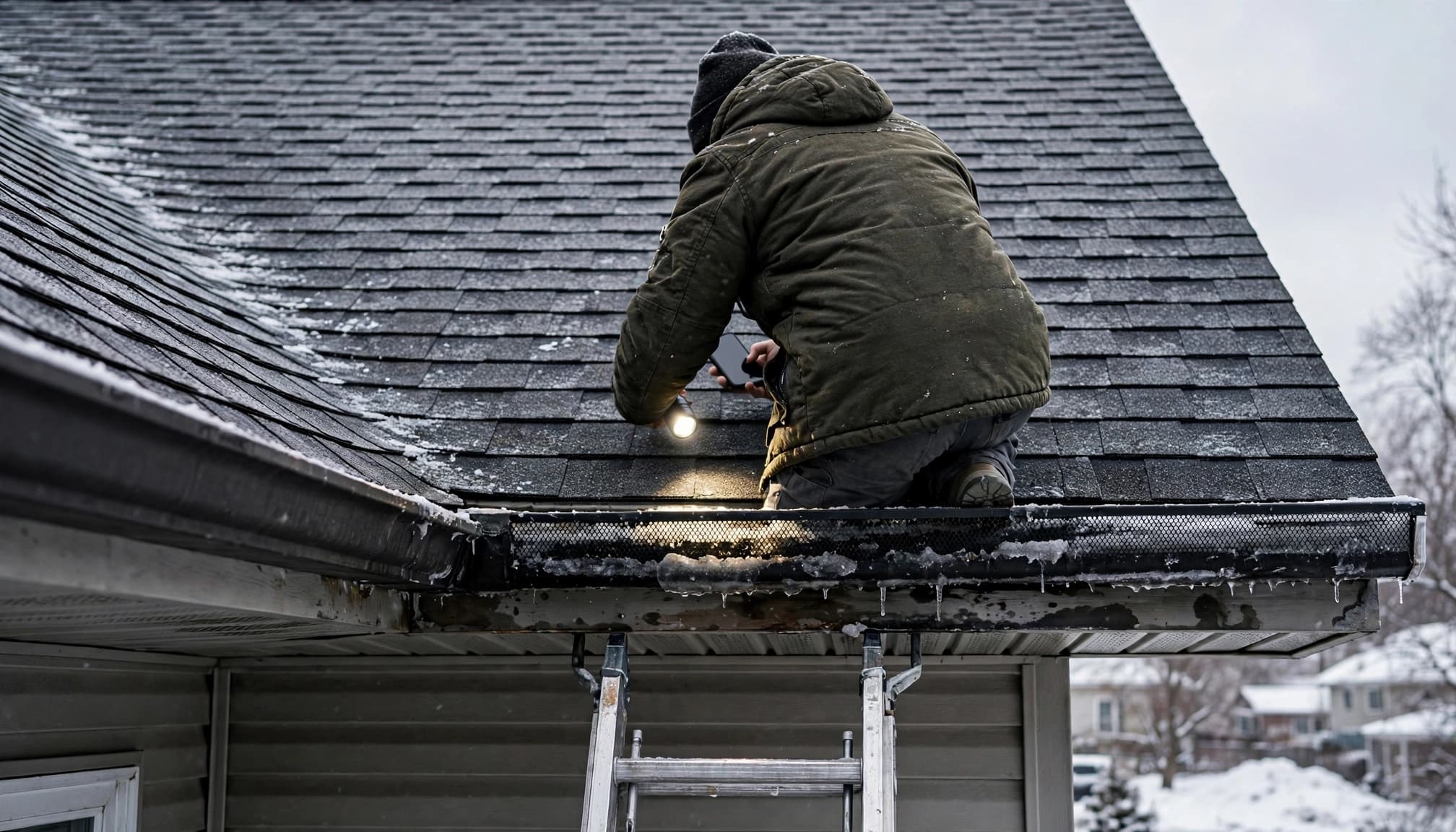
Photograph the entire roofline, then individual ice ridges, gutter separations, and downspout outlets. Compare snow coverage after fresh snowfall and after a thaw. Bare strips can indicate heat loss, although sun exposure also changes melting patterns.
Inside, record ceiling stains, damp insulation, attic frost, and swollen trim as signs of water damage. Stay away from bulging ceilings and wet electrical fixtures.
Our guide to ice dam gutter damage covers loose hangers, bent troughs, and concealed fascia deterioration.
What should a contractor inspect after safe access is established?
The inspection should follow the water path:
- Examine eave granule-loss patterns and distinguish scraping damage from normal wear or hail bruising.
- Inspect flashing separation and displaced drip edge.
- Check decking for deflection, softness, and moisture.
- Follow valleys uphill for trapped debris, damaged roof covering, and failed transitions.
- Inspect pipe boots for cracking and separated seals.
Document soffit and fascia rot, gutter damage, wet insulation, and sheetrock stains. Diverted runoff can also reach basement walls, while falling ice threatens entrances.
Step-by-Step
How should you control an active leak?
- Protect occupied areas first. Move belongings, collect dripping water where safe, and isolate wet electrical fixtures. Keep people away from sagging ceilings. For active water entry, Call 651-703-2336 for 24/7 Emergency Roofing.
- Reduce accessible loose snow only when ground conditions allow safe work. Use a roof rake without climbing or standing beneath falling snow. Keep the blade off shingles, flashing, and guards. Leave a protective snow layer rather than scraping the roof clean.
How should bonded ice be removed?
- Use trained crews with low-pressure steam removal equipment for thick, bonded ice. Controlled steam opens drainage channels without hammering against the roof covering or flashing. Guards can limit access, so technicians may work through small openings or remove accessible sections after releasing the ice.
- Inspect the exposed assembly after drainage returns. Document displaced roofing material, damaged fasteners, wet decking, and gutter attachment failures before permanent repairs. Don’t pry frozen guards off the roof.
Minnesota Commerce’s ice-dam safety guidance warns against damaging removal methods. Don’t use axes, hammers, picks, pressure washers, torches, or rock salt. Proper steam equipment reduces mechanical damage risk; careless operation can still damage roofing.
Repair vs. Replace: The Decision Framework
When is targeted repair enough?
Localized damage usually supports residential roof repair when surrounding shingles remain flexible and the deck is sound. Correct the flashing, membrane, gutter attachment, or individual damaged units.
Use these planning distinctions before approving a replacement.
| Factor | Targeted repair | Full replacement |
|---|---|---|
| Cost range | About $500 to $1,500 for limited flashing work | About $450 to $700 per roofing square for architectural shingles |
| Remaining service life | Useful covering remains outside the damaged area | Widespread aging or deterioration limits repair value |
| Insurance implications | Document covered damage and repair scope | Replacement requires a supported scope, not icicles alone |
| Material compatibility | Matching roofing material and flashing must integrate properly | Rebuild incompatible or failed layers as one assembly |
These figures aren’t interchangeable quotes. A roofing square equals 100 square feet, and concealed damage changes either scope.
When does replacement make sense?
Residential roof replacement becomes reasonable when brittle roofing material, widespread membrane deficiencies, or extensive deck rot prevent durable repairs.
Ice alone doesn’t establish that threshold. Replacing the roof covering without correcting attic heat loss can leave the same winter problem. Separate the roof-covering decision from the attic correction and gutter-guard decision.
Material Specs That Matter for This Repair or Replacement
Which gutter guards handle winter drainage better?
No independent winter ranking supports calling one guard universally ice-proof. Judge the drainage path and installation geometry.
| Guard type | Cold-weather consideration |
|---|---|
| Perforated metal | Open drainage and ventilation make it a reasonable cold-climate option |
| Heated gutter guards with a surface tension design | Can maintain channels when correctly designed and powered |
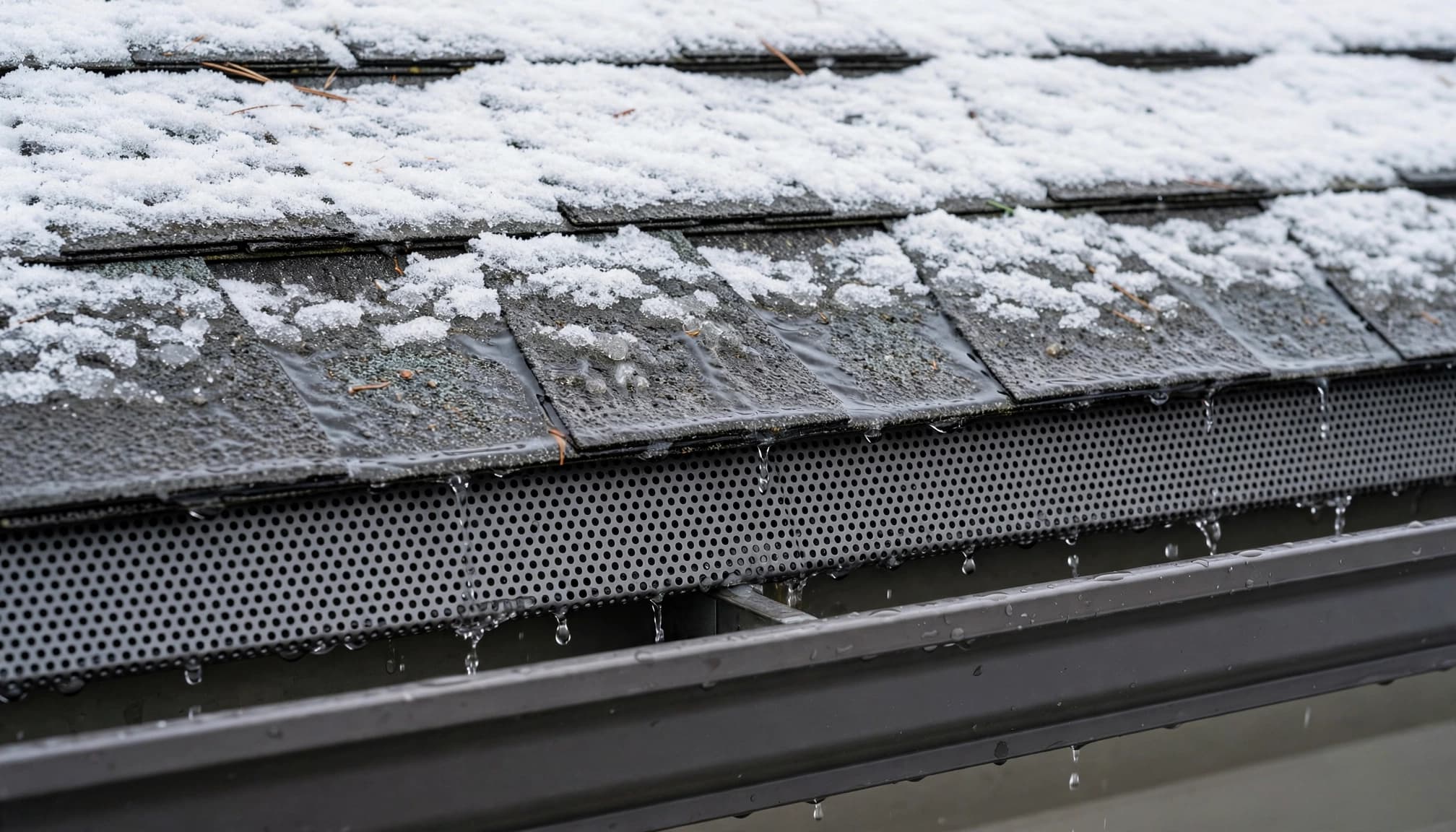
| Micro mesh | Fine openings can freeze at the surface and hold melting snow |
| Reverse curve or helmet | Intake openings can admit snow, ice, and debris; accumulation adds gutter load |
| Flat solid cover | A horizontal shelf can slow water and promote refreezing |
| Foam or brush insert | Foam retains moisture and freezes; inserts can obstruct drainage |
Mesh and solid guards can both hold snow above the trough. Guard slope, attachment, installation quality, and valley runoff matter as much as material.
Which roof-system specifications matter?
GAF Timberline HDZ, CertainTeed Landmark, and Class 4 impact-rated Malarkey Legacy shingles still require correct flashing and underlayment. Impact resistance doesn’t prevent ice dams.
Synthetic underlayment or felt alone doesn’t replace an ice-and-water shield. Where required, the ice barrier extends at least 24 inches inside the exterior wall line, not merely 24 inches uphill from the eave. Wide overhangs require more coverage. Valley coverage follows the assembly and manufacturer requirements.
DOE’s cold-climate eave guidance describes self-adhering membrane protection.
Low-slope transitions require separate specifications. A 60-mil TPO membrane or 45-mil versus 60-mil EPDM decision concerns a membrane assembly, not a substitute shingle detail.
Insurance Documentation and the Claim Process
What evidence supports a roof insurance claim?
Photograph conditions before emergency work when doing so won’t delay protection. Include wide roof views, close damage details, interior stains, and dates. Keep removal invoices and damaged-material photographs.
An adjuster evaluates cause, coverage, timing, and repair scope. A contractor documents the physical condition: wet decking, failed flashing, lifted tabs, and the likely water-entry route.
Ice-related leakage isn’t automatically covered. Policy wording, maintenance history, and the cause of loss affect the outcome. Emergency mitigation also doesn’t establish coverage by itself.
How should storm damage be separated from ice damage?
Hail damage and wind-lifted tabs can admit water independently of an ice dam. Photograph hail bruises, concentrated granule displacement, torn tabs, and disturbed flashing after safe access is available.
Don’t label every winter stain as storm damage. Water can travel along decking before appearing inside.
Our information on hidden attic insulation damage explains why the damaged insulation may extend beyond the visible ceiling stain. Document both the entry point and affected materials.
What a Professional Roof Contractor Does Differently
What happens after damaged materials are opened?
Where tear-off is required, the contractor inspects the exposed deck before installing new materials. Rotted sheathing needs removal back to sound, supported boundaries, followed by replacement of matching thickness.
Covering wet or deteriorated wood hides the problem. Flashing and membrane layers must shed water continuously through eaves, valleys, and wall intersections.
Failed pipe boots need replacement rather than a surface smear of sealant. Gutter hangers also need sound attachment backing.
How is ventilation evaluated?
A ventilation assessment uses net free area, not the outside dimensions of a grille. At a 1:150 ratio, a 1,000-square-foot attic requires about 6.7 square feet of net free ventilation area. A 1:300 allowance depends on applicable code conditions.
The assessment includes intake, exhaust, baffles, blocked soffits, and ceiling air leakage. DOE’s Guide to Durable Attics treats moisture control and airflow as related assembly work.
The written scope should distinguish roofing work from insulation, electrical, and energy-assessment work.
How Can You Prevent the Ice Dam From Returning?
Which attic corrections come first?
- Seal ceiling air leaks before adding insulation. Address attic hatches, plumbing penetrations, wiring, ducts, recessed lights, and exhaust-system openings. Chimneys and hot flues require approved fire-safe materials and clearances.
- Improve the thermal barrier after sealing. An energy professional can use a blower door and infrared camera to locate heat loss. Insulation upgrades often target R-49 to R-60, depending on the assembly and applicable requirements.
What ventilation and drainage work follows?
- Maintain a continuous airflow path in conventional vented roofs. Soffit vents must connect through baffles to compatible high exhaust, often a ridge vent. Remove insulation blockages and address painted-over openings.
- Restore drainage before winter. Clear clogged gutters and downspouts, correct guard shelves or distorted panels, and repair loose hangers. Assess complex valleys and low-slope transitions separately.
For ice dam prevention, don’t rely on a powered attic fan. The University of Minnesota Extension’s ice-dam prevention guidance warns that powered attic exhaust can create moisture and pressure problems.
A ridge vent can’t correct household air pouring through an unsealed ceiling. Control that heat path before increasing exhaust.
Cost Ranges for Ice-Dam Work in Minnesota
What should you budget for removal?
For preliminary budgeting, professional steam removal can fall around $650 to $2,000. Large or complicated roofs can reach roughly $1,500 to $4,000. These are published planning estimates, not a verified metro-wide rate or our quoted price.
Height, access, ice thickness, valley congestion, snow removal, and minimum service charges affect the total. Removal stops the immediate blockage; it doesn’t include every resulting repair.
What changes the permanent repair cost?
Separate removal, roof repair, attic correction, and gutter work in the estimate. Deck deterioration, disposal, permit requirements, and material access can change the scope substantially.
Heated guards also add electricity use and maintenance. Improper cable installation can create a fire hazard. Use a roof-and-gutter-rated system with compatible controls and regular inspections for frayed cables or damaged connections.
A thermostat or moisture-and-temperature controller limits unnecessary operation. Heat cables maintain drainage channels; they don’t replace air sealing and insulation.
Frequently Asked Questions
Should I remove my gutter guards before winter?
Leave secure guards that drain properly. Removal is reasonable when inspection identifies a flat shelf, distorted panels, blocked drainage, or attachment damage. Don’t pull guards out while they’re frozen into the roof edge.
Are icicles proof that I have an ice dam?
No. Sun-driven melting can produce icicles without water backing beneath shingles, although falling ice remains hazardous. Persistent icicles across broad shaded sections, thick eave ridges, and interior leakage warrant an attic and drainage assessment.
Can calcium chloride socks melt ice in my gutters?
A roofing-compatible calcium chloride sock placed downslope across a dam can create a temporary channel. It can also damage metals and landscaping. Minnesota Commerce discourages chemical removal, so use professional removal for bonded ice rather than treating socks as a routine fix.
Will a roof rake prevent ice dams?
Removing accessible loose snow reduces the supply of meltwater. It doesn’t correct heat loss or guarantee prevention. Ice can reform near the remaining snow edge, and aggressive scraping can strip granules or crack cold tabs in the roof covering.
Which gutter guards does Consumer Reports rate worst for ice dams?
There isn’t a verified Consumer Reports winter ranking here that supports naming a worst product. Compare documented design limitations instead: freeze-prone mesh, moisture-retaining inserts, horizontal shelves, and restricted intake openings. No guard design eliminates attic-driven melting.
Keep the Roof Cold and the Drainage Path Open
Should you keep, modify, or remove the guards?
Keep guards that remain secure and drain properly. Modify or replace a design when inspection identifies a shelf, frozen intake, distorted cover, or overloaded gutter.
The decision should follow the observed water path. A guard change may improve drainage while leaving attic heat loss untouched.
What should happen before repairs are closed?
Complete the inspection after ice releases, replace damaged materials, and address the ceiling leaks that warmed the roof. The permanent scope should connect air sealing, insulation, ventilation, and drainage, with responsibility for each item clearly identified.
For damaged roofing material, flashing, or roof decking, Get a Free Residential Roof Estimate. The estimate separates roof repairs from attic and gutter corrections so you can understand the proposed work before approval.
Related Roofing Services
Need a roof inspection in Saint Paul or the Twin Cities? Call Sellers Roofing Company at +1-651-703-2336 or schedule a free estimate. We are a black-owned, NMSDC-certified MBE roofing contractor with 9+ years experience.
