Last updated: 2026-08-01 by Ted Sellers, Owner
Adjusters verify hail damage on asphalt shingles by matching storm data with physical roof evidence. They look for fresh impact marks, bruising, broken shingle mat, granule loss, and related hits on metal vents or gutters. Just as important, they rule out age, blistering, foot traffic, and other wear before they approve a claim.
When This Applies
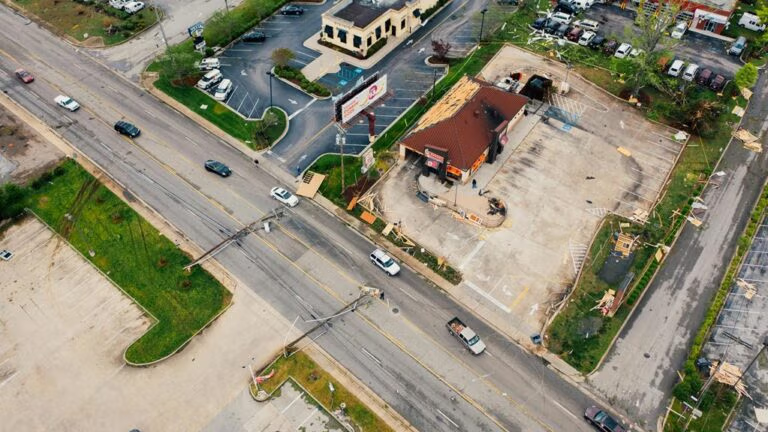
This process fits shingle-covered commercial properties after a hail event
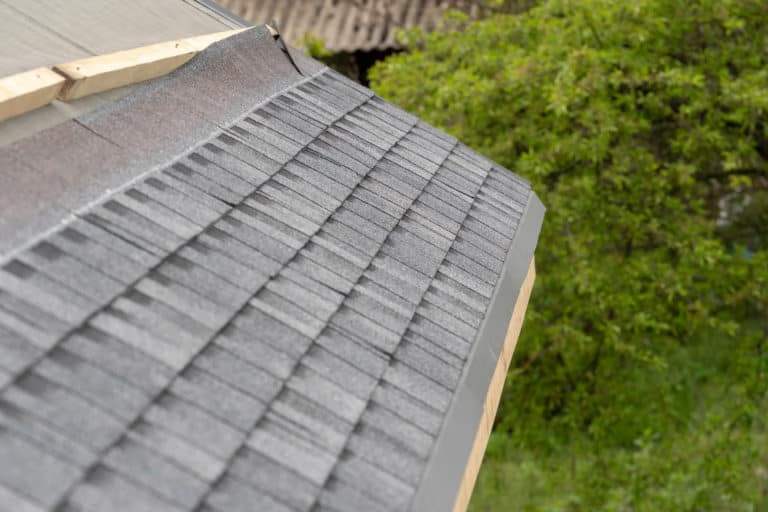
This applies to offices, churches, multifamily buildings, retail buildings, and mixed-use properties with asphalt shingles on part or all of the roof. It matters most when a recent storm triggered a claim and the roof still shows fresh marks.
It does not fit every roof. If your building has membrane, metal, or modified bitumen sections, the adjuster uses a different method. In those cases, evidence may point to punctures, seam failure, or moisture intrusion instead of bruised shingles.
Mixed roof systems often need separate scopes
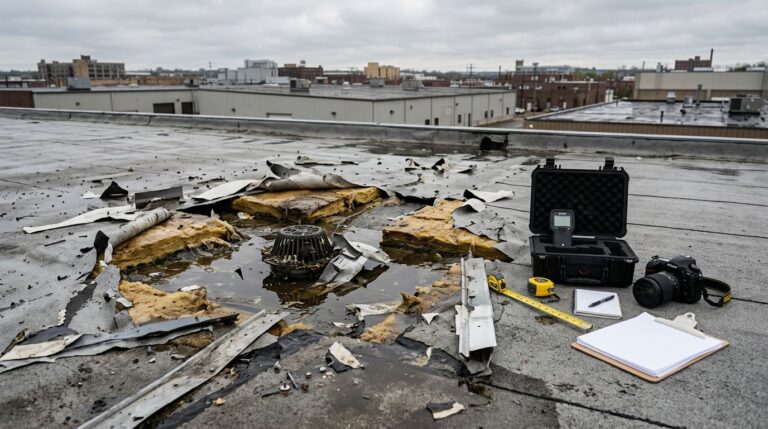
Some commercial buildings have shingled entry roofs and low-slope sections in back. In that case, one area may show hail damage asphalt shingles evidence, while another may call for moisture testing or commercial flat roof repair.
Older roofs also create gray areas. Brittle shingles can crack from age, not hail. If a storm may have opened a hidden path for water, professional commercial leak detection can help confirm what happened beneath the surface.
When an adjuster may reject the claim
A claim gets harder when the roof has heavy granule loss, curling, blistering, or poor attic ventilation. Those issues can mimic storm damage. Adjusters know that, so they look for random impact patterns, not evenly worn surfaces.
They also compare exposed slopes with protected areas. If every mark looks the same on all sides, hail may not be the cause.
Dents on soft metal help support a claim, but broken shingle mat usually carries more weight than a dent alone.
Step-by-Step
On-roof verification process
- They confirm the storm first. Adjusters review the date of loss, hail size reports, and storm path. That gives the roof inspection a time and place, not just a guess.
- They inspect soft metals and nearby property. Gutters, downspouts, roof vents, metal caps, and AC fins often show impact first. These marks support the claim, because hail usually leaves a wider trail.
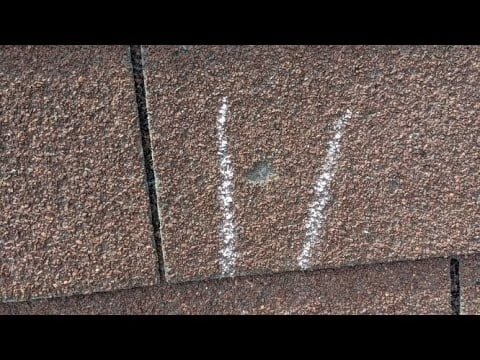
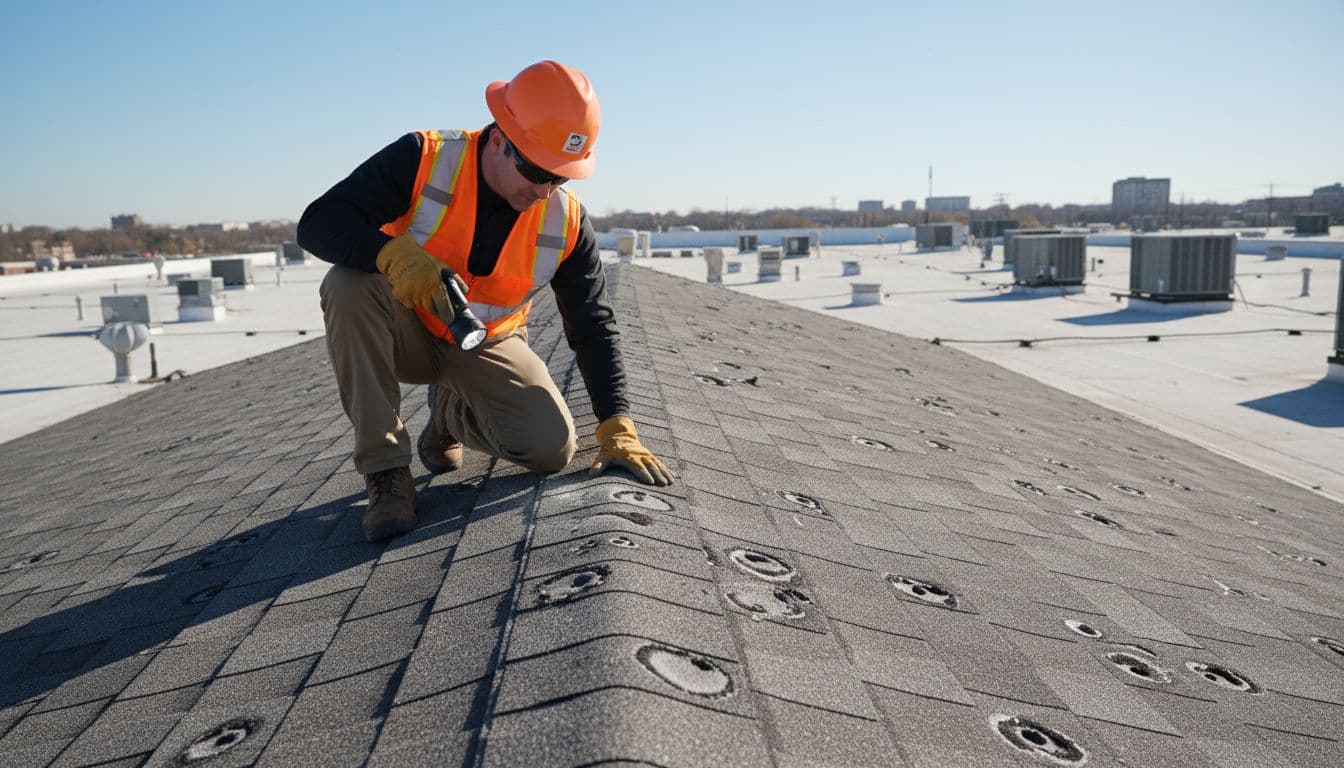
- They check each roof slope in test areas. Many use marked squares to count damaged shingles on each elevation. This helps them measure pattern, spread, and severity.
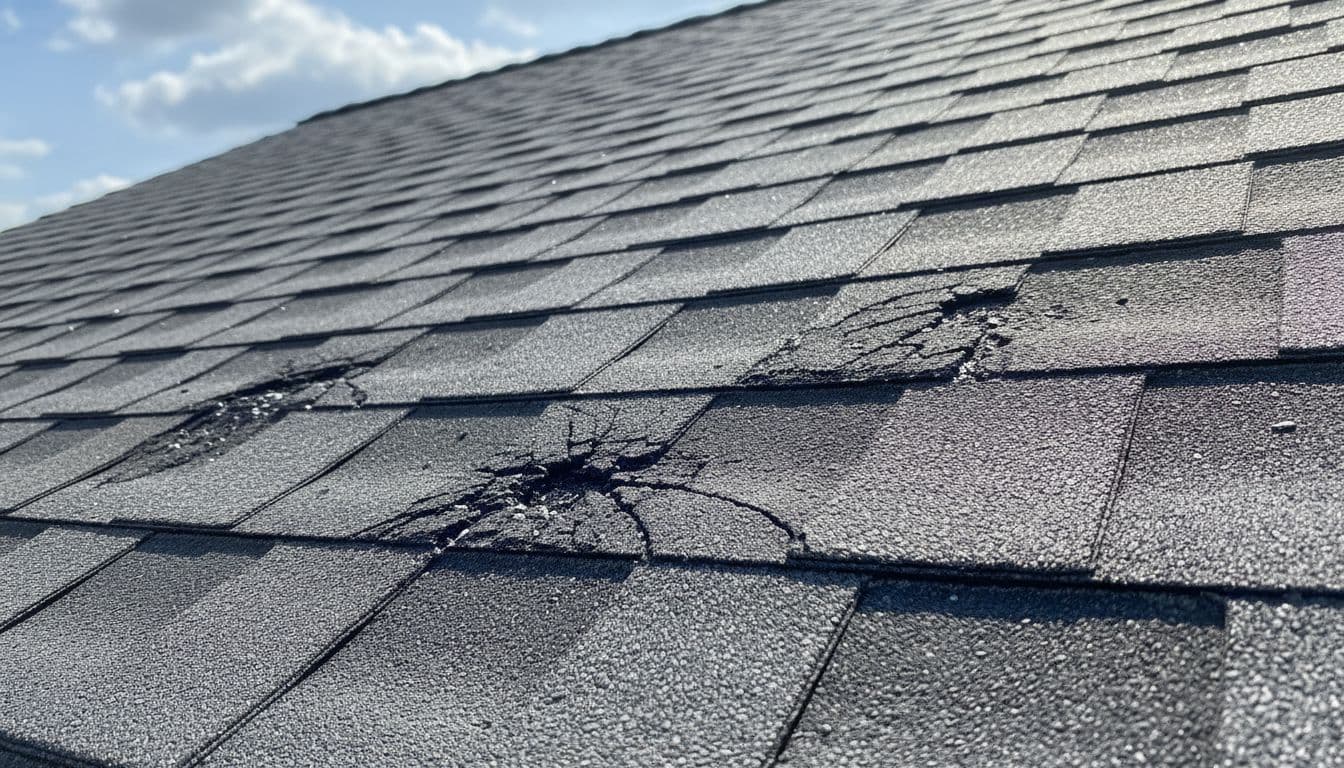
- They inspect the shingle surface by touch and sight. A real hail bruise often feels soft or slightly crushed. In stronger hits, the mat underneath is fractured, which is much more persuasive than surface scuffing.
- They compare suspect hits with normal wear. Foot traffic often leaves directional scuffs. Blistering tends to look round and uniform. Hail damage is usually random, with sharper edges and matching collateral signs.
- They document everything. Photos, slope notes, counts, and chalk marks build the file. Without that record, even clear damage can turn into a weak claim.
How they decide repair or replacement
- They rule out non-storm causes. Mechanical damage from tools, satellite work, or careless traffic can look dramatic. Adjusters separate those marks from true impact damage before writing scope.
- They decide whether isolated repair is realistic. If damage is limited and matching shingles exist, spot repair may work. If many slopes fail, or the mat breaks in multiple areas, commercial roof replacement becomes more likely.
- They consider hidden moisture and business risk. If water entered the assembly, the issue may extend past the shingles. That helps answer whether the commercial roof needs repair right away, or whether a broader scope is justified.
What Evidence Carries the Most Weight
Hail damage versus normal wear
Adjusters trust patterns more than one dramatic mark. Real hail damage on asphalt shingles usually appears random, recent, and supported by other storm signs.
| What they see | More consistent with hail | More consistent with wear |
|---|---|---|
| Granule loss | Fresh, localized impact spots | Broad, even aging |
| Surface feel | Soft bruise or broken mat | Dry, brittle surface |
| Pattern | Random hits on exposed slopes | Uniform loss on all slopes |
| Collateral signs | Dented vents, gutters, caps | Little or no matching damage |
The best claims tell one clear story. Storm data, slope patterns, collateral hits, and interior signs all line up. If they do not, the adjuster will question the cause.
FAQ About Hail Damage Claims on Asphalt Shingles
Can an adjuster miss hail damage on older shingles?
Yes. Older shingles can hide fresh bruises because they already look worn. A reinspection often makes sense when storm timing is clear and the first inspection missed collateral damage.
When a second look helps
Bring photos, dates, and any contractor documentation from the same week as the storm.
What if only one roof slope shows hail damage?
That can happen. Wind direction, nearby trees, parapet walls, and building height can shield one side while exposing another.
Do gutters and downspouts matter in the claim?
Yes, but they are supporting evidence, not final proof. Think of them as footprints near the scene, they help, but they do not close the case by themselves.
What happens if leaks start weeks after the inspection?
Report them fast and document the interior path. Water can travel, so the stain you see may be far from the actual entry point.
Don’t wait on hidden moisture
Small leaks can spread into insulation and decking long before the ceiling shows it.
Can a carrier approve repairs instead of full replacement?
Yes, if damage is limited, shingles still match, and local code does not force a larger scope. On the other hand, discontinued shingles, widespread mat breaks, or repeated leaks can push the claim toward replacement.
What Business Owners Should Do Next
Protect the evidence before weather and traffic erase it
Hail claims turn on proof, not guesses. The adjuster wants storm timing, test-square counts, collateral hits, and clear signs that the shingle mat failed. If your building has mixed systems or the scope feels too narrow, Saint Paul commercial roofing experts can document both the visible damage and the risk behind it before the evidence fades.
Need a roof inspection in Saint Paul or the Twin Cities? Call Sellers Roofing Company at +1-651-703-2336 or schedule a free estimate. We are a black-owned, NMSDC-certified MBE roofing contractor with 9+ years experience.