Last updated: 2026-08-01 by Ted Sellers, Owner
Yes. Wind can damage ridge vents even when shingles still look fine. The ridge sits at the highest, most exposed part of the roof, so uplift often hits the vent first. On commercial buildings with steep-slope roof sections, that can mean a loose or broken vent, minor leaks, and hidden moisture, even without obvious shingle loss.
When This Applies
It fits buildings with steep-slope roof sections
This applies to commercial properties that have shingled roof sections with ridge vents, such as offices, churches, mixed-use buildings, and some retail sites. In those cases, the vent is a separate component with its own fasteners, seams, and cap shingles.
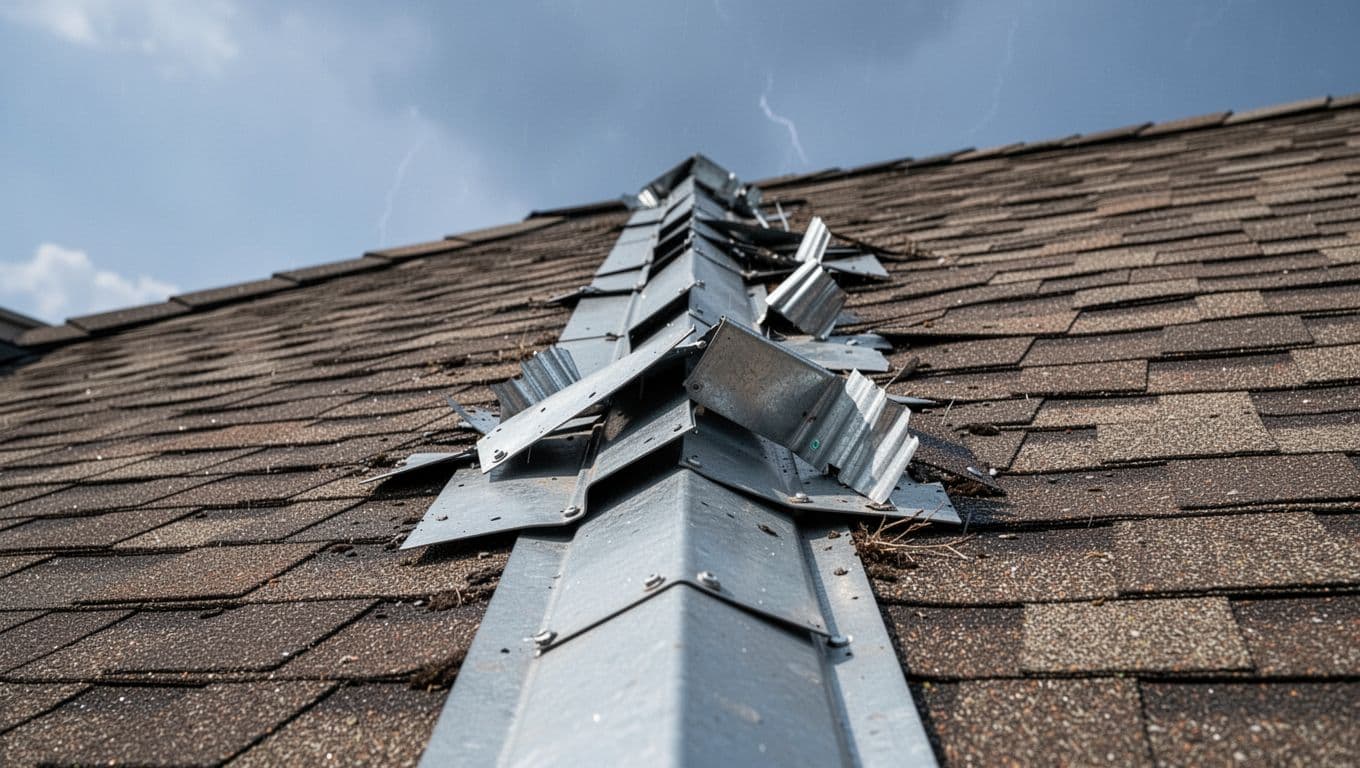
Because it stands proud of the roof surface, the ridge vent catches pressure differently than field shingles do. Wind uplift can grab the vent, bend baffles, loosen nails, or crack plastic sections while the main shingle courses stay sealed. That lines up with how wind damages roof components, especially near ridges and edges.
Common signs include a crooked ridge line, lifted cap shingles, exposed fasteners, attic drafts, or stains near the peak. Sometimes the only clue is water after a windy rain.
It does not fit most flat or low-slope roofs
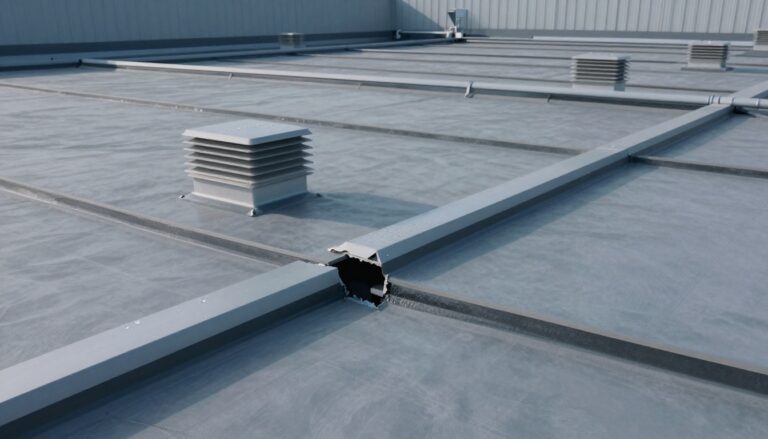
Most membrane roofs, including TPO, PVC, and EPDM, do not use ridge vents. If your building has a low-slope system, the issue is usually flashing, drains, seams, or edge metal. In that case, the better question is whether you need commercial flat roof repair, not ridge vent work.
If water is showing up but the source is unclear, commercial roof leak detection in Saint Paul is often the smarter first move.
There are also exceptions on steep-slope roofs. If you see creased shingles, missing tabs, wet decking, or damage across multiple roof planes, the problem is no longer isolated to the vent. As FEMA’s wind and water infiltration guidance shows, one failed detail can lead to broader water entry fast.
A ridge vent can fail on its own, but once moisture spreads below it, the repair scope changes quickly.
Step-by-Step
Confirm whether the ridge vent is the only damaged part
- Start from the ground. Use binoculars and look for a lifted ridge cap, an uneven ridge line, or missing vent sections.
- Check the inside next. Water stains near the roof peak, damp insulation, or a drafty attic often point to ridge-level failure.
- Take photos before any temporary fix. Note the storm date, wind direction, and where water appeared inside.
Decide whether the fix is local or broader
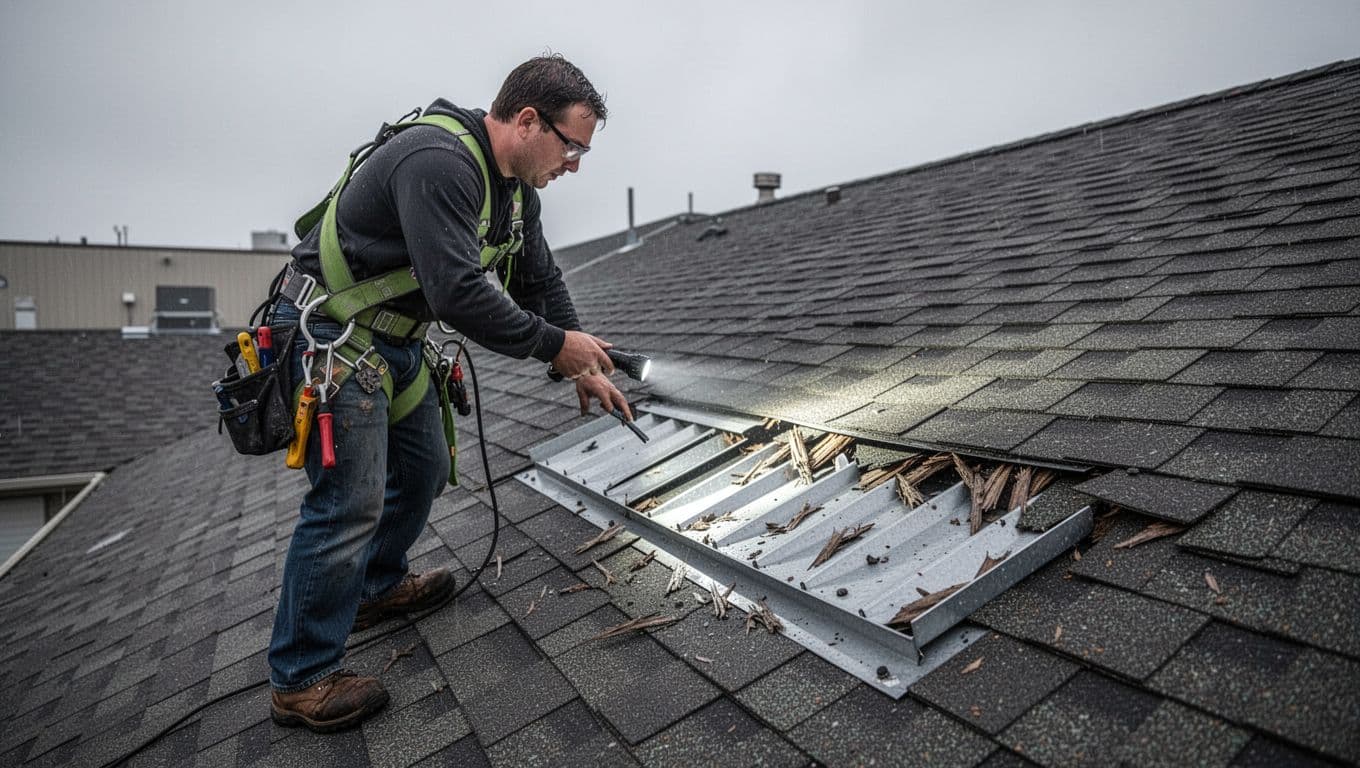
- Have a roofer inspect the vent body, fasteners, cap shingles, and decking at the ridge. If the surrounding shingles are sealed and the deck is dry, a focused repair usually works.
- Replace cracked or lifted vent sections, then re-install the cap shingles correctly. In many cases, that’s far less expensive than jumping into commercial roof replacement.
- Expand the repair scope if the roofer finds wet decking, repeated leaks, or damage beyond the ridge. That’s when a commercial roof needs repair beyond one component, and Sellers Roofing Company’s commercial roofing team can compare spot repair, section replacement, and full-system options.
Protect the building while you wait for repairs
- Move inventory or electronics away from the leak path. Ridge vent failures can drip farther downslope than you expect.
- Don’t let anyone seal it with random caulk and call it done. A bad patch can trap water and hide the real problem.
- Schedule the repair before the next windy rain. A vent that barely leaked once can open wider on the next storm cycle.
FAQ
Can a ridge vent leak only during high winds?
Yes. Wind-driven rain can enter through lifted baffles, broken end caps, or gaps under ridge cap shingles. On calm days, the same vent may not leak at all, which makes the problem easy to dismiss.
Will insurance cover ridge vent damage if the shingles are intact?
Sometimes. Coverage depends on the cause, policy terms, age of the roof, and whether the damage is sudden or tied to wear. Good storm photos and a prompt inspection help a lot.
Can you replace only the ridge vent?
Often, yes. If the deck is dry and nearby shingles can be re-used or replaced cleanly, the roofer can fix the vent area without disturbing the rest of the roof.
What happens if I wait a few months?
Small leaks become bigger bills. Water can wet insulation, stain ceilings, feed mold, and rot roof decking. What starts as a simple vent repair can grow into interior work and larger roof repairs.
Could poor installation cause the same symptoms as wind damage?
Yes, and that matters.
How to tell the difference
If the fasteners are spaced poorly, the vent type doesn’t match the roof pitch, or the cap shingles were nailed wrong, the vent may fail in ordinary storms. Wind may expose the flaw, but bad installation often starts it.
Wind can damage ridge vents without tearing up the shingles around them. For business owners, that’s both good news and a warning. The repair may stay small, but only if you catch it early.
After the next wind event, don’t stop at the shingle field. Check the ridge line too, because that’s often where the first failure shows up.
Need a roof inspection in Saint Paul or the Twin Cities? Call Sellers Roofing Company at +1-651-703-2336 or schedule a free estimate. We are a black-owned, NMSDC-certified MBE roofing contractor with 9+ years experience.